Projects For Our Future

header image

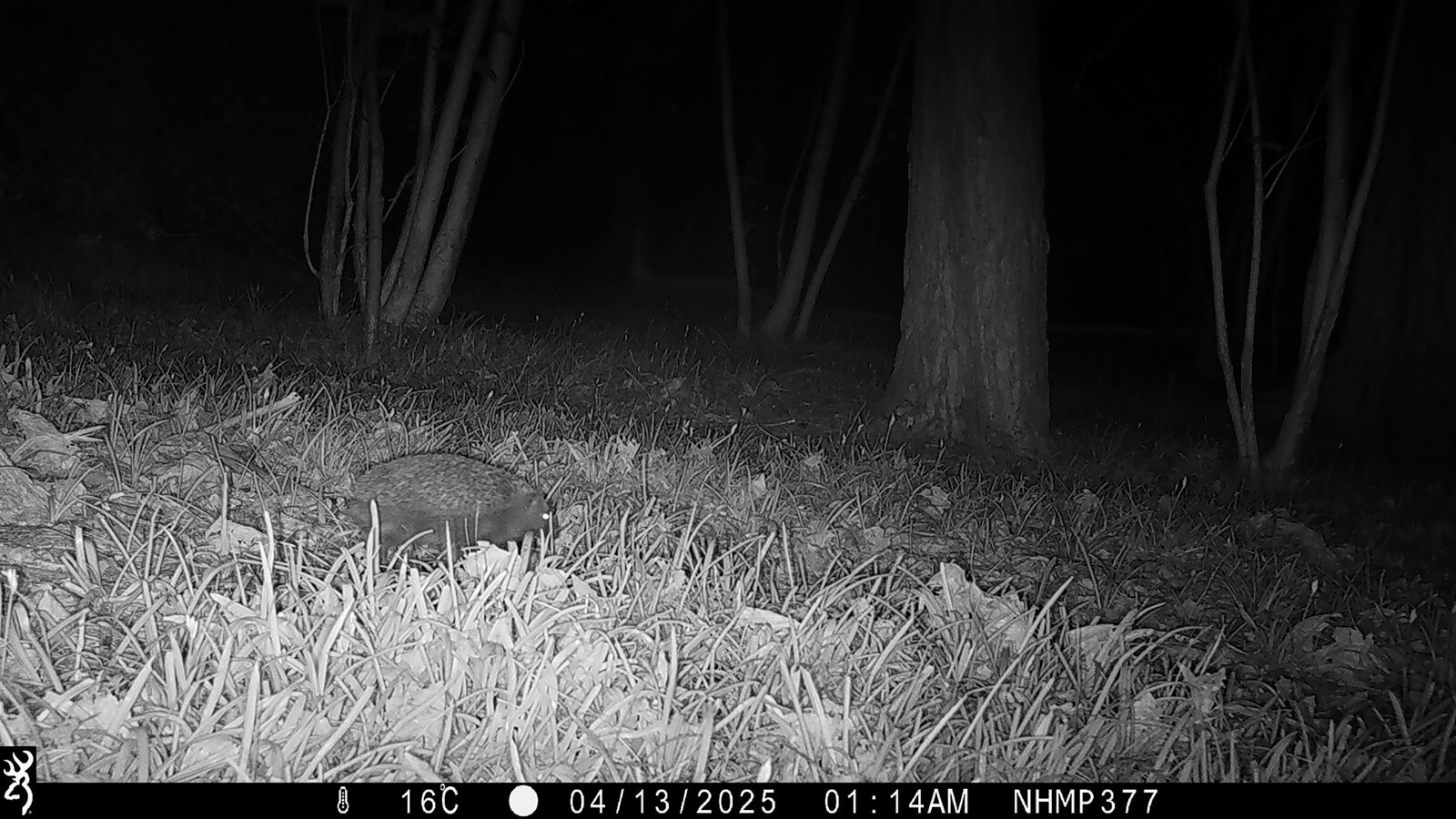
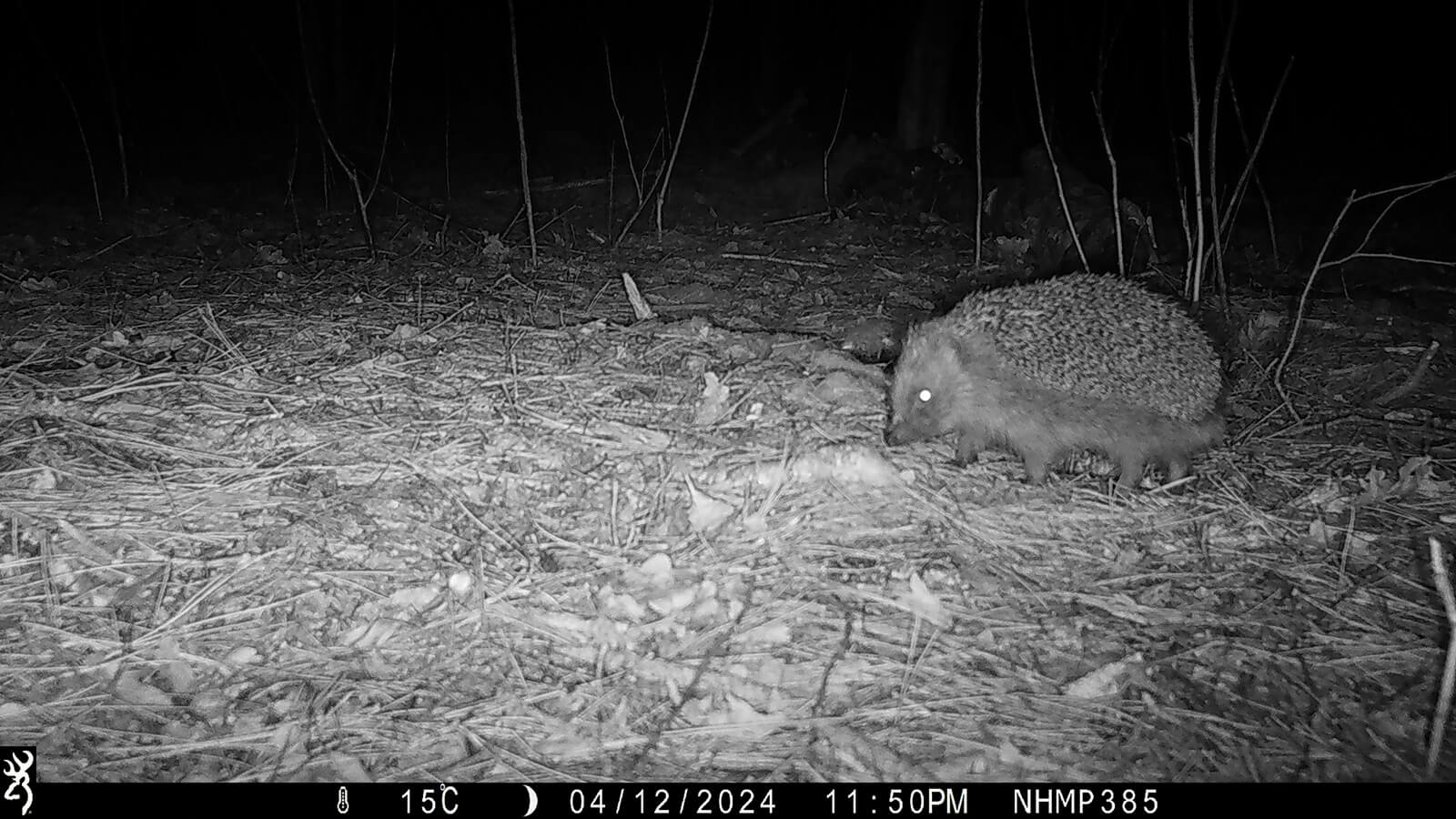
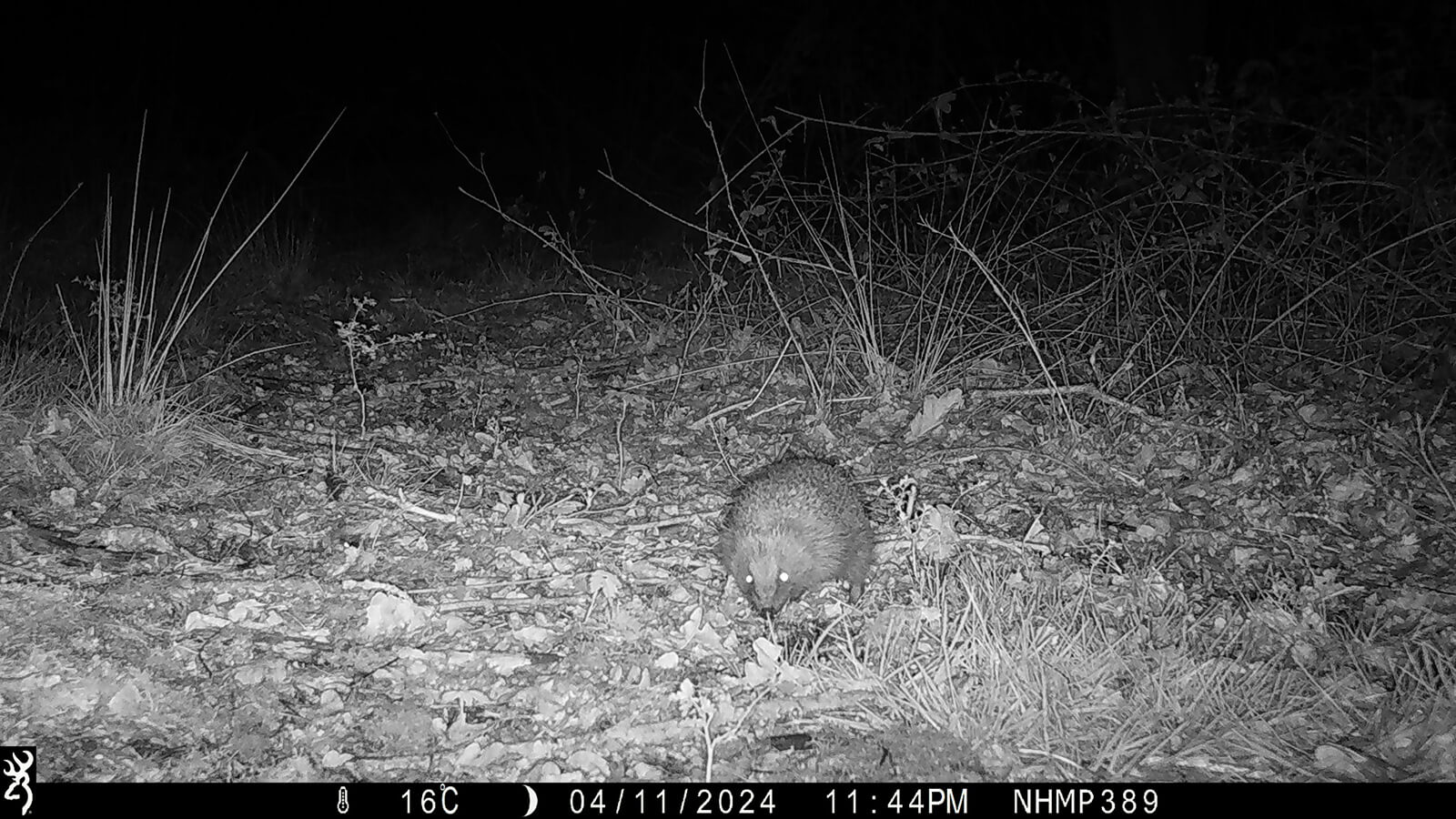
CrossCountry Trains supported the placement of 12 trail cameras in 2025-26 for the National Hedgehog Monitoring Programme

UK hedgehogs are in decline and are now listed as Vulnerable to extinction. However, owing to high uncertainty around population estimates, the true scale of loss is unknown. To reverse the trend for hedgehogs, we need to understand this better, to identify where and why they are struggling, and implement appropriate conservation measures.

Thanks to records submitted by the public via the BIG Hedgehog Map, we have a useful picture of where hedgehogs are being seen. However, these sightings often reflect where people live and spend time, rather than the true distribution of hedgehogs across the landscape. They also tell us that hedgehogs are present, but not how many there are, or how numbers vary over time and between habitats. That’s why monitoring abundance (how many hedgehogs are in an area) is so important: it is a far more sensitive way to detect change, giving us an early warning when populations start to decline and helping us target conservation action where it’s needed most.
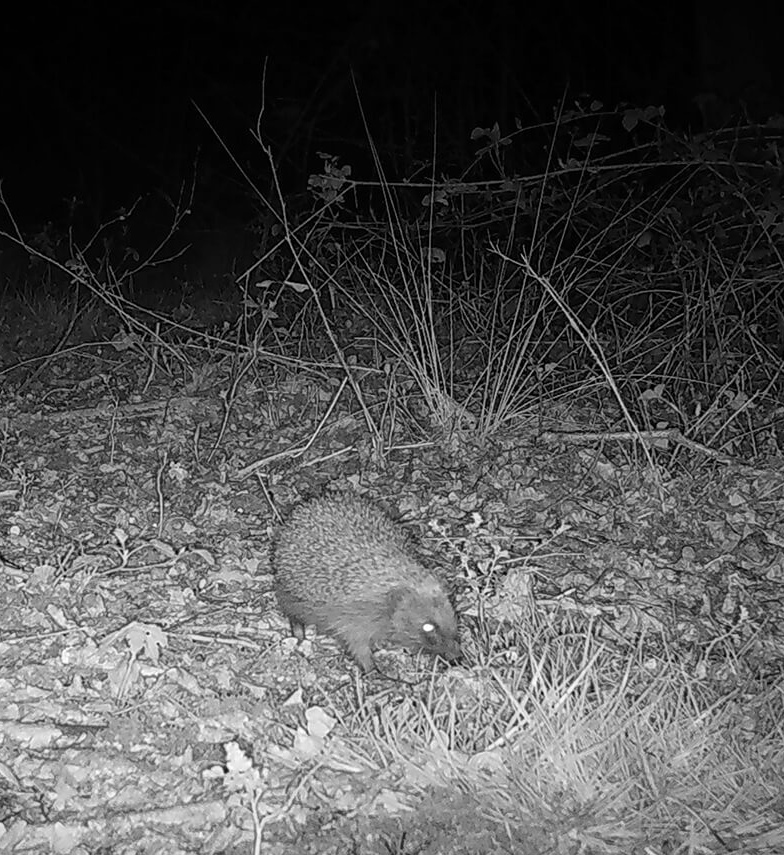
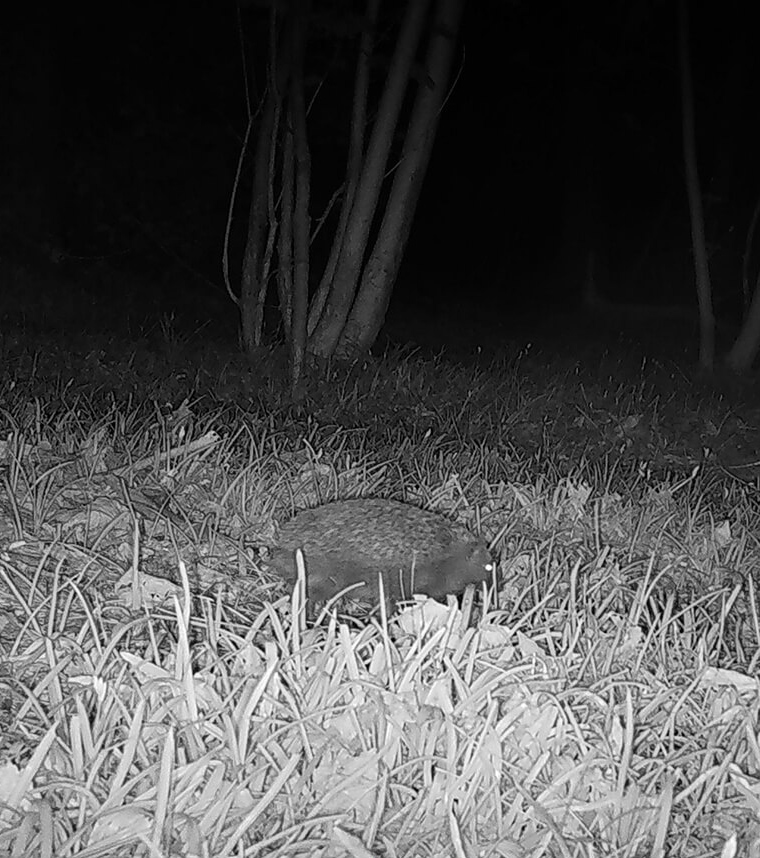
A New Hedgehog Survey

As with many nocturnal mammals, monitoring the abundance of hedgehogs is challenging because they can be hard to detect. The National Hedgehog Monitoring Programme (NHMP) was launched in 2023 by People’s Trust for Endangered Species, and The British Hedgehog Preservation Society, in partnership with Nottingham Trent University, Zoological Society of London, London Hogwatch, MammalWeb and Durham University, and co-funded by Natural England. This exciting new project combines innovative technology and methods in a citizen science programme that, for the first time, yields robust hedgehog population estimates, enabling us to look at regional and habitat differences. These figures will help us detect changes in hedgehog numbers over time. The survey works by using a network of wildlife trail cameras put out by volunteers at specific sites across the country, between April and October. Thirty cameras are placed at each site and collected after 30 days. By putting out cameras in the same way at each site every year, we can standardise effort across the country, making sure that any changes we see over time or between sites are due to real changes in hedgehog numbers and not due to people surveying some areas more intensively than others. Using cameras in this way will also give us better information on where hedgehogs are absent, rather than information on where people are looking for hedgehogs.

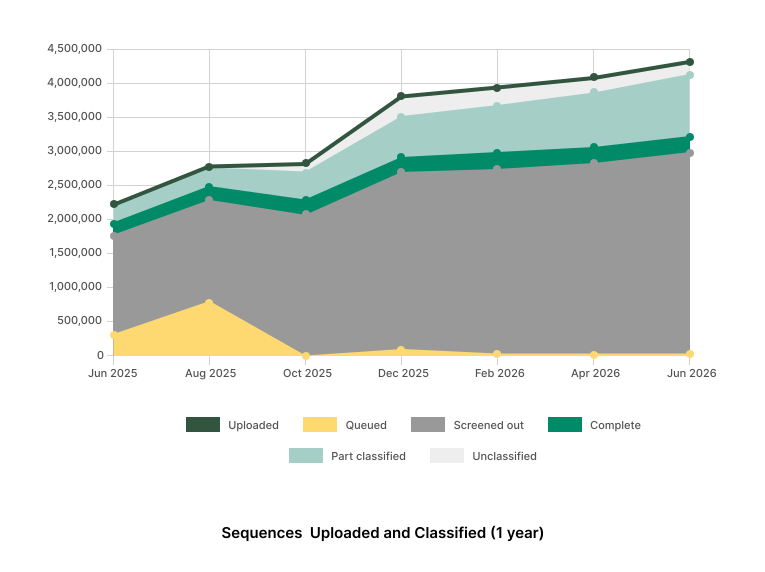
Over the past three years, NHMP has fulfilled 106 surveys at a total of 59 sites, producing population density estimates for hedgehogs, and advancing our understanding of their population trends and requirements. This means that we can implement all-important conservation measures. Nearly 20 million images from the surveys have been uploaded to a dedicated online platform (www.mammalweb.org/nhmp), where over 4000 volunteers have identified the species snapped. Preliminary results suggest 124 species have been spotted at cameras across all the sites surveyed over the three years. Hedgehogs have been spotted at 41 of the 59 sites surveyed over the three years of the project.
Hedgehog Protection
Hedgehog Protection
Hedgehog Protection
Sequences  Uploaded and Classified (1 year)
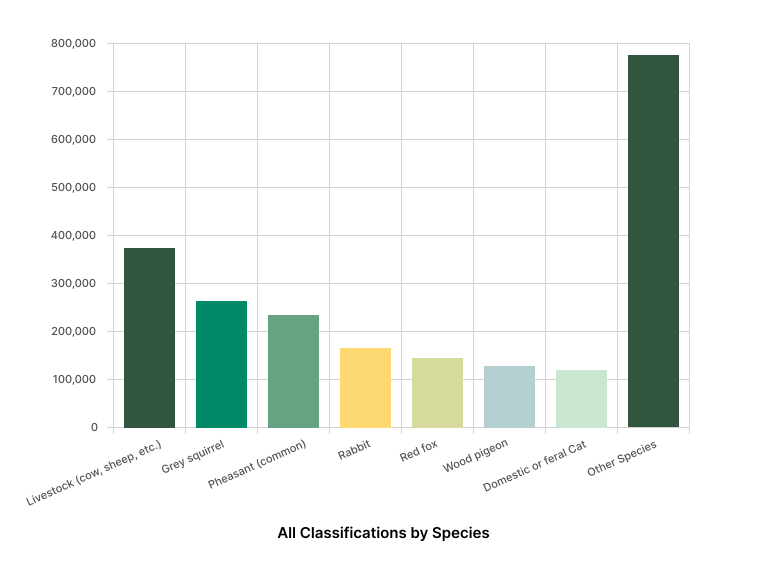
All Classifications by Species
Image

CrossCountry Trains' Impact

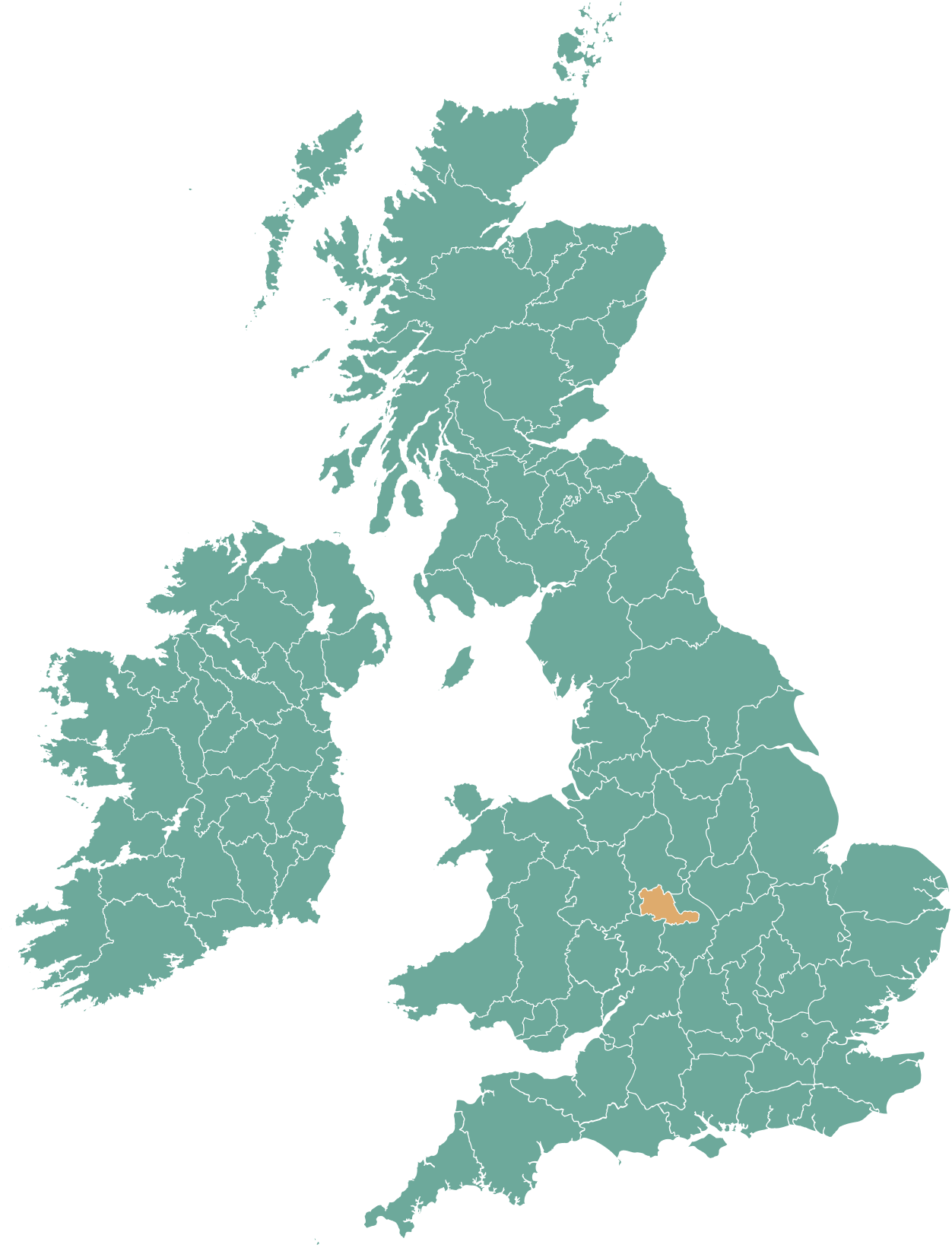
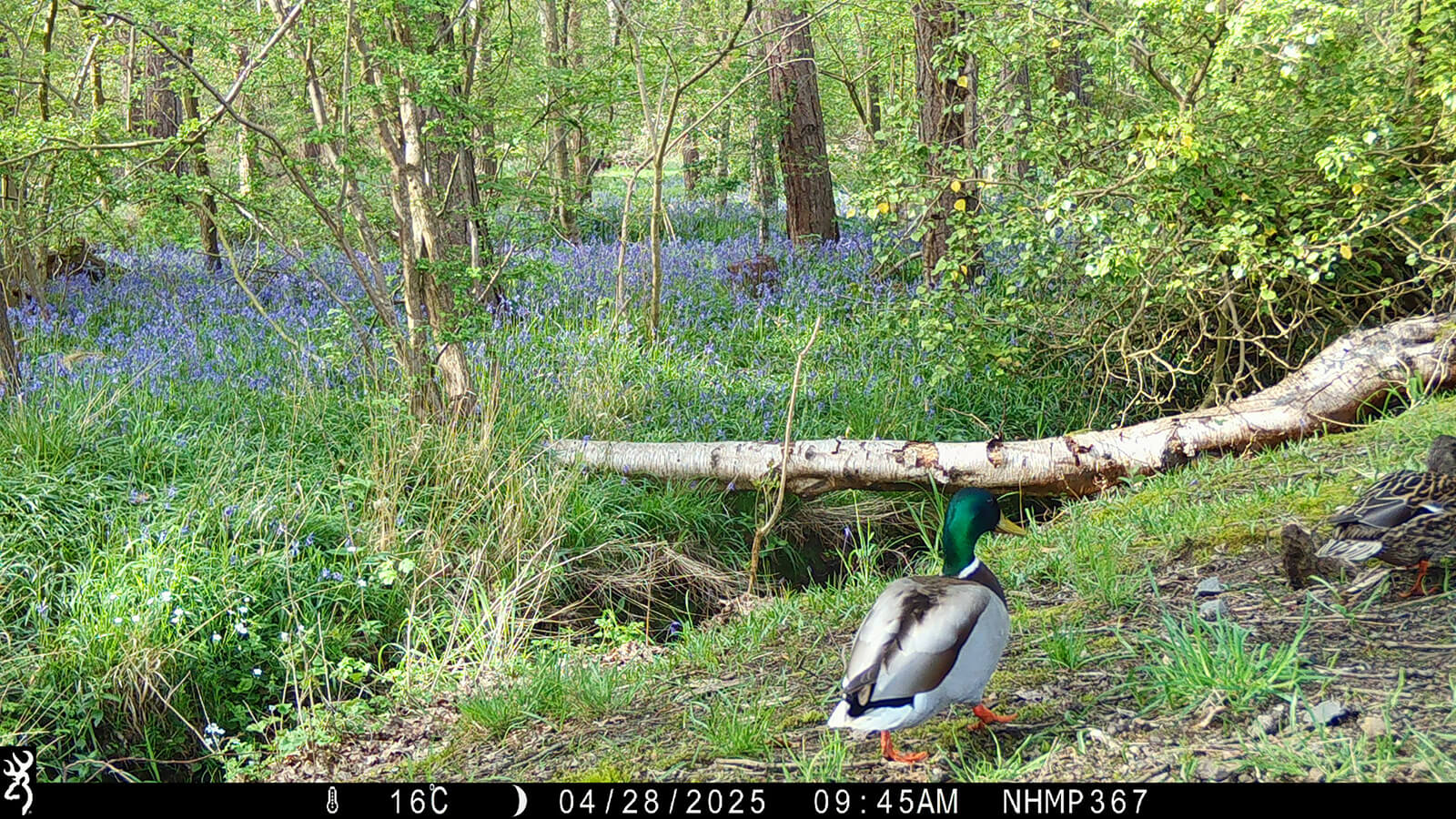
In 2025-26, we surveyed 53 sites, in a range of different habitats. CrossCountry Trains supported the placement of 12 cameras for the NHMP at a site in Coventry, as part of a long-standing partnership with GreenTheUK to protect UK wildlife. The cameras were put out by volunteers in April, and collected a month later, during which time they took photos of anything passing in front of them. Nearly 110,000 images were uploaded to MammalWeb from the site. AI filtered out pictures of humans and blank images, and the rest were made available for volunteers to look through, identifying the species that had been photographed. This is a crucial step to identify which of the images contain hedgehogs and therefore need to be analysed. So far, 229 volunteer “Spotters” have helped to classify the image sequences from the Coventry site, providing a unique insight into the wildlife present.
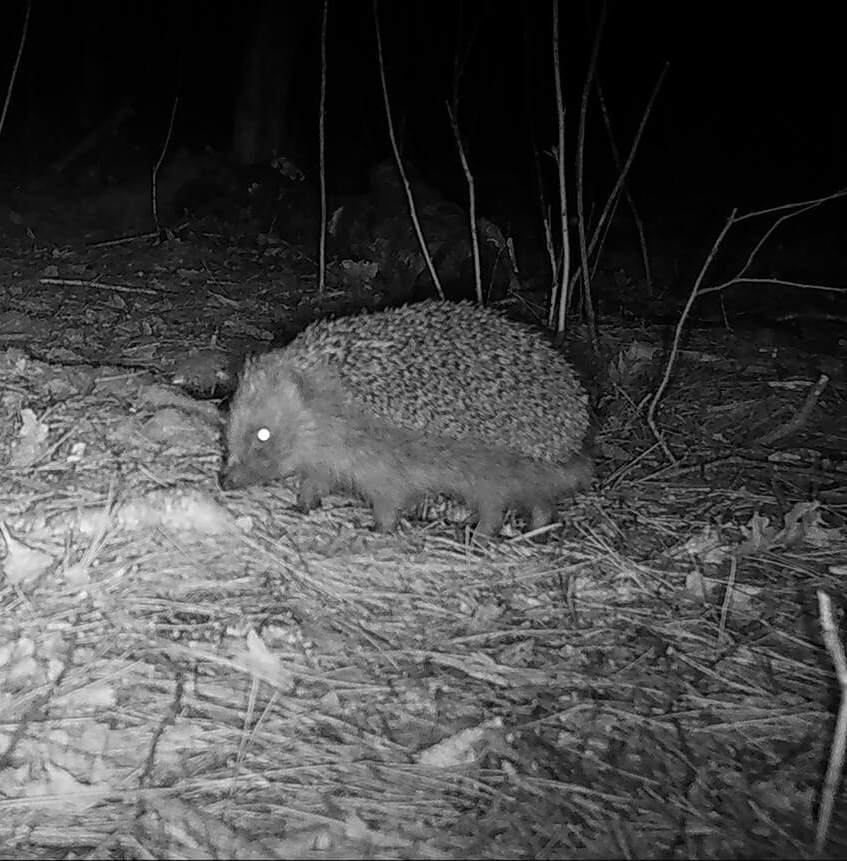
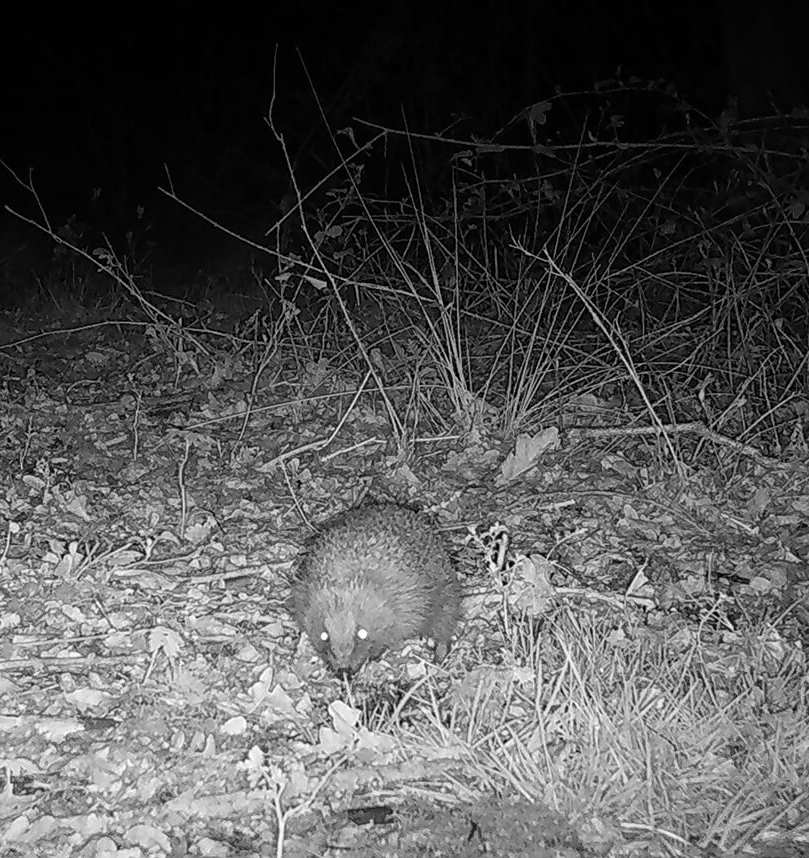
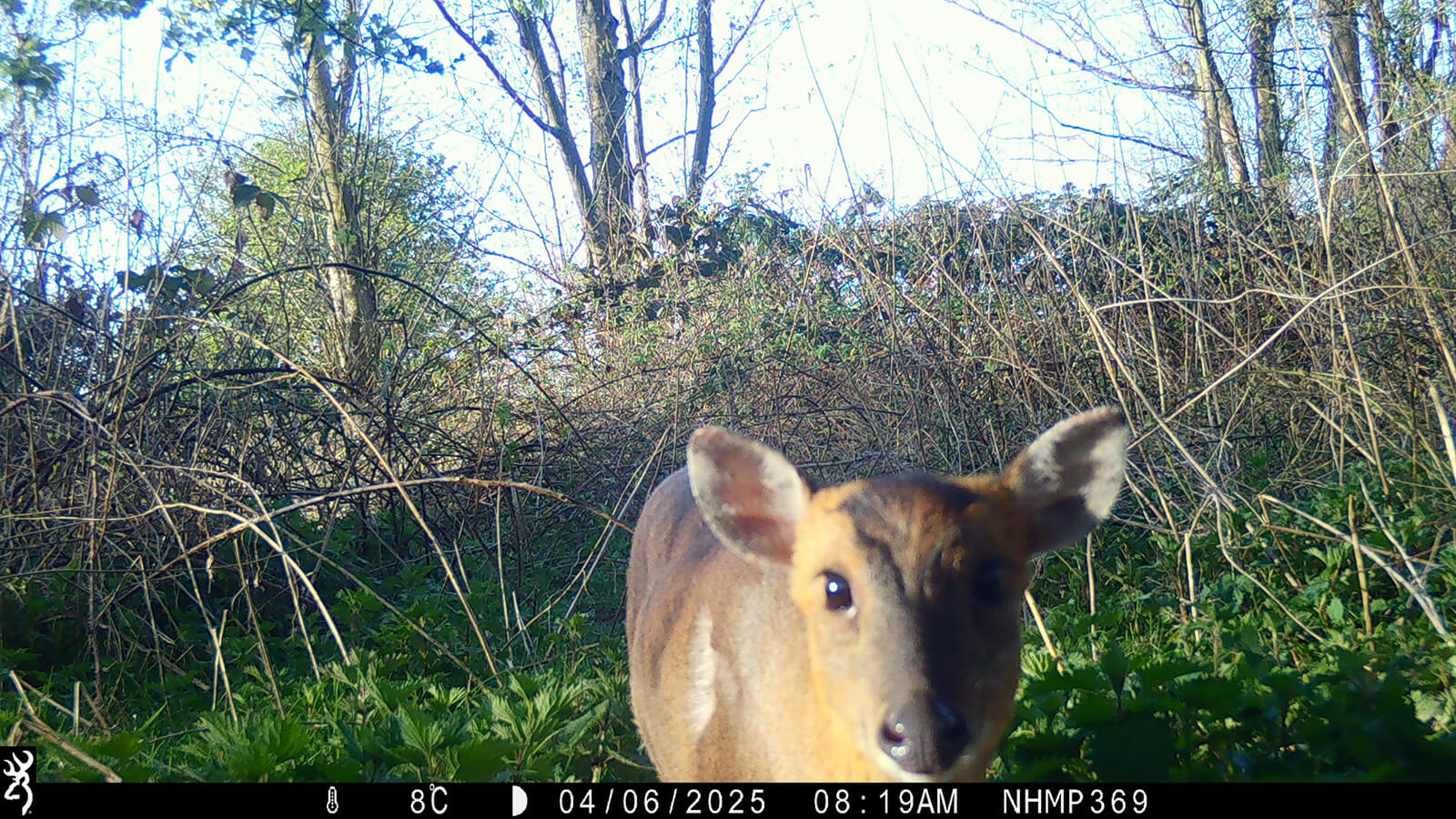
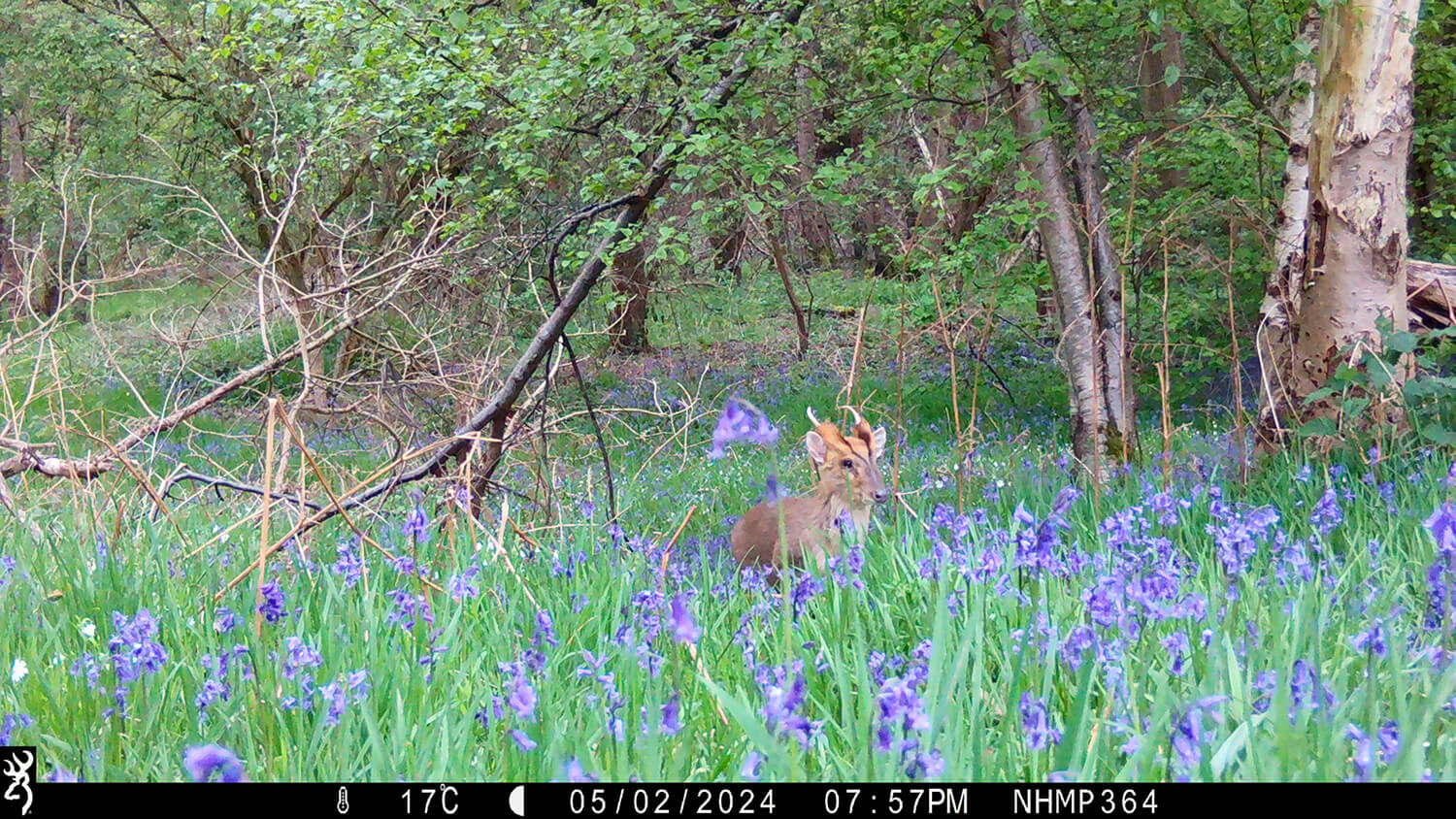
In exciting news, hedgehogs have been recorded at the site, appearing on four cameras. Preliminary results suggest that 23 species have been spotted at the site, including muntjac, red fox, and badger. These images will be analysed and population estimates produced to help conserve our much-loved hedgehog. Thanks to the support of CrossCountry Trains, and the partnership with GreenTheUK, a rich dataset on other mammals and wildlife is being generated, helping inform conservation action more broadly.
map illustration
Image

Commonly seen on NHMP cameras

Image

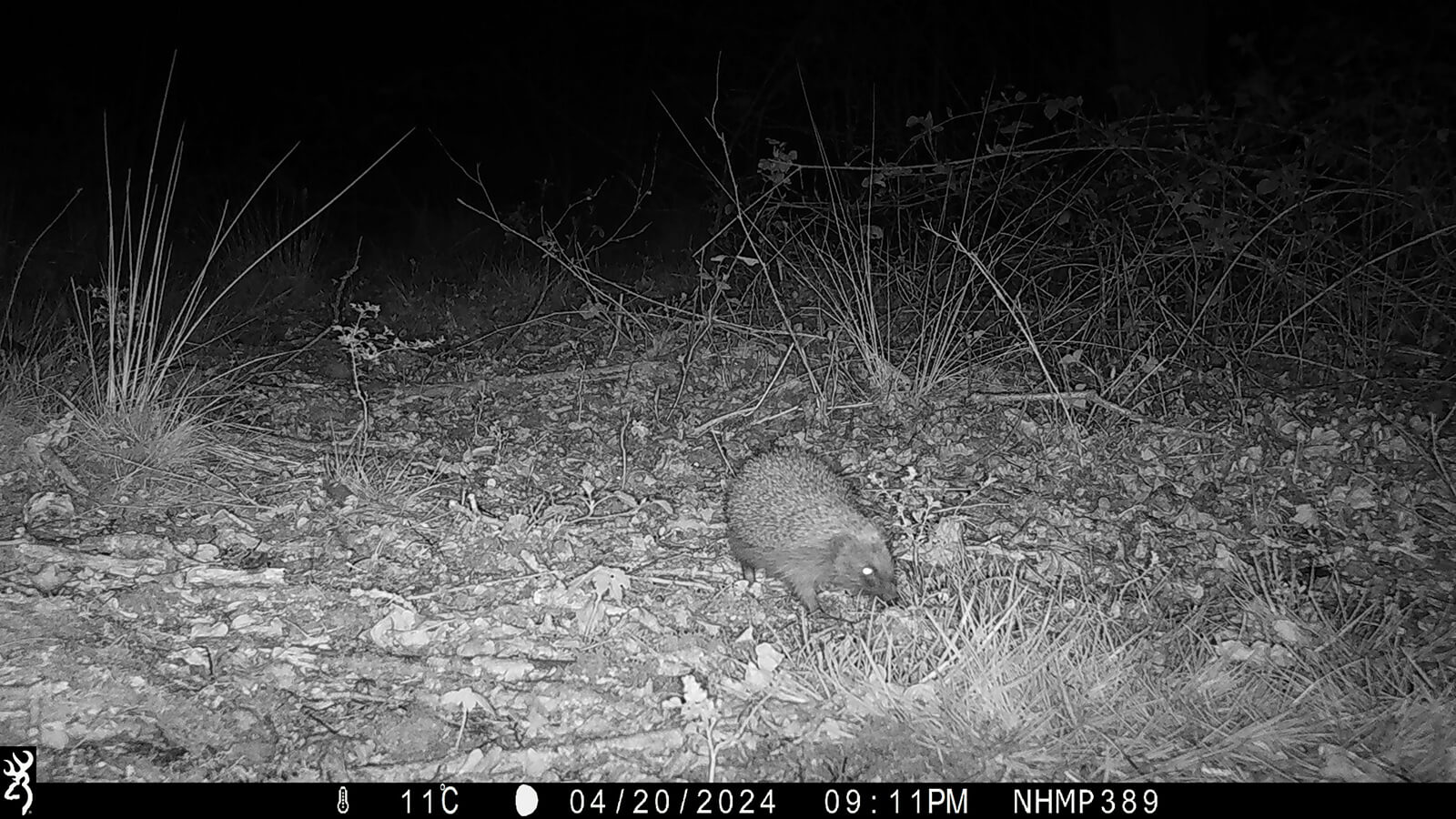
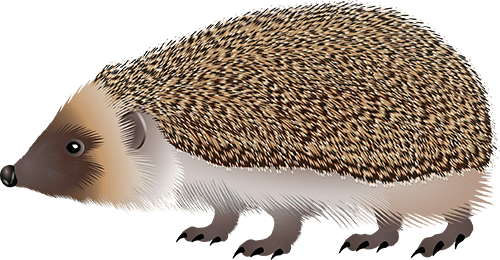
European Hedgehog: Erinaceus europaeus

As their name suggests, these small mammals like to build their nests in hedges, bushes and shrubs. Hedgehogs have up to 7000 spines on their backs, with each lasting for about a year before falling out so that another can grow in its place. They have snouts which help them to sniff out food like berries and insects.

Image

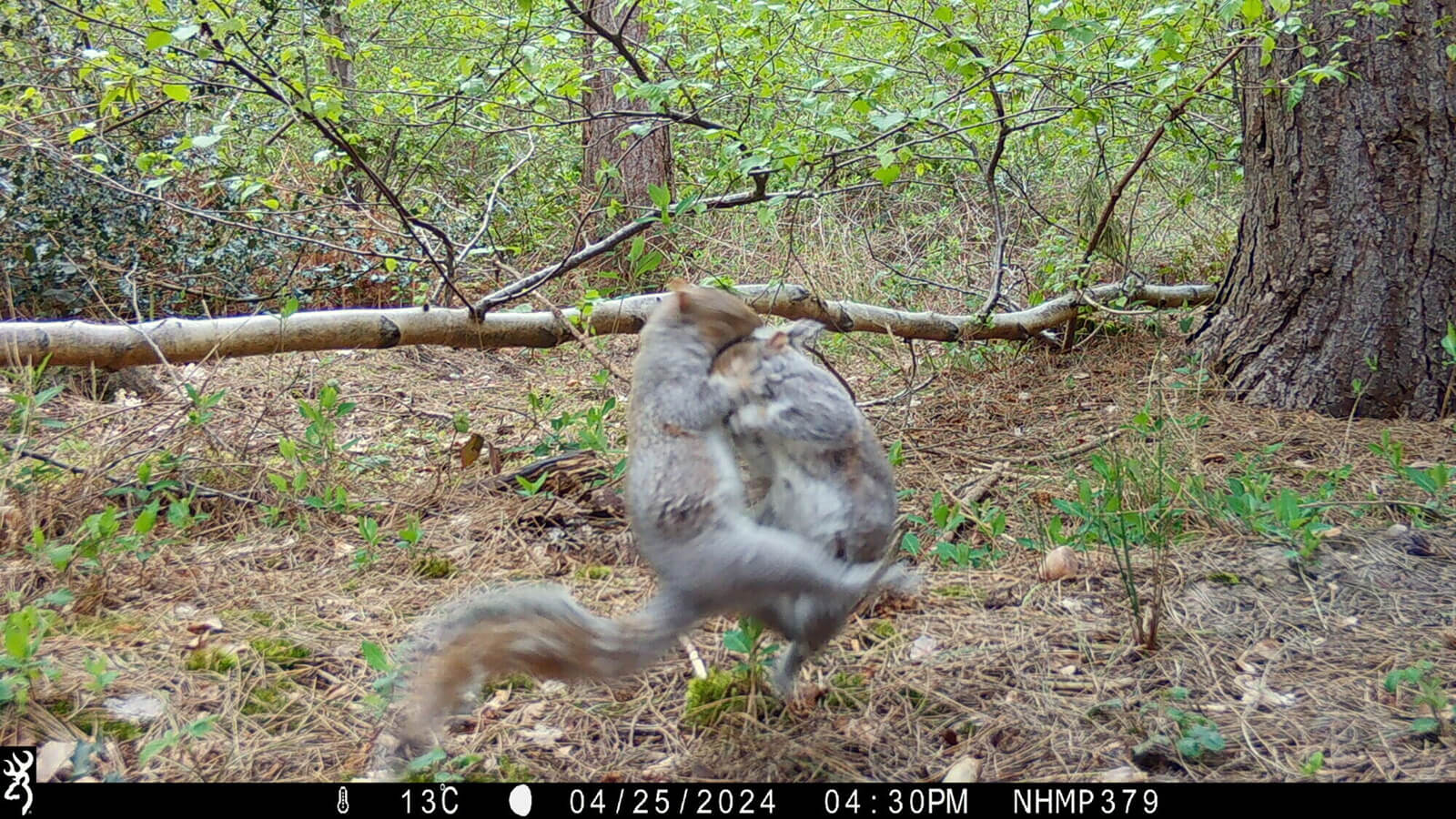
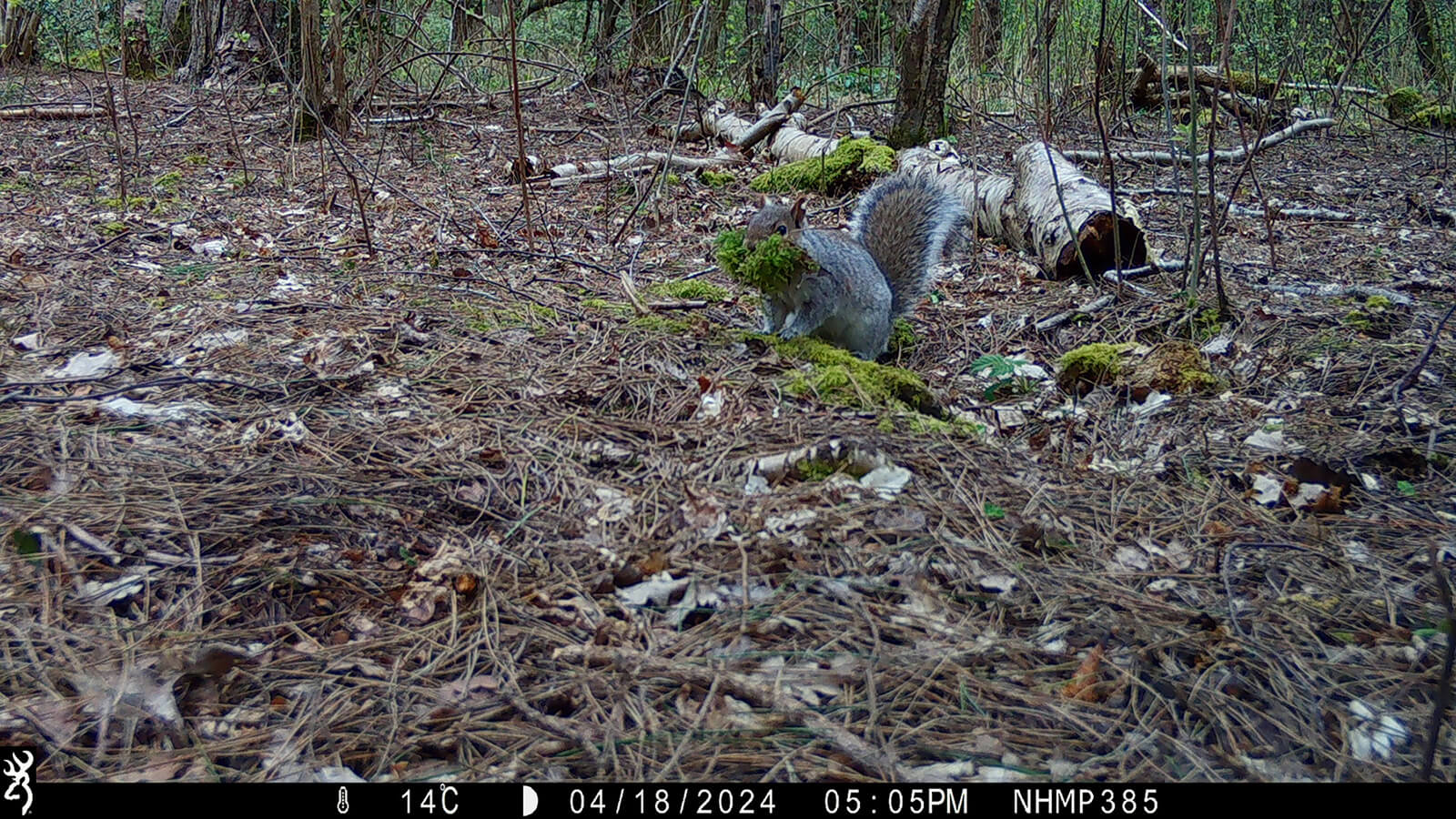
Grey Squirrel: Sciurus carolinensis

Grey squirrels first arrived in the UK from their native North America in the 1800s. Their introduction to these shores has been a disaster for red squirrels, as greys carry squirrelpox, to which they themselves are immune, but which can infect and kill reds. Grey squirrels also cause mayhem in woods where they strip the bark from trees, damaging them in the process.

Image

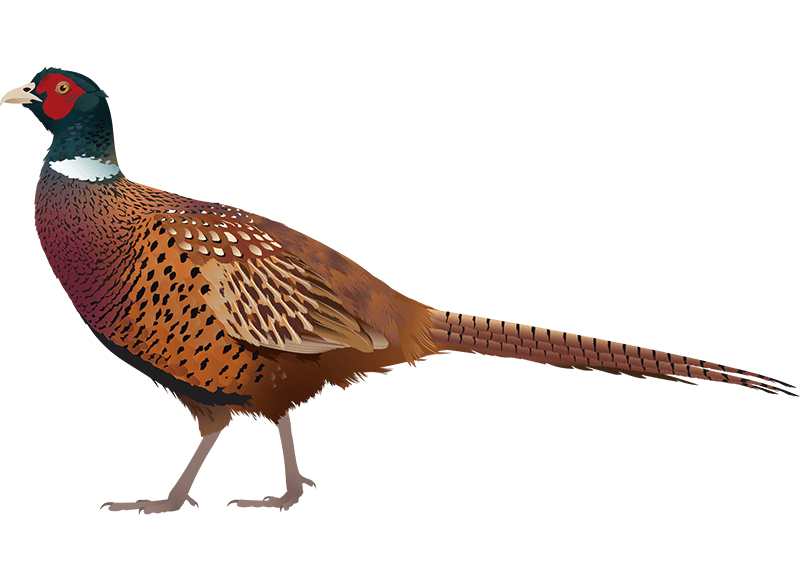
Pheasant: Phasianus colchicus

The pheasant is one of the UK's most recognisable countryside birds, with males showing off glossy feathers in rich shades of green, gold and copper. Originally introduced from Asia, pheasants are now widespread across farmland, woodland edges and hedgerows. They spend much of their time foraging on the ground for seeds, berries and insects, and when startled they burst into flight with a sudden, noisy flapping of wings.

Image

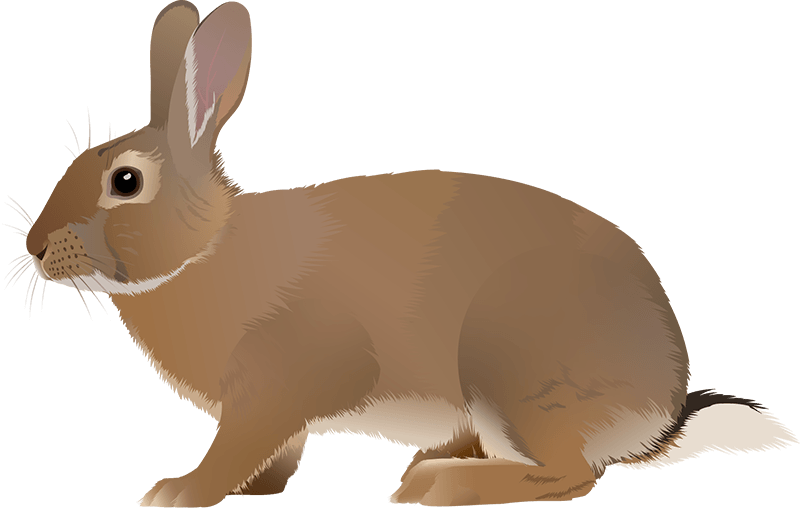
Rabbit: Oryctolagus cuniculus

Rabbits are small, social mammals that live in underground burrows known as warrens. They are most active at dawn and dusk, feeding on grasses, herbs and young shoots in fields, meadows and woodland clearings. Although often seen as common, rabbits are an important food source for many British predators, including foxes, stoats and birds of prey.

Image

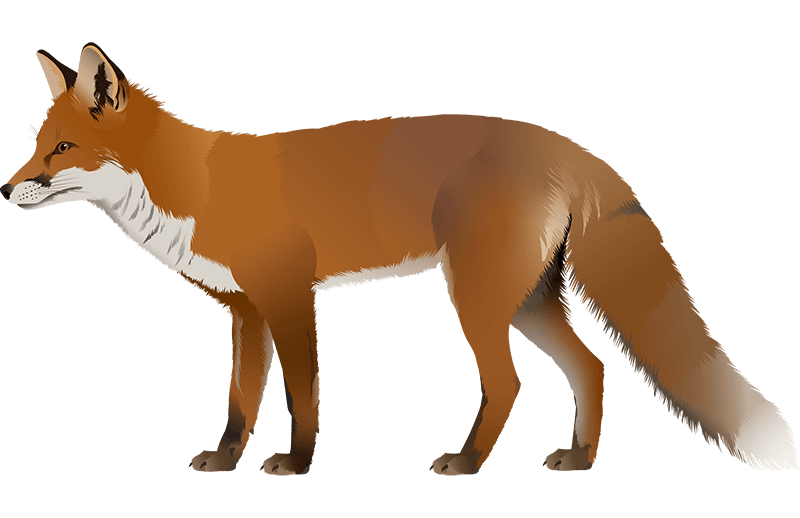
Red Fox: Vulpes vulpes

The red fox is a clever and adaptable animal that can be found in the countryside, woodland and even busy towns and cities across the UK. Known for its reddish coat, bushy tail and sharp ears, the fox is mainly active at night, hunting small mammals, birds and insects. Foxes communicate using a surprising range of calls, from sharp barks to eerie screams that are often heard after dark.

Image

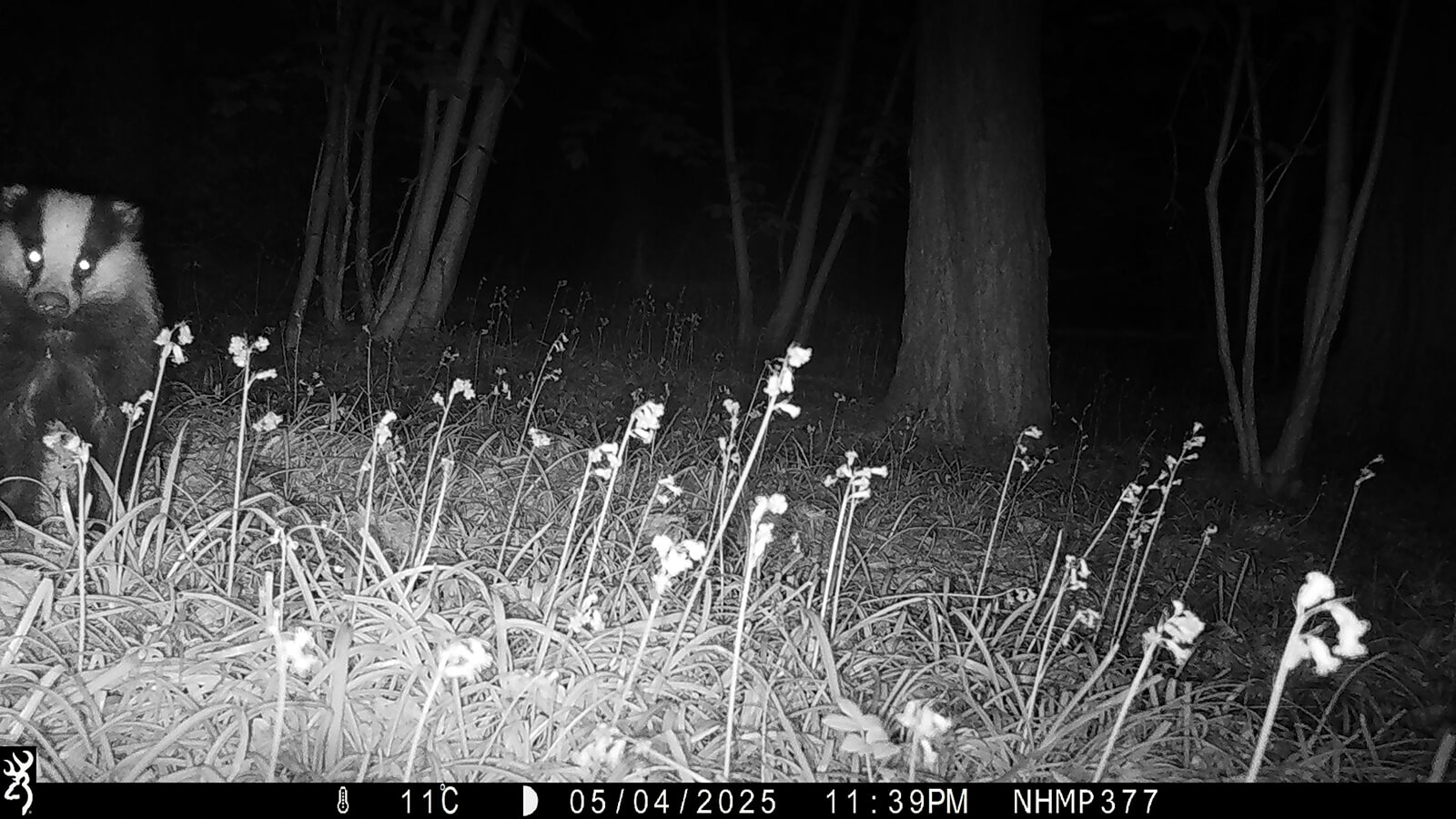
Badger: Meles meles

This black and white striped mammal is the UK’s largest land predator, and can be found living all around the country. Badgers make their homes underground in networks of burrows and tunnels known as setts, with the same family occupying the area for generations. It can be tricky to spot badgers in the wild because they are nocturnal, but during warmer weather in the summer, they occasionally emerge just before sunset.

Image

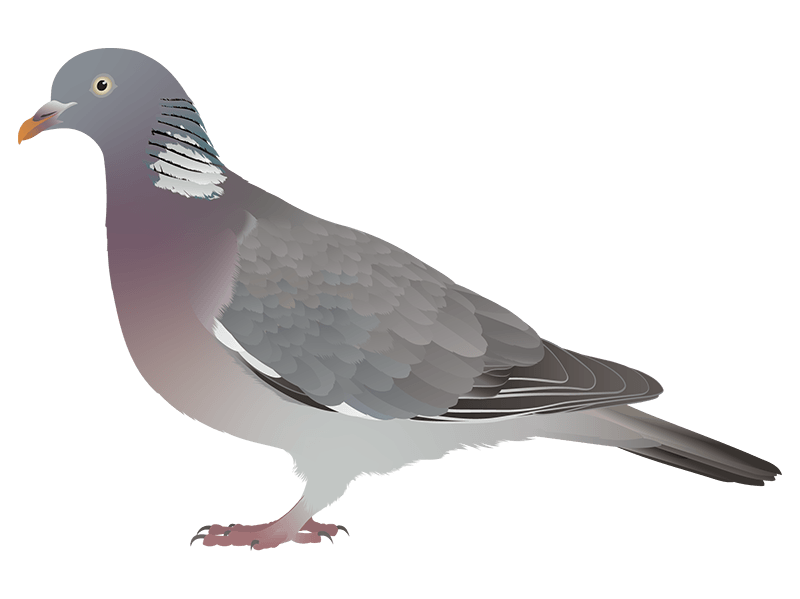
Woodpigeon: Columba palumbus

The woodpigeon is the UK's largest and most widespread pigeon, recognised by its soft grey plumage and distinctive white neck patch. These birds are commonly seen feeding in fields, gardens and woodland, where they eat seeds, leaves and berries. Their gentle cooing call and fast clattering wingbeats are familiar sounds across the British countryside.

Image

Muntjac: Muntiacus reevesi

This small hump-backed deer originally came to the UK from China and can now be spotted here all year round. Muntjac deer are not much bigger than foxes and hang around in small family groups rather than large herds. Sadly, they can damage important wildflower species in the woodlands they visit.

Image

Roe Deer: Capreolus capreolus

Roe deer live on their own or in small groups throughout England and Scotland, feeding on leaves, shrubs, heather and grass. Male roe deer have quite short antlers, which begin to grow in November so that they are ready for the summer rutting season, then fall out again in October. Roe deer mate in July and August, but implantation of the fertilised egg is delayed until January so that the young aren’t born in the winter.

Image

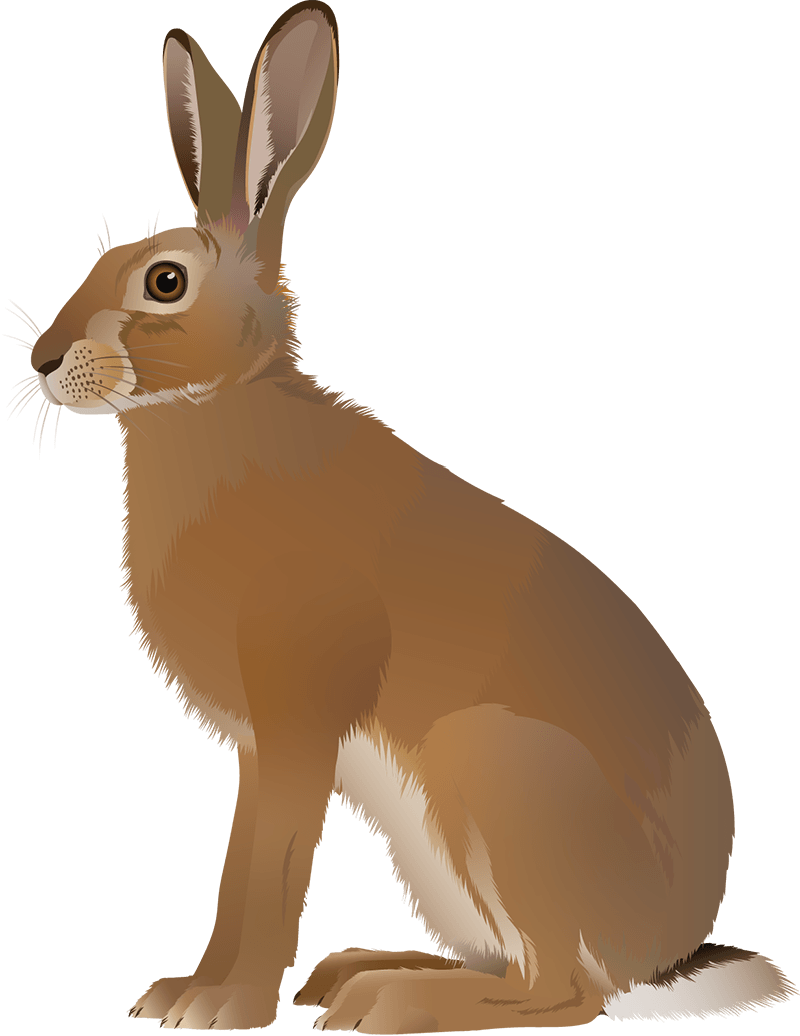
Brown Hare: Lepus europaeus

Brown hares are powerful runners, capable of reaching impressive speeds when escaping danger across open farmland and grassland. Unlike rabbits, they do not live in burrows and instead rest in shallow dips in the ground called forms. During spring, hares are famous for their energetic boxing matches, which are usually females fending off eager males.

Image

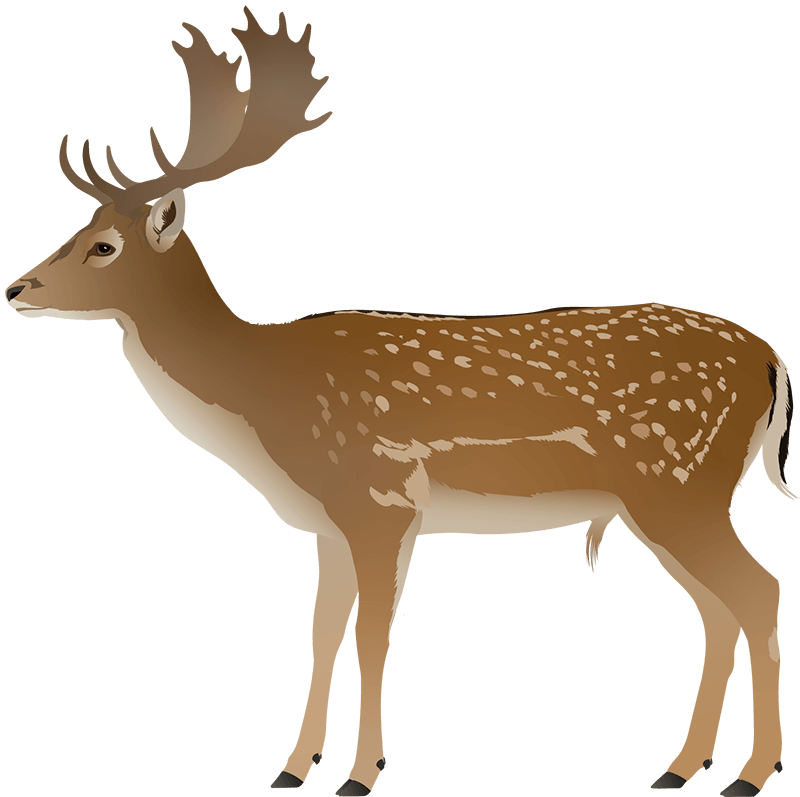
Fallow Deer: Dama dama

Fallow deer are elegant animals with spotted coats and broad, flattened antlers on the males. They were introduced to Britain many centuries ago and are now commonly found in woodland, parkland and open countryside. In summer their coats are rich chestnut brown with pale spots, while in winter they become much darker and shaggier.

Image

Red Deer: Cervus elaphus

These truly majestic animals are the UK’s largest native land mammals, and you’ll find most of them in Scotland, although there are herds dotted all around the country. Red deer can weigh as much as 190kg, and live for up to 20 years. Males (stags) and females (hinds) tend to live apart for most of the year, then they get together to mate in the autumn and their young are born in the late spring and early summer.

Image

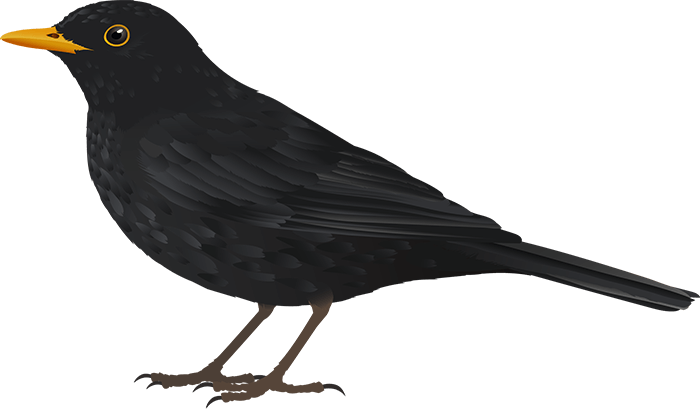
Blackbird: Turdus merula

One of the UK’s most familiar garden birds, male blackbirds are easily recognised by their glossy black plumage and bright yellow beak, while females are dark brown with subtle mottling. Blackbirds are often seen hopping across lawns and leaf litter, searching for worms, insects and fallen fruit. Their rich, melodic song is a classic sound of spring and early summer, often heard at dawn and dusk.

Image

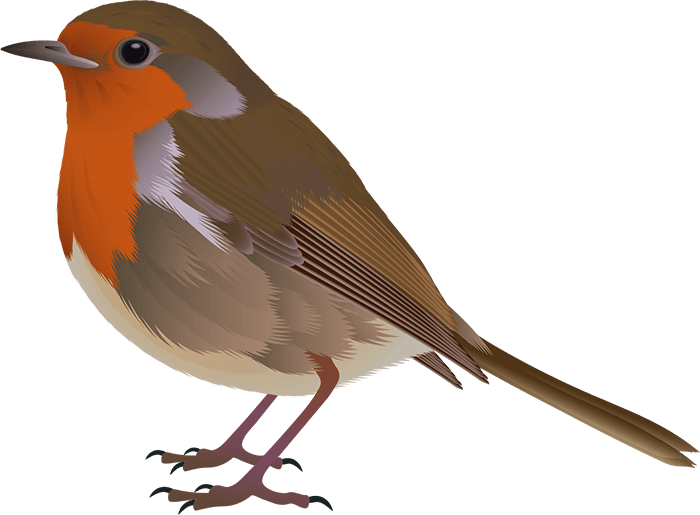
Robin: Erithacus rubecula

Famously known for their red breast and grey-brown back, male and female robins are identical in plumage. They're relatively unafraid of humans, and are known as gardener's friends, looking for worms and other food in disturbed soil. Robins also approach other large animals, such as wild boar, to forage in the ground they disturb.

Image

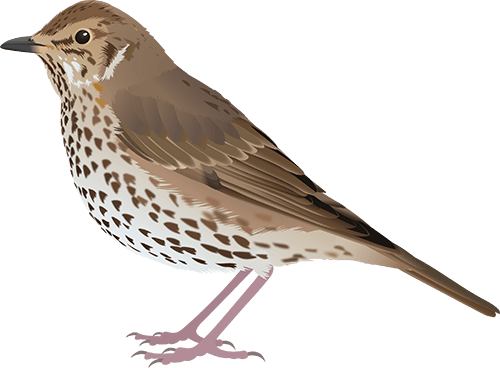
Song Thrush: Turdus philomelos

The song thrush is famous for its distinctive song and can be found all across Europe. In Great Britain, it frequents wooded and bushy areas, such as parks, gardens, and hedgerows. Whilst widespread, there has been a large decrease in population across the UK, with numbers down as much as 50% since the mid-1900s which has been theorised to be due to a variety of reasons, including habitat loss and food scarcity. Their famous song has been featured in a myriad of poetry pieces over hundreds of years and is even the emblem of West Bromwich Albion Football Club.

Image

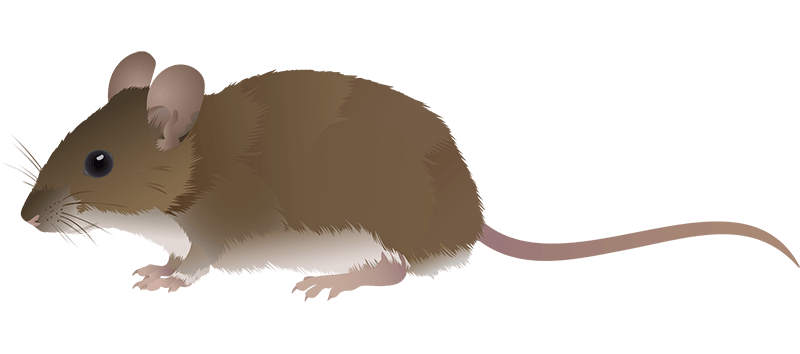
Wood Mouse: Apodemus sylvaticus

The wood mouse is a small, agile mammal with large ears, big dark eyes and a long tail. It is widespread across the UK and can often be found in woodland, hedgerows and gardens, where it feeds on seeds, nuts and insects. Excellent climbers and jumpers, wood mice store food underground to help them survive through the colder months.

Image

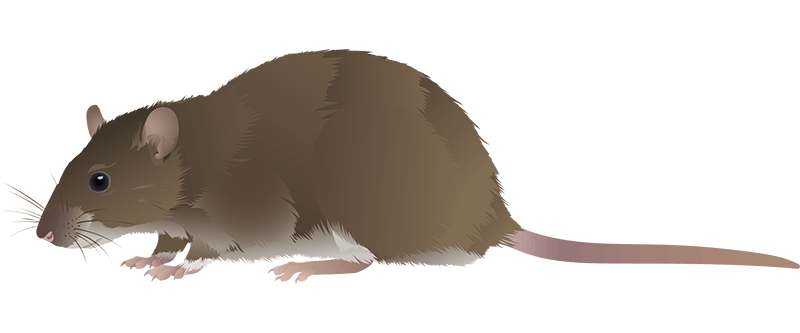
Brown Rat: Rattus norvegicus

Brown rats are highly intelligent and adaptable animals that live in a wide variety of habitats, from farmland and riverbanks to towns and cities. They are strong swimmers and mostly active at night, feeding on almost anything they can find. Despite their reputation, rats are social creatures that live in groups and communicate using scent, touch and sound.

Less likely to be seen on NHMP cameras

Image

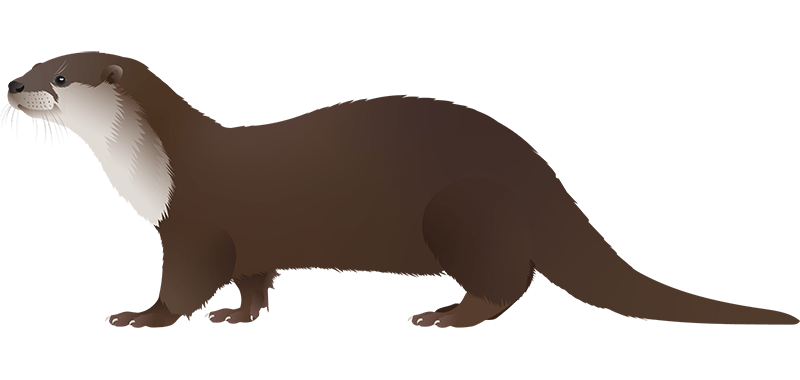
Otter: Lutra lutra

Otters are playful, semi-aquatic mammals that have made a remarkable recovery in UK rivers and wetlands in recent decades. They have thick waterproof fur, webbed feet and long muscular tails that help them swim with ease. Otters feed mainly on fish and are often most active at night, although they can occasionally be spotted during the day along quiet riverbanks.

Image

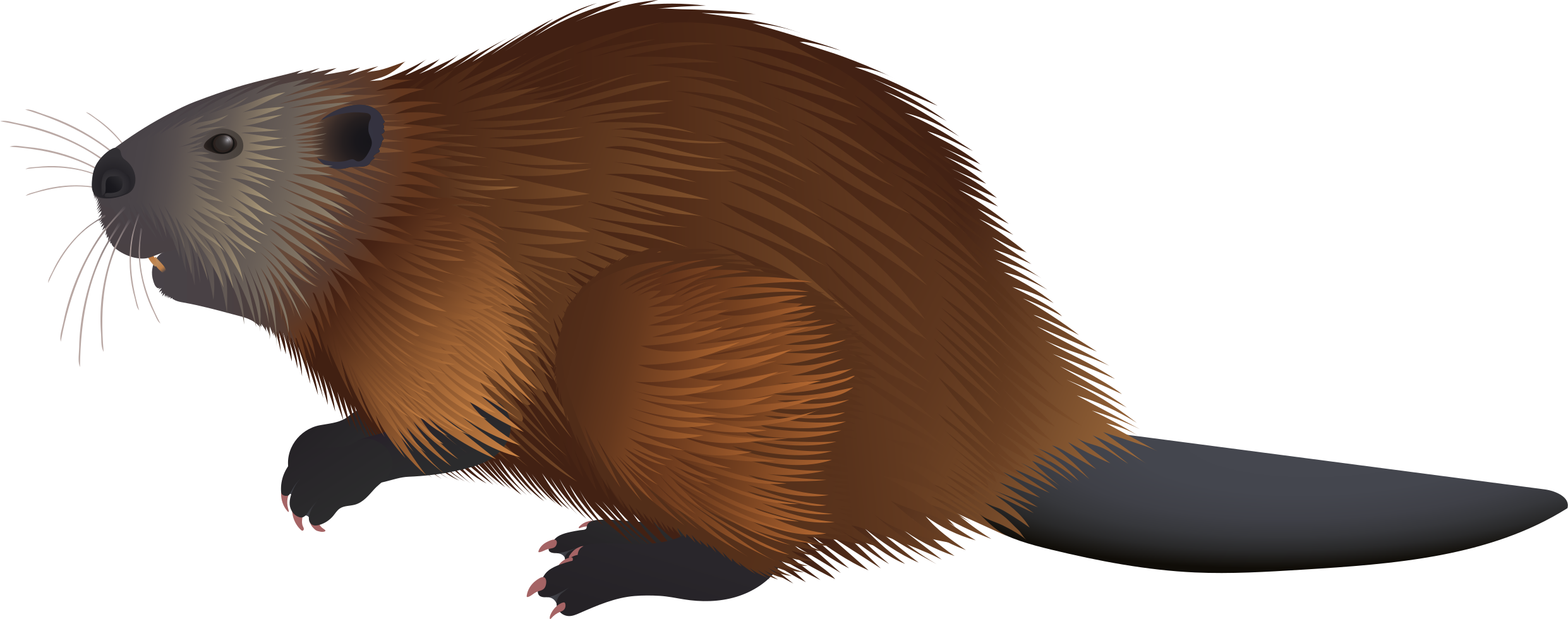
Beaver: Castor fiber

These large rodents can live for up to eight years and are an endangered species here in the UK. Beavers are fantastically efficient ecosystem engineers, as they change the landscape and restore it to the way nature intended it to be. They benefit other species by creating pools and they build dams, thereby preventing flooding.

Image

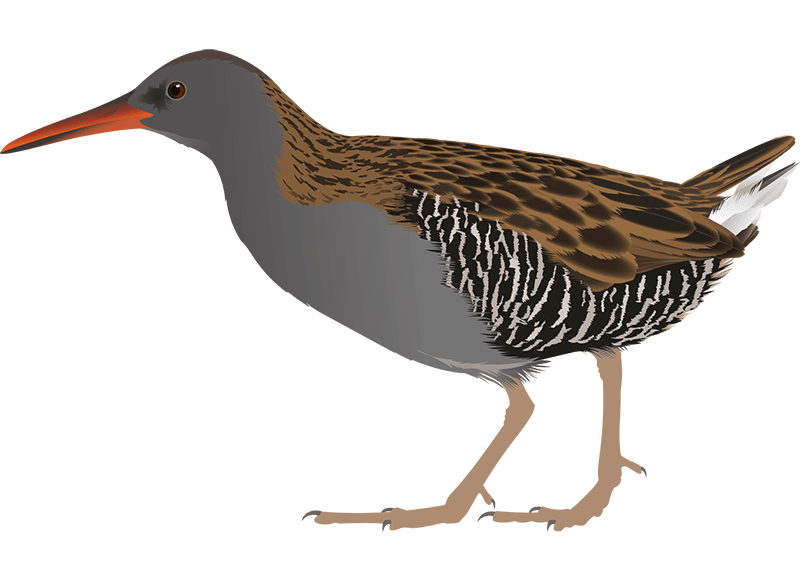
Water Rail: Rallus aquaticus

The water rail is a secretive wetland bird, more often heard than seen amongst dense reeds and marsh vegetation. It has a slender body, a long reddish bill and surprisingly loud squealing calls that echo across wetlands. Water rails feed on insects, snails and small aquatic animals, carefully picking their way through muddy edges and shallow water.

Image

Tawny Owl: Strix aluco

As you might expect, tawny owls have excellent eyesight, but they also have fantastic hearing, which makes it easier for them to catch their prey. This species can be found living in England, Wales and Scotland, usually in broadleaf woodland. The tawny owl has a ring of dark feathers around its face, surrounding dark eyes.

Image

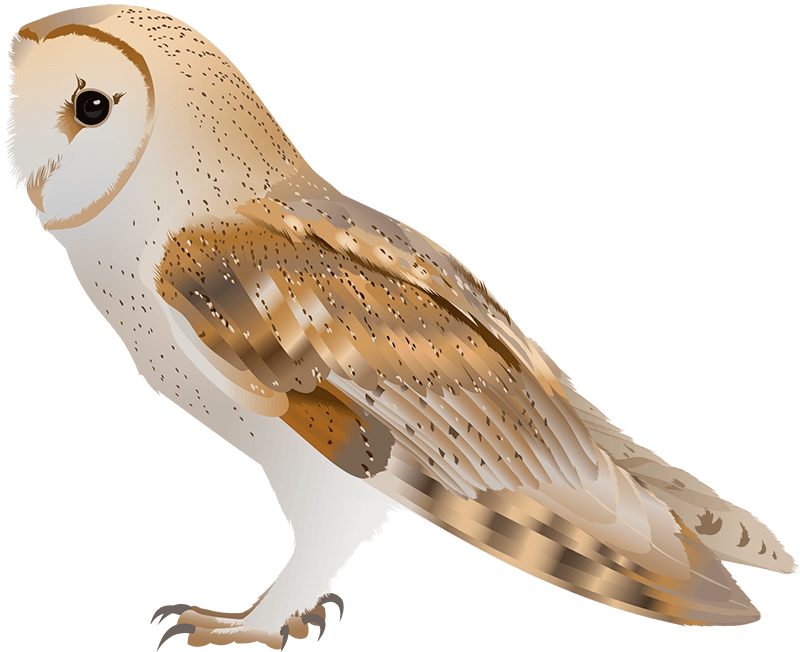
Barn Owl: Tyto alba

The barn owl is one of Britain's most distinctive birds of prey, with a heart-shaped face and pale golden feathers. It hunts mainly at dusk and during the night, flying low over grassland in search of voles and other small mammals. Thanks to its exceptional hearing, the barn owl can locate prey even beneath long grass or under a layer of snow.

Image

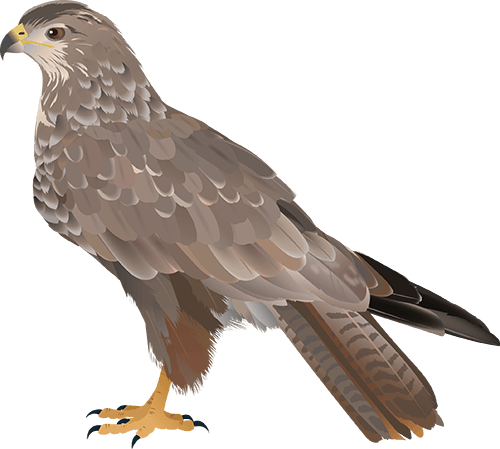
Buzzard: Buteo buteo

The common buzzard is a medium-to-large bird of prey that mostly feeds on small mammals, such as mice or voles. It is found throughout most of Europe and prefers woodlands with access to open grounds, typically residing on the edge of a forest. They're one of the most numerous raptors in Europe, with estimations of at least 700,000 pairs.

Image

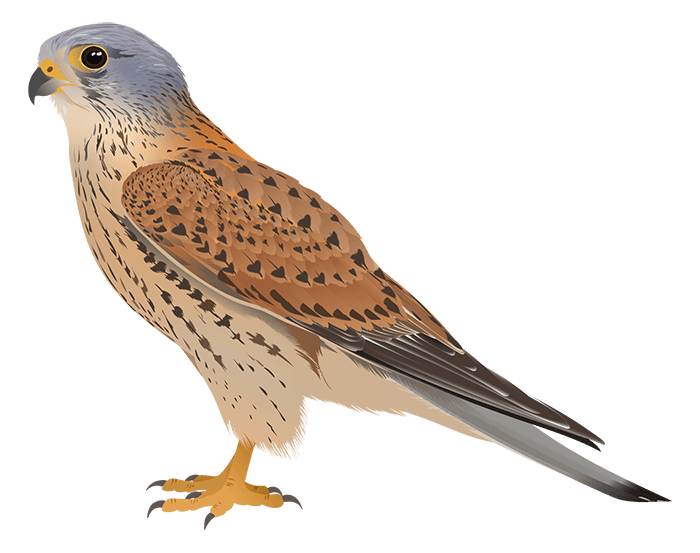
Kestrel: Falco tinnunculus

Kestrels are small falcons best known for their ability to hover almost motionless in the air while searching for prey below. They feed mainly on small mammals such as voles, along with insects and small birds. Their rusty brown plumage and sharp, piercing calls are a familiar sight and sound across farmland, roadside verges and open countryside.

Image

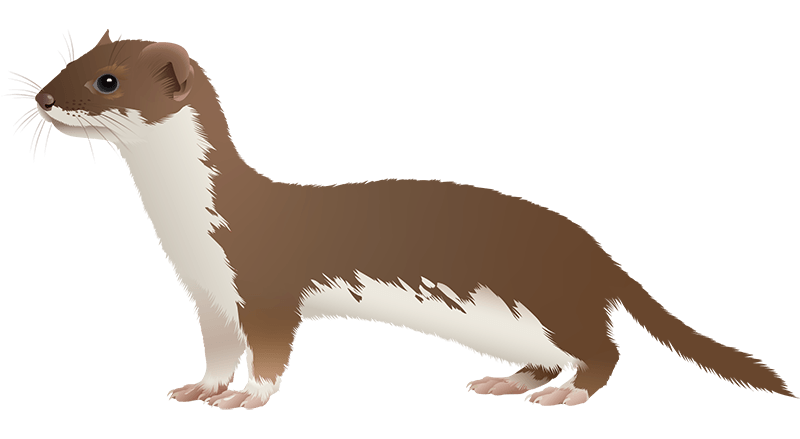
Stoat: Mustela erminea

The stoat is a fast and fearless predator with a slim body, short legs and a distinctive black-tipped tail. It hunts rabbits, rodents and birds with remarkable speed and agility, often pursuing prey into burrows. During winter, some stoats in colder parts of the UK develop a much paler coat, although they rarely turn fully white in Britain.

Image

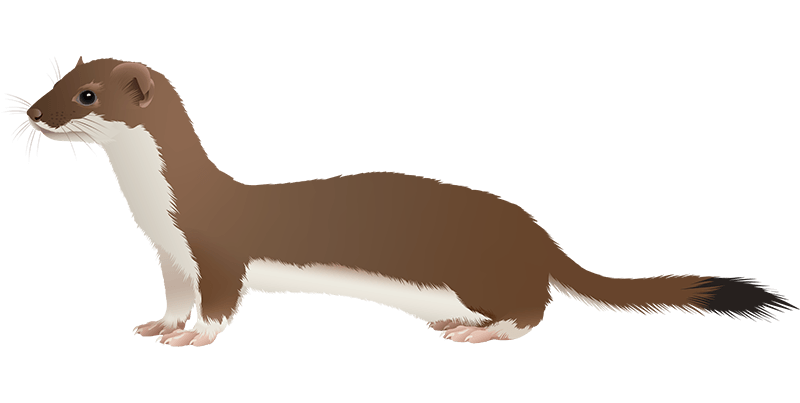
Weasel: Mustela nivalis

Weasels are the UK's smallest carnivores, but they are bold hunters capable of taking prey much larger than themselves. Their long, slender bodies allow them to chase mice and voles through narrow tunnels and thick vegetation. Weasels are quick-moving and energetic, often darting through hedgerows and grassland in search of food.

Image

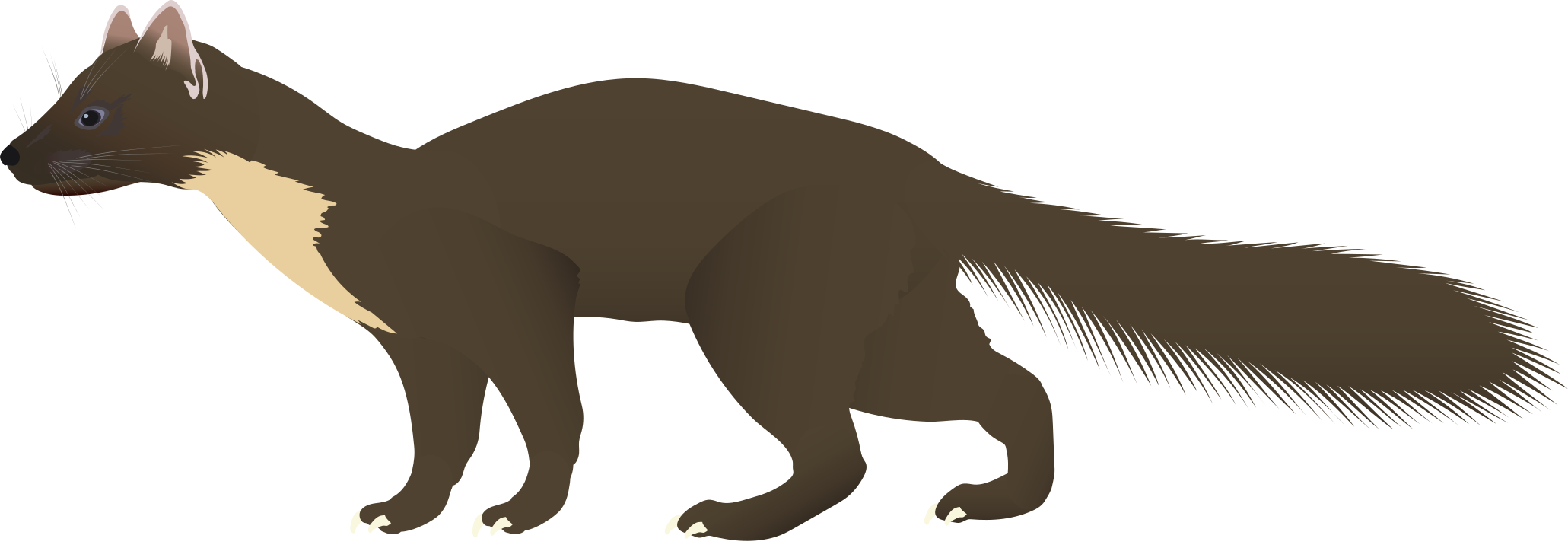
Pine Marten: Martes martes

Pine martens live in woodland habitats across Scotland and Ireland, but are on the verge of extinction in England and Wales. This elusive nocturnal hunter is tricky to spot, but if you do see one you’ll recognise it by the distinctive yellow “bib” on its otherwise rich brown fur. In 2013, an intrepid pine marten caused quite a stir when it invaded the pitch during a football match in Switzerland, biting one of the players!

Image

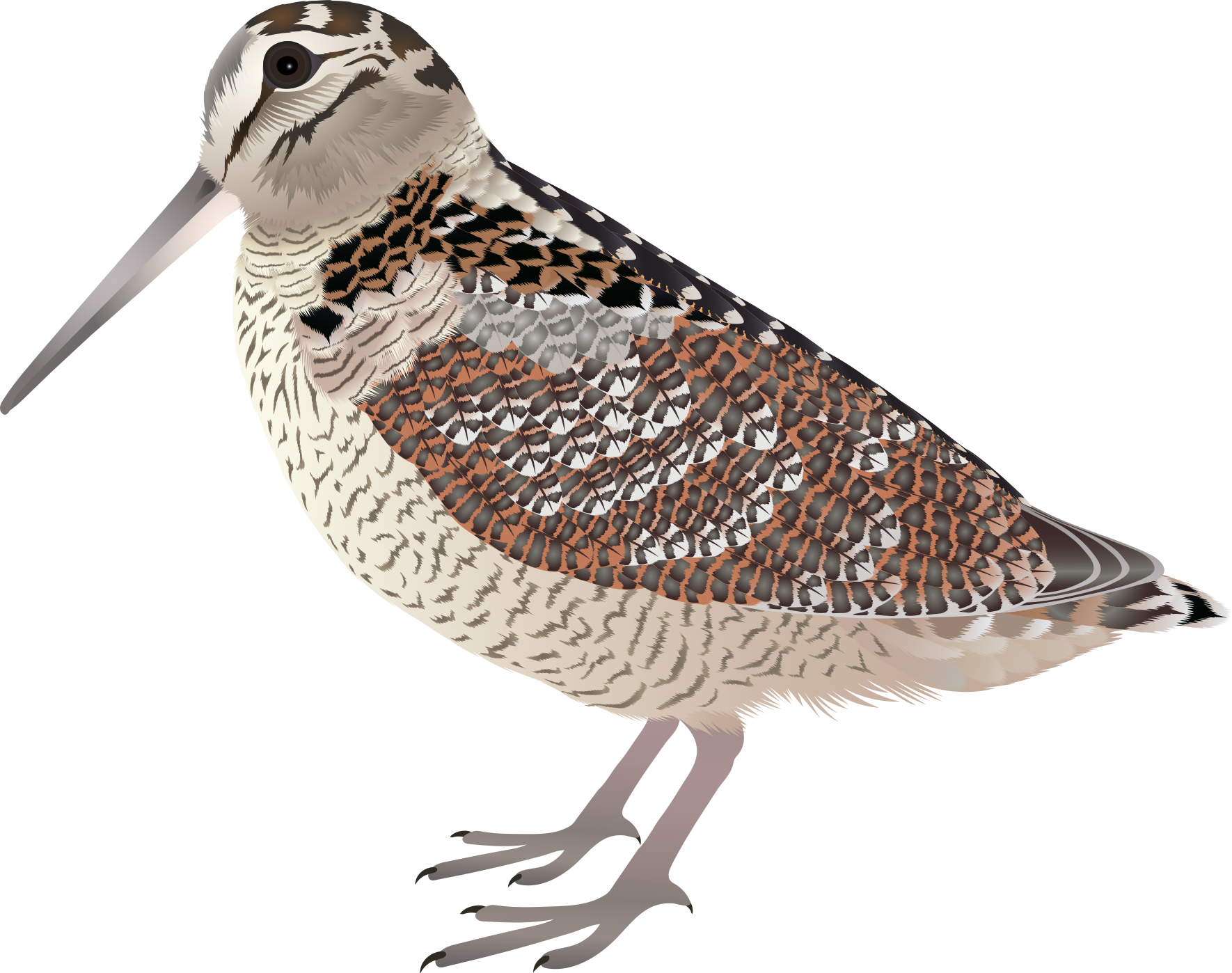
Woodcock: Scolopax rusticola

The woodcock is a large wading bird with short legs and a long, straight bill. Its feathers are mottled and brown, allowing the woodcock to blend in with the woodland floor. Woodcock feathers were used to paint the gold stripe on the side of the Rolls Royce and before that, they were popular with Victorian miniaturists who favoured them for painting on ivory.

Species geographically restricted

Image

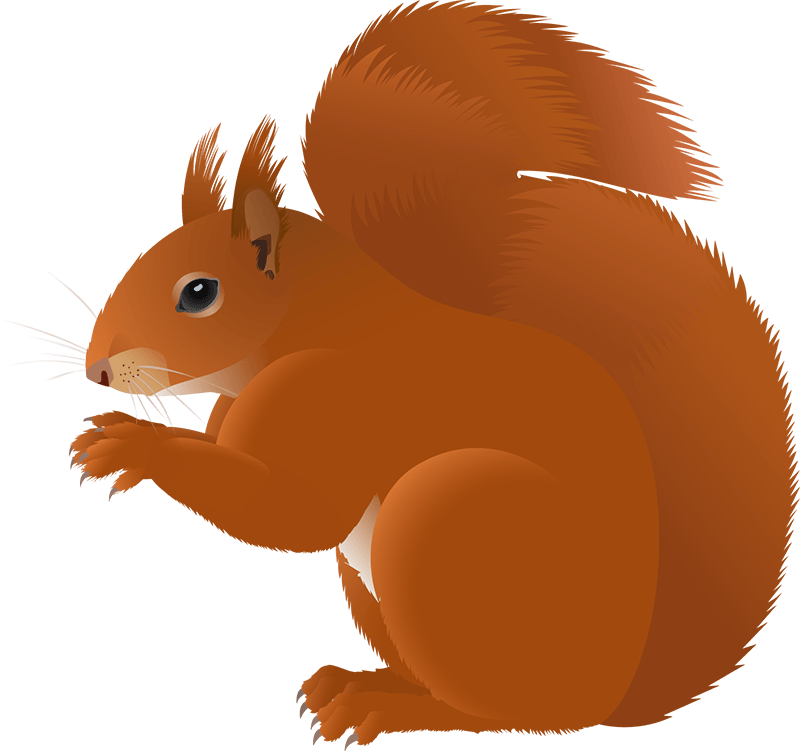
Red Squirrel: Sciurus vulgaris

Red squirrels are one of the UK's most loved native mammals, recognised by their reddish fur, pale underside and tufted ears. They spend most of their lives in trees, feeding on seeds, nuts, fungi and pine cones. Once common across Britain, red squirrels are now largely restricted to a few strongholds due to habitat loss and competition from grey squirrels.

Image

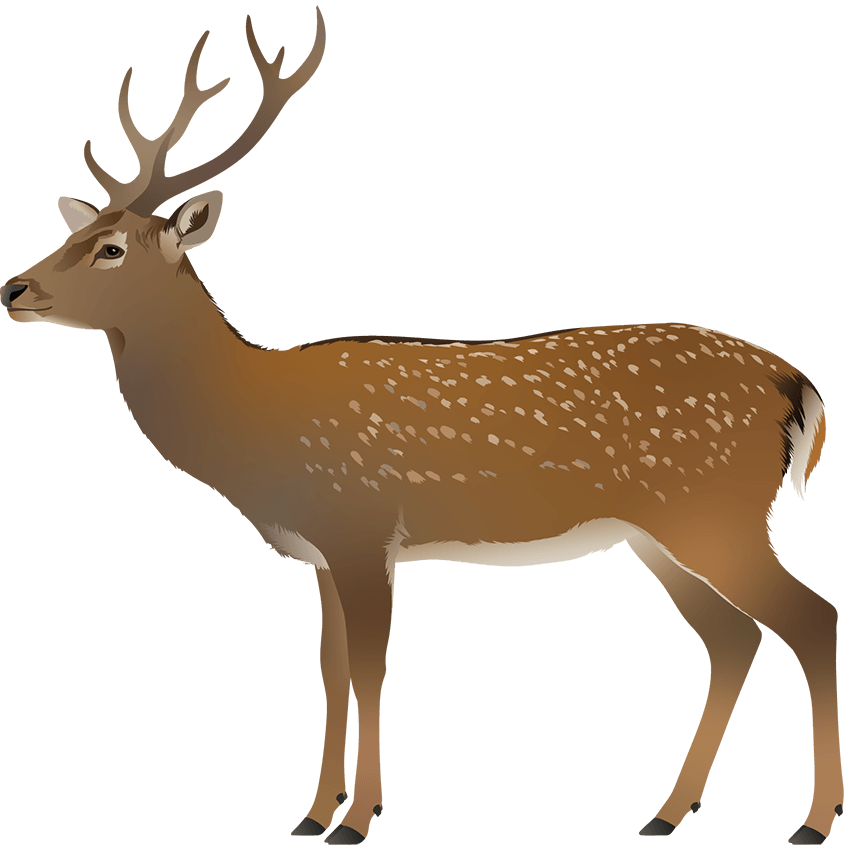
Sika Deer: Cervus nippon

Sika deer are medium-sized deer with compact bodies and distinctive spotted coats during the summer months. Originally introduced from East Asia, they are now found in parts of Scotland, northern England and a few southern areas of the UK. Sika deer are particularly vocal during the autumn rut, when males produce loud whistles and eerie calls to attract mates and defend territory.

UN Sustainable Development Goals

As a GreenTheUK partner, you support projects that are in line with the UN Sustainable Development Goals.

SDG Icon

Take urgent action to combat climate change and its impacts.

SDG Icon

Sustainably manage forests, combat desertification, halt and reverse land degradation, halt biodiversity loss.

Supported By:

supported company logo

Project Partner:

partner logo GreenTheUK logo

Join Our Mailing List...