Planting for the Future

header image

JCDecaux supported the planting of 70 climate-resilient trees in a local school in 2025-26

Project Overview

This report highlights the Trees for Schools initiative, through which climate-resilient trees have been planted at a local primary school with the generous support of JCDecaux, alongside additional schools that have benefited from their wider commitment to the project.

Each Trees for Schools workshop is carefully designed around the individual needs of the school. Before planting takes place, a consultation is carried out with staff to understand the site, the pupils’ age range, and how much green space is available. This allows us to select appropriate tree species, plan the layout of the planting, and ensure the trees will become a meaningful and long-lasting resource for both learning and the wider school community.

The programme has a strong social impact focus, prioritising schools where a higher proportion of pupils are eligible for Free School Meals, helping to ensure that access to high-quality green learning spaces and environmental education is available to those who may benefit most.

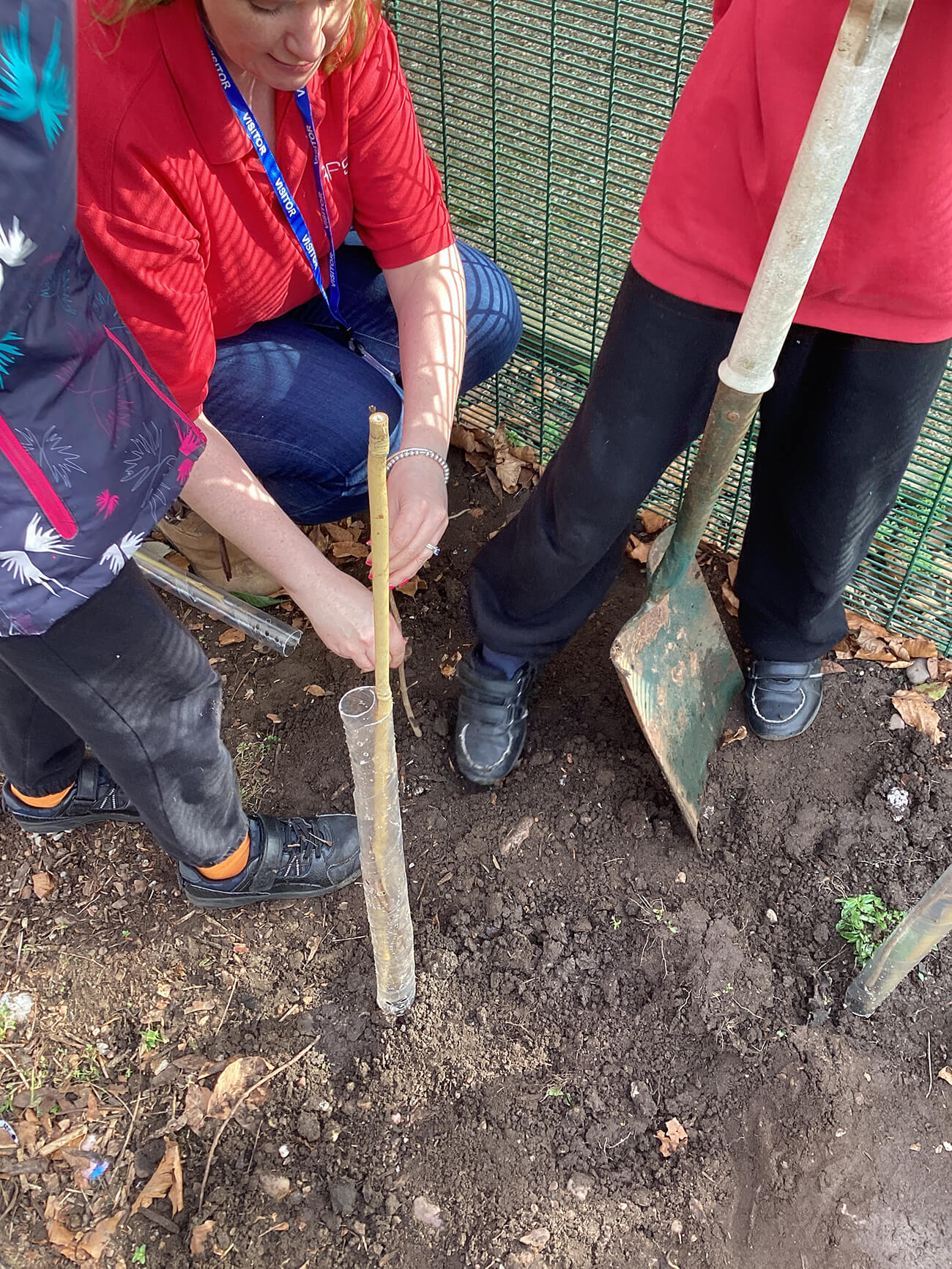
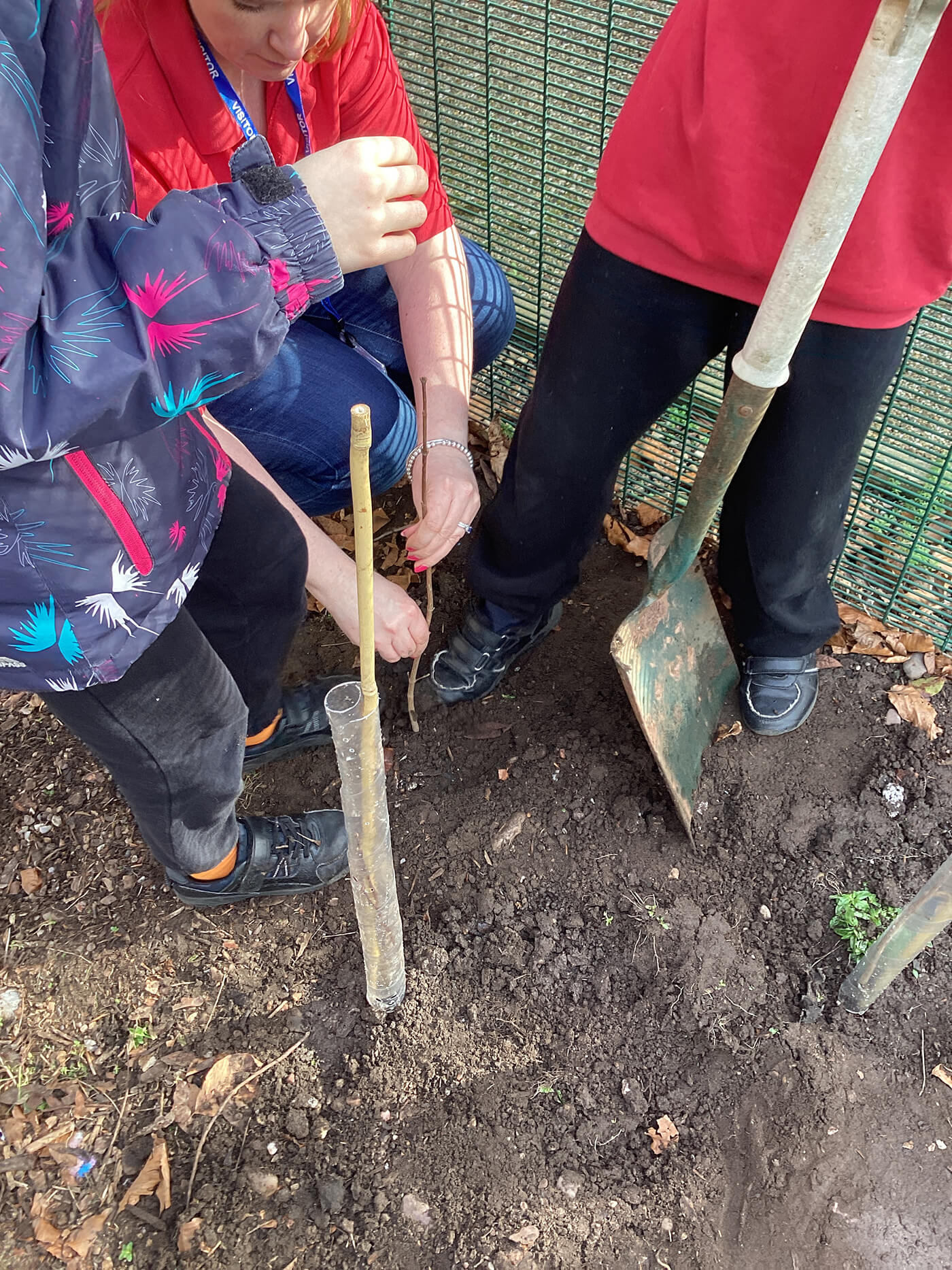
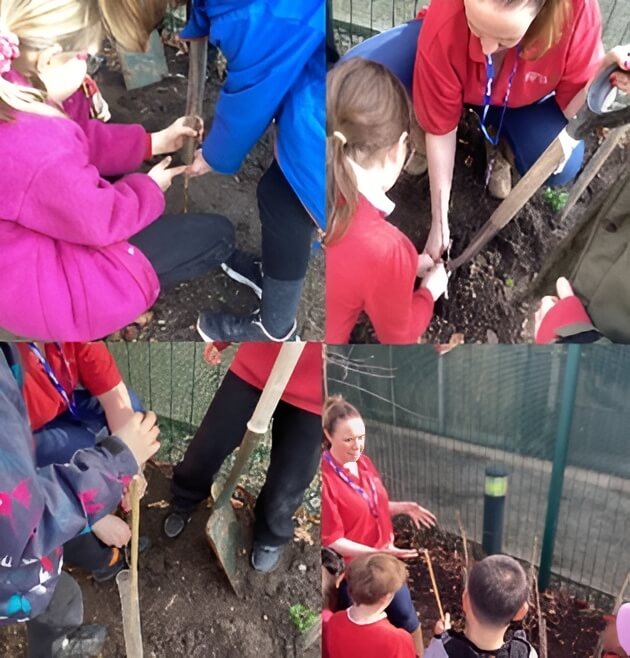
Our Education Officers lead hands-on sessions where children learn how to plant and care for trees, with activities adapted to suit different year groups. Pupils explore topics such as seasonal change, plant life cycles, forest ecosystems, animal identification, food chains and the impact of climate change. By combining practical outdoor learning with curriculum-linked themes, the project strengthens children’s connection to nature, particularly in urban environments where access to green space can be limited.

Beyond environmental education, Trees for Schools helps create greener, healthier school grounds that support wellbeing, biodiversity and climate resilience. It encourages environmental stewardship from an early age, builds practical life skills in planting and care and contributes positively to local ecosystems.


header image

Project Statistics

School Tree icon

70

Trees Planted
icon

90

Approx. Children Engaged
icon

533

Children on School Roll
icon

23.20%

Free School Meals
icon

5.49%

County Woodland Cover
icon

Testimonials

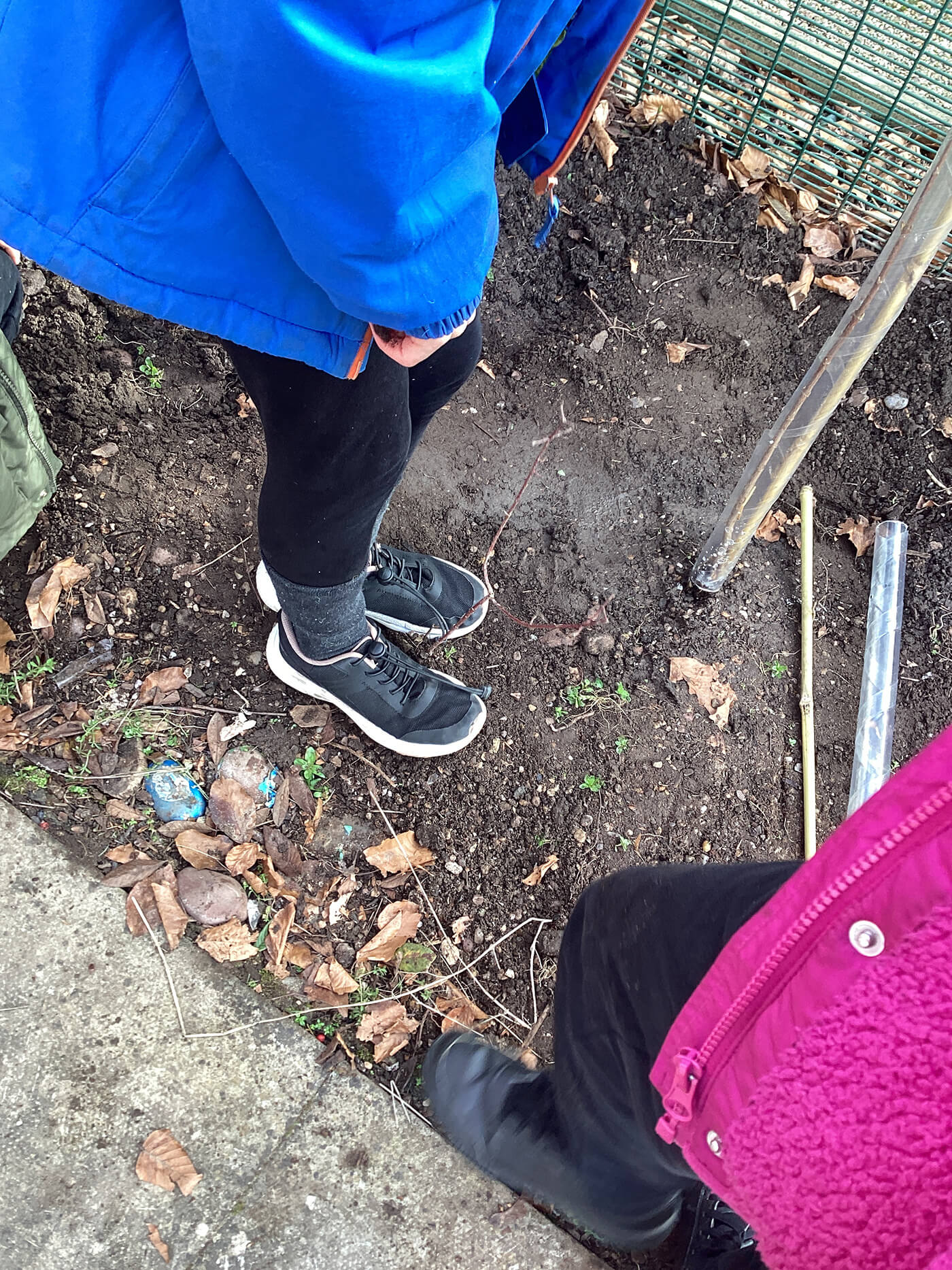
"We wanted to plant trees for more wildlife. Better privacy. Enhanced outdoor learning opportunities for pupils." - Teacher, Seely Primary "Yes the trees will affect how we use the school’s grounds, although it will take a long time for them to become established. In the long term they will be used for lessons and outdoor learning." - Teacher, Seely Primary "Many thanks. This was a wonderful opportunity for our pupils and we very much appreciate your time and resources." - Teacher, Seely Primary "Many thanks, the children LOVED planting the trees." - Teacher, Seely Primary "YES! I liked planting the trees" - Student, Seely Primary "I enjoyed taking the dirt out (digging)." - Student, Seely Primary "I liked planting the sticks to hold the trees." - Student, Seely Primary "I enjoyed putting the plastic tube on." - Student, Seely Primary "Yes, I learned how to plant a tree." - Student, Seely Primary "I learned that you use bamboo, I thought you’d use a twig." - Student, Seely Primary "We will have more oxygen because of the trees." - Student, Seely Primary "Eco warriors used to plant trees because they’re good for the environment." - Student, Seely Primary "There will be more nature." - Student, Seely Primary "Before there was just dirt and no trees, now it’s better." - Student, Seely Primary "We had a fantastic day planting. Little hands, big impact!" - Education Officer

Planting for the Next Generation

Seely Primary School is a welcoming school at the heart of its community, where high expectations and a strong sense of care underpin everything it does. The dedicated staff team is committed to supporting all pupils to achieve their best, with the aim that children leave as confident, healthy global citizens equipped with the knowledge, skills and ambition for the future.

The school is proud of its inclusive culture and celebrates diversity, ensuring that all pupils and families feel a strong sense of identity, belonging and respect. This commitment is reflected in its achievement of the Rainbow Flag Award and the Equality, Diversity and Inclusion Quality Mark.

Guided by values closely aligned with British Values, Seely Primary fosters positive behaviour, mutual respect and a shared understanding of what it means to be part of a caring and inclusive school community.

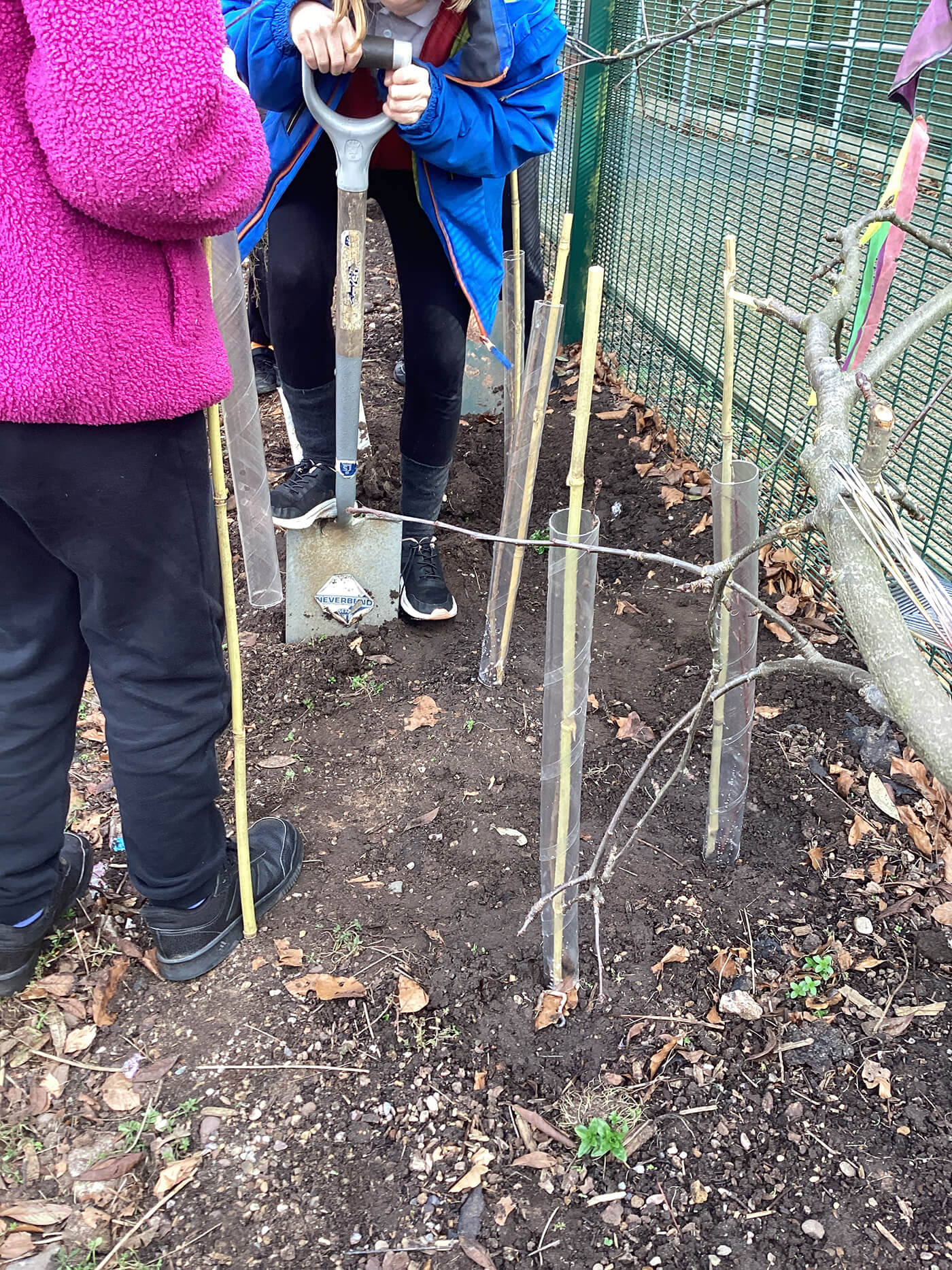
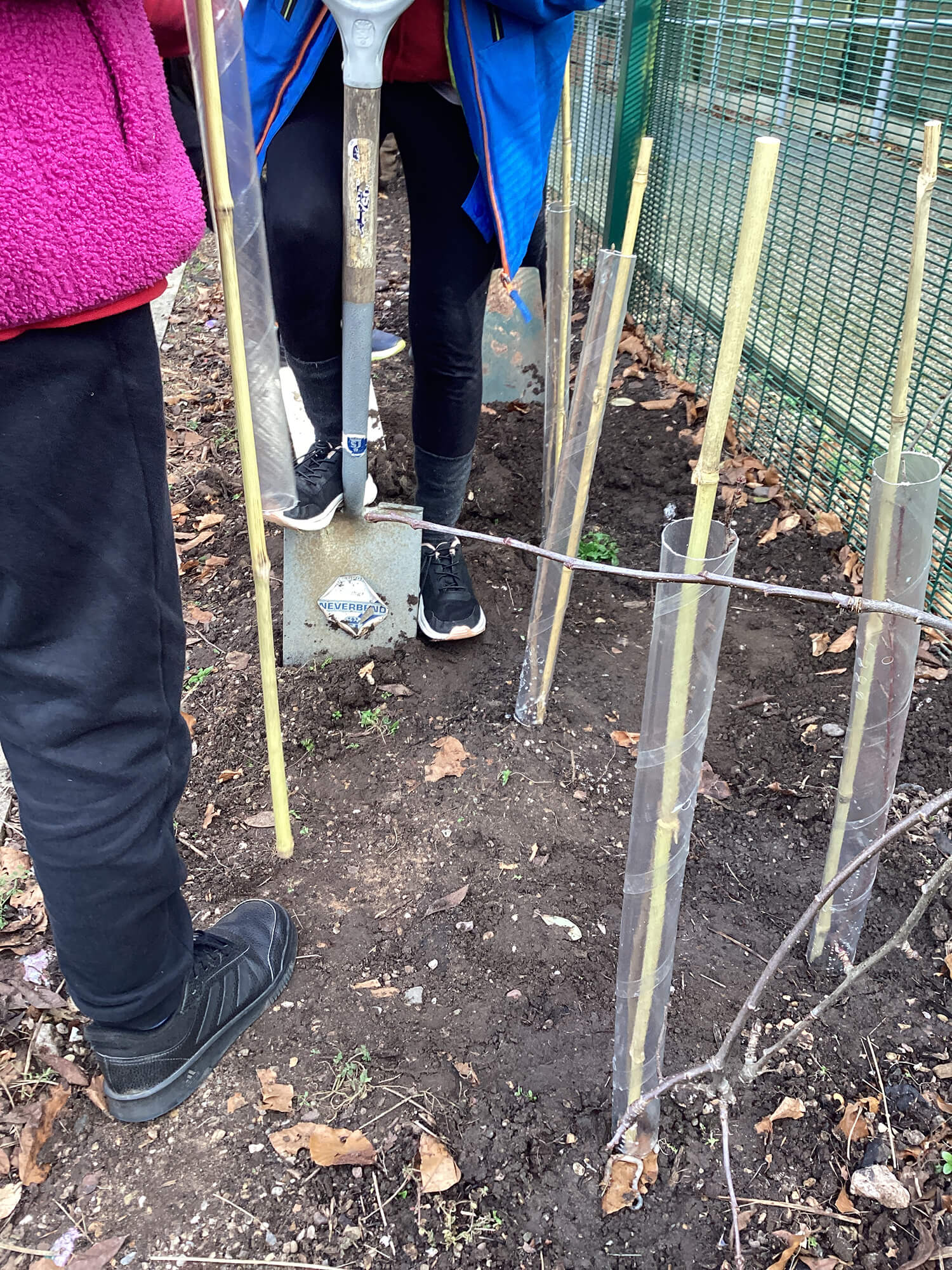
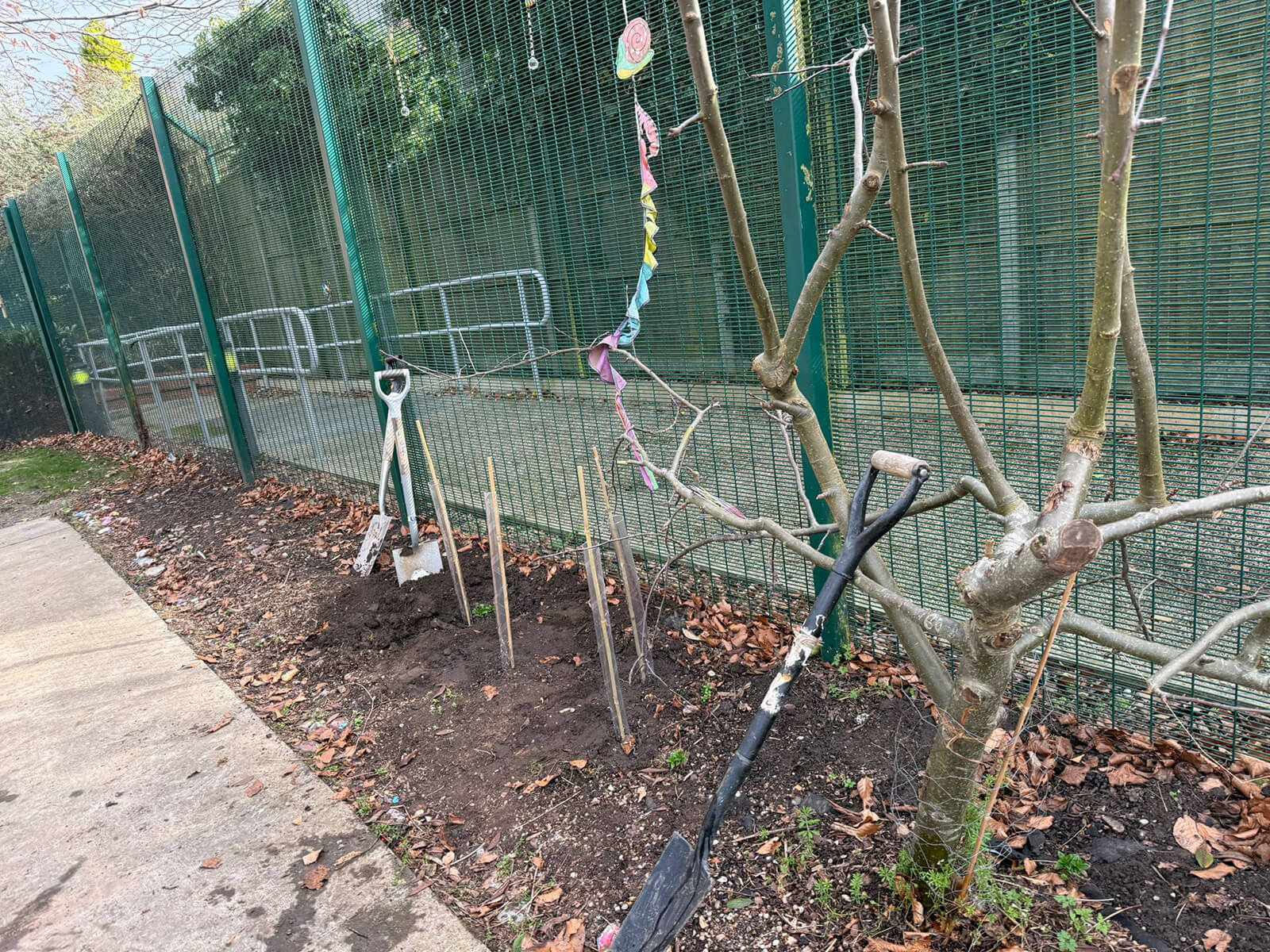
A mixed-species hedge was planted along the boundary of a new area being developed for outdoor learning. Following an existing fence, the new row of trees will provide both habitat and a corridor for wildlife, as well as help enhance the space for pupils. As most of the school grounds are tarmac, concrete, and fake grass, any addition of natural greenery is enthusiastically welcomed.

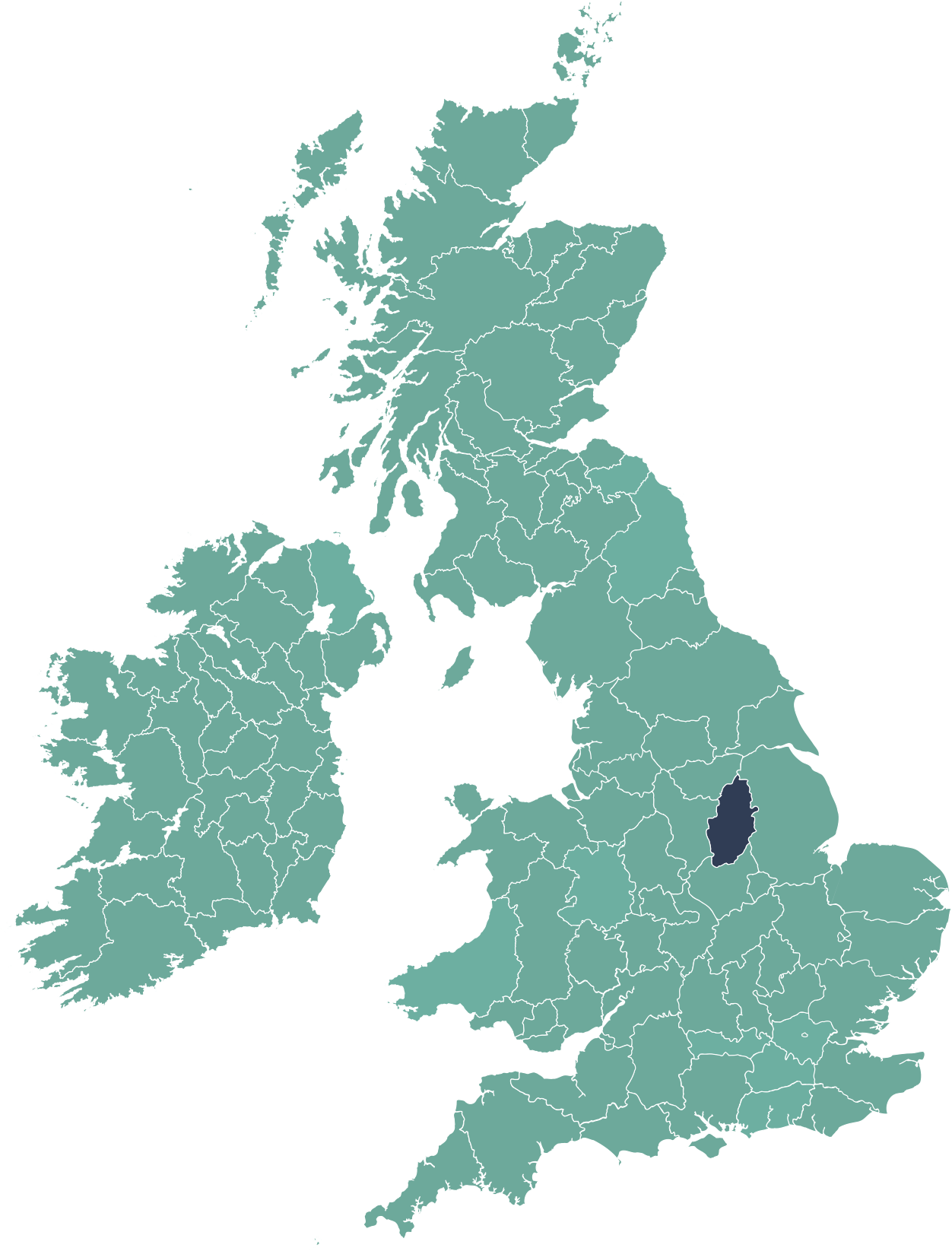
Map
Education Officer - Alice Parker

Meet Our Education Officer

Alice

Alice is an experienced primary school teacher and forest school leader with a passion for getting children out into forests and learning about them.

Tree Species Planted:

70 trees planted in Nottinghamshire

Tree Leaf
10 Trees Planted

Dogwood: Cornus sanguinea

Read More

Dogwood: Cornus sanguinea

This hardy, deciduous shrub is commonly found in hedgerows and woodland edges across Britain. In late spring to early summer, it produces clusters of small creamy-white flowers that attract a wide range of pollinators. These are followed by dark berries in autumn, which provide an important food source for birds. Dogwood offers dense cover for nesting and sheltering wildlife, while its leaves support a variety of insect species.

Tree Leaf
10 Trees Planted

Elder: Sambucus nigra

Read More

Elder: Sambucus nigra

Elder trees can be found growing all over the UK, often near rabbit warrens and the homes of other woodland creatures who spread the seeds through their droppings. Our ancestors in the Middle Ages believed that planting elder trees near their houses would ward off the Devil, and elder leaves were thrown into graves at funerals to protect the dead from evil spirits. Although poisonous when raw, elderberries can be cooked and made into syrup or jam, while elderflowers make the perfect refreshing summer cordial.

Tree Leaf
10 Trees Planted

Field Maple: Acer campestre

Read More

Field Maple: Acer campestre

This species is the UK’s only native maple and is often grown as an ornamental tree in large gardens and parks, as well as in woods and hedgerows. Its wood is white, hard and strong, and is popular for making furniture, flooring and musical instruments, especially harps. Field maple flowers are hermaphrodite, meaning each flower contains both male and female reproductive parts.

Tree Leaf
20 Trees Planted

Hawthorn: Crataegus monogyna

Read More

Hawthorn: Crataegus monogyna

Hawthorn is very much associated with the month of May, and the appearance of its bright, white flowers heralds the change from spring to summer. It is prolific in hedgerows, scrub and woodland throughout the UK and Ireland, and a single tree can grow as tall as 10m. In pagan times, hawthorn was a symbol of marriage and fertility, but in the Middle Ages, it was never brought into homes, as people believed it was a harbinger of illness and death.

Tree Leaf
20 Trees Planted

Hornbeam: Carpinus betulus

Read More

Hornbeam: Carpinus betulus

The hornbeam is extremely tough and keeps its leaves all year round, making it an attractive proposition for birds, insects and other animals. Hornbeam wood is very hard, in fact it is also known as “ironwood” and the Romans recognised its durability, using it to make their chariots. Nowadays, this timber is used for tool handles, coach wheels, parquet flooring and chess pieces!

Supported By:

supported company logo

Project Partner:

partner logo GreenTheUK logo

UN Sustainable Development Goals

As a GreenTheUK partner, you support projects that are in line with the UN Sustainable Development Goals.

SDG Icon

Take urgent action to combat climate change and its impacts.

SDG Icon

Sustainably manage forests, combat desertification, halt and reverse land degradation, halt biodiversity loss.

Join Our Mailing List...