Planting for the Future

header image

Simple Life Homes supported the planting of 90 climate-resilient trees in a local school in 2025

Project Overview

The Trees for Schools project brings climate-resilient tree planting and high-quality outdoor learning directly into school grounds across the UK. Thanks to the support of Simple Life Homes, pupils at a local primary school have taken part in a planting workshop that will leave a legacy on their school grounds for decades to come. In total, Simple Life Homes has now supported tree planting in 4 schools, helping to expand green space, provide cleaner air in playgrounds, improve biodiversity and inspire the next generation of environmental stewards. This project is delivered in partnership with GreenTheUK and the Royal Forestry Society (RFS).

Every Trees for Schools workshop is designed specifically for the needs of each school. Before planting begins, the Royal Forestry Society (RFS) Education Officers meet with teachers to understand the school’s goals, existing green space, soil and site conditions, and long-term plans for the grounds. This ensures that the chosen species are well-suited to the location, resilient to future climate pressures and valuable as a learning resource. The planting layout is mapped in advance, creating a purposeful design that will support wildlife, shade, shelter, outdoor education and reduce particulate air pollution.

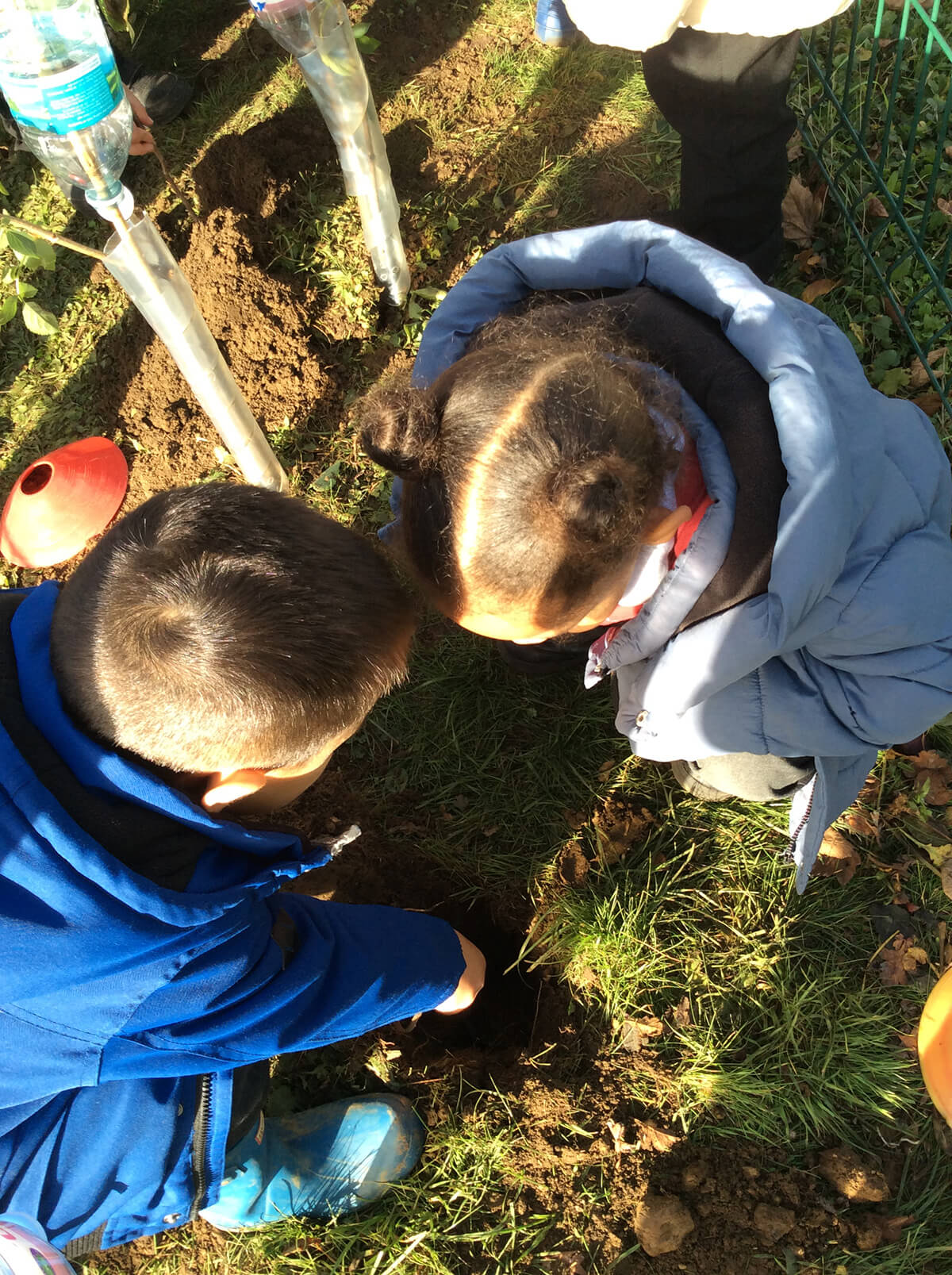
On the day of planting, pupils learn directly from experienced Education Officers, who tailor sessions to the children’s age and interests. Activities may include exploring seasonal changes, understanding seeds and life cycles, identifying trees and animals, studying food chains and predators, and learning how forests help tackle climate change. The programme works with – and extends beyond – the curriculum, improving access to nature for children who may have limited opportunities to spend time outdoors. In urban areas especially, these workshops help break down barriers to nature connection and foster curiosity, confidence and wellbeing.

Through this project, young people learn why trees matter: their role in supporting local wildlife, improving air quality, capturing carbon and creating resilient habitats. At the same time, schools benefit from enhanced green spaces that support outdoor learning and provide calming, restorative environments for pupils and staff. National surveys show that over three-quarters of children want more time in nature, yet many families face accessibility barriers. With public support growing for a legal right to live within 15 minutes of nature, initiatives like Trees for Schools are more important than ever.

By supporting this programme with RFS and GreenTheUK, Simple Life Homes is helping to equip children with environmental understanding while transforming school grounds into nature-rich places for communities to enjoy.


header image

Project Statistics

School Tree icon

90

Trees Planted
icon

180

Approx. Children Engaged
icon

177

Children on School Roll
icon

19.80%

Free School Meals
icon

9.80%

County Woodland Cover
icon

Testimonials

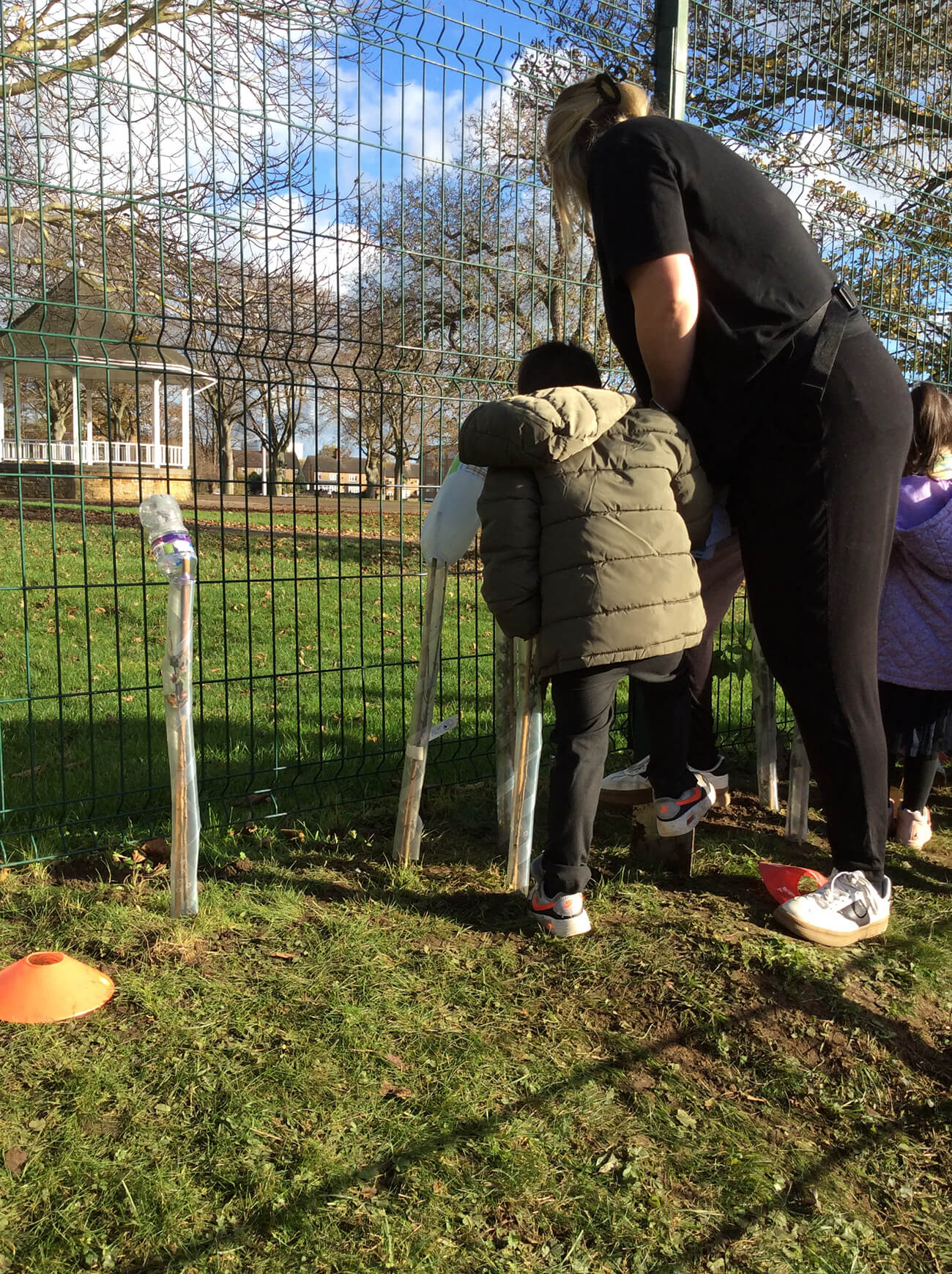
"We wanted to make the school look nicer and to give students some privacy from the park. Thank you for a lovely day. The children got a lot out of the experience. I heard lots of positive comments from the children and staff throughout the day. It was also lovely seeing children at the end of the day showing their parents which tree they planted. - Teacher Did you enjoy planting the trees? What did you enjoy most? I enjoyed digging a hole. - Student I liked it when I put the tree in. - Student I think it is good that we have more trees and I like I can say I planted that tree. - Student Did you learn anything new? I learned the names of some trees. - Student I didn’t know that I had to wrap the tree up. - Student We learned that trees are very important and they give you oxygen. - Student How do you think having the trees living here will change the school grounds? It will make the school grounds look better and the trees will help the planet. - Student It will look beautiful and give us some privacy. - Student The whole school, from Reception to Year 2, came out to plant. Even though it was very cold, the ground was sloping and hard to dig, and they were very little, they showed great resilience and determination! - Education Officer"
Planting for the Next Generation

St Barnabas Church of England School teaches students from age 5-7. The school prides itself on its inclusive, nurturing approach to education and aims to promote a supportive environment for students. Student's education expands beyond the classroom, with pupils visiting local parks, shops, churches and businesses to enrich their learning and understanding, whilst engaging with the community.

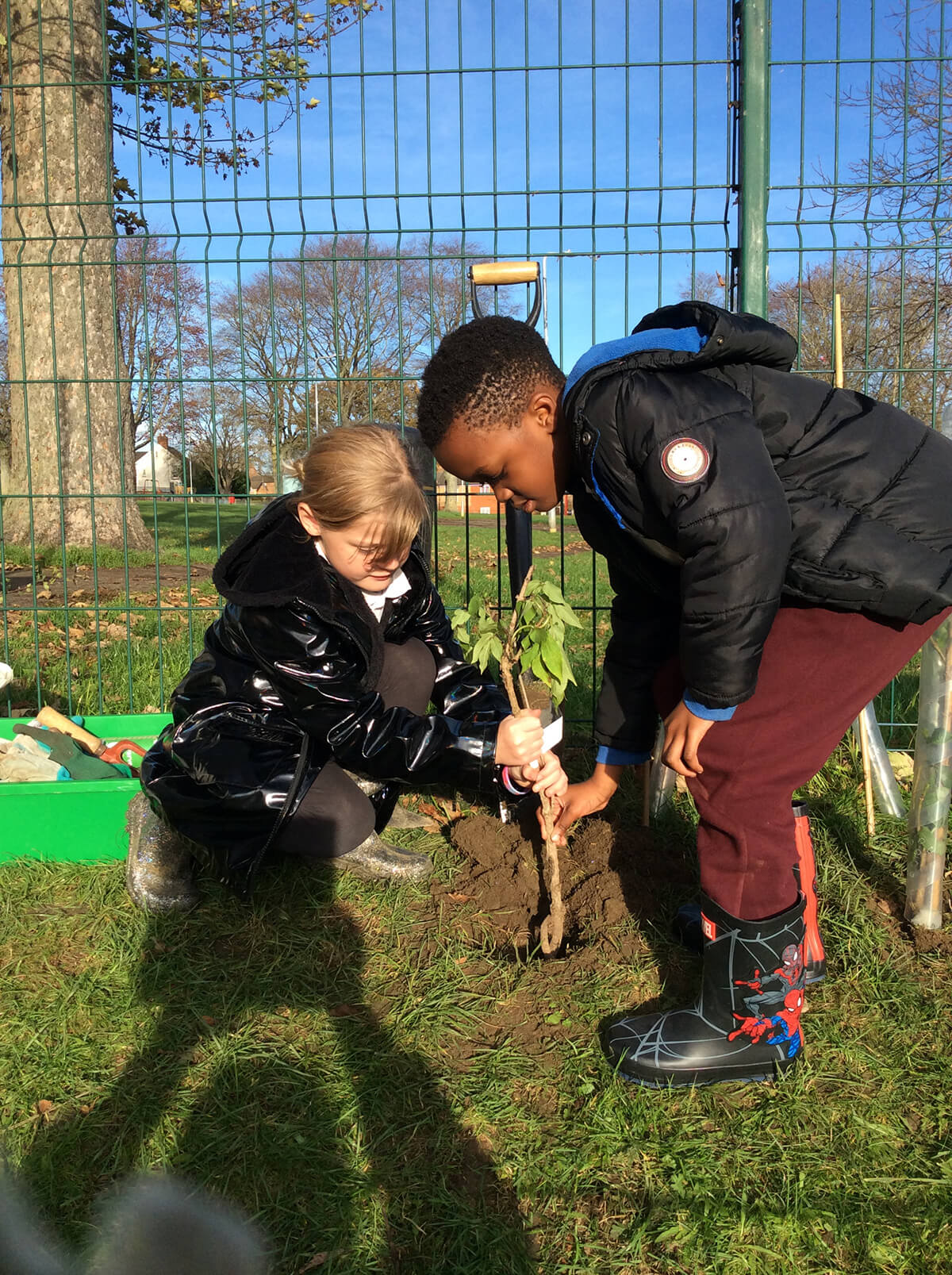
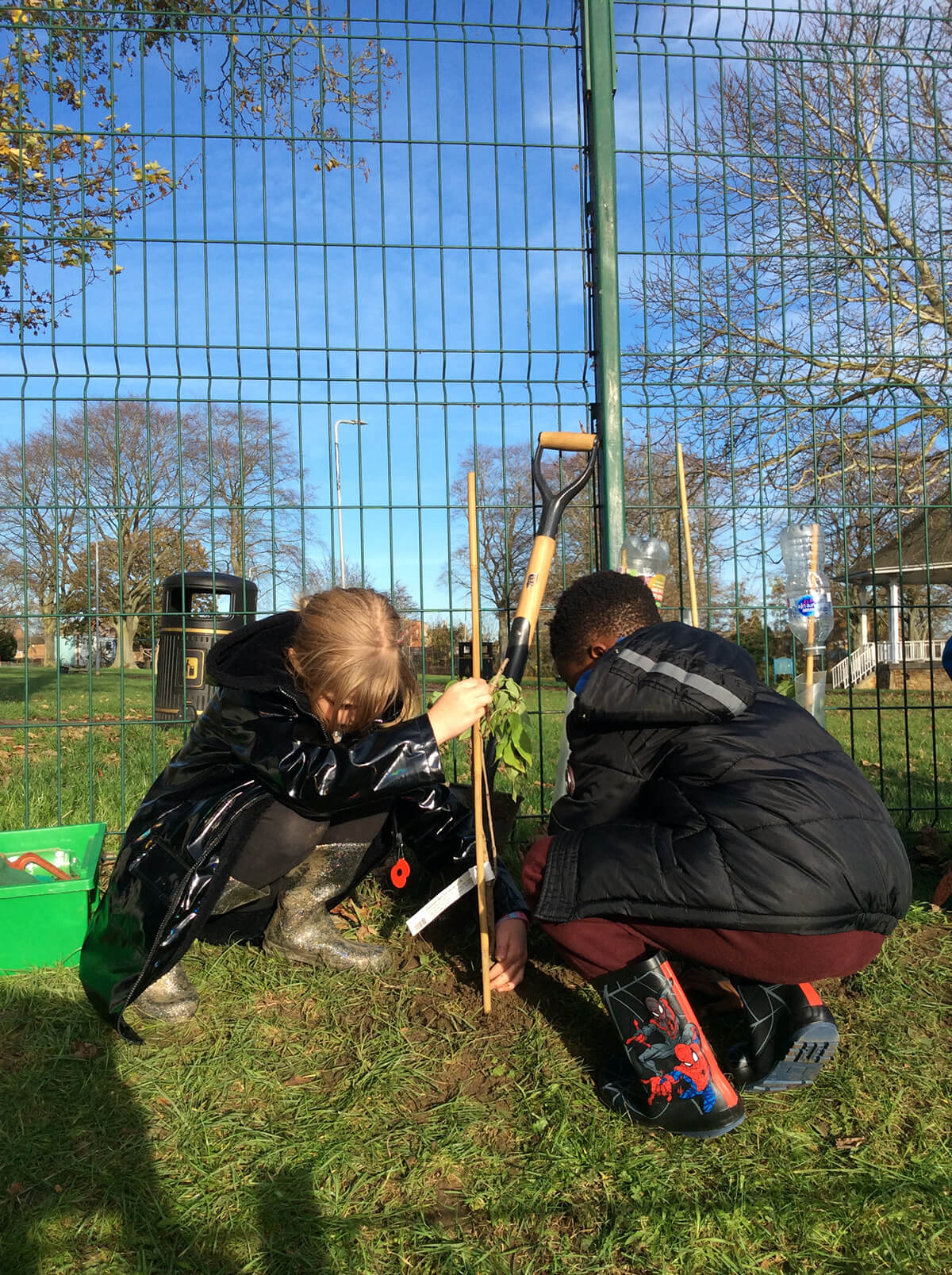
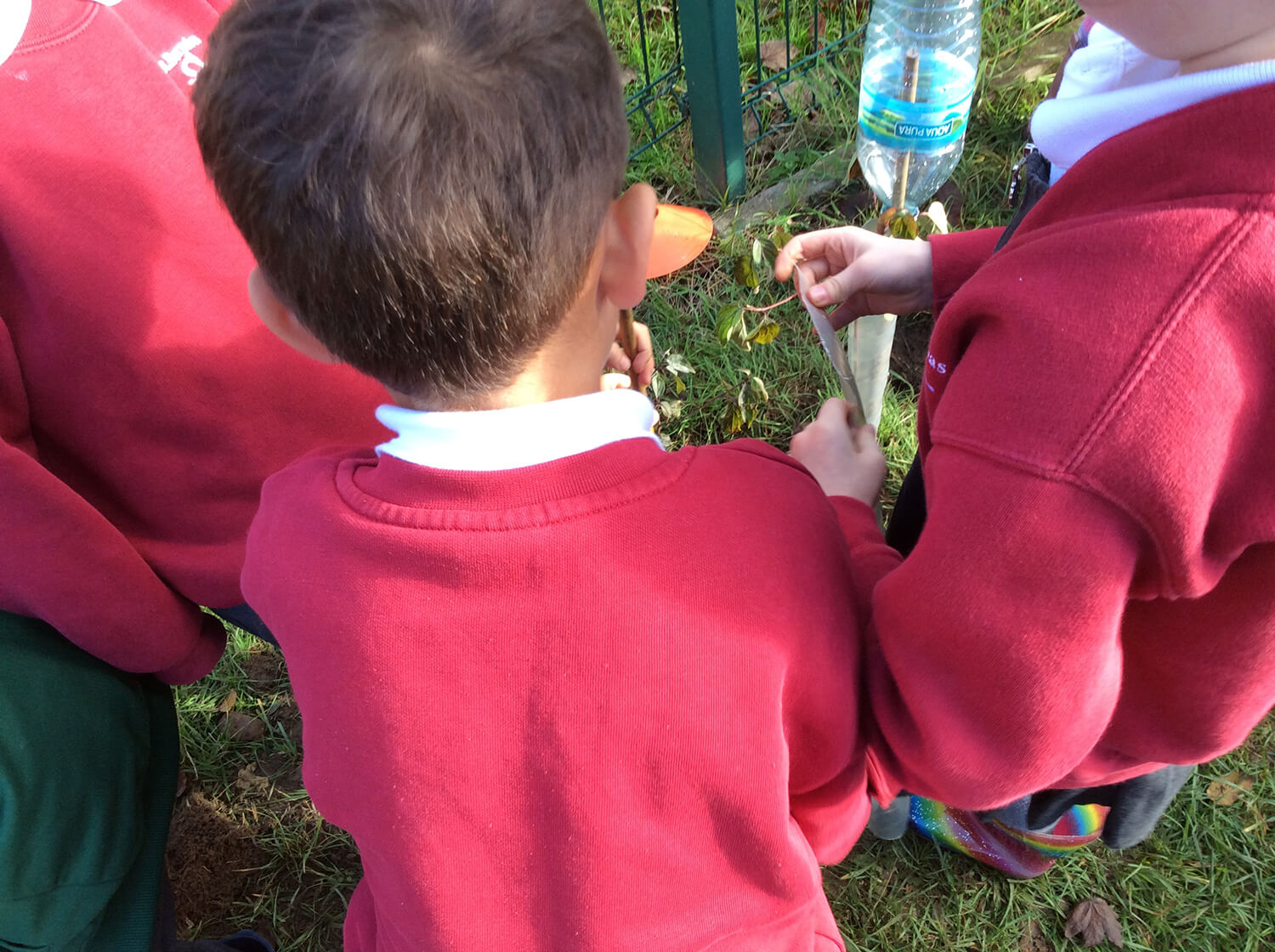
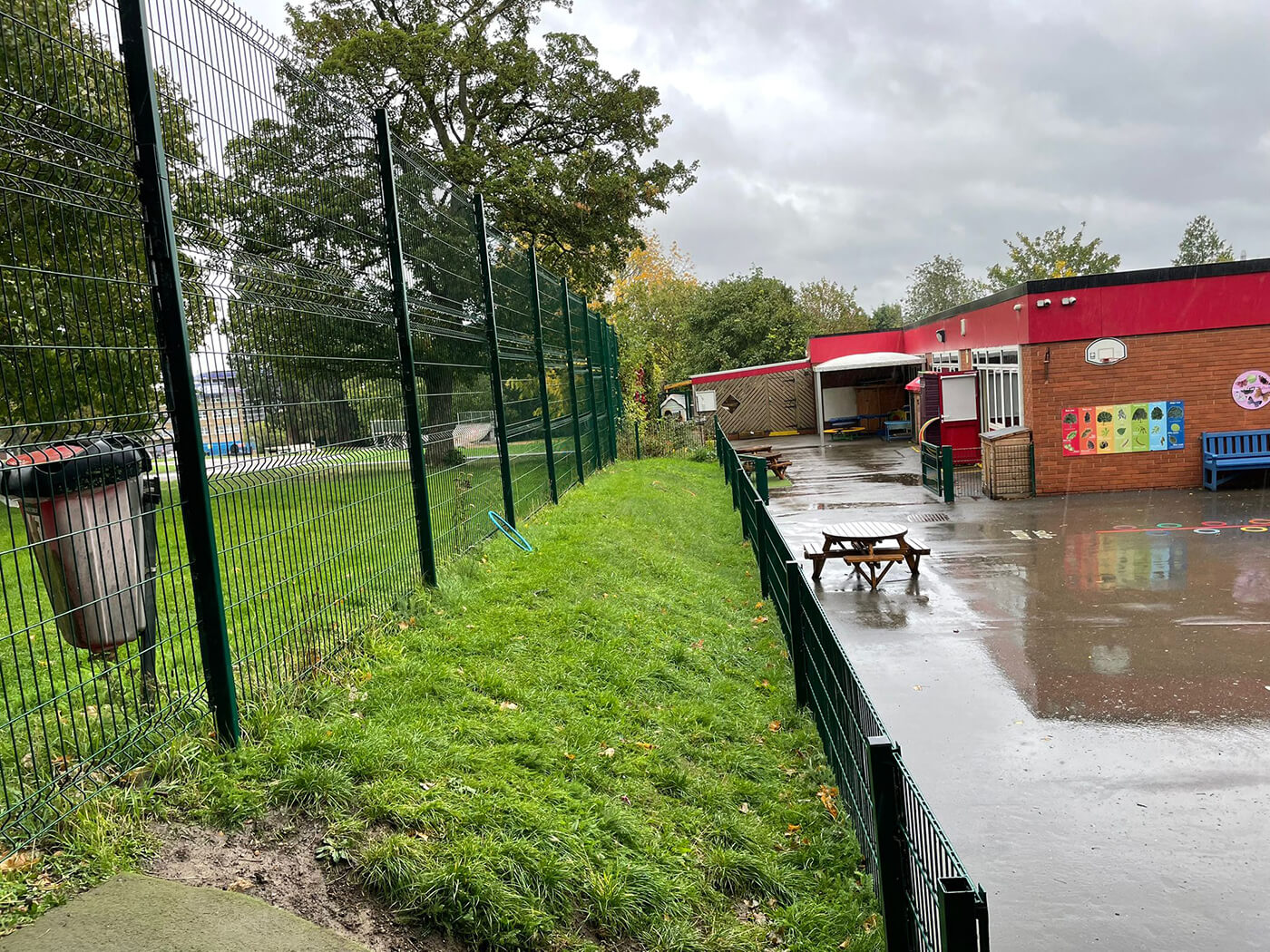
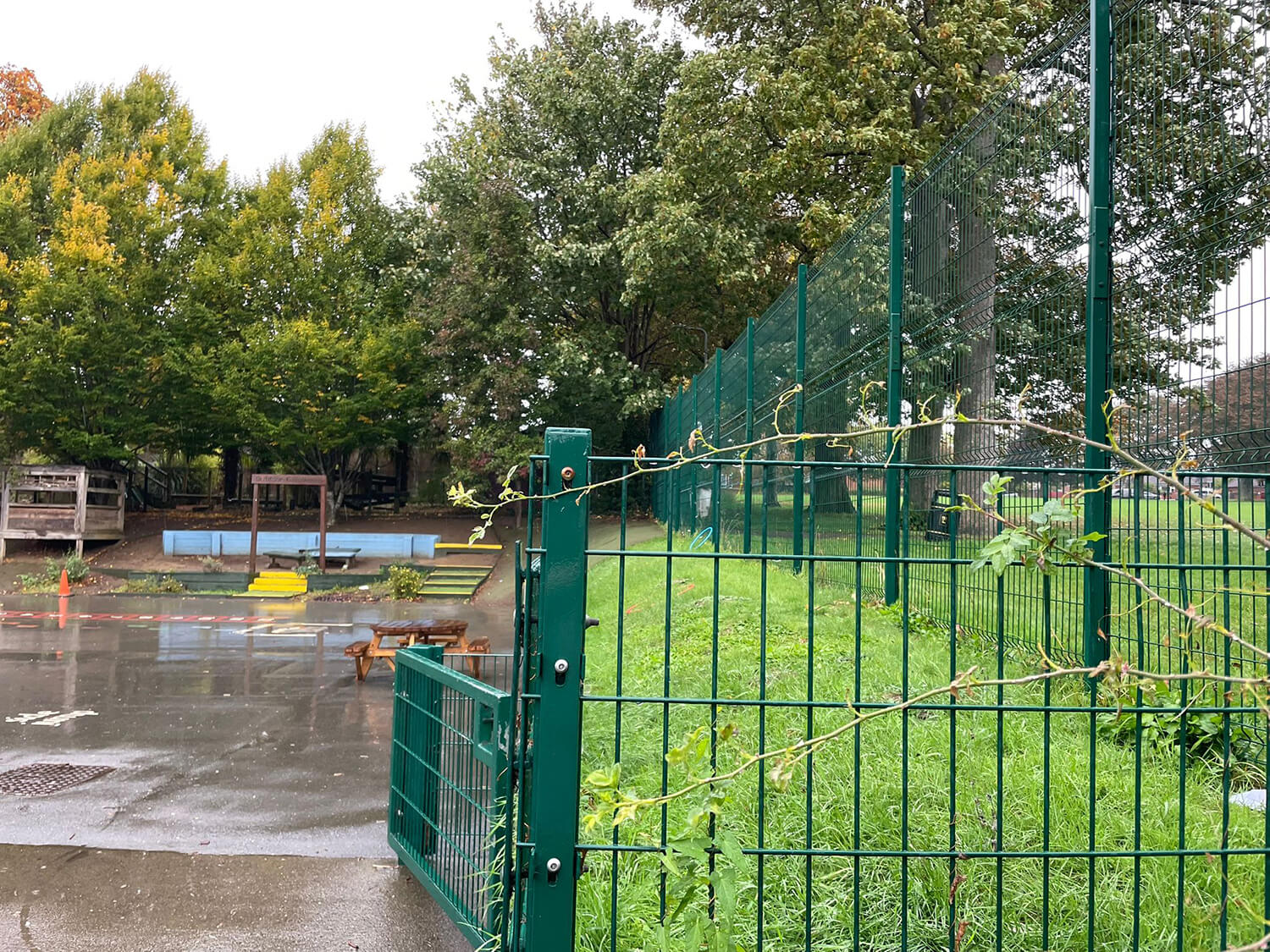
A mixed-species hedge was planted along the playground fence to give students more privacy from the neighbouring public park. The new planting also visually enhances the area, creating a greener, more inviting environment for the children. In addition, the hedge provides a valuable corridor for wildlife, attracting birds, insects and other species, while offering students the chance to engage with nature as part of their outdoor learning. Pupils enjoyed planting the trees, digging in the soil, and taking pride in the knowledge that they contributed to a lasting improvement in their school grounds.

Map
Jemma

Meet Our Education Officer

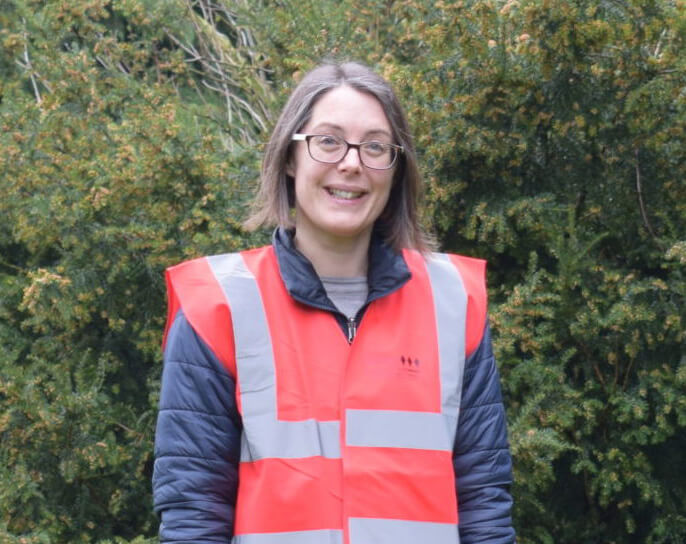
Jemma

Jemma has been a primary school teacher for 14 years and worked in environmental education for 6 years prior to that. She has a degree in Ecology and a lifelong interest in the natural world.

She says: “I love seeing children enthused about the living things they find when exploring outdoors. That sense of wonder and curiosity is magical! I firmly believe that encouraging widespread learning about the species and habitats we share the world with is vital to conserving them and managing them wisely. As an experienced teacher, I also know that learning outdoors benefits children directly, with great potential to boost interest, enjoyment and self-esteem.”

Tree Species Planted:

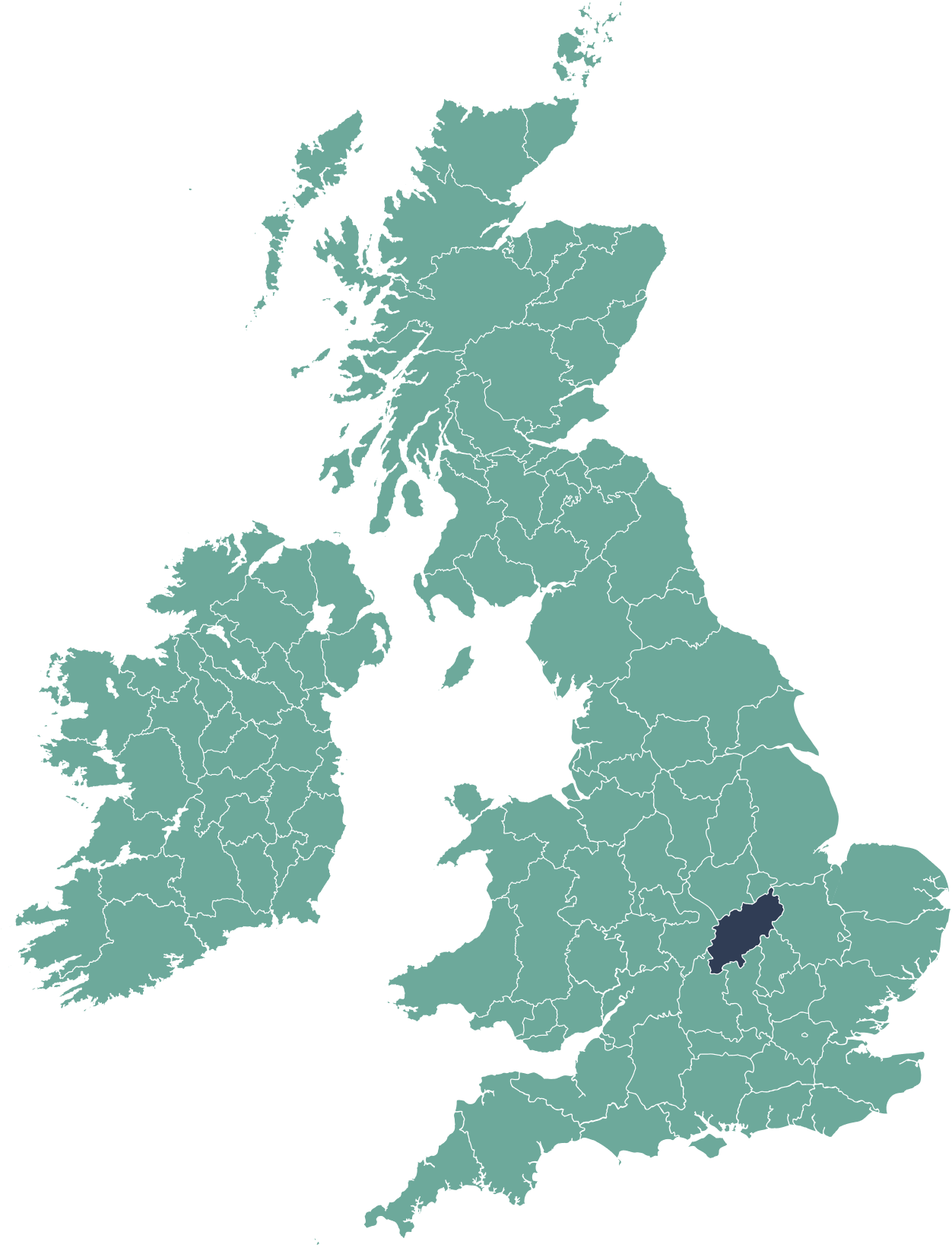
90 Trees planted in Northants

Tree Leaf
30 Trees Planted

Hawthorn: Crataegus Monogyna

Read More

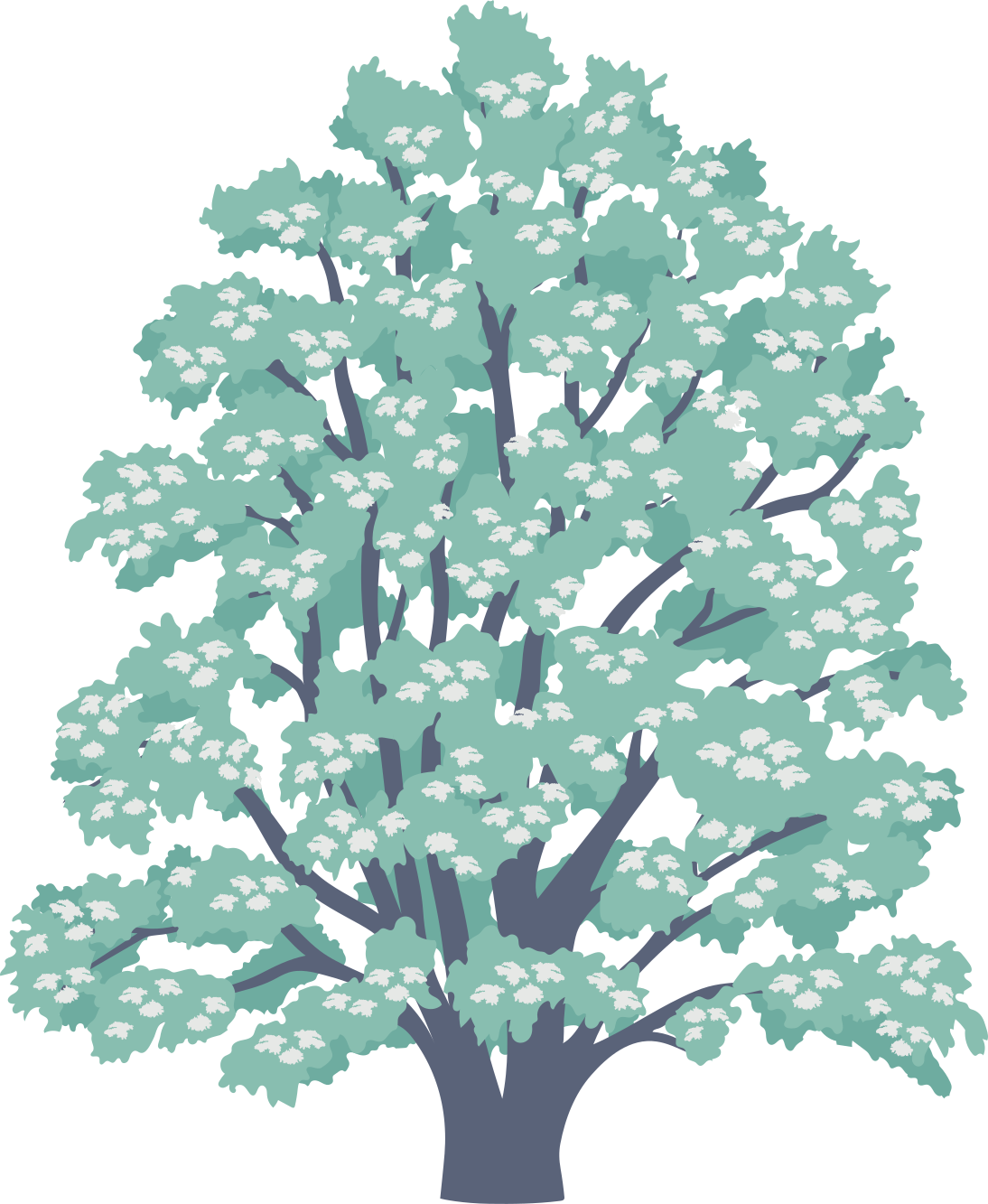
Hawthorn: Crataegus Monogyna

Hawthorn is very much associated with the month of May, and the appearance of its bright, white flowers heralds the change from spring to summer. It is prolific in hedgerows, scrub and woodland throughout the UK and Ireland, and a single tree can grow as tall as 10m. In pagan times, hawthorn was a symbol of marriage and fertility, but in the Middle Ages, it was never brought into homes, as people believed it was a harbinger of illness and death.

Tree Leaf
10 Trees Planted

Crab Apple: Malus sylvestris

Read More

Crab Apple: Malus sylvestris

Crab apple trees grow throughout Europe and can live for up to a century, reaching a height of around 10m. This tree is traditionally associated with love and marriage, and it is said that if you say the name of your lover while throwing crab apple pips into a fire, then your love is true if the seeds explode! Crab apples can be made into jelly, roasted and added to drinks, or served as an accompaniment to meat.

Tree Leaf
10 Trees Planted

Field Maple: Acer Campestre

Read More

Field Maple: Acer Campestre

This species is the UK’s only native maple and is often grown as an ornamental tree in large gardens and parks, as well as in woods and hedgerows. Its wood is white, hard and strong, and is popular for making furniture, flooring and musical instruments, especially harps. Field maple flowers are hermaphrodite, meaning each flower contains both male and female reproductive parts.

Tree Leaf
20 Trees Planted

Hornbeam: Carpinus Betulus

Read More

Hornbeam: Carpinus Betulus

The hornbeam is extremely tough and keeps its leaves all year round, making it an attractive proposition for birds, insects and other animals. Hornbeam wood is very hard, in fact it is also known as “ironwood” and the Romans recognised its durability, using it to make their chariots. Nowadays, this timber is used for tool handles, coach wheels, parquet flooring and chess pieces!

Tree Leaf
10 Trees Planted

Dogwood: Cornus Alba

Read More

Dogwood: Cornus Alba

Dogwood thrives on the edges of damp woodlands and in hedgerows, so Britain’s wet climate really isn’t a problem for this fast-growing shrub. Mature dogwood trees can grow as high as 10m, with small blue-black fruits and little white flowers. It is one of the hardest woods there is, and was used to make crucifixes including - it is said - that of Jesus.

Tree Leaf
5 Trees Planted

Elder: Sambucus Nigra

Read More

Elder: Sambucus Nigra

Elder trees can be found growing all over the UK, often near rabbit warrens and the homes of other woodland creatures who spread the seeds through their droppings. Our ancestors in the Middle Ages believed that planting elder trees near their houses would ward off the Devil, and elder leaves were thrown into graves at funerals to protect the dead from evil spirits. Although poisonous when raw, elderberries can be cooked and made into syrup or jam, while elderflowers make the perfect refreshing summer cordial.

Tree Leaf
5 Trees Planted

Dog Rose: Rosa Canina

Read More

Dog Rose: Rosa Canina

This pale pink hedgerow staple uses its thorns to clasp onto other plants and grow stronger. According to Roman naturalist Pliny the Elder, the plant is so-called because its root was once believed to cure the bite of a rabid dog. Rose hip oil is a popular ingredient in skincare products, and can also be used to make a syrup that is rich in vitamin C.

Supported By:

supported company logo

Project Partner:

partner logo GreenTheUK logo

UN's Sustainable Development Goals

As a GreenTheUK partner, you support projects that are in line with the UN Sustainable Development Goals.

SDG Icon

Take urgent action to combat climate change and its impacts.

SDG Icon

Sustainably manage forests, combat desertification, halt and reverse land degradation, halt biodiversity loss.

Join Our Mailing List...