Planting for the Future

header image

Spiro supported the planting of 1,600 climate resilient trees across the UK in 2025-26

Spiro is working in partnership with GreenTheUK and the Royal Forestry Society (RFS) to grow more resilient and sustainable woodlands across the United Kingdom. This work supports a long-term approach to building healthier woodlands that can adapt, thrive and continue to deliver for both people and nature.

Trees and woodlands play a vital role in tackling climate change and reversing biodiversity loss, while also bringing wider benefits to communities and the economy. Across the UK, many woods face increasing pressure from environmental change, pests, disease and under-management. Without the right care, these challenges can limit the ability of woodlands to recover and grow stronger over time.

By supporting projects that prioritise the right tree in the right place, and encouraging active, ongoing management, Spiro is helping to ensure new and existing woodlands are more resilient, productive and diverse. This includes planting a thoughtful mix of species to strengthen ecological balance, improve adaptability and maintain habitats for wildlife now and in the future.
Map

Increasing tree cover is only part of the solution. Bringing more woodlands into active management is equally important, helping to improve woodland condition, boost biodiversity and unlock long-term environmental value. Well-managed woods are better equipped to cope with changing conditions, from extreme weather to emerging pests and diseases, while continuing to provide essential ecosystem services.

Expanding and improving woodland cover helps capture and store carbon, supports nature recovery, improves soil and water health, and contributes to a more sustainable domestic timber resource. Growing more home-grown timber is increasingly important for the UK, helping to reduce reliance on imports, which currently supply around 80% of timber demand. A stronger domestic timber resource can lower the carbon footprint associated with imported materials, while also reducing the risk of introducing new pests and diseases through international trade.

Through its support, Spiro is contributing to a bigger, shared ambition: a future where resilient, well-managed woodlands are at the heart of the UK’s natural environment. By investing in the long-term health of our woodlands, this partnership helps ensure that the benefits of trees are felt for future generations.

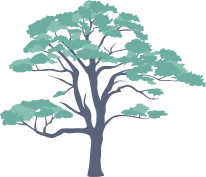
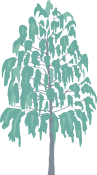
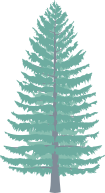
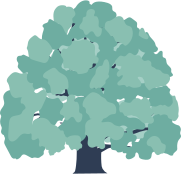
Tree Species Planted:

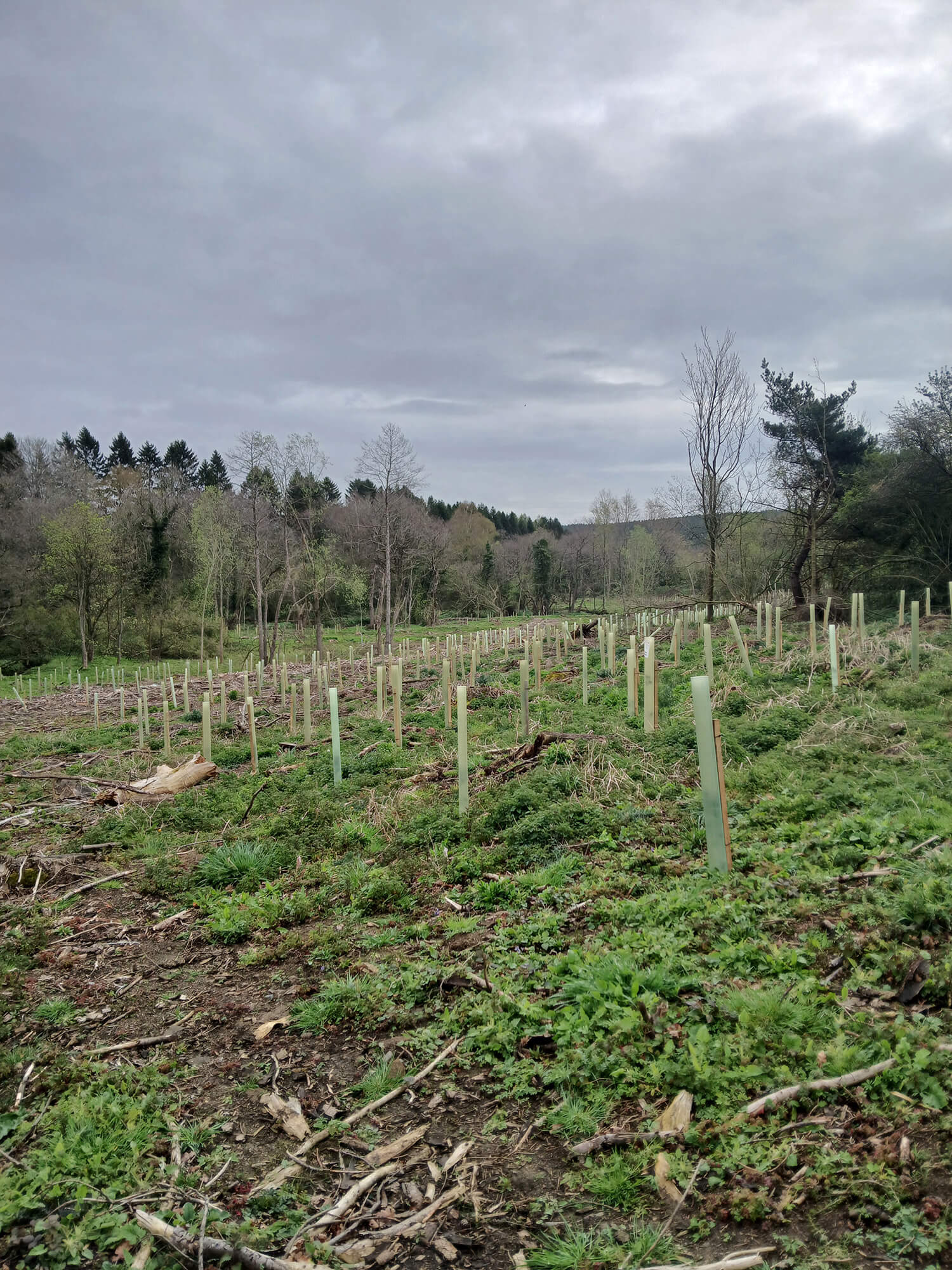
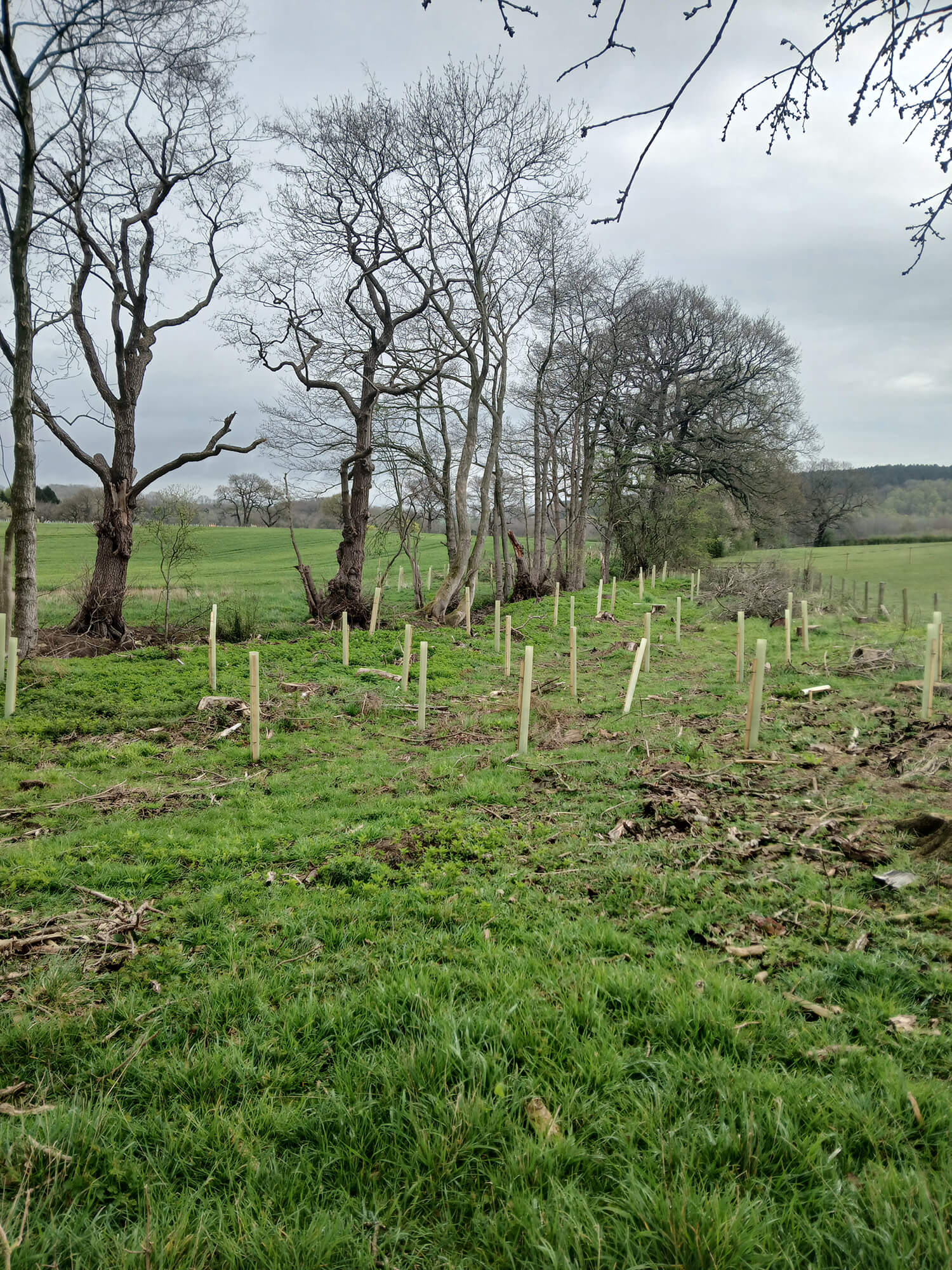
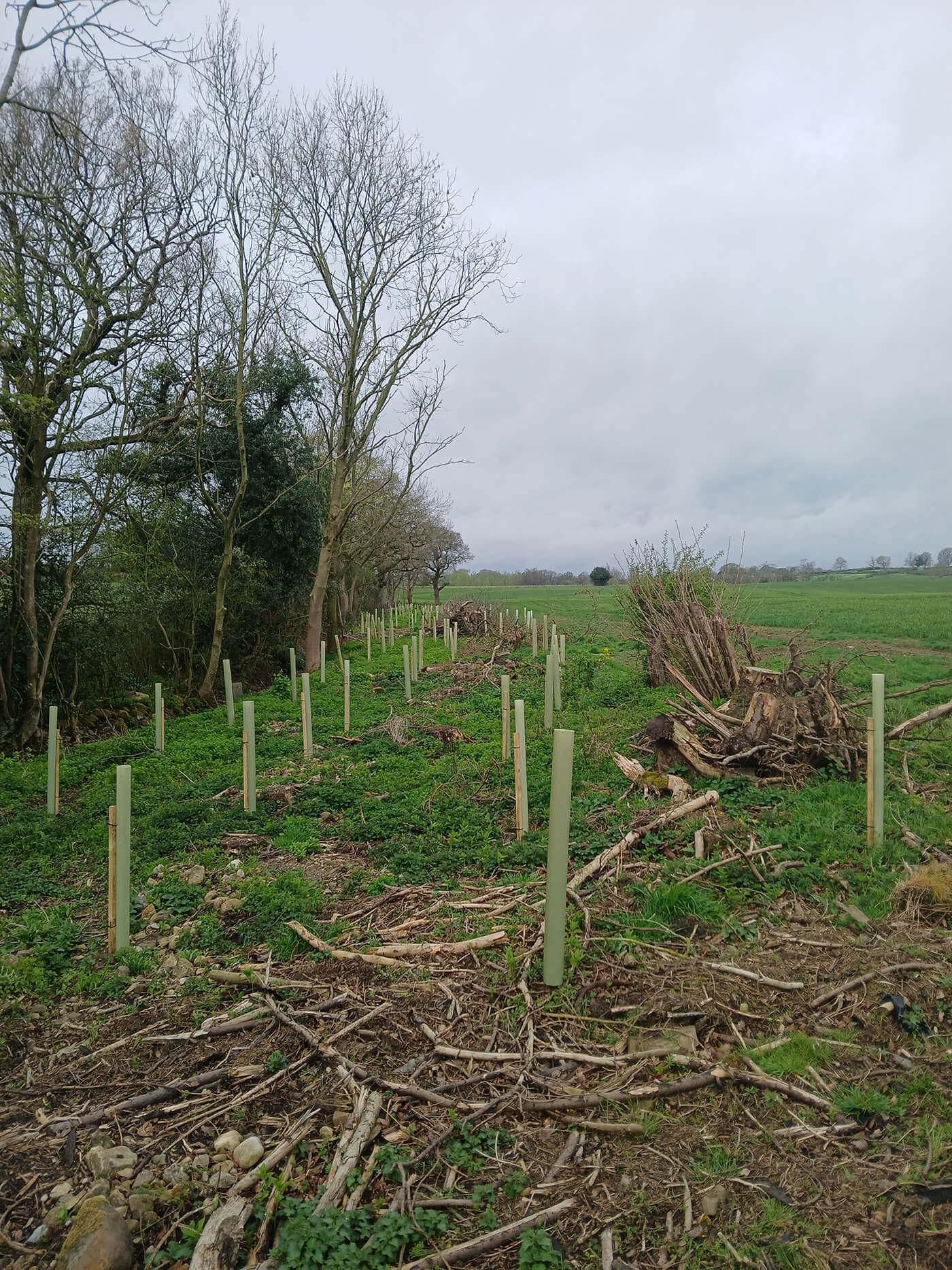
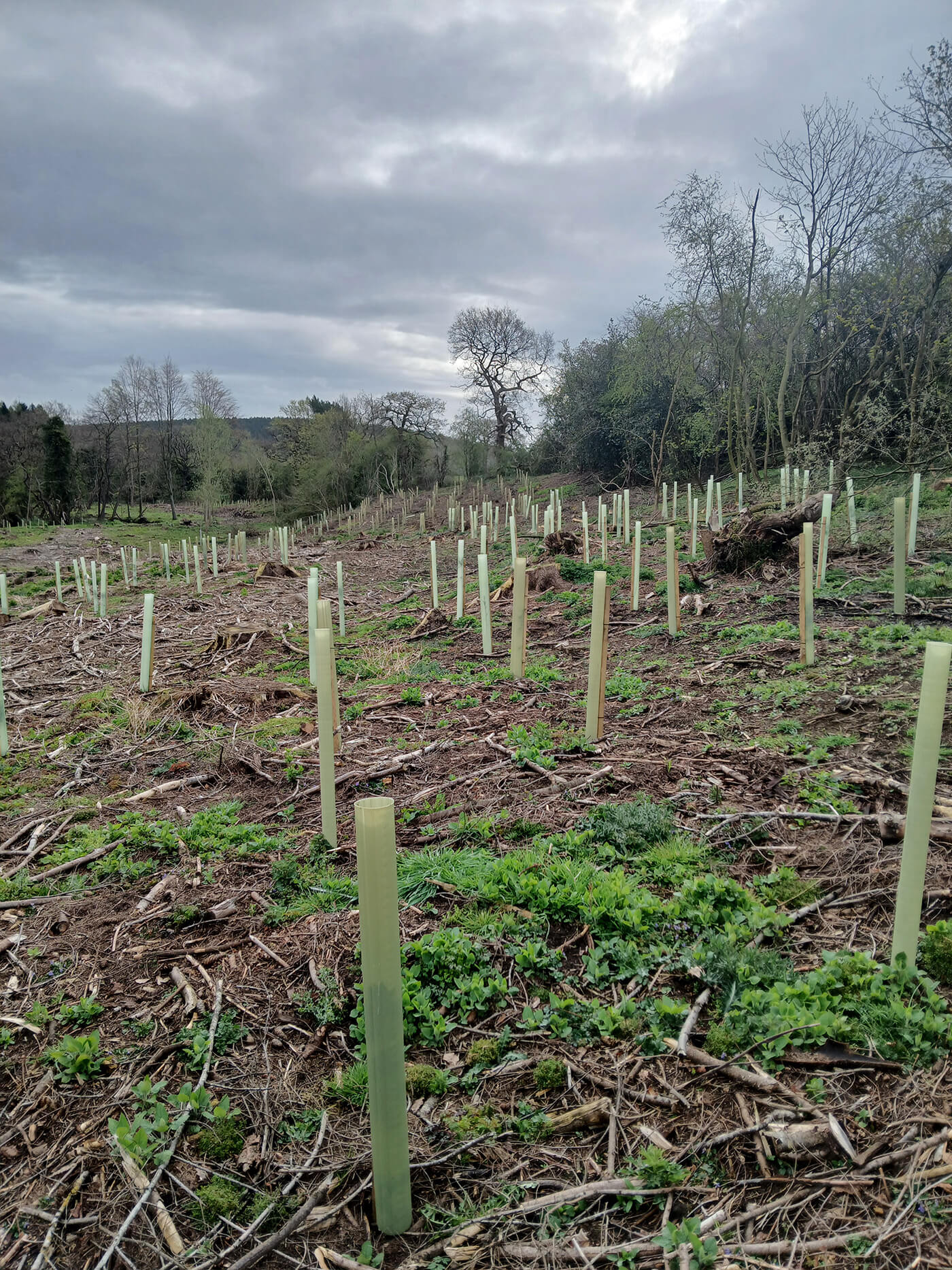
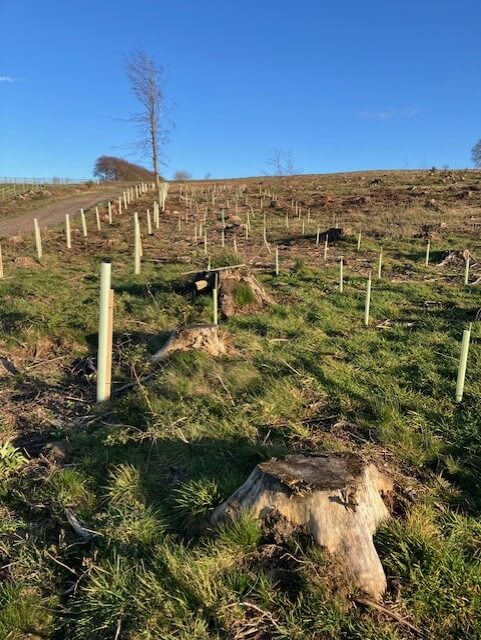
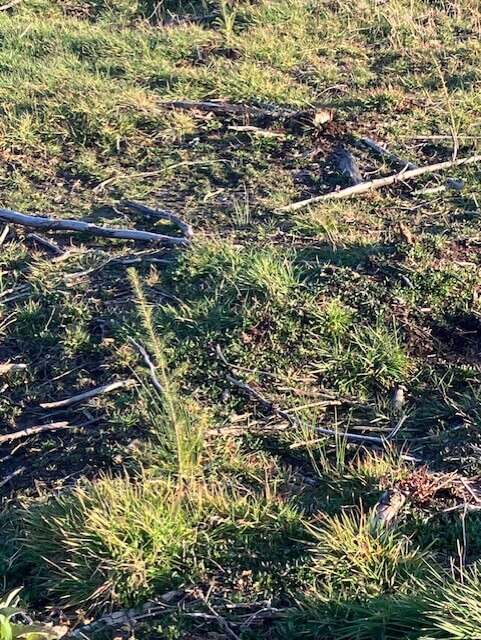
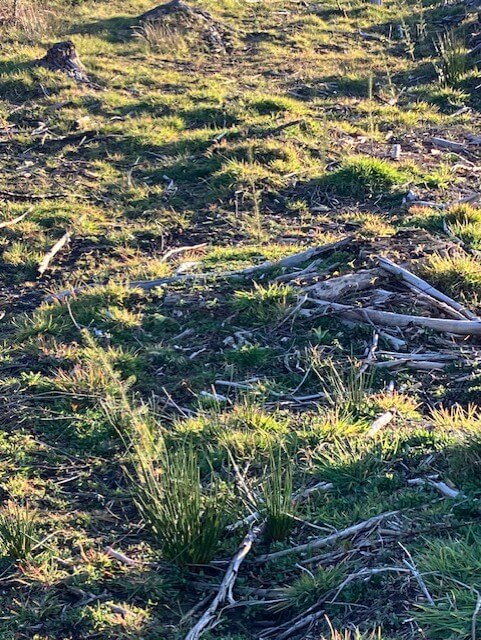
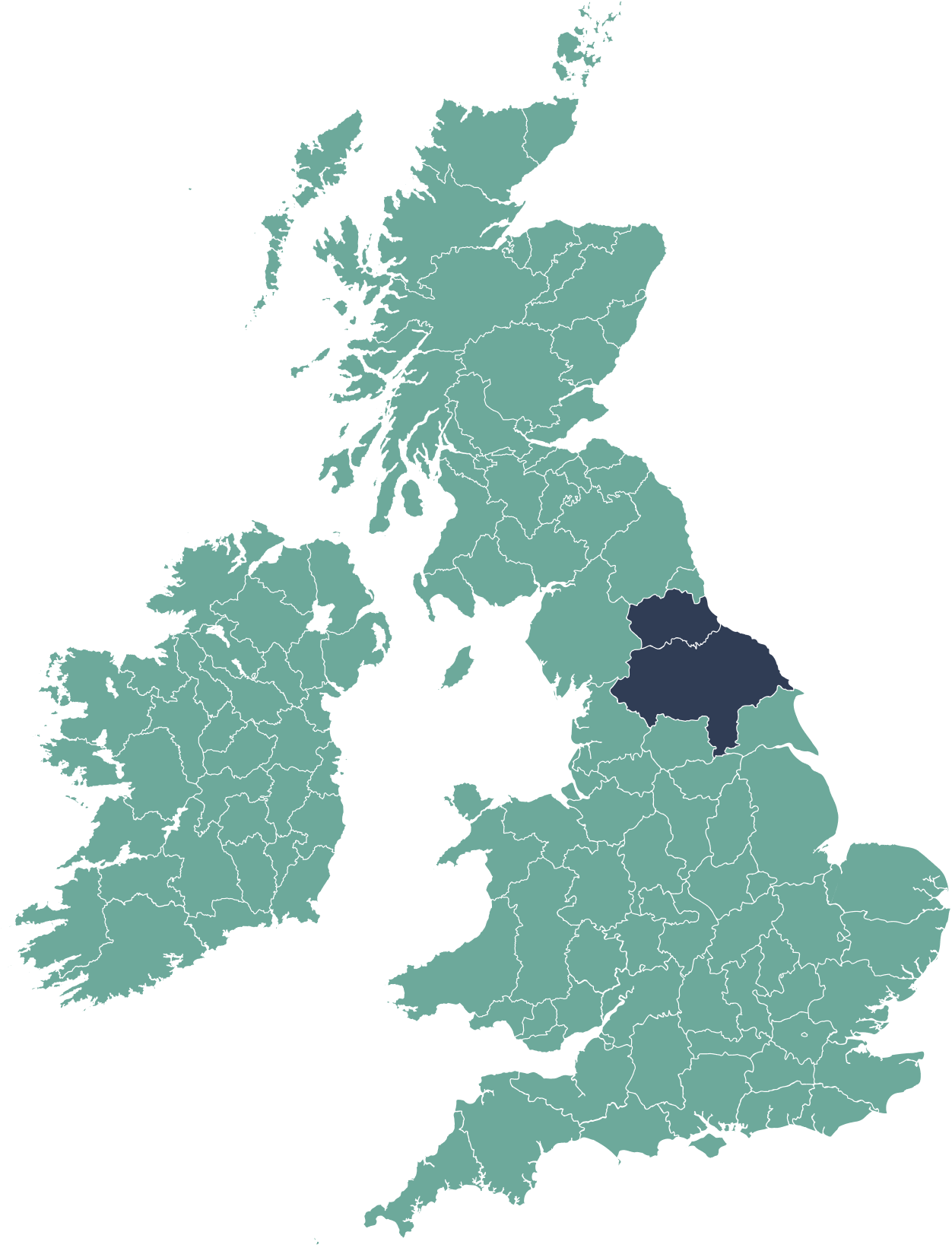
800 trees planted in North Yorkshire

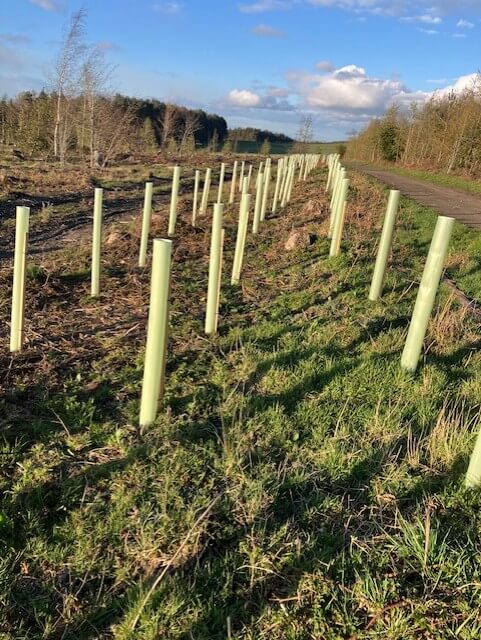
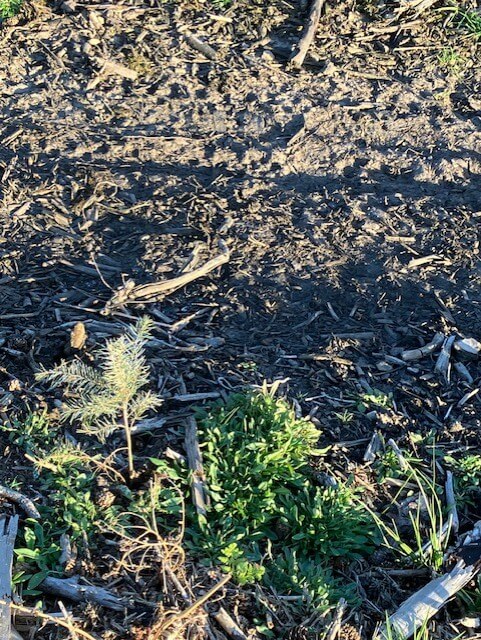
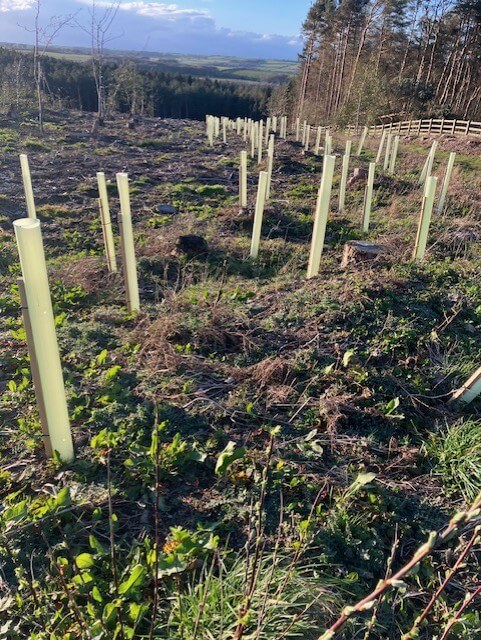
This conifer wood, planted in the 1970s, has been replanted as a mostly broadleaf woodland which will improve the habitat and biodiversity of local wildlife. A new hedgerow has also be planted and will provide a wildlife corridor, connecting to a nearby SSSI and improving the landscape and natural environment.

Tree Leaf
91 Trees Planted

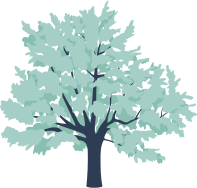
Alder: Alnus Glutinosa

Read More

Alder: Alnus Glutinosa

Alder can be found across Europe and thrives in moist ground and damp cool areas, which is why you’ll often see alder trees planted near rivers and ponds. Moth caterpillars love alder leaves and the tree’s roots make an ideal nesting site for otters. For humans, the real value of alder wood is that it’s durable when wet, so is useful for making boats and sluice gates. The story goes that outlaws like Robin Hood would have used the green dye from alder flowers to camouflage their clothing!

Tree Leaf
91 Trees Planted

Rowan: Sorbus Aucuparia

Read More

Rowan: Sorbus Aucuparia

Also known as the mountain ash, rowan trees grow well at high altitudes and are commonly found in the Scottish Highlands, as well as on streets and in gardens across the UK. Many birds eat their scarlet berries in the autumn, then disperse the seeds. Rowan used to be planted next to homes to ward off the threat of witches, as red was once believed to guard against evil.

Tree Leaf
206 Trees Planted

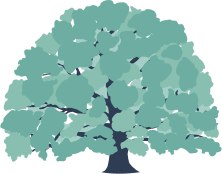
Sessile Oak: Quercus Petraea

Read More

Sessile Oak: Quercus Petraea

The sessile oak is Ireland’s national tree and can be found across Europe. Sessile means “without a stalk”, and this tree’s acorns are stalkless, growing directly on twigs. Oaks provide a habitat for many creatures, including red squirrels, badgers, jays, caterpillars and around 250 more species of wildlife.

Tree Leaf
206 Trees Planted

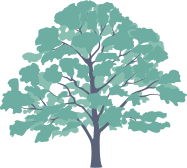
Sycamore: Acer Pseudoplatanus

Read More

Sycamore: Acer Pseudoplatanus

Sycamores can live for 400 years and are attractive to aphids and their predators. Their seeds are very fertile and float to the ground like little helicopters. Sycamore timber is pale cream in colour and good for carving, which is why it is used for making traditional Welsh lovespoons. Fans of the children’s author Julia Donaldson may know that her popular character Stick Man and his family live in a sycamore tree!

Tree Leaf
206 Trees Planted

Wild Cherry: Prunus Avium

Read More

Wild Cherry: Prunus Avium

Stunning white cherry blossoms burst forth in April, heralding the arrival of spring and bringing joy to parks and gardens. Mature cherry trees can live for up to 60 years, and provide a great source of food for birds, bees, insects and small animals like badgers and mice. Our ancestors would boil wild cherries and make them into a syrup to treat a range of ailments including coughs and anaemia.

800 trees planted in County Durham

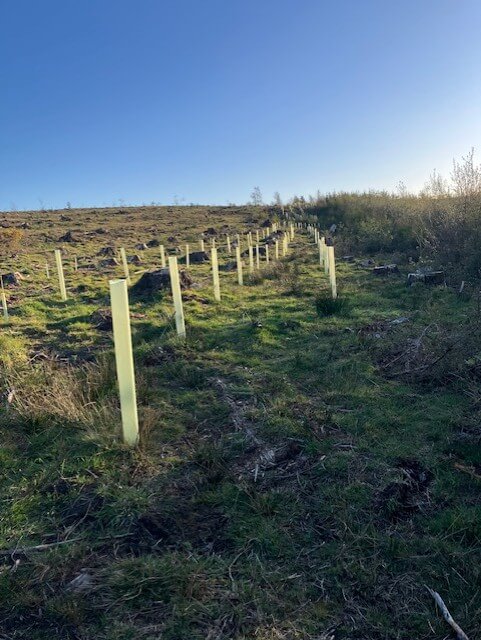
Moving from a single species that is at risk of disease, this site is replanting with a diverse mix for timber production, biodiversity and red squirrel support. The conifer crops will support the local sawmills and broadleaves will provide more diverse habitats for the wildlife and provide shelter for adjacent agricultural fields. The conifers are also a great food source for the red squirrel population which are in this area and they provide extra habitat and their edible cones all year round.

Tree Leaf
261 Trees Planted

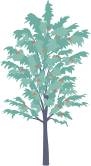
Douglas Fir: Pseudotsuga Menziesii

Read More

Douglas Fir: Pseudotsuga Menziesii

Douglas fir was first introduced to the UK from North America in the 1800s. These fragrant evergreen members of the pine family can live for up to 1,000 years, but are often cut down for use as Christmas trees. Douglas fir timber has lots of commercial uses, including furniture, flooring and decking, for example.

Tree Leaf
47 Trees Planted

Scots Pine: Pinus Sylvestris

Read More

Scots Pine: Pinus Sylvestris

The UK’s only truly native pine is Scotland’s national tree and can be found in abundance in the Highlands. The Caledonian Pine Forest is home to all sorts of wonderful species including the pine marten, red squirrel and rare Scottish wildcat. Scots pine has strong timber which is used for making fences, telegraph poles and other construction materials, and the bark can be tapped for resin to make turpentine.

Tree Leaf
114 Trees Planted

Silver Birch: Betula pendula

Read More

Silver Birch: Betula pendula

The silver birch is an elegant, majestic-looking tree which can survive in a range of climates, making it a very popular choice for gardeners. It attracts hundreds of insect species, and woodpeckers like to nest in its rough, tough, silver-white trunk. There is a lot of mythology attached to the silver birch, which is said to symbolise purity, new beginnings and protection. Once upon a time, on Midsummer’s Eve, silver birch boughs were hung across the doors of houses to bring good luck to their residents.

Tree Leaf
326 Trees Planted

Sitka Spruce: Picea Sitchensis

Read More

Sitka Spruce: Picea Sitchensis

Sitka is by far the largest species of spruce, growing to nearly 100m tall with a trunk up to 5m thick. This majestic tree is named after a city in southern Alaska but makes up around half of commercial plantation here in the UK. Sitka timber has all sorts of uses, including making boats and paper. It is also used in the manufacture of violins, guitars, pianos and harps, as it conducts sound well.

Tree Leaf
21 Trees Planted

Sweet Chestnut: Castanea Sativa

Read More

Sweet Chestnut: Castanea Sativa

The sweet chestnut tree is native to the Mediterranean and was first brought to Britain by the Romans, who used it in their cooking just as we do today. Sweet chestnuts grow in spiny capsules containing two or three nuts, which can then be removed and roasted. Indeed, anyone who has ever been to a Christmas market will recognise that scrumptious smell! The oldest chestnut tree in the world is over 2,000 years old and can be found five miles from Mount Etna in Sicily.

Tree Leaf
10 Trees Planted

Wild Cherry: Prunus Avium

Read More

Wild Cherry: Prunus Avium

Stunning white cherry blossoms burst forth in April, heralding the arrival of spring and bringing joy to parks and gardens. Mature cherry trees can live for up to 60 years, and provide a great source of food for birds, bees, insects, and small animals like badgers and mice. Our ancestors would boil wild cherries and make them into a syrup to treat a range of ailments including coughs and anaemia.

Tree Leaf
21 Trees Planted

Wild Pear: Pyrus Communis

Read More

Wild Pear: Pyrus Communis

Pear trees have been grown in orchards and gardens across the UK since the end of the 10th century. This tree can live for a long time - around 250 years - so ancient Chinese people believed that the pear was a symbol of immortality. Pear trees are popular with both humans and insects; birds enjoy snacking on the fruit, while bees sip nectar from the flowers.

UN Sustainable Development Goals

As a GreenTheUK partner, you support projects that are in line with the UN Sustainable Development Goals.

SDG Icon

Take urgent action to combat climate change and its impacts.

SDG Icon

Sustainably manage forests, combat desertification, halt and reverse land degradation, halt biodiversity loss.

Woodland Animals

Examples of species which could benefit from a woodland habitat.

Tawny Owl: Strix Aluco

Tawny Owl

As you might expect, tawny owls have excellent eyesight, but they also have fantastic hearing, which makes it easier for them to catch their prey. This species can be found living in England, Wales and Scotland, usually in broadleaf woodland. The tawny owl has a ring of dark feathers around its face, surrounding dark eyes.

Green Woodpecker: Picus Viridis

Green Woodpecker

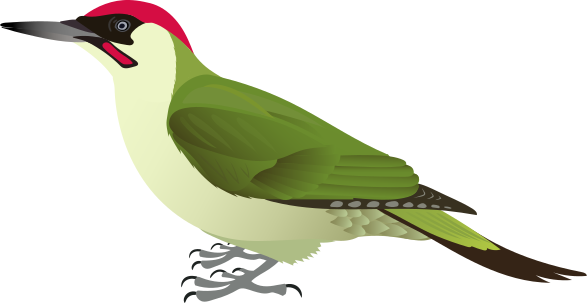
The large green woodpecker has a bright red crown and a black moustache. Green woodpeckers don’t actually peck that much wood, because they have fairly weak bills. This bird used to be known as the “yaffle”, which is how the animated, carved woodpecker bookend - Professor Yaffle - got his name in the classic 1970s children’s television show “Bagpuss”.

Pied Flycatcher: Ficedula Hypoleuca

Pied Flycatcher

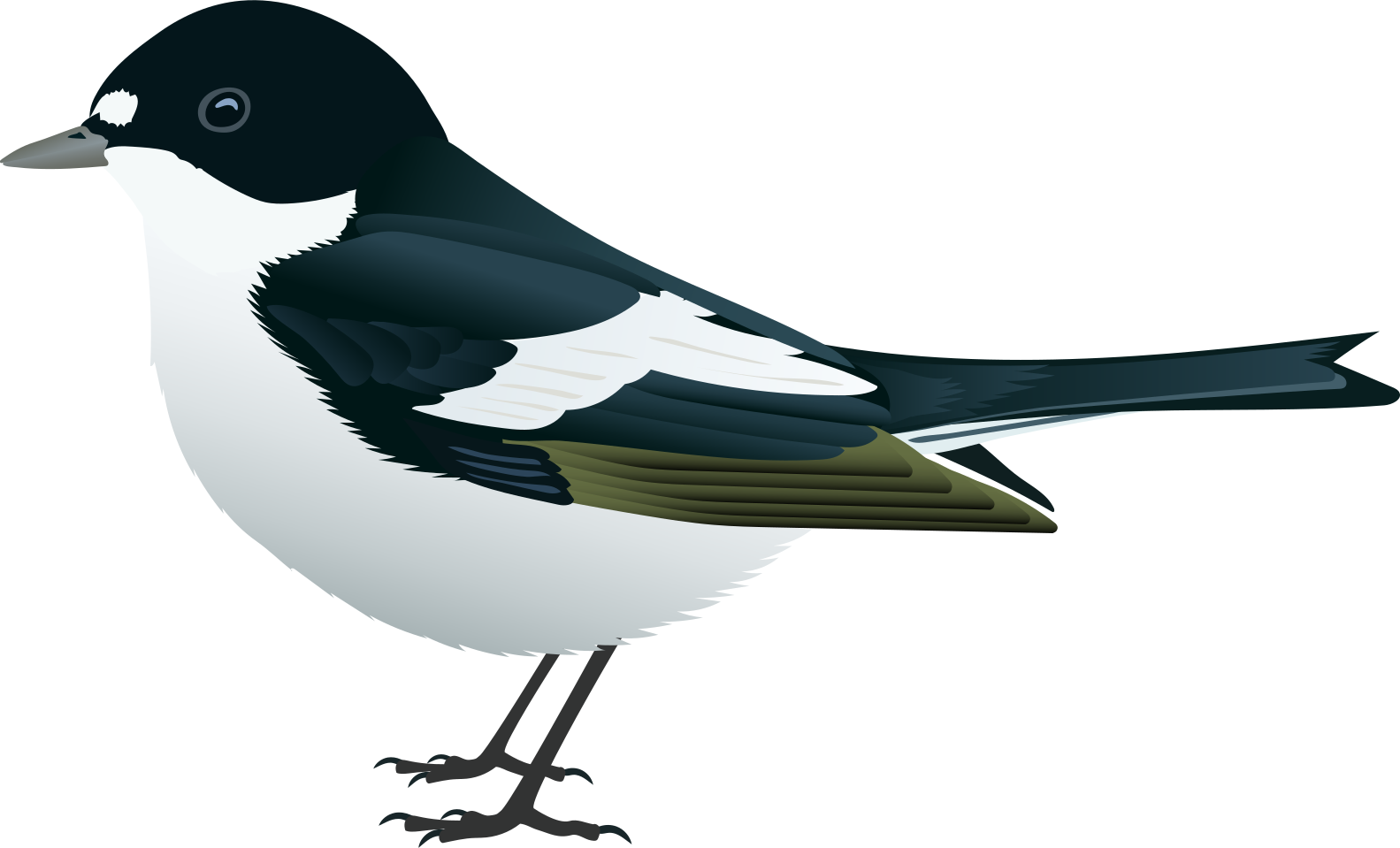
The pied flycatcher is a summer visitor to these shores, preferring to spend the winter in West Africa. You’ll find these birds in mature woodlands, mainly in western parts of Great Britain, because they like temperate rainforests. They make their nests in tree trunks and nest boxes, where the females lay up to seven light blue eggs at a time.

Wood Warbler: Phylloscopus Sibilatrix

Wood Warbler

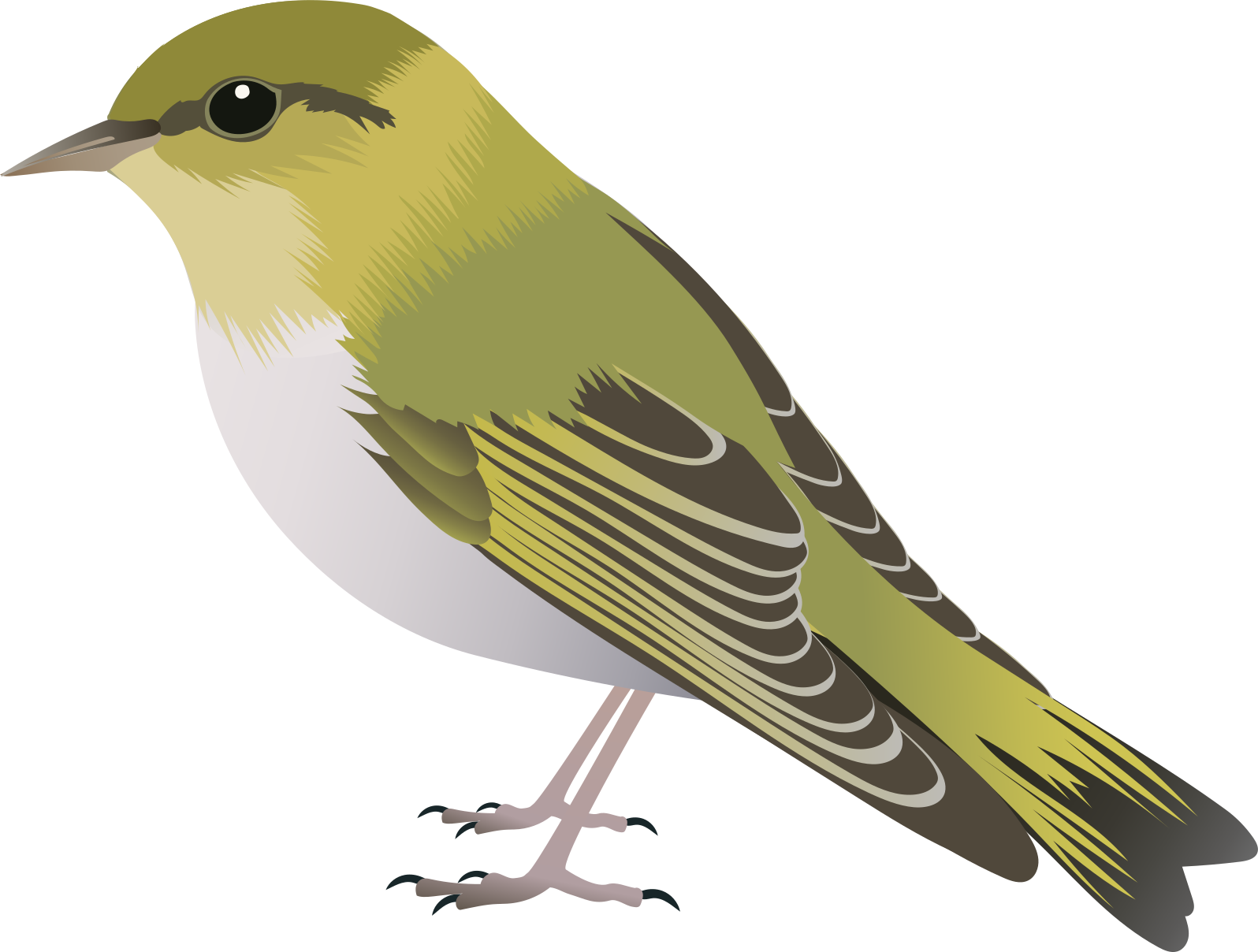
These bright green and yellow birds tend to stick to oak woodland areas across the UK. Their song is a slightly metallic-sounding chirp, which some have compared to the sound of a small coin spinning on a table. Wood warblers migrate to Africa in August and come back to the UK towards the end of April.

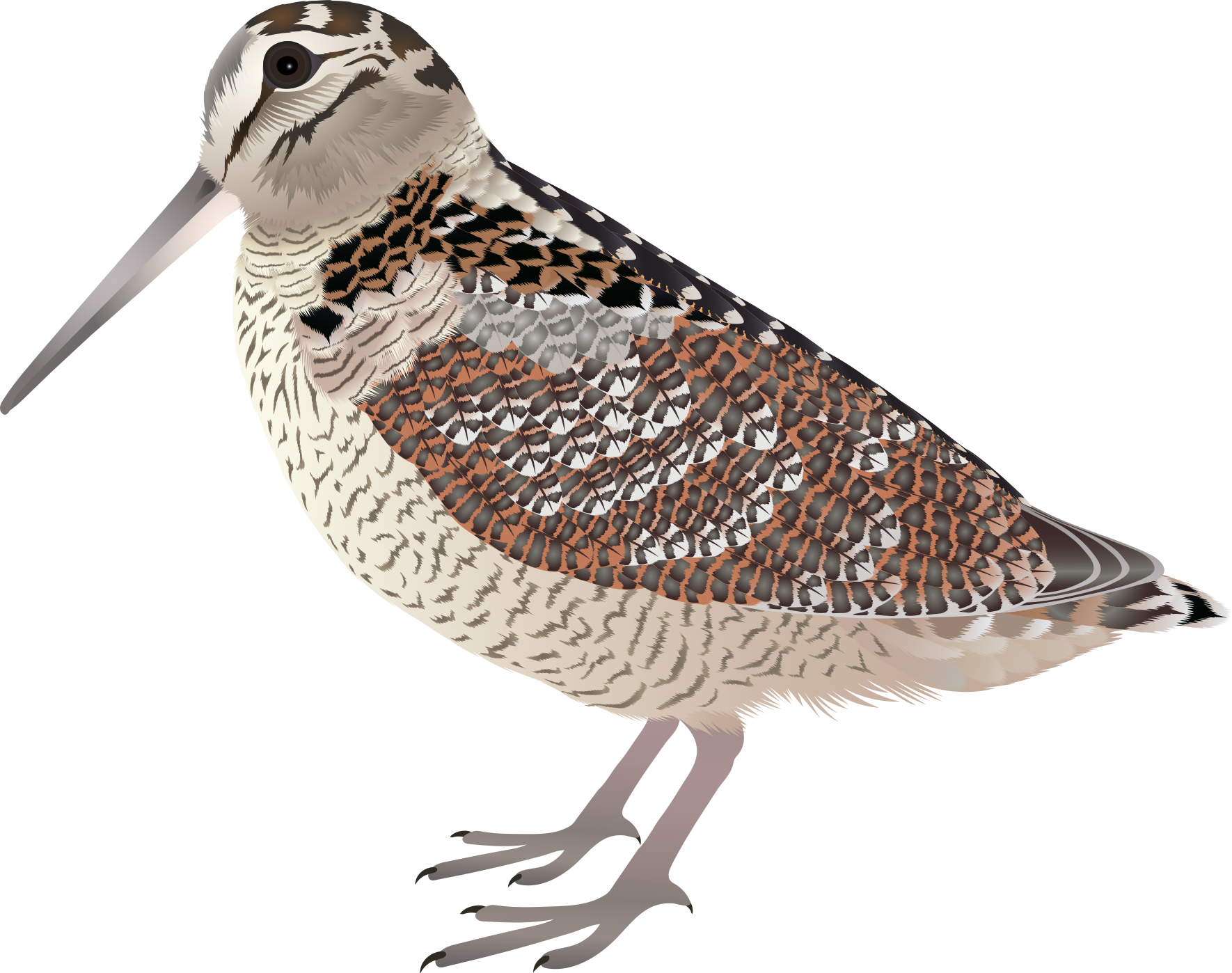
Woodcock: Scolopax Rusticola

Woodcock

The woodcock is a large wading bird with short legs and a long, straight bill. Its feathers are mottled and brown, allowing the woodcock to blend in with the woodland floor. Woodcock feathers were used to paint the gold stripe on the side of the Rolls Royce and before that, they were popular with Victorian miniaturists who favoured them for painting on ivory.

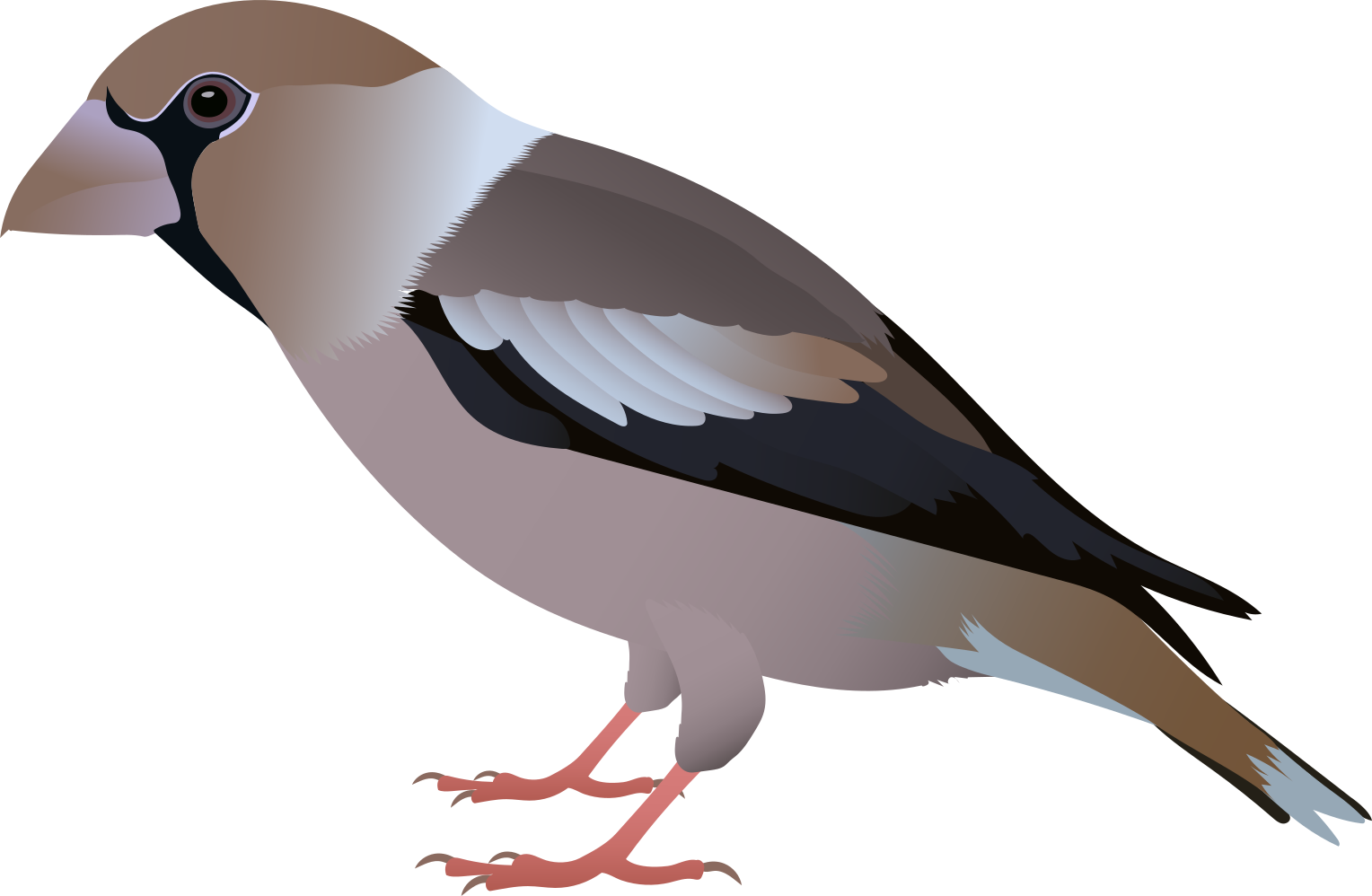
Hawfinch: Coccothraustes Coccothraustes

Hawfinch

The hawfinch is the UK’s largest finch and has a very powerful bill. This timid bird can be tricky to spot but tends to nest in woodland or parkland in England, particularly near beech, oak and hornbeam trees. Some hawfinches stay in the UK all year round, but others fly south for the winter.

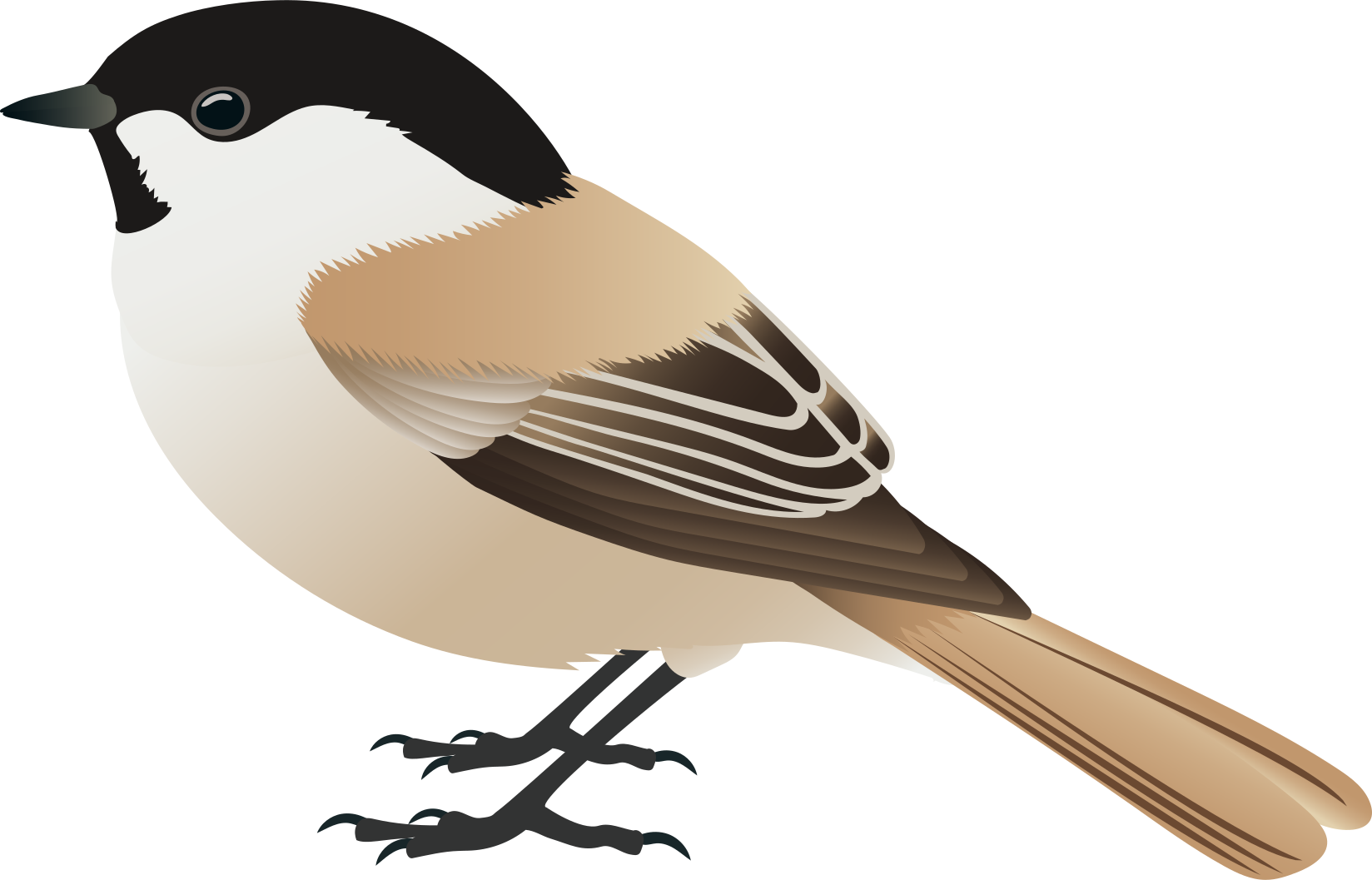
Willow Tit: Poecile Montanus

Willow Tit

Willow tits tend to live in wet woodland and willow carr across England, Wales and the south of Scotland. Their diet is rich in insects, but they also eat seeds and berries in the winter when there are fewer creepy crawlies about. Willow tits carve out their own nesting holes, usually in trees or rotten stumps.

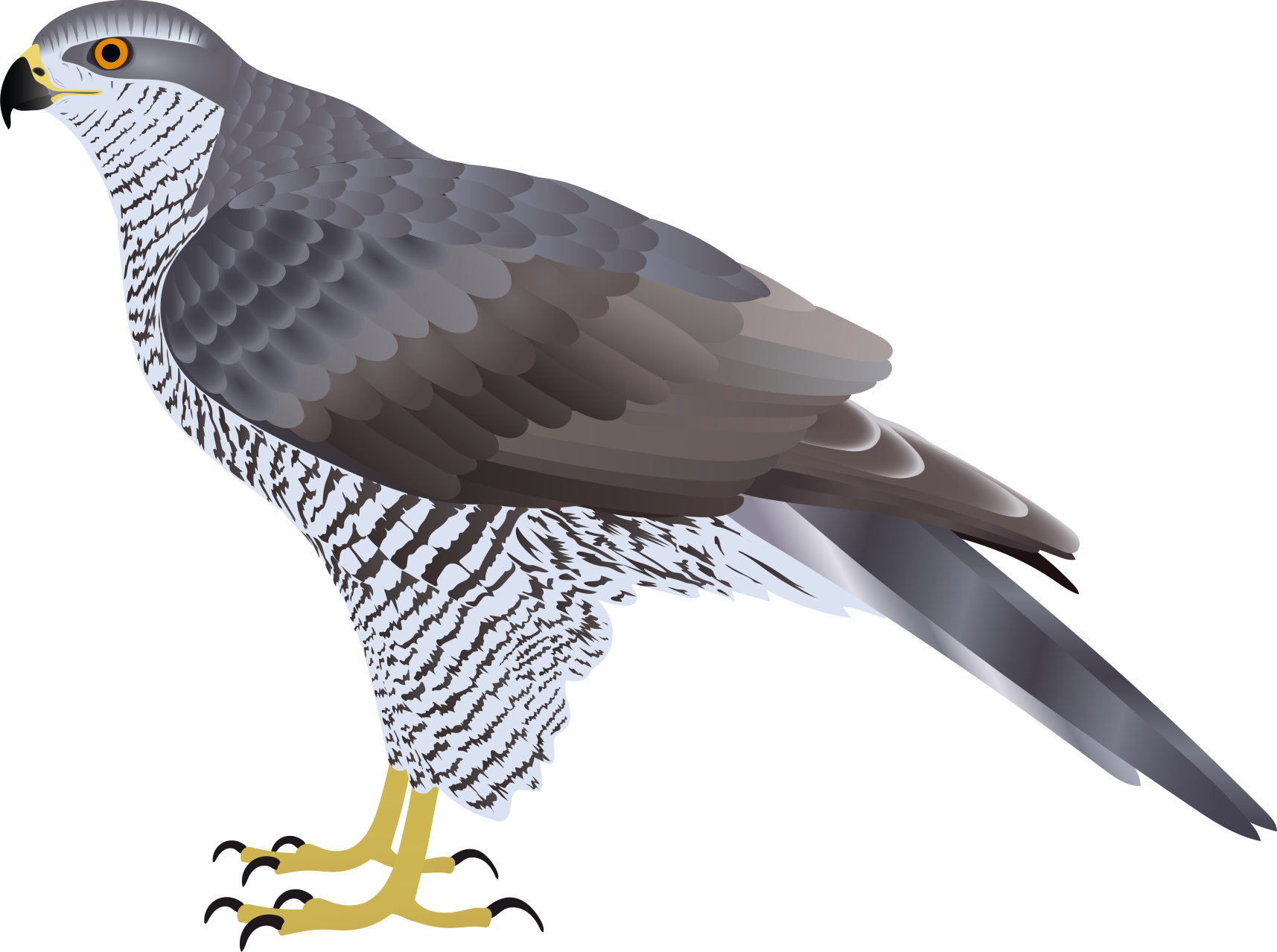
Goshawk: Accipiter Gentilis

Goshawk

These fierce hawks have a wingspan of around 1.5m and can weave in and out of trees, hunting their prey which includes smaller birds, squirrels and rabbits. The female of the species is larger than the male. The name goshawk comes from the Old English for “goose hawk”.

Red Deer: Cervus Elaphus

Red Deer

These truly majestic animals are the UK’s largest native land mammals, and you’ll find most of them in Scotland, although there are herds dotted all around the country. Red deer can weigh as much as 190kg, and live for up to 20 years. Males (stags) and females (hinds) tend to live apart for most of the year, then they get together to mate in the autumn and their young are born in the late spring and early summer.

Dormouse: Muscardinus Avellanarius

Dormouse

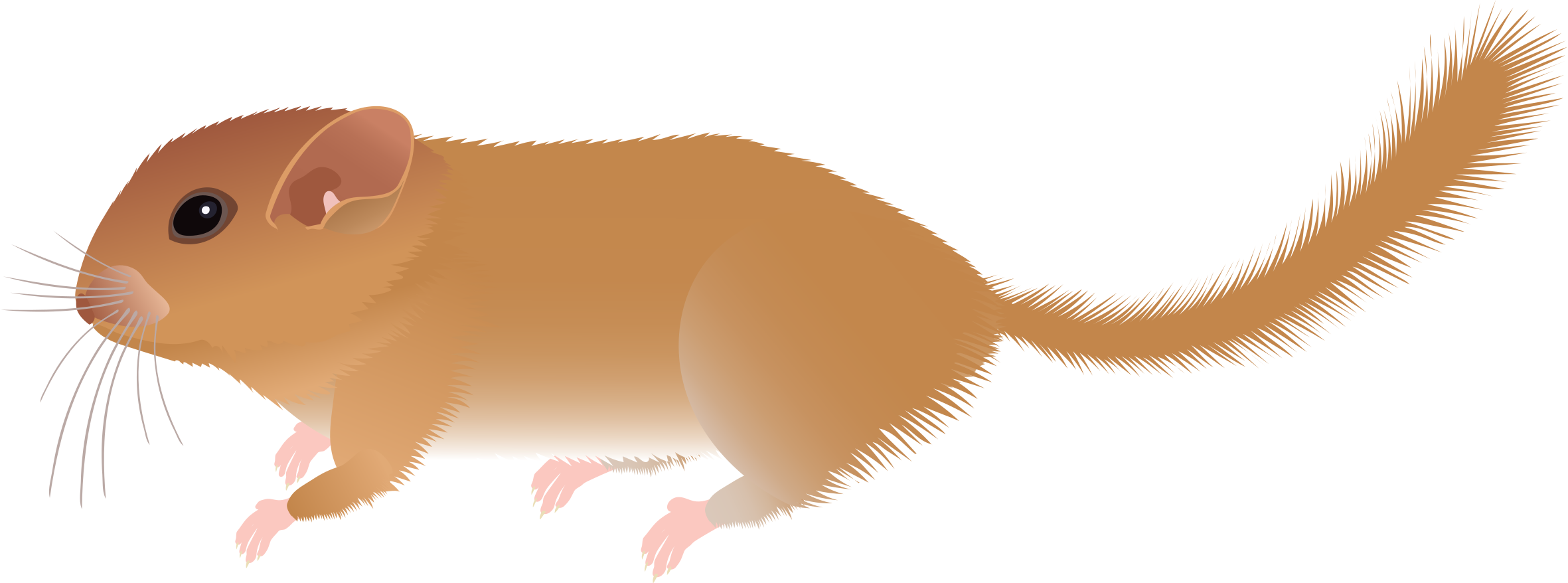
The dormouse, or hazel dormouse, makes its home in the overgrown hedgerows and deciduous woodland of southern England. UK dormouse populations have declined in this century and they are strictly protected by law. You might remember the dormouse who kept falling asleep during the Mad Hatter’s Tea Party in Alice in Wonderland; probably because dormice are nocturnal and the party was during the day!

Pine Marten: Martes Martes

Pine Marten

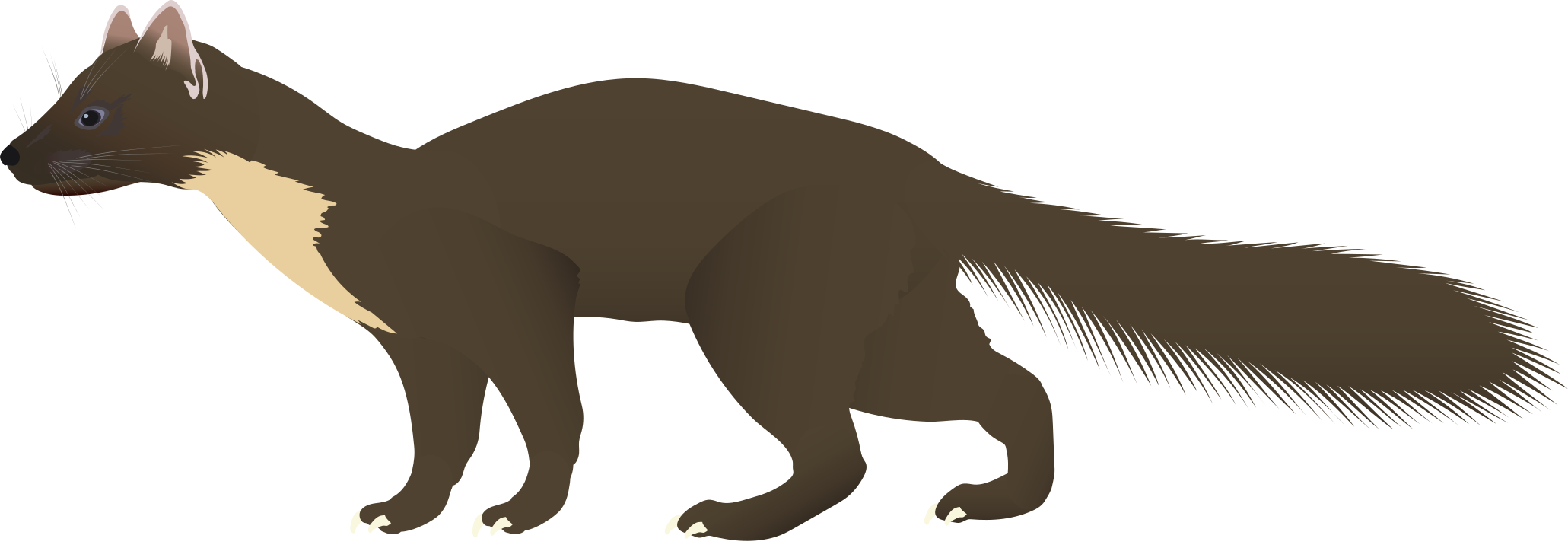
Pine martens live in woodland habitats across Scotland and Ireland, but are on the verge of extinction in England and Wales. This elusive nocturnal hunter is tricky to spot, but if you do see one you’ll recognise it by the distinctive yellow “bib” on its otherwise rich brown fur. In 2013, an intrepid pine marten caused quite a stir when it invaded the pitch during a football match in Switzerland, biting one of the players!

Badger: Meles Meles

Badger

This black and white striped mammal is the UK’s largest land predator, and can be found living all around the country. Badgers make their homes underground in networks of burrows and tunnels known as setts, with the same family occupying the area for generations. It can be tricky to spot badgers in the wild because they are nocturnal, but during warmer weather in the summer, they occasionally emerge just before sunset.

Roe Deer: Capreolus Capreolus

Roe Deer

Roe deer live on their own or in small groups throughout England and Scotland, feeding on leaves, shrubs, heather and grass. Male roe deer have quite short antlers, which begin to grow in November so that they are ready for the summer rutting season, then fall out again in October. Roe deer mate in July and August, but implantation of the fertilised egg is delayed until January so that the young aren’t born in the winter.
Barbastelle Bat: Barbastella Barbastellus

Barbastelle Bat

This distinctive-looking bat has a flat face and makes its home in deciduous woodland, preferably near water, in England and Wales. The Latin name “barbastella” means “star beard”, because this bat has white hairs growing around its mouth. It is an incredibly rare, protected species, with as few as 5,000 believed to be living in the UK.
Bechstein’s Bat: Myotis Bechsteinii

Bechstein’s Bat

Bechstein’s bat is very rare and lives almost exclusively in woodland areas. This species is hard to detect because its echolocation is very quiet. Like other species of bat, Bechstein’s bat is nocturnal, and listens out for woodland moths, then catches and eats them.

Natterer’s Bat: Myotis Nattereri

Natterer’s Bat

Natterer’s bats are medium-sized with fairly long ears, and although quite rare, they live all over the UK. They feed on insects, many of which they forage straight from the foliage around them. They hibernate in small rock crevices, often in groups, and can contort themselves into all kinds of weird and wonderful positions.

Brown Long-Eared Bat: Plecotus Auritus

Brown Long-Eared Bat

As the name suggests, these medium-sized bats have huge ears: nearly as long as their bodies, in fact! They have grey-brown fur and like to roost in old buildings and holes in tree trunks. They prick up their ears when they are flying to aid with hunting, but can roll them back when resting and even tuck them under their wings.

Stag Beetle: Lucanus Cervus

Stag Beetle

You’ll find the UK’s biggest beetle in parks, gardens and woods in South East England. Stag beetles have huge jaws, but their bite isn’t actually that powerful so they don’t pose much of a threat to humans. It can take as long as seven years for stag beetle larvae to grow into adults, and once they do, they only live for a few months!

Glow Worm: Lampyris Noctiluca

Glow Worm

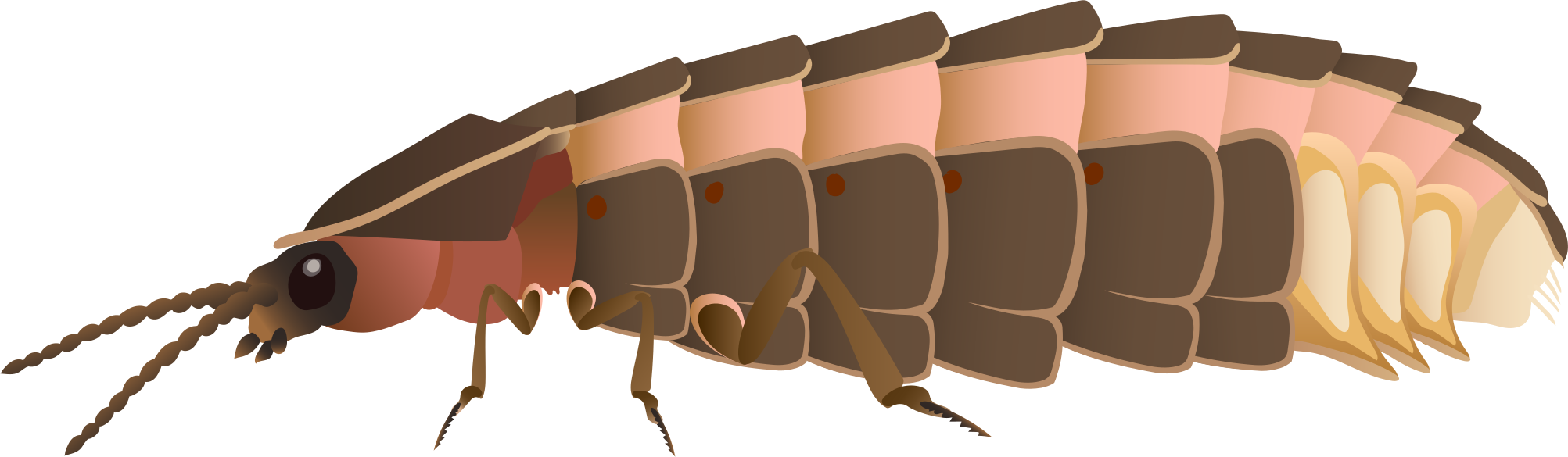
The female glow worm can light up at night to attract a mate in the darkness. Despite the name, glow worms actually look a bit more like beetles than worms. They are only adults for a very short time in the summer months.

Common Lizard: Zootoca Vivipara

Common Lizard

The common lizard incubates its eggs inside its body, then gives birth to live young, which is unusual for a reptile. If it feels threatened, this clever reptile can shed its tail to confuse the predator for long enough to get out of danger. The common lizard likes the sunshine and you might even be able to spot one in your garden.

Grass Snake: Natrix Helvetica

Grass Snake

Grass snakes pose no threat to humans because they are non-venomous and tend not to bite. Long green and yellow grass snakes can be found throughout England and Wales. You can spot them between April and October, as they hibernate for the rest of the year.

Slow Worm: Anguis Fragilis

Slow Worm

The slow worm looks a bit like a snake, but it is actually Britain’s only native legless lizard. They evolved without legs because they spend a lot of their time burrowing through soil and vegetation. If the slow worm senses danger nearby, it will try pooing in the hope that the smell puts the predator off.

Smooth Newt: Lissotriton Vulgaris

Smooth Newt

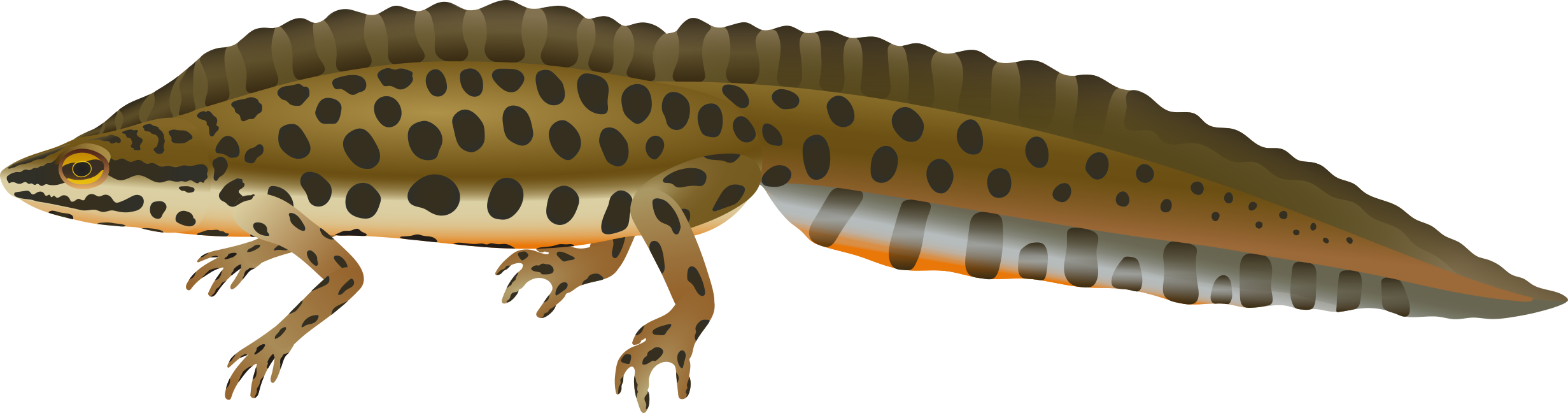
You’ll find these newts throughout Britain and Ireland, where they are protected by law. Adults head for ponds to mate and generally stay there from February to June. The female smooth newt wraps each of her eggs in an individual pond weed leaf to keep it safe.

Palmate Newt: Lissotriton Helveticus

Palmate Newt

Britain’s smallest species of newt looks a lot like the smooth newt, but prefers shallow pools and acidic soils. The males grow black webbing on their back feet during the breeding season. Palmate newts don’t exactly hibernate, but they do spend the winter sheltering under rocks, or in compost or mud.

Great Crested Newt: Triturus Cristatus

Great Crested Newt

The UK’s biggest newt is dark brown or black and covered in warts. Males dance on their front legs and wave their tails when trying to court females. The animals and their eggs, breeding sites and resting places are protected by law.

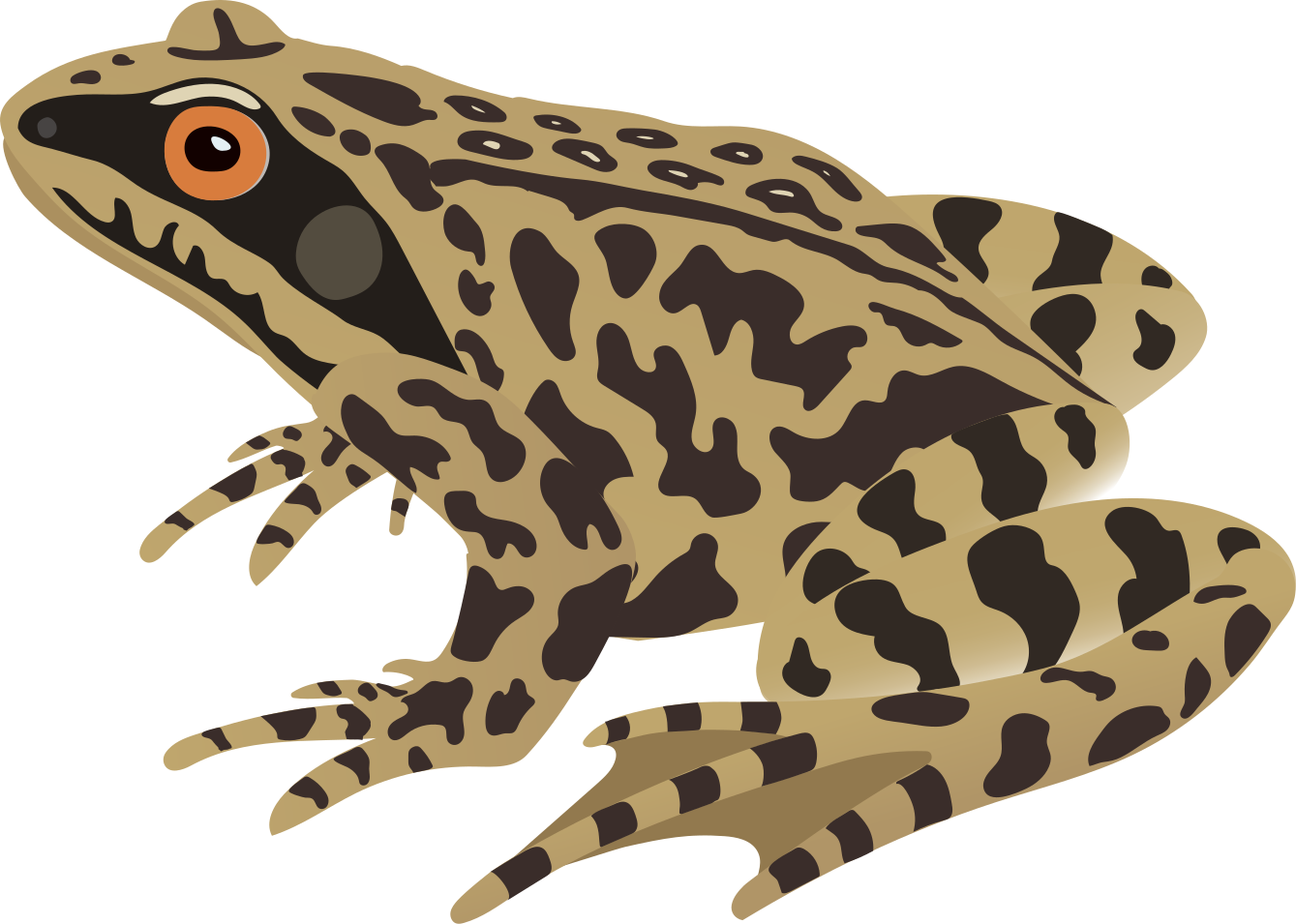
Common Frog: Rana Temporaria

Common Frog

Common frogs have smooth skin and are most active at night. This clever amphibian uses its long, sticky tongue to catch insects like worms, slugs and snails. Garden ponds are very important for common frogs and suburban populations depend on them.

Grey Squirrel: Sciurus Carolinensis

Grey Squirrel

Grey squirrels first arrived in the UK from their native North America in the 1800s. Their introduction to these shores has been a disaster for red squirrels, as greys carry squirrelpox, to which they themselves are immune, but which can infect and kill reds. Grey squirrels also cause mayhem in woods where they strip the bark from trees, damaging them in the process.

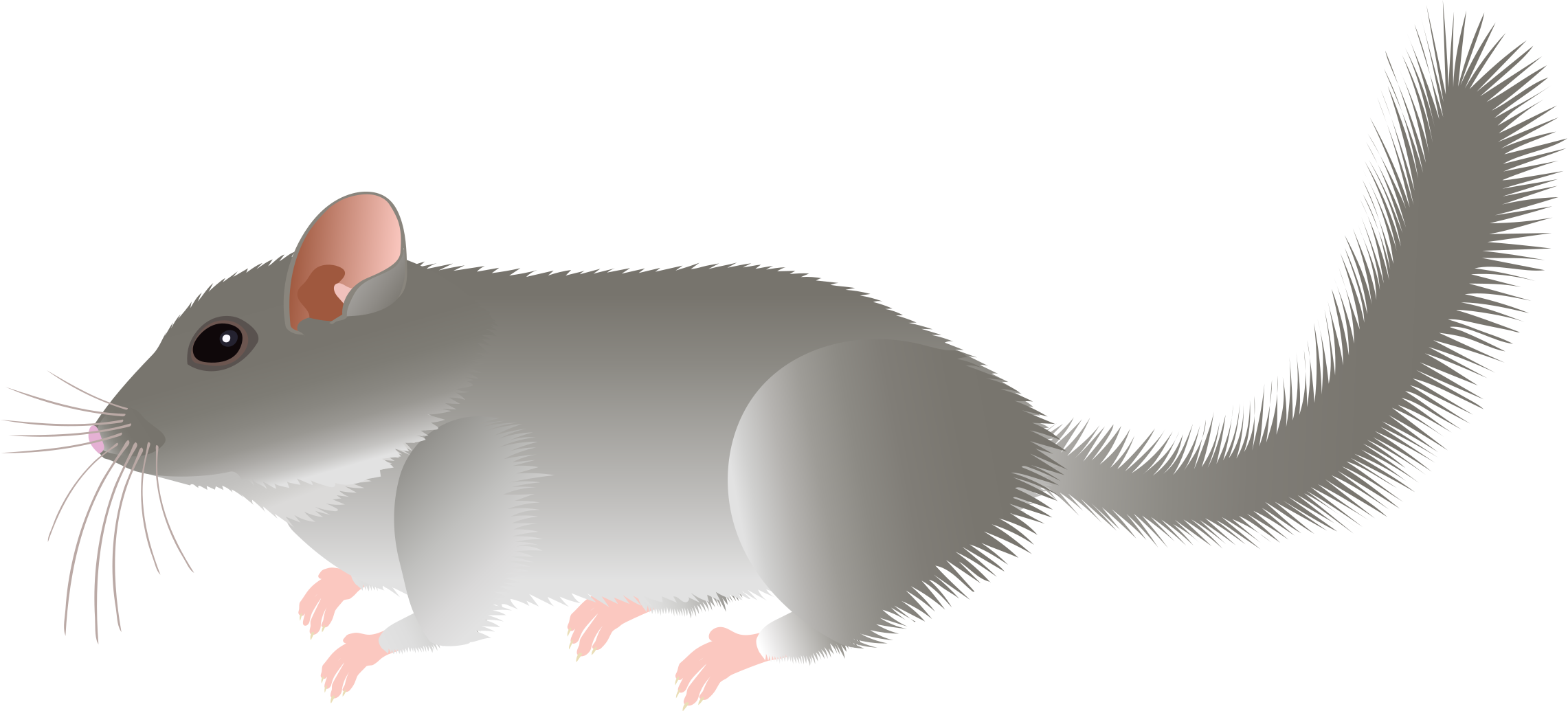
Edible Dormouse: Glis Glis

Edible Dormouse

The Romans used to breed edible dormice to eat as a snack. These rodents look a bit like tiny squirrels, with greyish fur and brown tails. Britain’s edible dormouse population is confined to the Chilterns and nearby woodlands.

Muntjac Deer: Muntiacus Reevesi

Muntjac Deer

This small hump-backed deer originally came to the UK from China and can now be spotted here all year round. Muntjac deer are not much bigger than foxes and hang around in small family groups rather than large herds. Sadly, they can damage important wildflower species in the woodlands they visit.

Supported By:

supported company logo

Project Partner:

partner logo GreenTheUK logo

Join Our Mailing List...