Projects For Our Future

header image

CrossCountry Trains Sponsors A Mile of Biodiversity Enhancement Along the National Cycle Network

In 2025, CrossCountry Trains expanded their support of local wildlife by making a commitment to enhance biodiversity along a mile of the National Cycle Network, in partnership with GreenTheUK and Walk Wheel Cycle Trust (formerly known as Sustrans). CrossCountry Trains have made a commitment to protect and conserve the natural environment by creating tangible biodiversity benefits in the communities they serve.

Our partnership is protecting vital species, connecting people and places with nature and promoting sustainable travel. Thank you CrossCountry Trains for dedicating biodiversity funding to communities and wildlife local to your stations.

The important role of the National Cycle Network

In the UK we are facing a climate and ecological emergency principally due to habitat loss, habitat fragmentation, climate change and changes to agricultural practices.

The survival of many species is threatened by an ever-shrinking amount of space for plants and animals to live and thrive in. There's also a perilous lack of safe routes connecting habitats, causing wildlife populations to become isolated.

In response to this, Walk Wheel Cycle Trust is developing greener, more biodiverse traffic-free paths on the National Cycle Network and expanding its biodiversity work to develop more greenways across the UK network.

The geography of greenways like the Lias Line offers the potential to create exemplary habitats with spaces and routes for wildlife to both live and travel.

Because just like us, animals need to travel to thrive.
image

The Lias Line Greenway

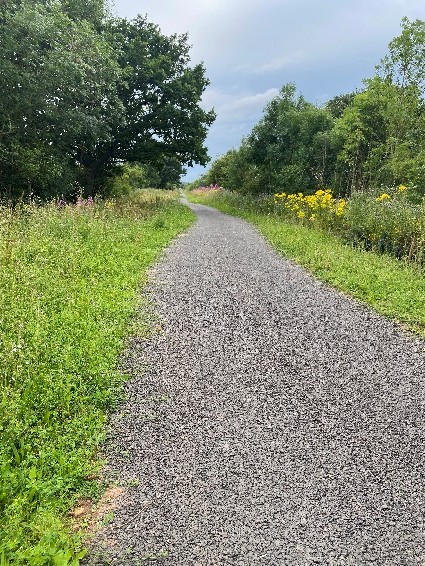
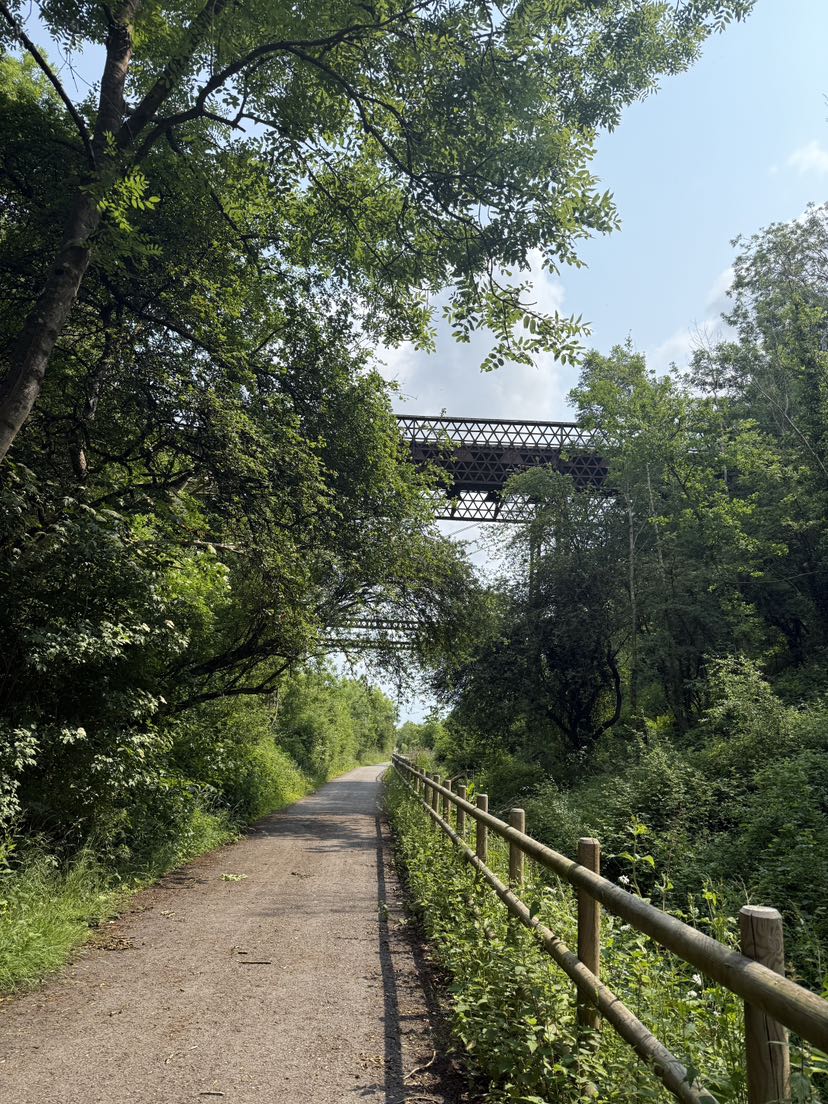
The Lias Line Greenway route – NCN41- connects Rugby, Long Itchington and Leamington Spa, with part of the route taking users along the Grand Union Canal, passing pretty villages, wildlife reserves, reservoirs and canals.

The Lias Line is 23.5 miles or 37.8 kilometres in length, 65% of the route is traffic free on a good quality surface making it a popular route for local communities to enjoy on foot or bike, with friends, family, dogs or alone. It is a flagship route on the National Cycle Network with great picnic spots where you can look out for rare migrating birds from the bird hides connected with Draycote Water.

It connects humans with nature, offering local communities the space to invest in their physical and mental wellbeing during commuting, utility and leisure trips.

The route is alive with wildlife, a haven for rare species of plants and animals.

In 2022 the Lias Line featured on BBC Countryfile where presenters Matt Baker and Ellie Harrison explored the greenway in Warwickshire. The show highlighted the work Walk Wheel Cycle Trust have delivered to transform the route into a vibrant greenway for both people and wildlife.

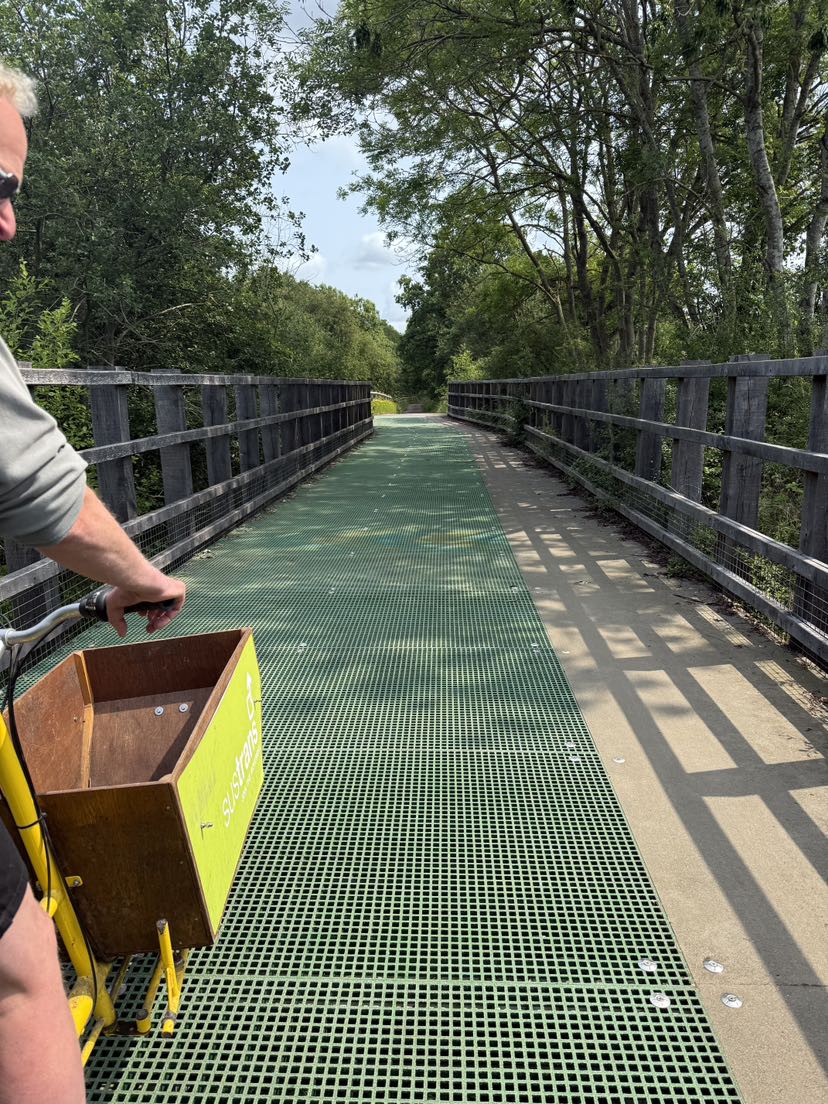
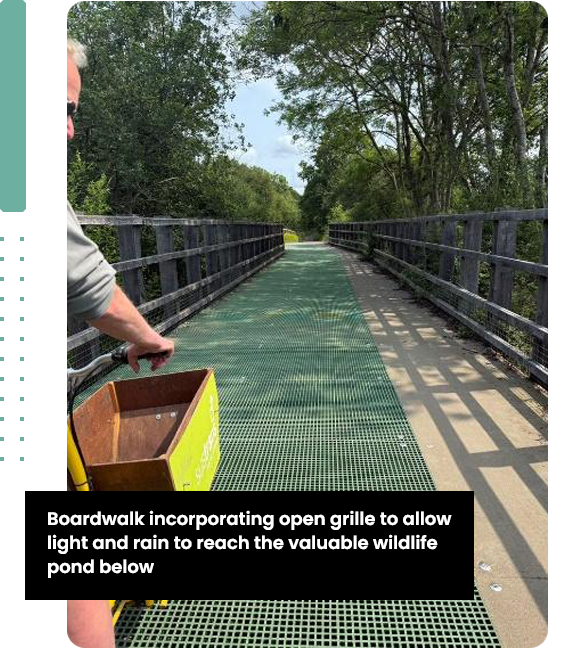
Walk Wheel Cycle Trust have used some innovative engineering designs to protect the local wildlife and enable biodiversity to thrive along the route. The Trust has built a raised boardwalk over an important wildlife pond. The board walk incorporates an open grid floor. Normally, this type of surface can be found on a fire escape. The use of the grid has helped to ensure that light can continue to cascade down to the pond below. Since it was finished in 2022, the design has helped important aquatic plants continue to grow and maintained suitable conditions for amphibians to breed. This is one of many examples of the sympathetic design advancements the charity has implemented along the route.

The impact of CrossCountry Trains support

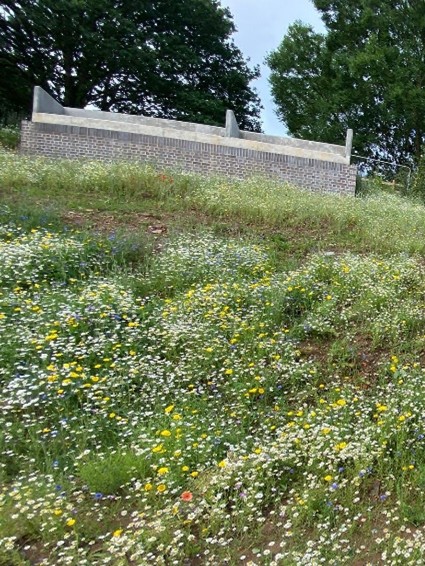
Improving biodiversity on the Lias Line Greenway

Throughout 2025, CrossCountry Trains has supported Walk Wheel Cycle Trust to improve the biodiversity and wildlife habitats on the Lias Line Greenway.

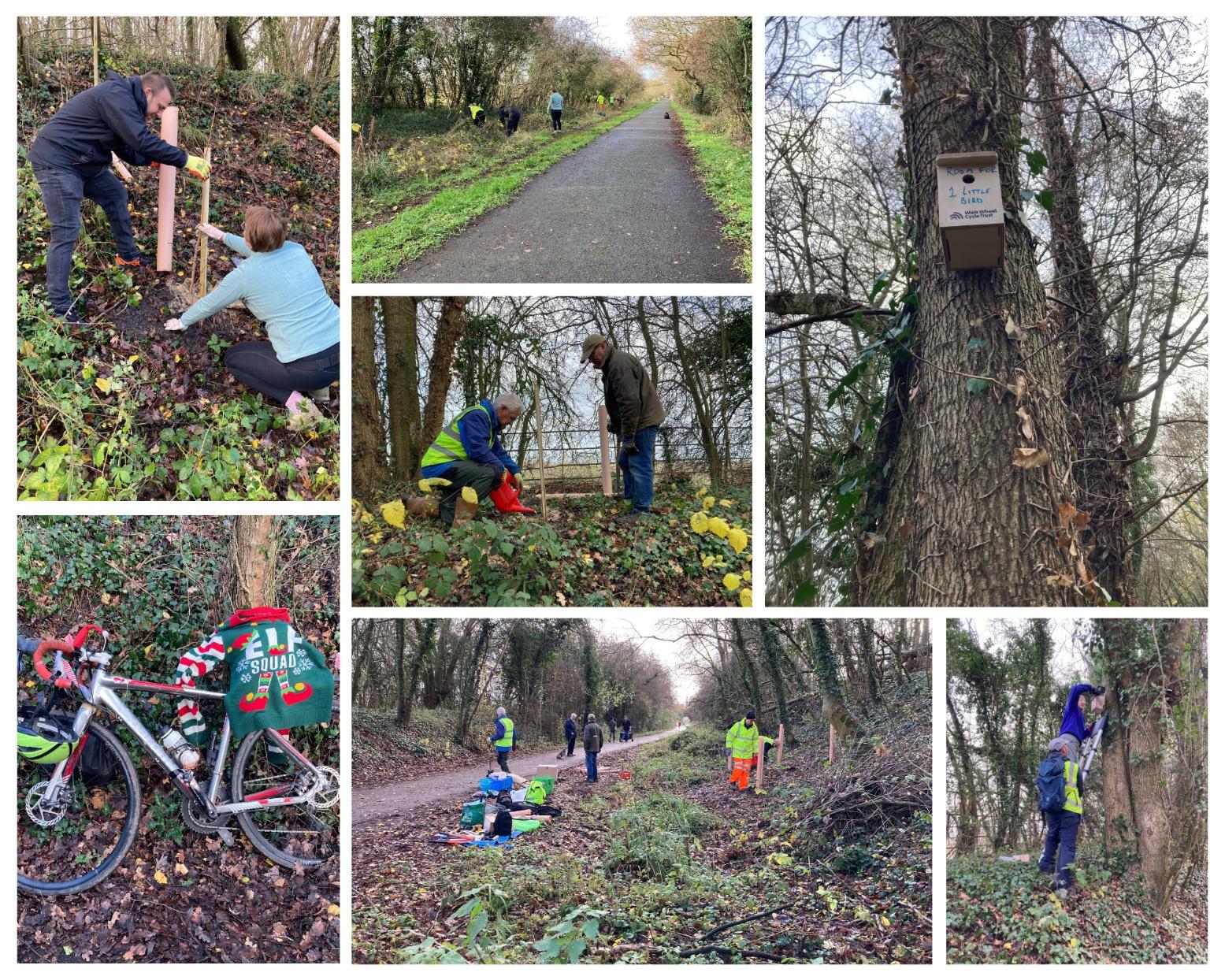
Funding has enabled native tree and shrub planting, targeted hedgerow restoration as well as the purchase and installation of the new wildlife boxes. This support has also allowed the Biodiversity Team to work with and train local volunteers to carry out valuable conservation management along the route.

All of these actions, and in particular the tree and shrub planting will help build the resilience of the existing woodland along the Lias Line to help mitigate against the effects of climate change. With the new wildlife boxes and restored hedgerow providing safe and secure locations for a range of birds and mammals to breed and seek shelter in future years.

Tree and Shrub Planting

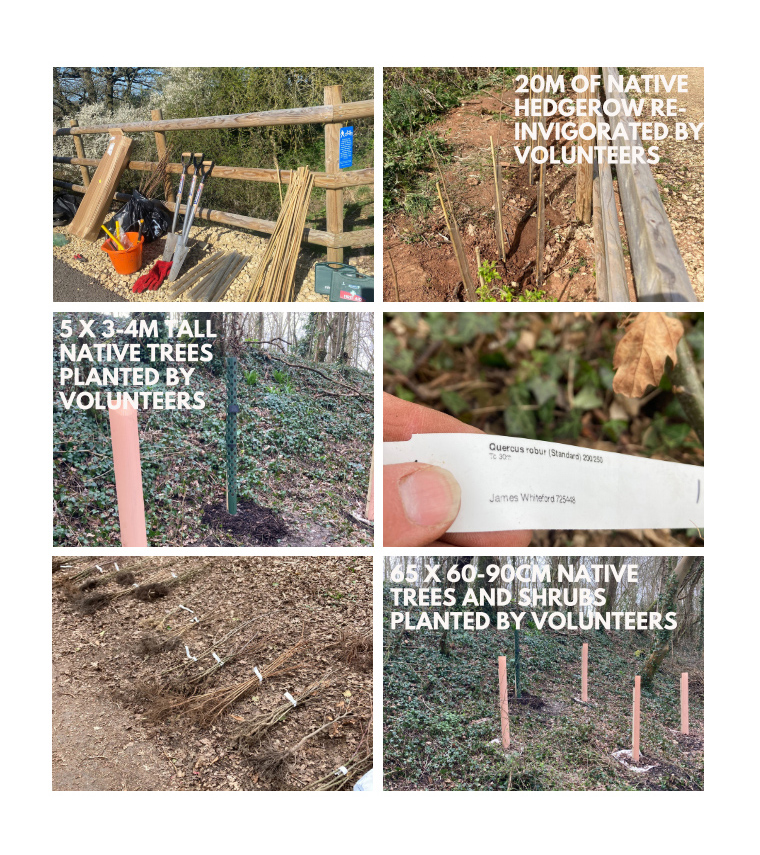
Over the last year, the Biodiversity Team and local volunteers have planted more than 70 broadleaved trees and shrubs, comprising nine tree species (including crab apple), one cultivated apple variety and two native shrub species.

Species Planted Include:

Tree Leaf

English Oak: Quercus Robur

Also known as the common or English oak, this is the undisputed king of the woods, supporting more wildlife species than any other native tree in the UK. “Robur” in this oak’s Latin name means “strength” and “hard timber” because this tree produces incredibly durable wood which can be used to make many things, including furniture and flooring. The oak has been considered sacred by many gods in mythology throughout the ages.

Tree Leaf

Alder: Alnus Glutinosa

Alder can be found across Europe and thrives in moist ground and damp cool areas, which is why you’ll often see alder trees planted near rivers and ponds. Moth caterpillars love alder leaves and the tree’s roots make an ideal nesting site for otters. For humans, the real value of alder wood is that it’s durable when wet, so is useful for making boats and sluice gates. The story goes that outlaws like Robin Hood would have used the green dye from alder flowers to camouflage their clothing!

Tree Leaf

Crab Apple: Malus Sylvestris

Crab apple trees grow throughout Europe and can live for up to a century, reaching a height of around 10m. This tree is traditionally associated with love and marriage, and it is said that if you say the name of your lover while throwing crab apple pips into a fire, then your love is true if the seeds explode! Crab apples can be made into jelly, roasted and added to drinks, or served as an accompaniment to meat.

Tree Leaf

Fruiting Apple: Scrumptious Variety

Common Apple trees produce fragrant blossoms in the spring, followed by delicious crisp apples in the summer and autumn. Apple trees provide shelter and food for an array of wildlife and can be found naturalised in hedgerows, planted gardens and abundant in orchards.

Tree Leaf

Field Maple: Acer Campestre

This species is the UK’s only native maple and is often grown as an ornamental tree in large gardens and parks, as well as in woods and hedgerows. Its wood is white, hard and strong, and is popular for making furniture, flooring and musical instruments, especially harps. Field maple flowers are hermaphrodite, meaning each flower contains both male and female reproductive parts.

Tree Leaf

Small-Leaved Lime: Tilia Cordata

Its heart-shaped leaves may be small, but this tree is large and sturdy, growing to around 20m tall. Lime wood is used to make piano keys, and its bark can be made into rope. During rationing in World War Two, people made an infusion from crushed lime leaves as a substitute for tea, which was tricky to get hold of.

Tree Leaf

Wild Cherry: Prunus Avium

Stunning white cherry blossoms burst forth in April, heralding the arrival of spring and bringing joy to parks and gardens. Mature cherry trees can live for up to 60 years, and provide a great source of food for birds, bees, insects, and small animals like badgers and mice. Our ancestors would boil wild cherries and make them into a syrup to treat a range of ailments including coughs and anaemia.

Tree Leaf

Hornbeam: Carpinus Betulus

The hornbeam is extremely tough and keeps its leaves all year round, making it an attractive proposition for birds, insects and other animals. Hornbeam wood is very hard, in fact it is also known as “ironwood” and the Romans recognised its durability, using it to make their chariots. Nowadays, this timber is used for tool handles, coach wheels, parquet flooring and chess pieces!

Tree Leaf

Beech: Fagus Sylvatica

If the oak is the king of British trees, then the beech is its queen. A dense canopy of leaves provides a rich habitat for all sorts of insects, its seeds are popular with mice and squirrels, and hole-nesting birds make their homes in beech trunks. Some of the UK’s tallest native trees are beeches, including one that stands at over 44m tall on the National Trust's Devil's Dyke Estate in West Sussex.

Tree Leaf

Spindle: Euonymus Europeaeus

You’ll find this striking, brightly-coloured flowering plant in hedgerows and forests all over Europe. The spindle is also a very popular addition to parks and gardens, because of its pink and orange fruit and foliage which turns red in the autumn. Its wood is hard and dense, making it the ideal choice for the manufacture of spindles and skewers, and the discovery of spindle wood at Bronze Age burial sites means man has been using it for thousands of years.

Tree Leaf

Wild Privet: Ligustrum Vulgare

This bushy, deciduous shrub is native to the UK and Europe. It was a regular feature in Elizabethan gardens and is still very popular with gardeners today, as well as being found in hedgerows and on the edge of woodlands. It has white flowers which bloom in June, before small black berries - which are extremely poisonous to humans but popular with birds - appear in the autumn.

Tree Leaf

Hazel: Corylus Avellana

The common hazel is native to Europe and western Asia and forms an important part of England’s hedgerows. We have all heard of hazelnuts, which are rich in unsaturated fats and protein, and an extremely popular ingredient in many of the world’s cuisines. Did you know that hazel trees were once seen as both magical and a symbol of fertility?

The smaller trees and shrubs have been protected from grazing deer and rabbits using biodegradable tree shelters and stakes. Biodegradable weed suppression mats have been used to give all the trees the best chance to establish.

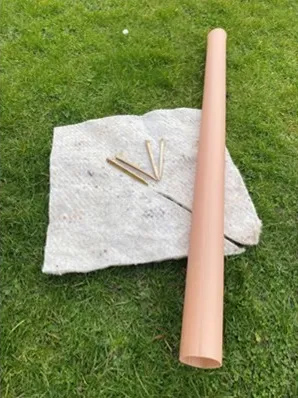
CrossCountry Trains’ support enabled the trial of a new type of weed mat. This new mat is made from recycled offcuts of wool and other natural fibres and have been secured to the ground using bamboo pins, rather than typical metal or plastic pegs. These actions help to minimise the carbon and ecological footprint of these works. The larger trees were fitted with re-usable guards which will be reused once the trees have become established.

Funding has also helped purchased: planting spades, mallets, a pull along hand trolley, a pair of collapsible water butts, pipe work and watering cans. These items will enable our volunteers to support the growth of the trees and shrubs over the drier months. All these items will stay onsite and be stored in a secure storage unit and be available for local volunteers to use in future years to maintain the biodiversity habitats along the Lias Line and adding a further legacy to CrossCountry Trains support.

All the tree and shrub planting was completed in-conjunction with local volunteers. Volunteer tree planting leads to great survival outcomes. Taking a volunteer-led approach also creates a higher sense of ownership and custodianship in the local community helping to increase the usage and recognition of the Lias Line and other Network routes into communities.

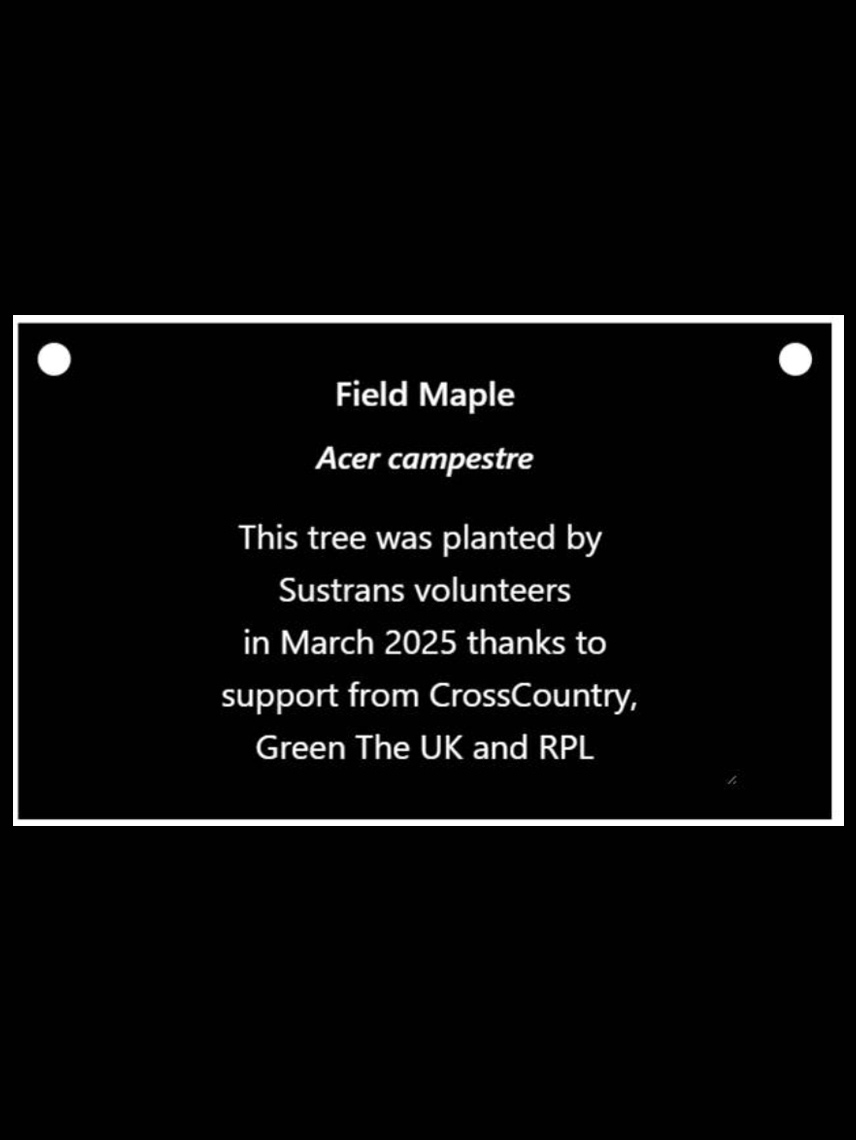
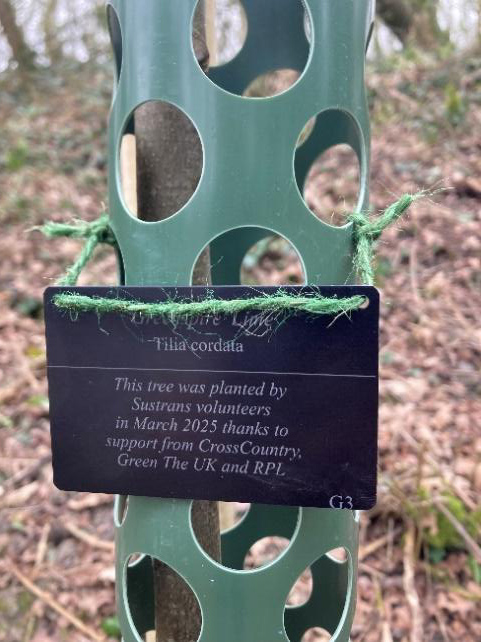
For 3 of the larger trees planted, which were approximately 3-4m tall, tree tags have been installed to inform users of the path of the species and to recognise the support from CrossCountry Trains.

image
Image of tree tag
image
In-situ image of tree tag, March 2025
image
Biodegradable tree shelters, weed suppression mats using offcuts of wool and other natural fibres

Wildlife boxes

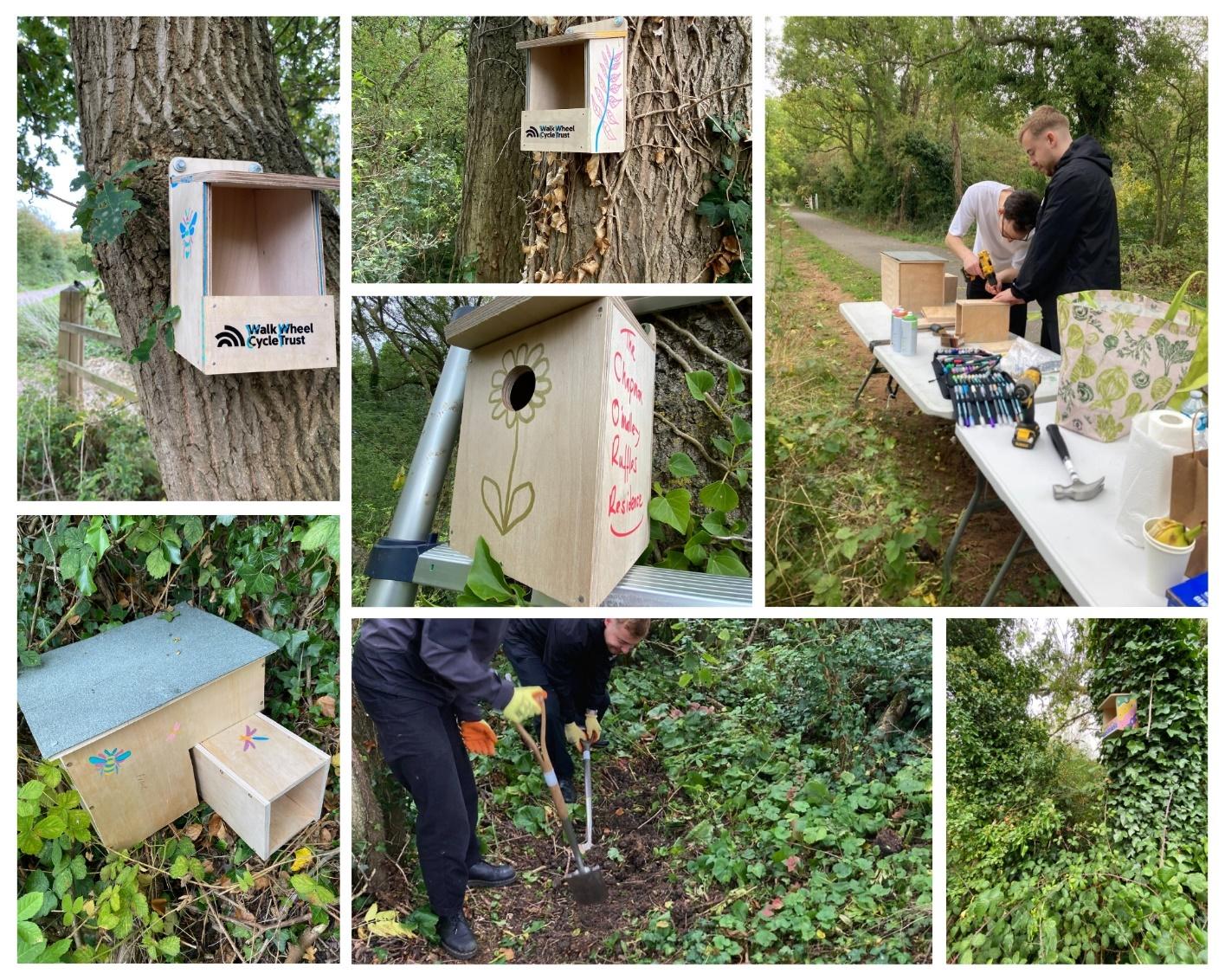
CrossCountry Trains’ funding provided ten hedgehog nesting hut kits and installed an additional ten bird boxes along the route to enhance habitat diversity. Hedgehogs are a UK Biodiversity Action Plan species experiencing significant national decline; the huts provide secure refugia and facilitate long-term population monitoring with support from volunteers.

The bird boxes, constructed by volunteers and Trust staff, incorporate a range of designs including open-fronted 28mm and 32mm entrance-hole types targeting a mixture of different species. These boxes increase the availability of nesting and roosting sites for woodland and edge-dwelling birds, including priority species such as nuthatch, contributing to broader biodiversity objectives along the corridor.

image
image

Target Species:

Bird

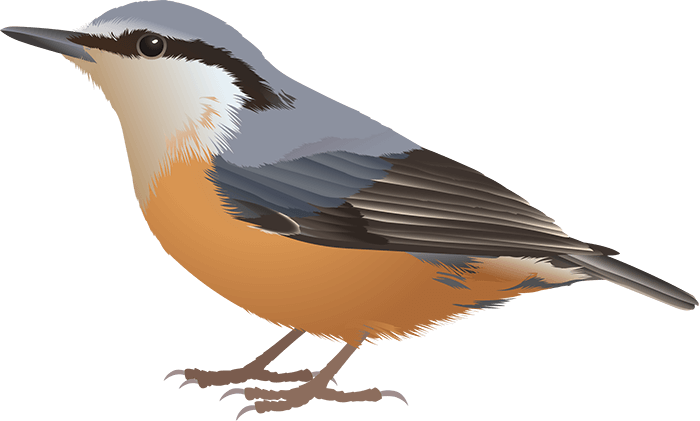
Nuthatch: Sitta europaea

A small, compact woodland bird with strong bills. They nest in tree holes, which they carefully modify by plastering the entrance with mud to make it the perfect size.

Bird

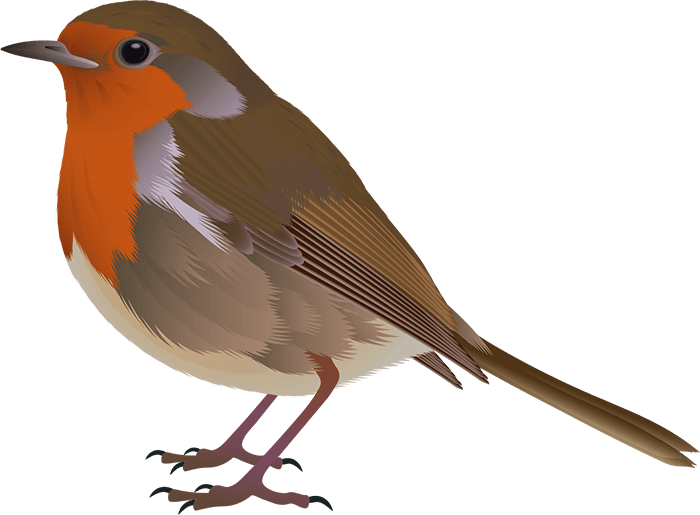
Robin: Erithacus rubecula

Famously known for their red breast and grey-brown back, male and female robins are identical in plumage. They're relatively unafraid of humans, and are known as gardener's friends, looking for worms and other food in disturbed soil. Robins also approach other large animals, such as wild boar, to forage in the ground they disturb.

Bird

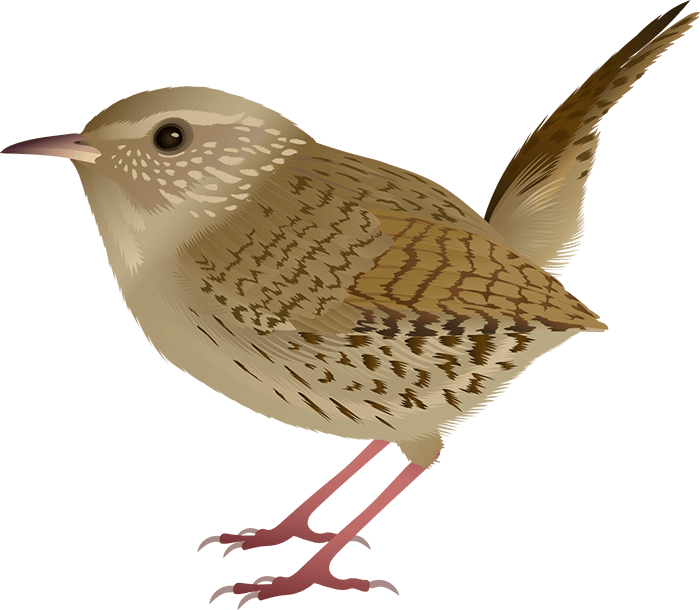
Wren: Troglodytes troglodytes

The wren is the UK’s most common breeding bird, and can be found anywhere where there are insects to eat and safe areas to nest in. This bird may be tiny, but it makes sure that it can be heard and has a very loud voice. Female wrens are especially vocal when their chicks first start flying, and can even sing two notes at the same time.

Bird

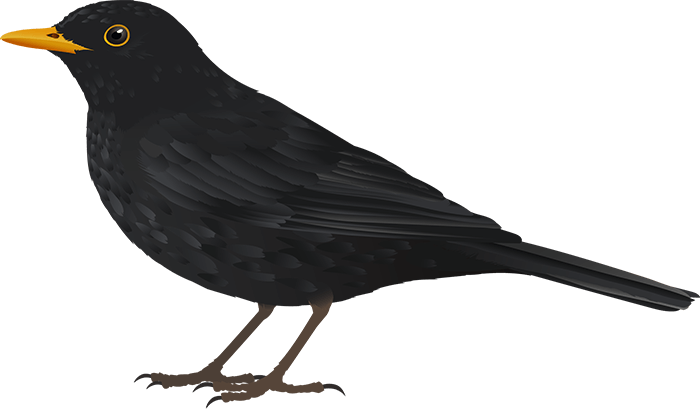
Blackbird: Turdus merula

One of the UK’s most familiar garden birds, male blackbirds are easily recognised by their glossy black plumage and bright yellow beak, while females are dark brown with subtle mottling. Blackbirds are often seen hopping across lawns and leaf litter, searching for worms, insects and fallen fruit. Their rich, melodic song is a classic sound of spring and early summer, often heard at dawn and dusk.

Bird

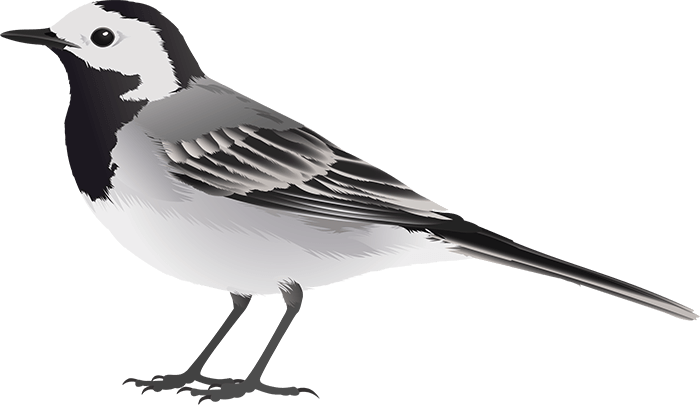
Pied Wagtail: Motacilla alba

The pied wagtail is a striking black, white and grey bird, instantly recognisable by its long tail, which it constantly wags up and down. Commonly found near water, farmland and urban areas, it feeds on insects disturbed by grazing animals, people, or even moving vehicles. Agile and fast-moving, pied wagtails are also known to gather in large communal roosts, particularly in towns and cities during winter.

Visit The Mile

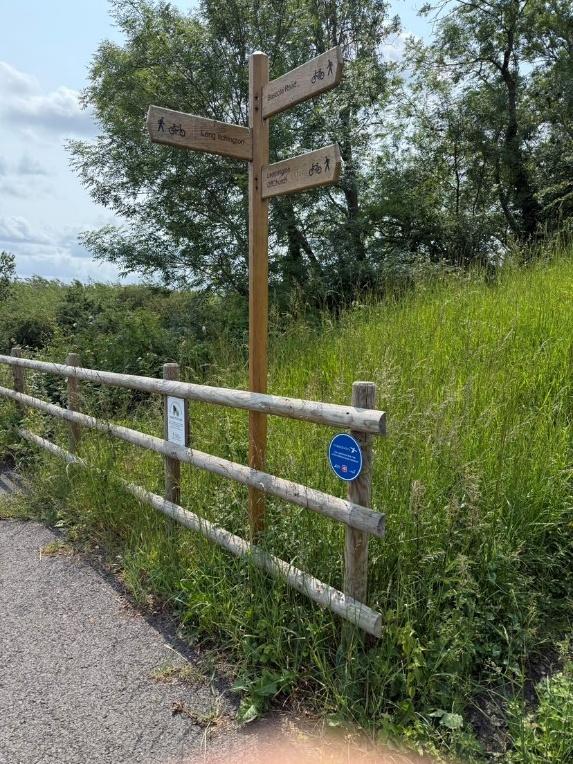
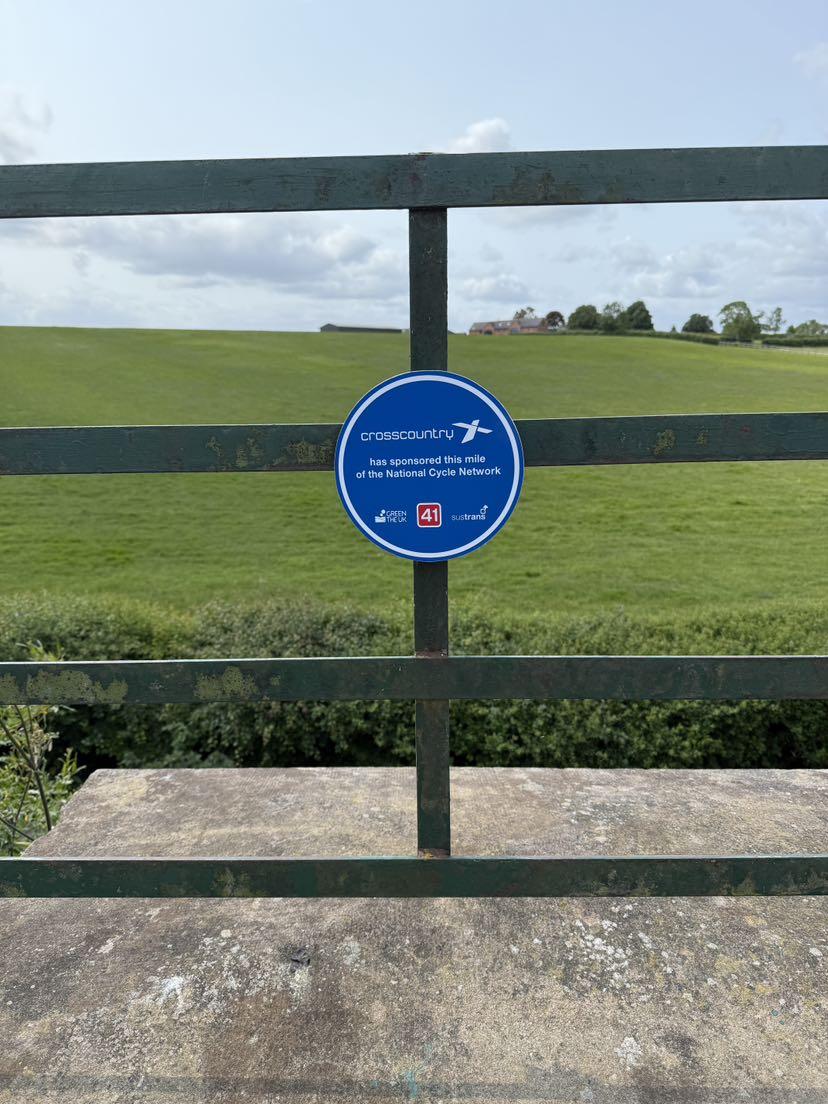
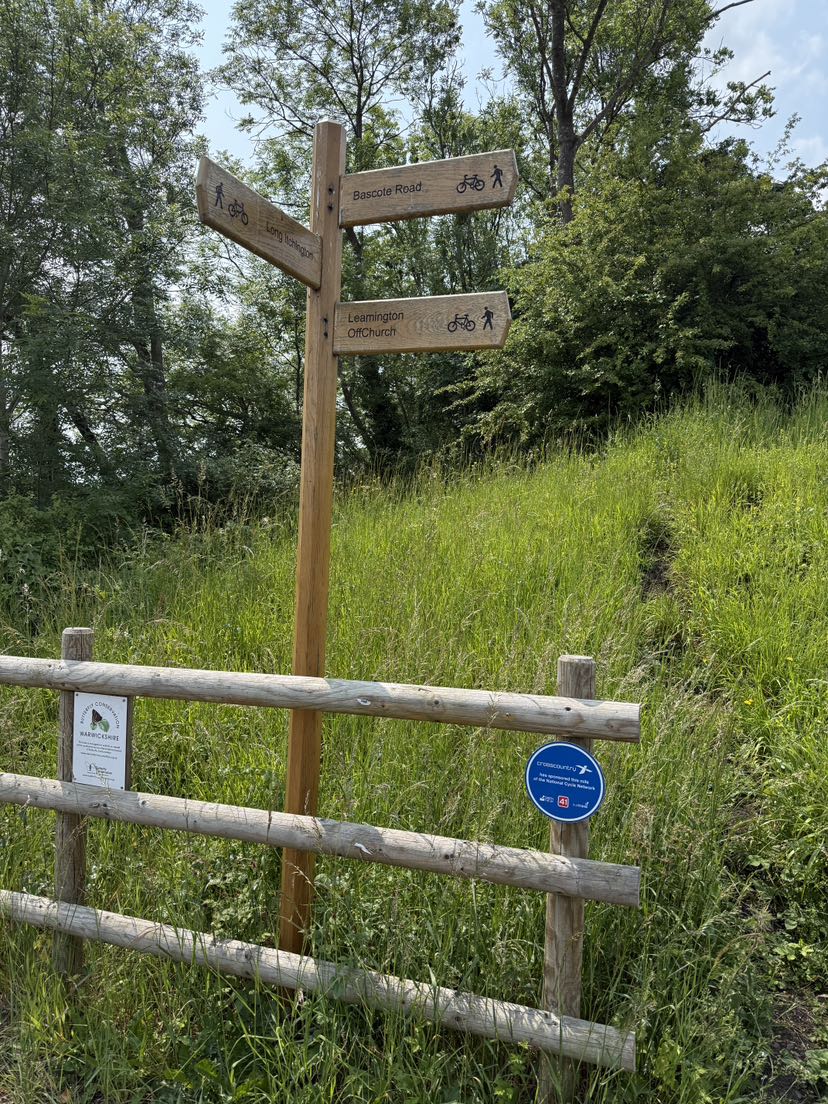
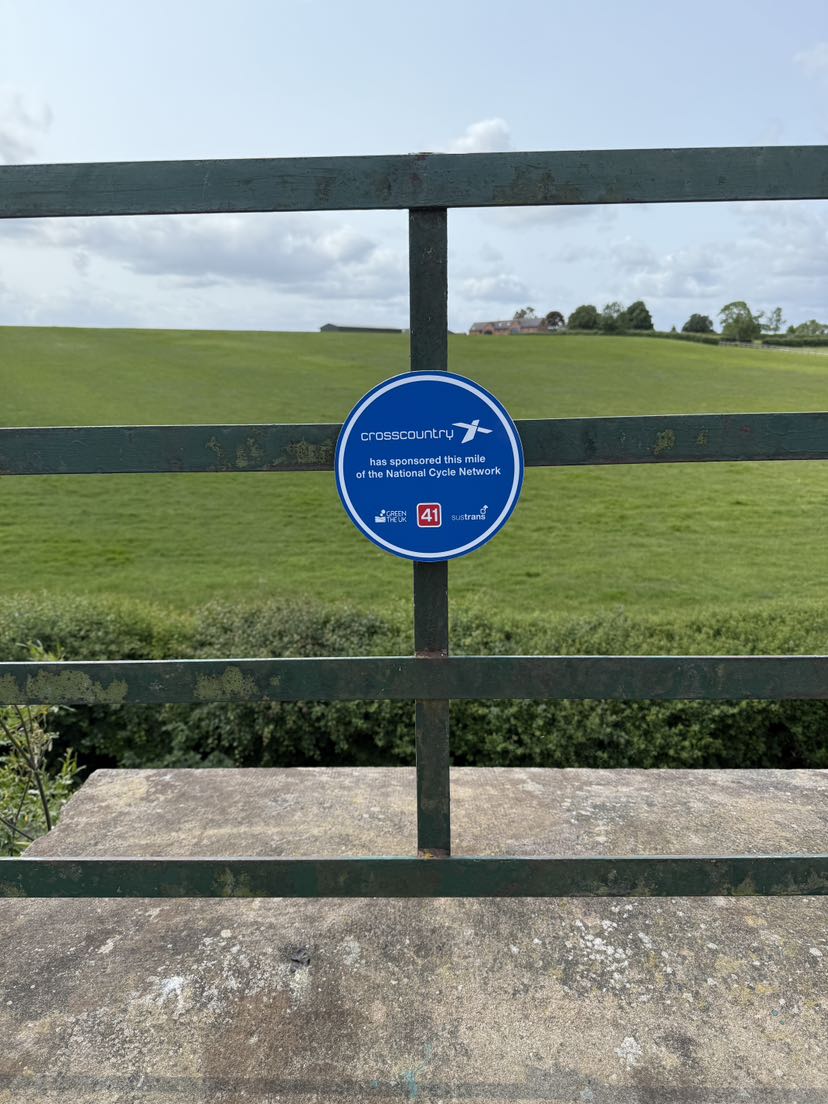
To celebrate CrossCountry Trains’ support and sponsorship of a mile of the Lias Line, signs have been installed at a busy intersection which is visible to users of the path. The mile chosen is a busy section of the Lias Line and runs alongside a grass bank which is home to a diverse population of butterflies making it a nice stretch of the route to enjoy on foot or by bike. You can find the sign at mile 41 using What3Words: exposes.push.tinny.

image
image

CrossCountry Trains Volunteering Day on the Lias Line - September 2025

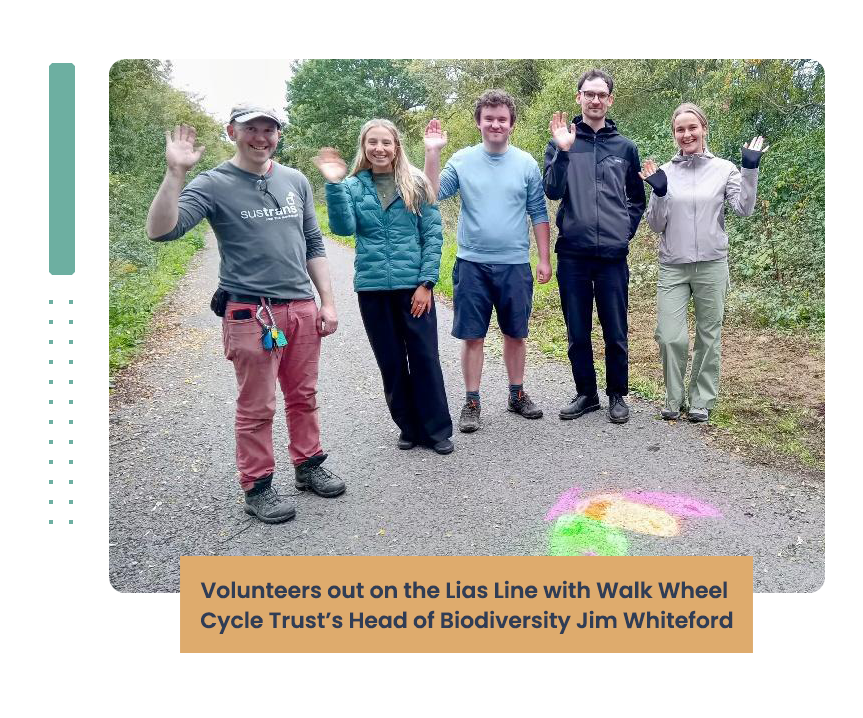
A small group of CrossCountry Trains volunteers joined the Walk Wheel Cycle Trust Ecology Team and GreenTheUK in September completing a range of tasks to improve and manage wildlife habitats along a stretch of the Lias Line.

Together the team created two hibernacula for amphibians, built and installed a pair of hedgehog boxes and helped install five bird boxes, as well as re-sow a section of verge at an entry point on to the route. The team also found time to help maintain a series of oak benches along the route and add some artwork to the path using chalk spray!

image
Image

LIAS LINE DELIVERING FOR BIODIVERSITY

image

Lasting Impact of CrossCountry Trains Support

Creating a network that helps rebuild nature and connect everyone to it is a core focus of Walk Wheel Cycle Trust’s new strategy. The commitment is to reconnect one million people to nature through the National Cycle Network and catalyse a UK-wide strategic nature network and rebuild nature at scale enabling everyone to access it. The generous funding received from CrossCountry Trains has enabled Walk Wheel Cycle Trust to advance this work and further enhance the Lias Line Greenway delivering impact for nature and people. This funding will enable local volunteers to maintain sections of the Lias Line, creating a sense of ownership and place for local people who can make an impact in their communities.

The Sponsor a Mile sign, tree tags and tools will create a legacy for CrossCountry Trains, sharing their commitment to the route and recognising the impact it has on the local communities who are now connected by the Lias Line.

Thank you CrossCountry Trains for helping make the network a place for people and nature to thrive. Extending and improving the Lias Line gives communities access to nature from their doorstep and offers local people the space to invest in their physical and mental health, whether commuting to work or enjoying the route for leisure. The Lias Line is a living project, and with generous support from CrossCountry Trains, vital work has taken place to support the species that call the Lias Line home.

Supported By:

supported company logo

Project Partner:

partner logo GreenTheUK logo

UN's Sustainable Development Goals

As a GreenTheUK partner, you support projects that are in line with the UN Sustainable Development Goals.

SDG Icon

Take urgent action to combat climate change and its impacts.

SDG Icon

Sustainably manage forests, combat desertification, halt and reverse land degradation, halt biodiversity loss.

Join Our Mailing List...