Planting for the Future

header image

LRG supported the planting of 3 hectares of wildflowers in the UK in 2024-25

LRG has taken action to restore one of the rarest habitats in the UK: wildflower meadows. They're essential for the protection and survival of insects around the country, thus a cornerstone of our entire ecosystem and food chain.

Wildflower meadows used to cover large swaths of England but approximately 97% of them have been lost since the 1930's, an area larger than the size of Wales.

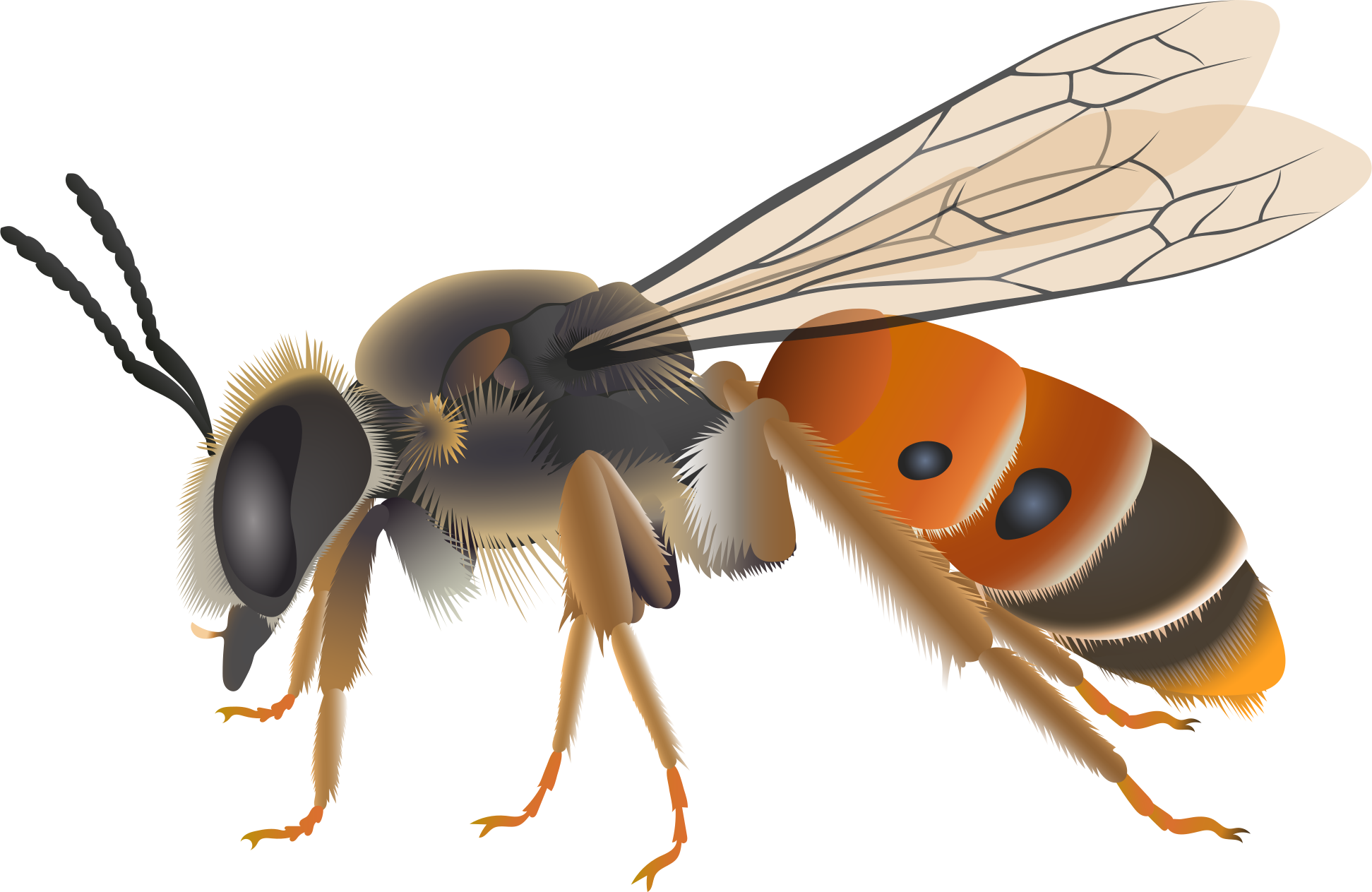
Wildflower meadows provide insects with food, shelter and transport links across counties in the UK where biodiversity has been depleted by habitat loss, development, and intensive farming. World leading study, State of Nature confirms the UK as one of the world’s most nature depleted countries, with 1 in 6 of more than 10,000 species assessed (16%) at risk of being lost from Great Britain. Some species, such as the Six-banded Nomad Bee have gone from being found all across southern England, to only being found in Devon.
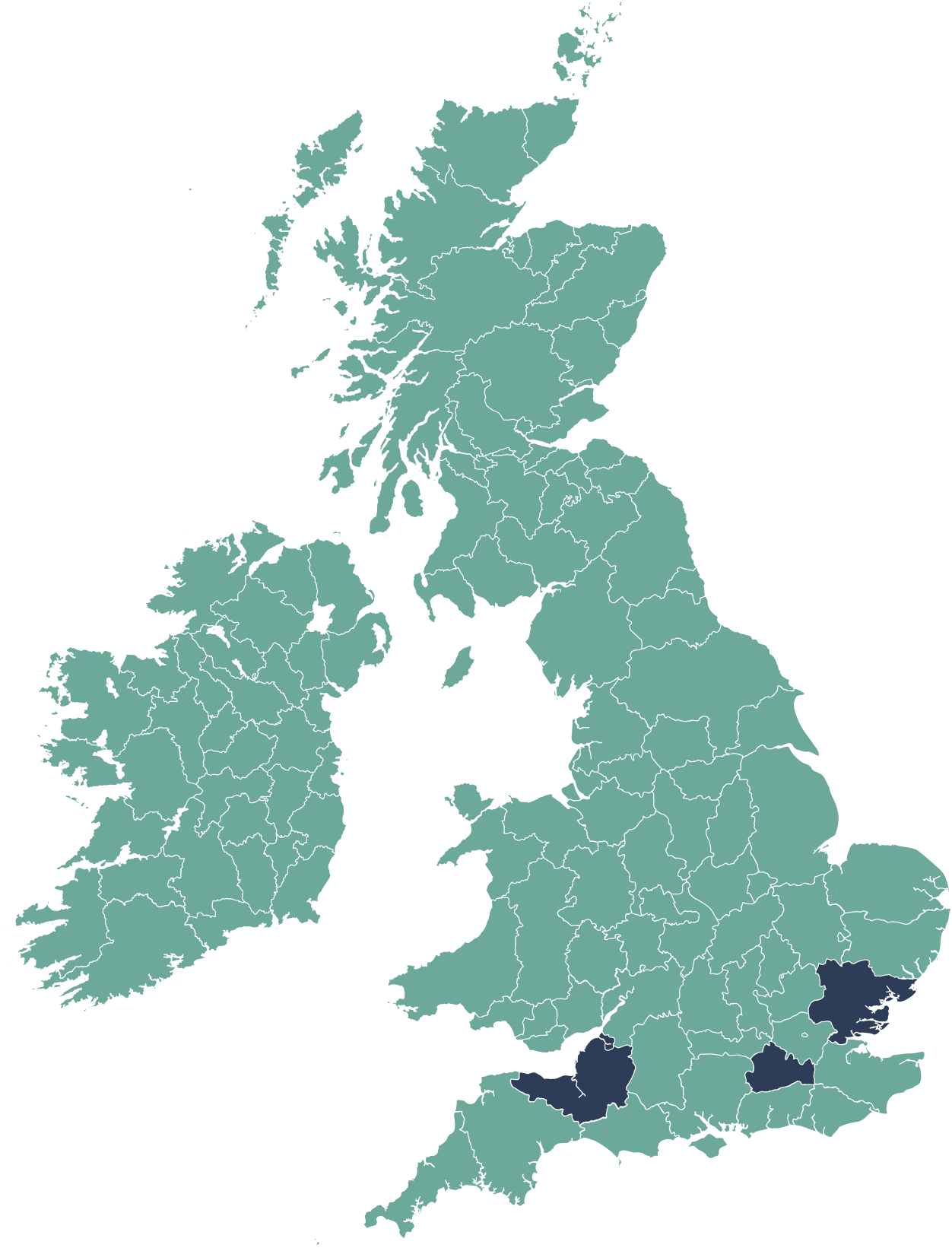
Map

Pollinators are critical to food chains and as such, wildflower meadows provide valuable support for wildlife and all life on earth, including humans. In the words of Kew Gardens, 'The more wildflowers there are, the more diverse pollinators they can support, and the more healthy crops we can grow.'

Our solution is to restore B-Lines - a network of insect pathways along which we are restoring and creating wildflower rich habitat. These pollinator highways created in partnership with GreenTheUK and Buglife will extend across the whole of the UK, allowing wildlife to move freely through our countryside and towns. Rather than covering entire regions in wildflowers, stepping stones of habitat have been created along the network to fulfil their purpose as efficiently as possible. In the event of the collapse of a wildflower habitat, having the B-Lines to provide new habitat and connect them with other wildflower meadows, we can save whole communities of insects from being lost.

Thanks to support from LRG, a network of flower-rich pathways that benefits pollinators, other wildlife, and people across the UK has been created.

Wildflower Restoration in South-West (0.1 hectare)

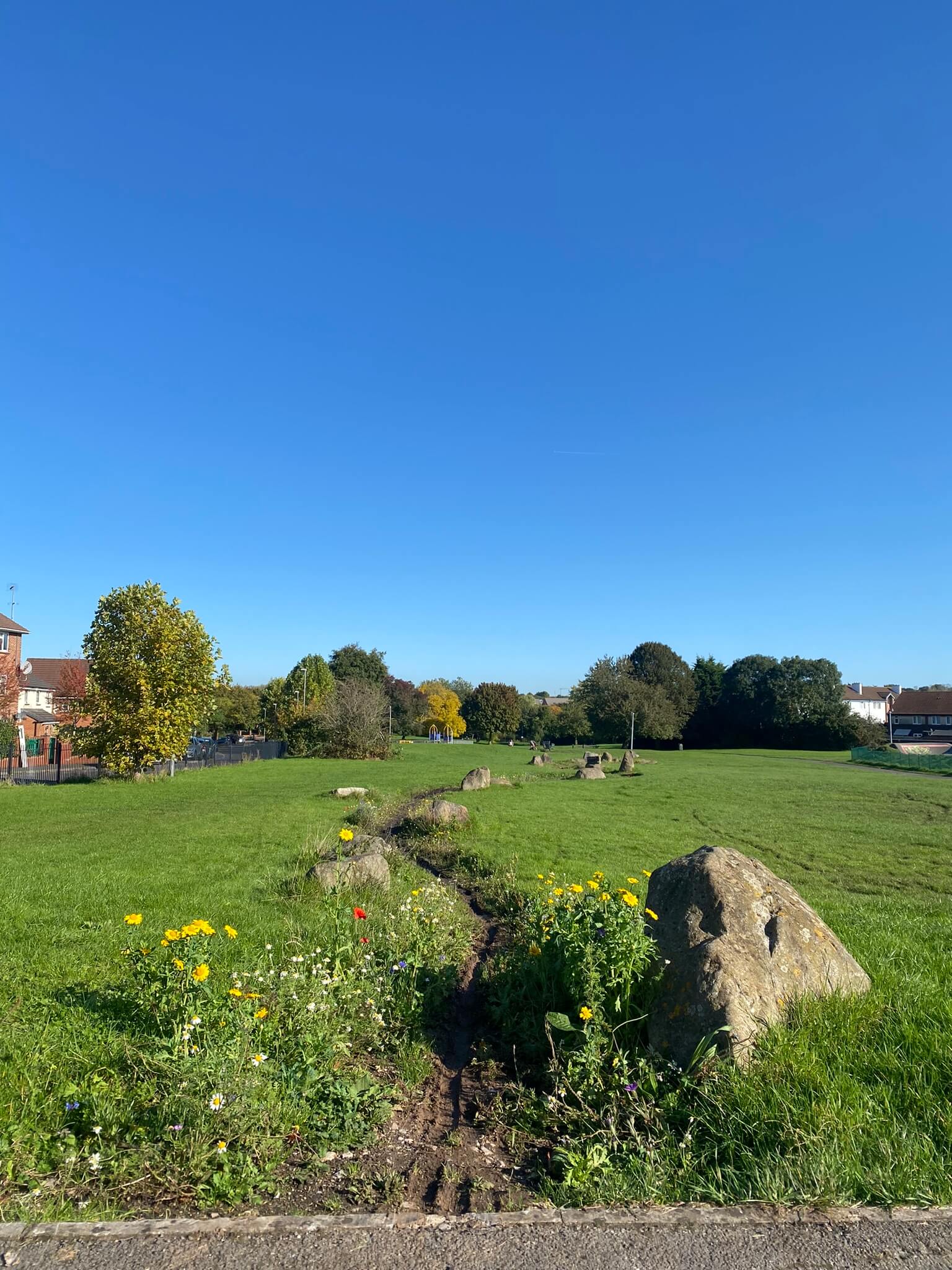
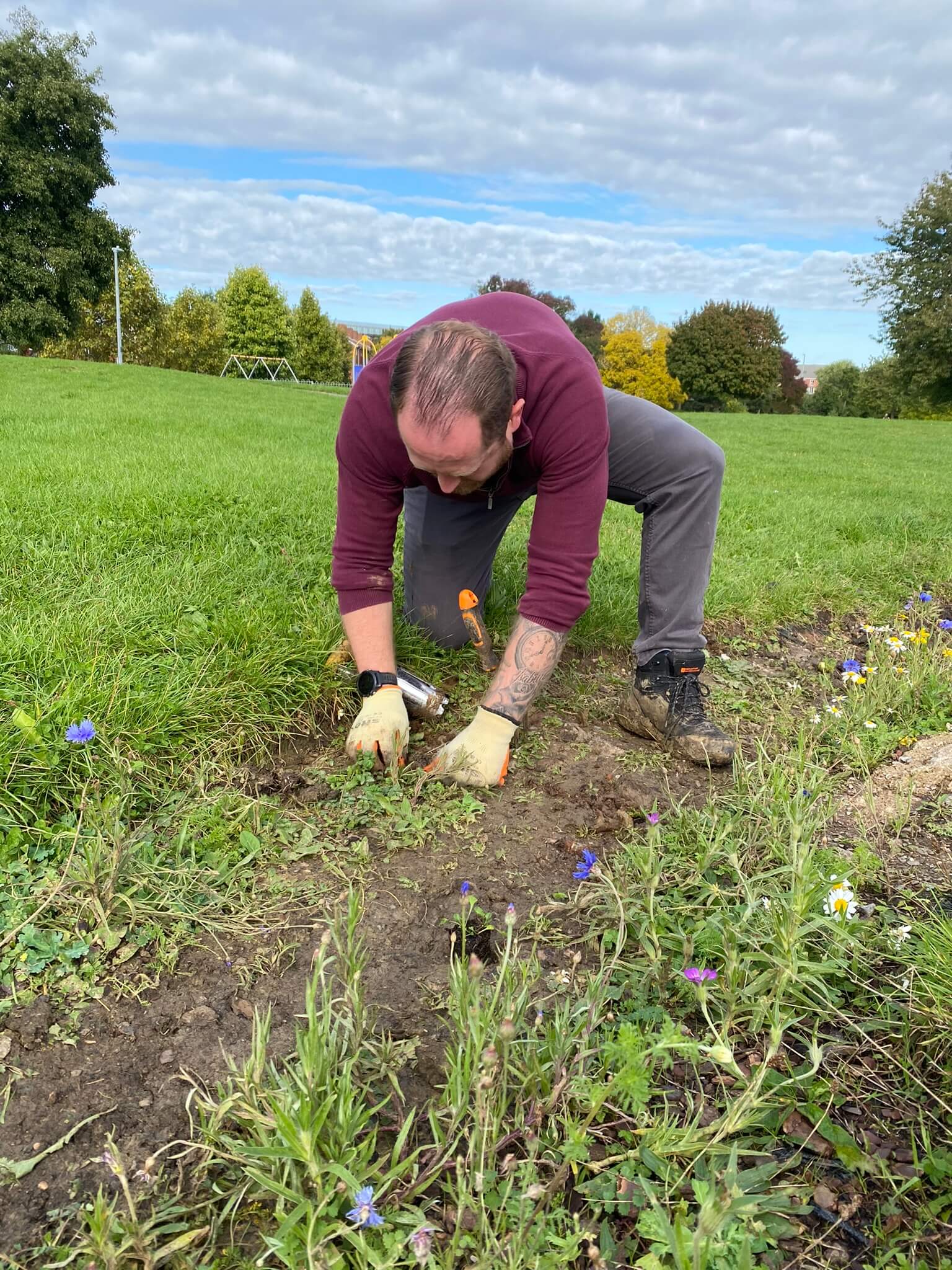
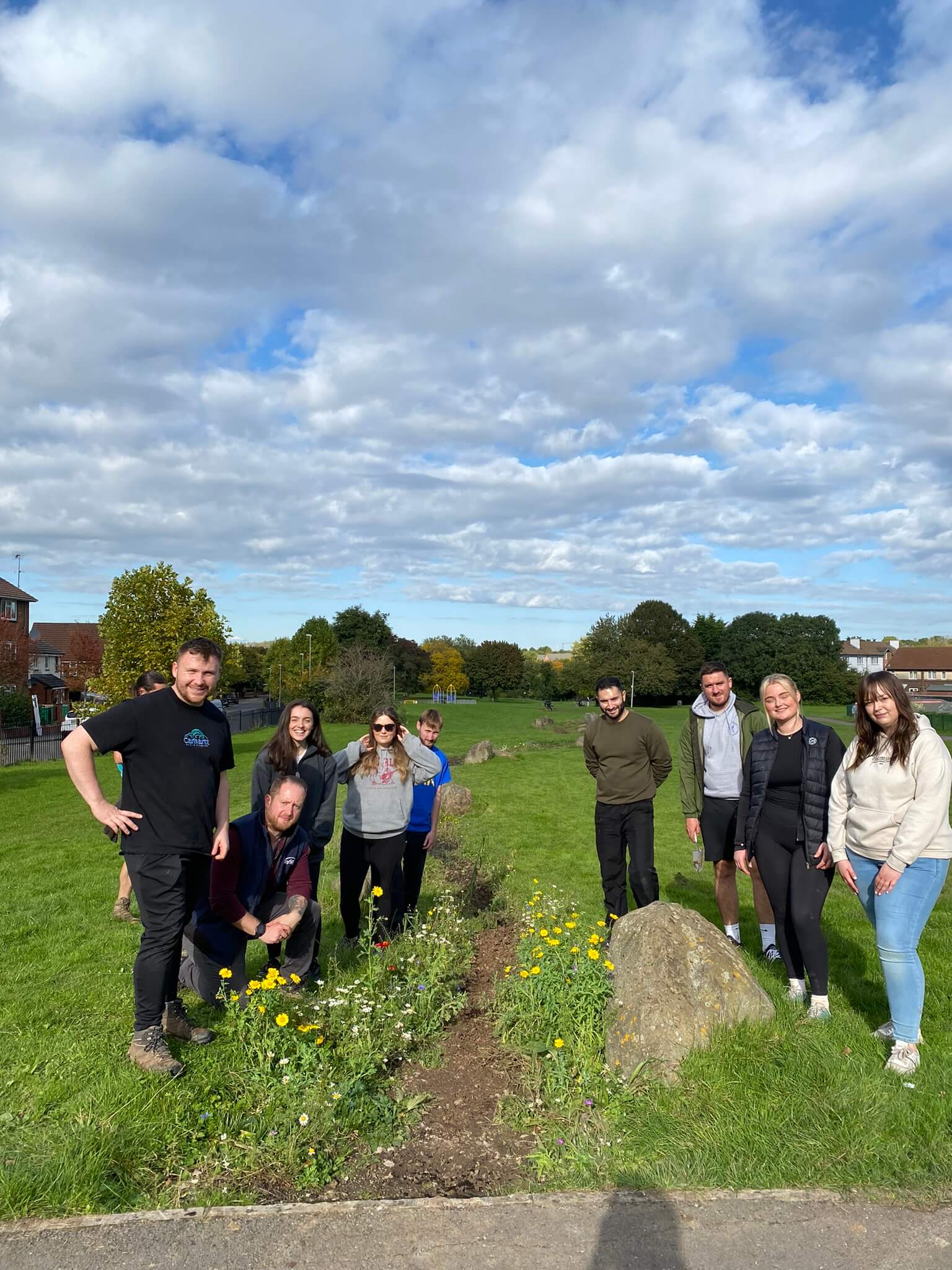
Wilmott Park is a 0.9 km linear greenspace that runs through the centre of Hartcliffe in South Bristol. The park is widely used by the community and enjoyed by friends, families, and dog walkers. It features a football pitch, 'rock river,' hill slide, children’s play area, and pump track.

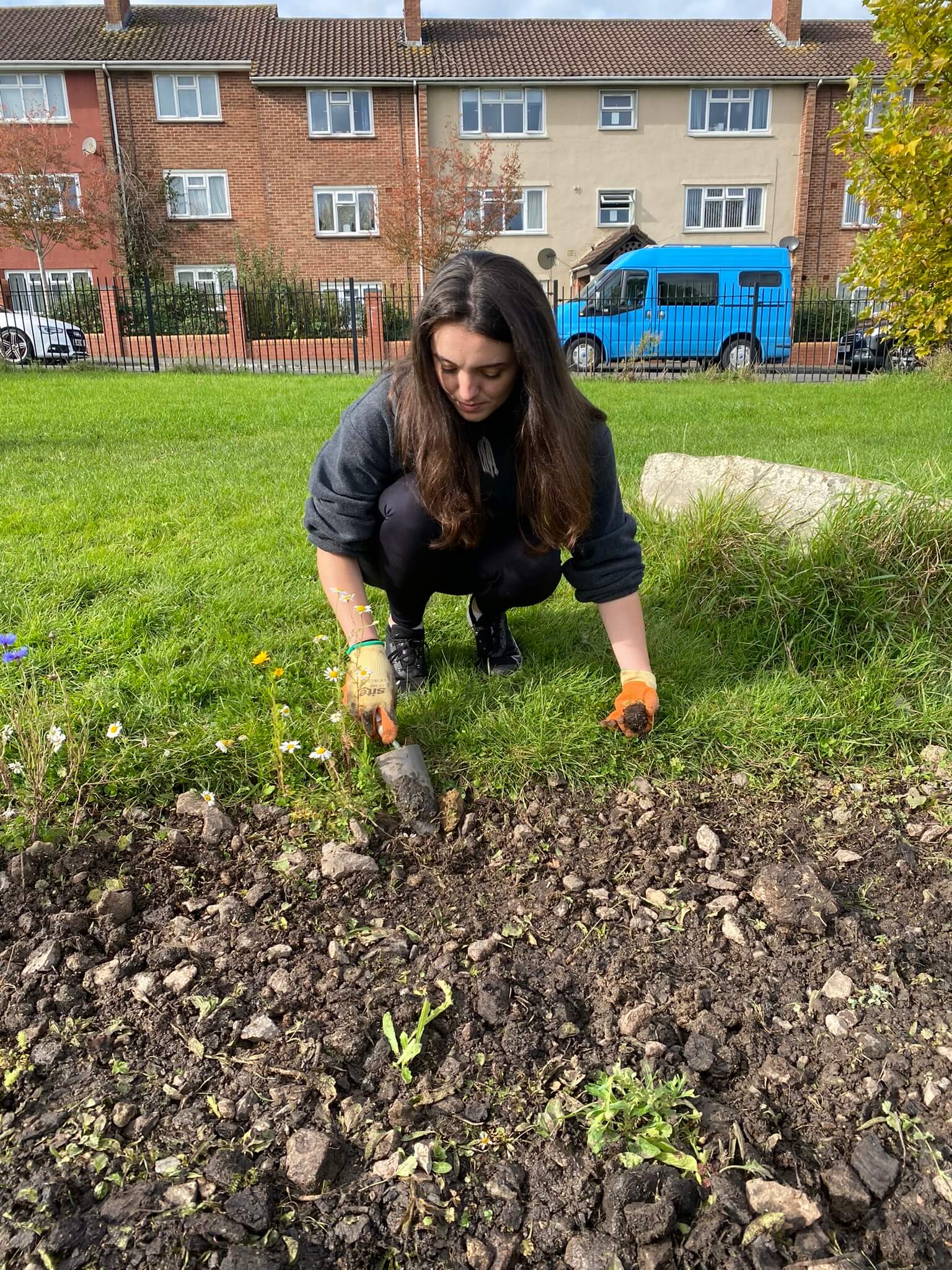
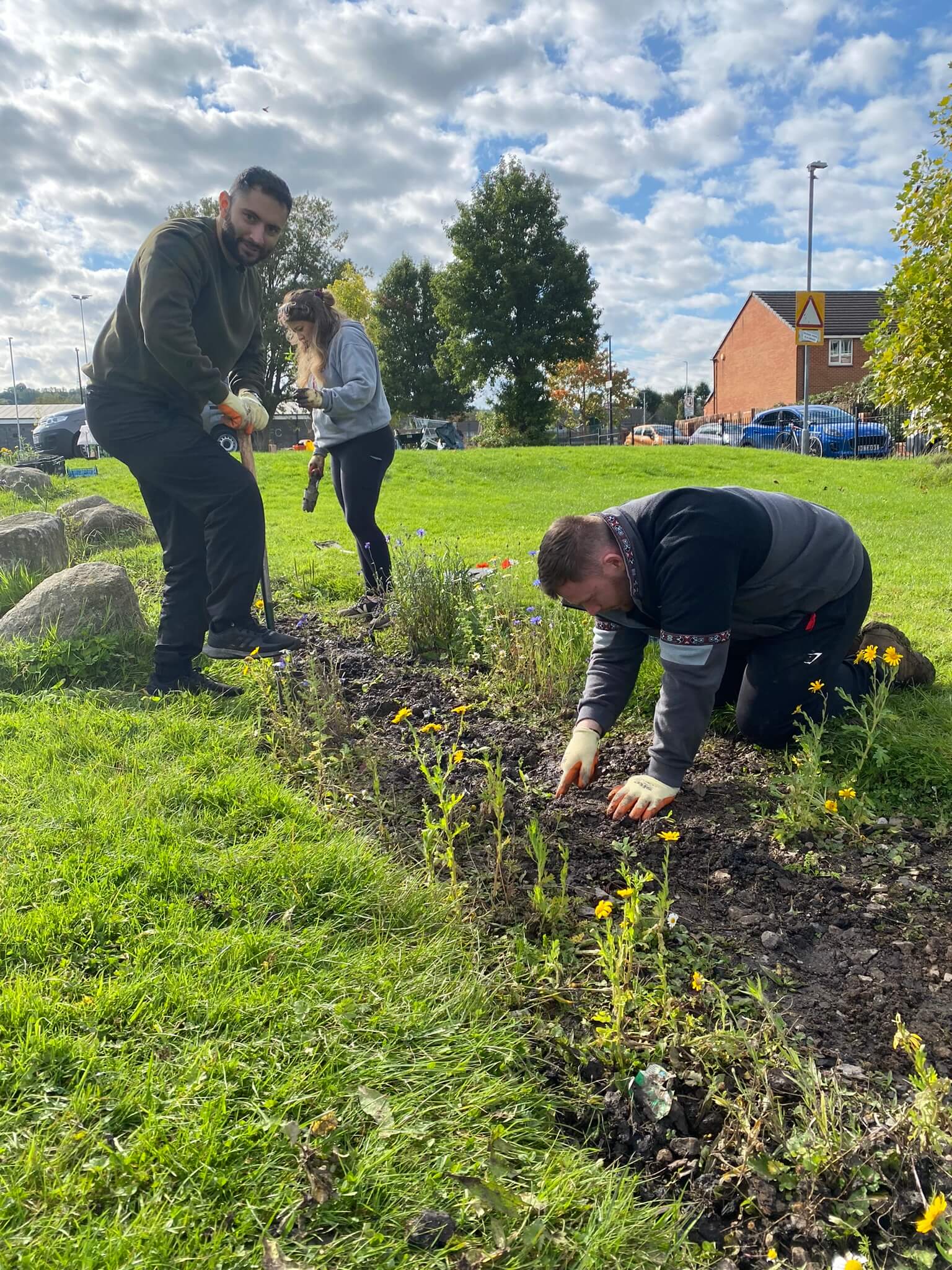
LRG joined Your Park to plant wildflower plugs in Wilmott Park, including species such as Bird’s-foot-trefoil (Lotus corniculatus), Field Scabious (Knautia arvensis), Oxeye Daisy (Leucanthemum vulgare) and Wild Carrot (Daucus carota). Planting these species in the Autumn will give the newly introduced plugs a chance to establish root systems before competitive grass species, that die-back in the colder months, return in the spring.

Wilmott Park is on the Bristol B-Line and so all the volunteers from LRG that generously donated their time on the day have not only supported their local area but have also secured another stepping stone in the landscape for pollinators and contributed to Buglife’s nationwide B-Lines initiative to create and restore at least 150,000 hectares of flower-rich habitat across the UK.

Wildflower Restoration in Surrey (0.1 hectare)

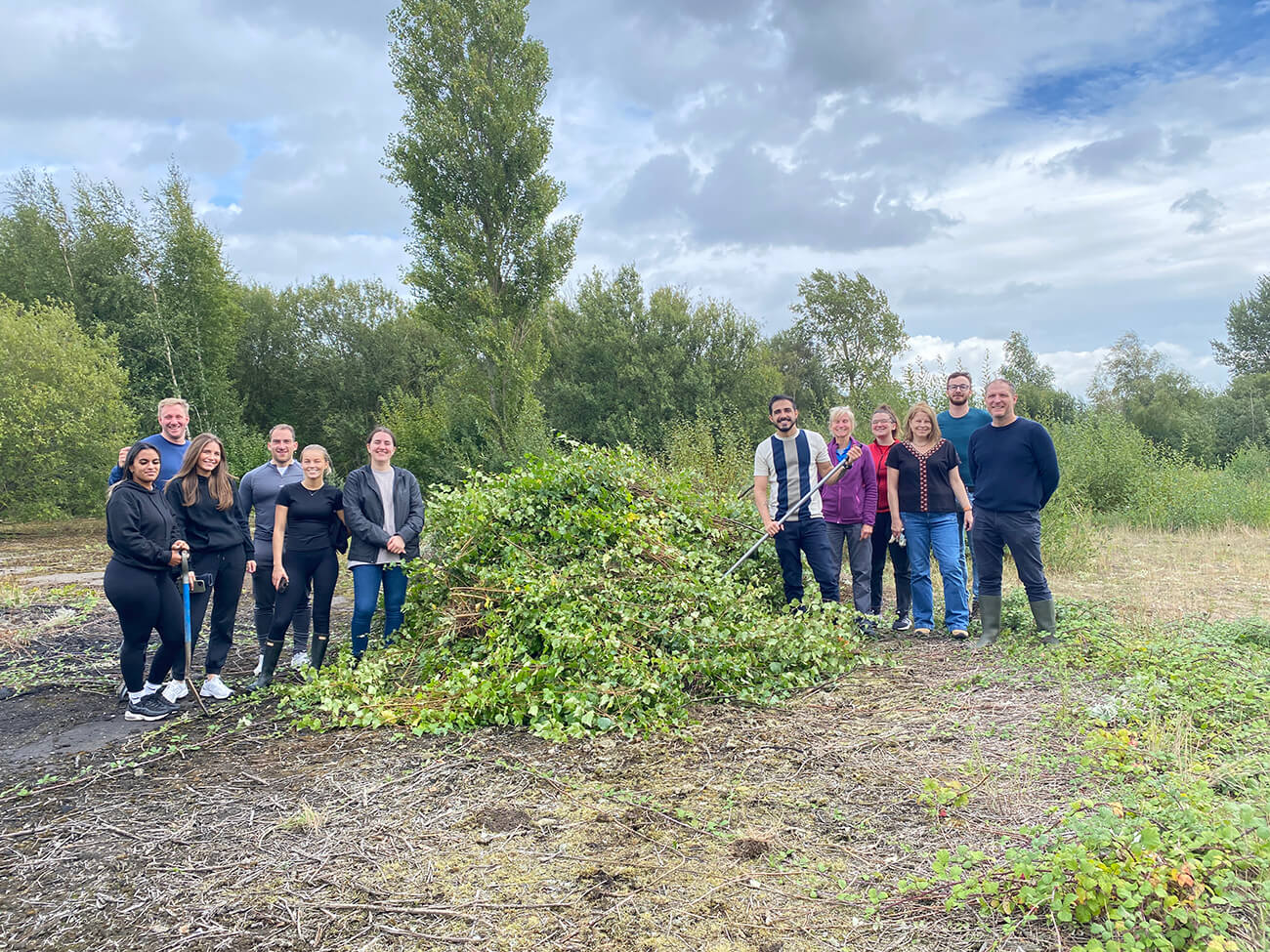
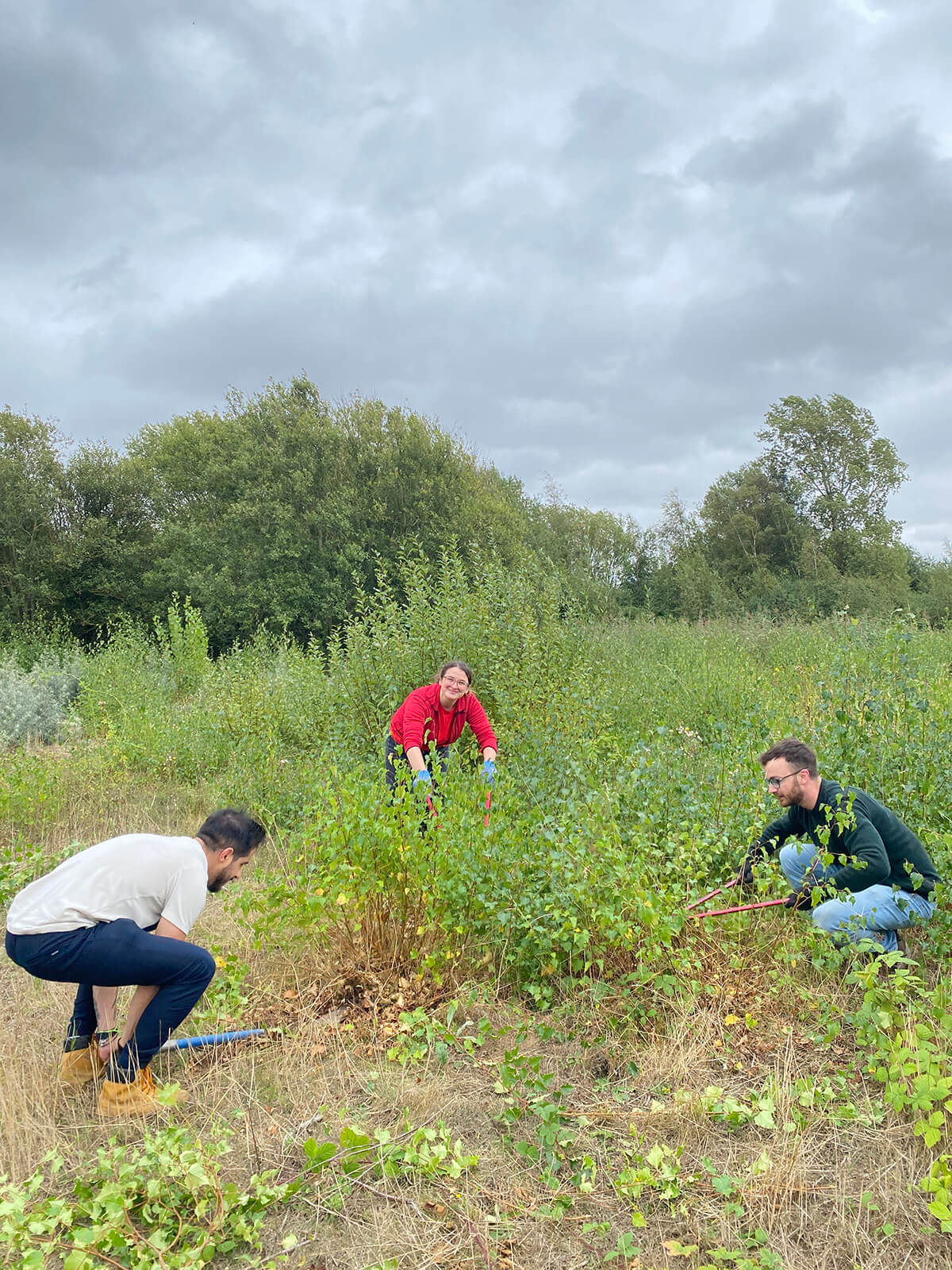
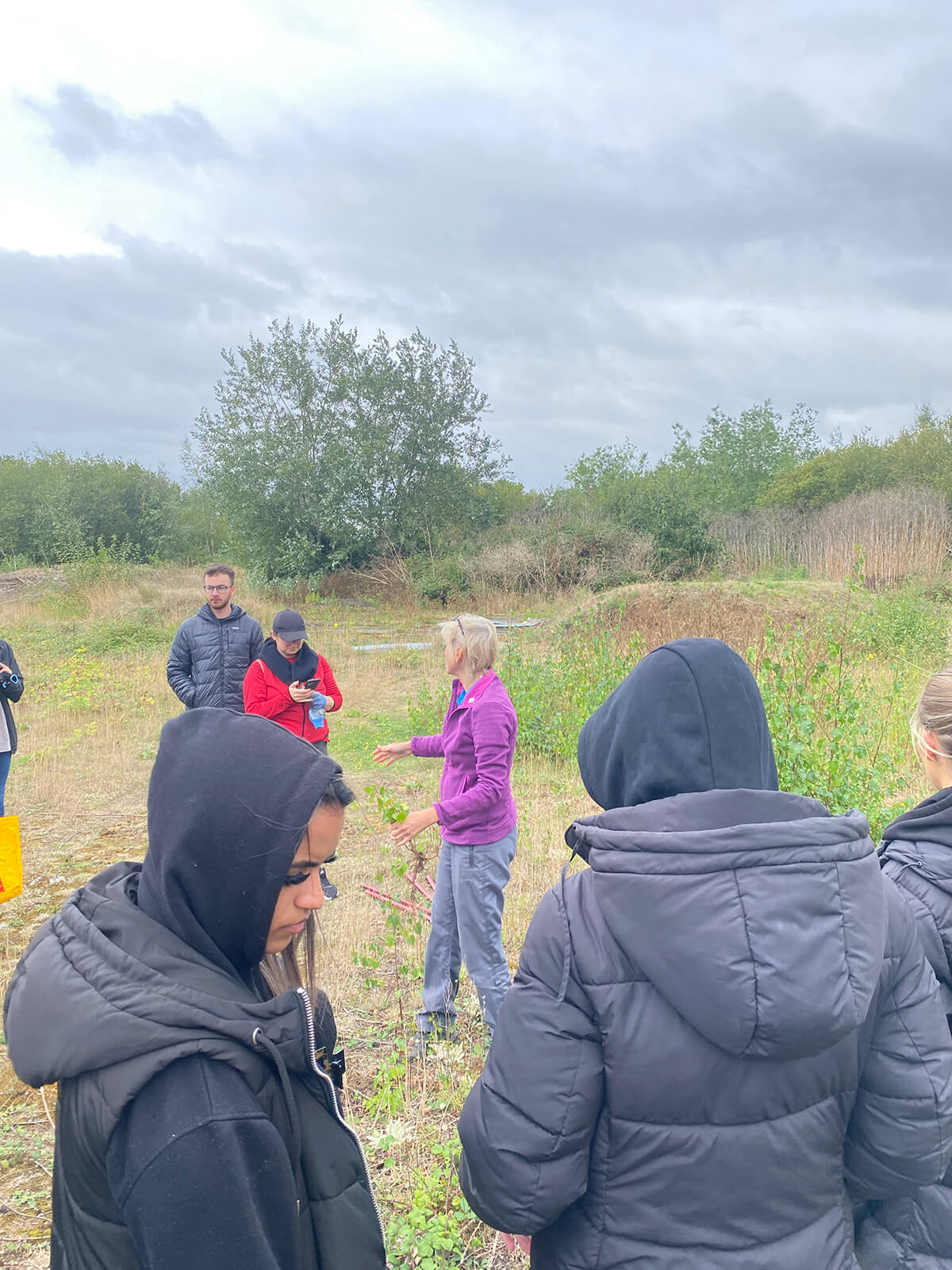
In March 2025, LRG joined Buglife and GreenTheUK at The Mount, a chalk grassland site on the south side of Guildford -one of Britain’s most biodiverse habitats and an important refuge for wildflower-dependent invertebrates. The team worked to remove woody scrub that was encroaching on the grassland and suppressing native wildflowers. Clearing this scrub is essential to allowing chalk grassland flora to return in spring and summer, providing nectar-rich feeding grounds for bees, butterflies and other invertebrates. Despite steep slopes, deep roots and a dramatic hailstorm at lunchtime, the LRG volunteers powered through the day, helping to restore 0.1 hectares of valuable wildflower habitat that will continue to flourish throughout the year.

Wildflower Restoration in Essex (1 hectare)

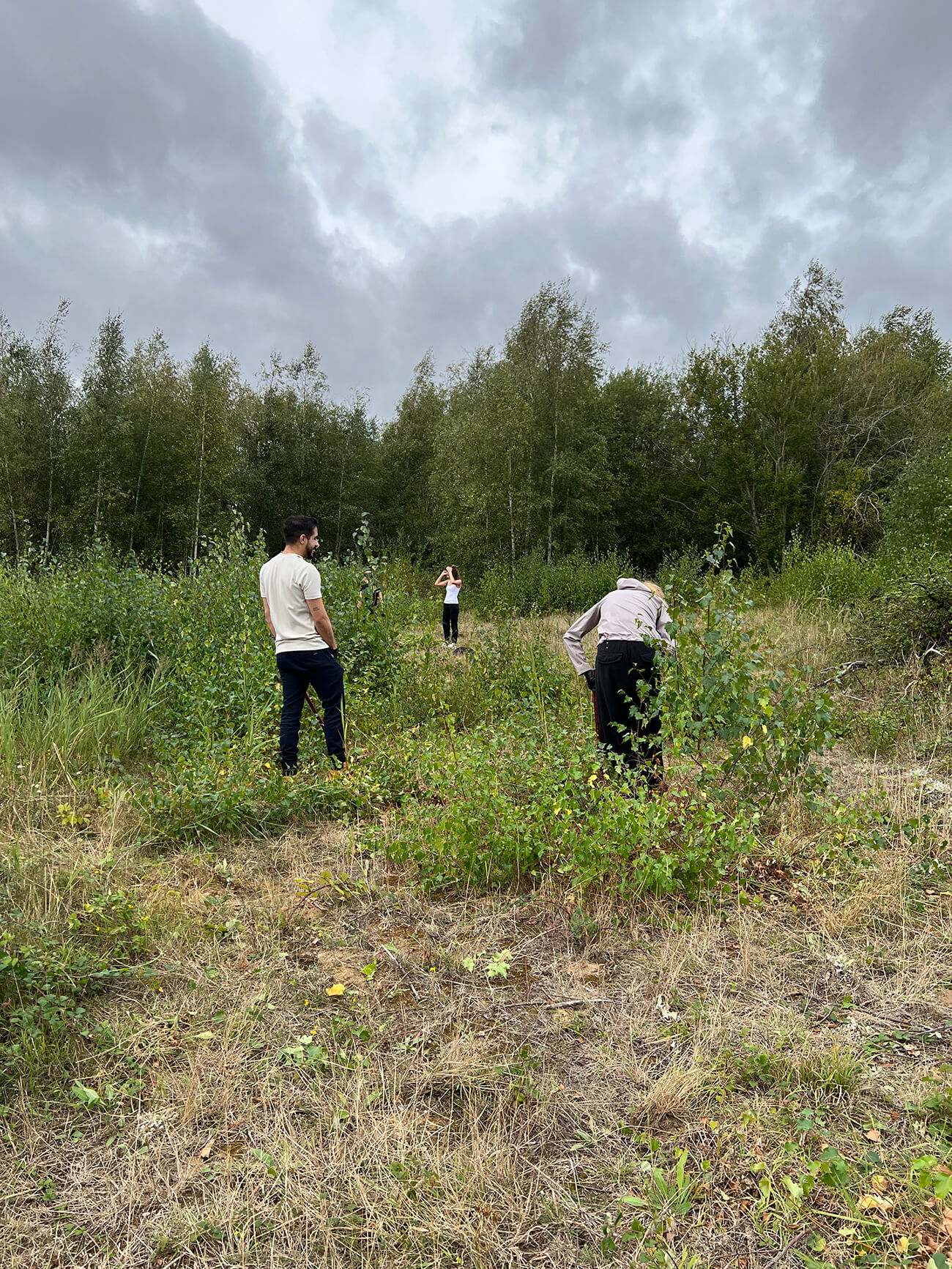
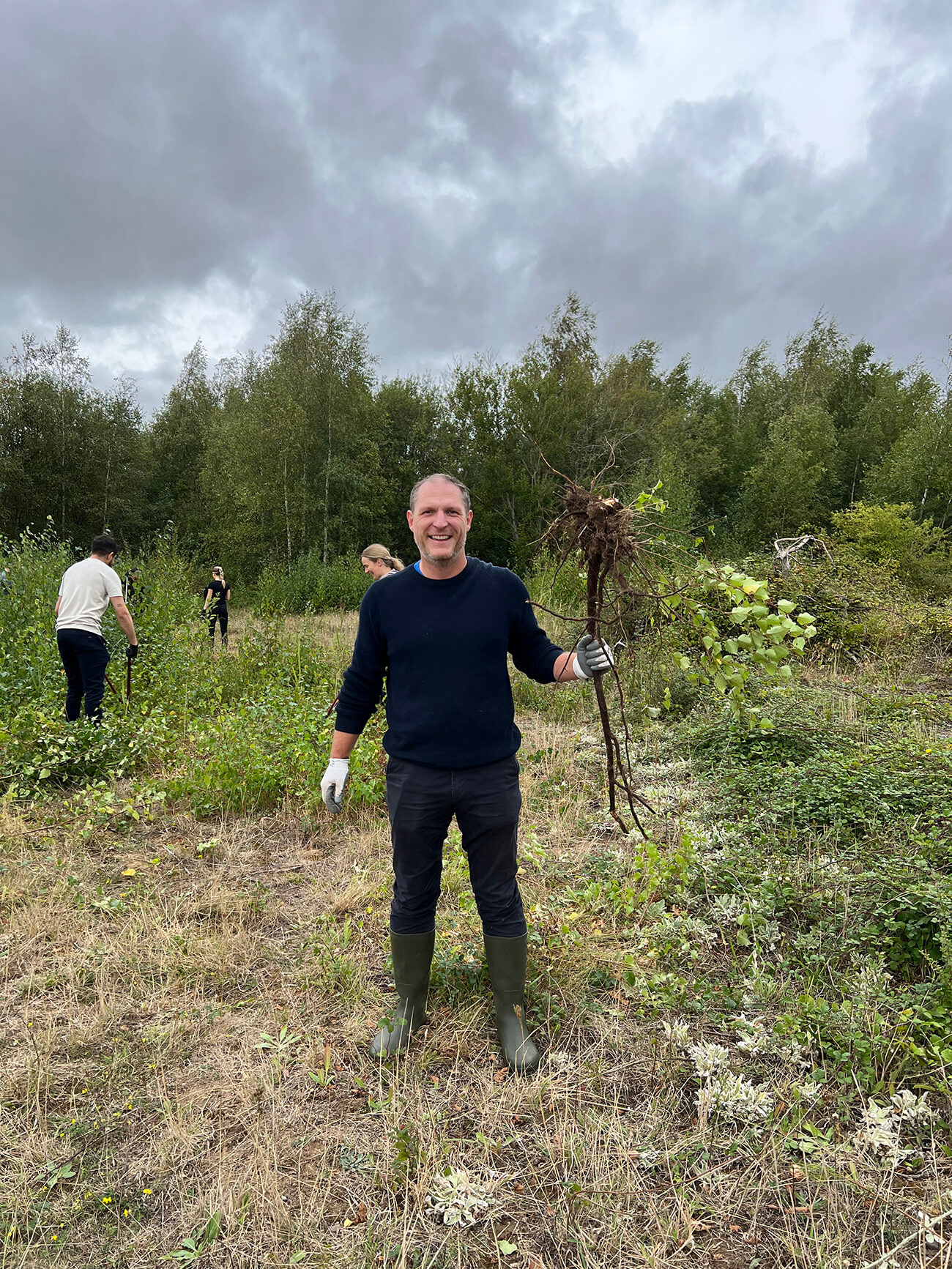
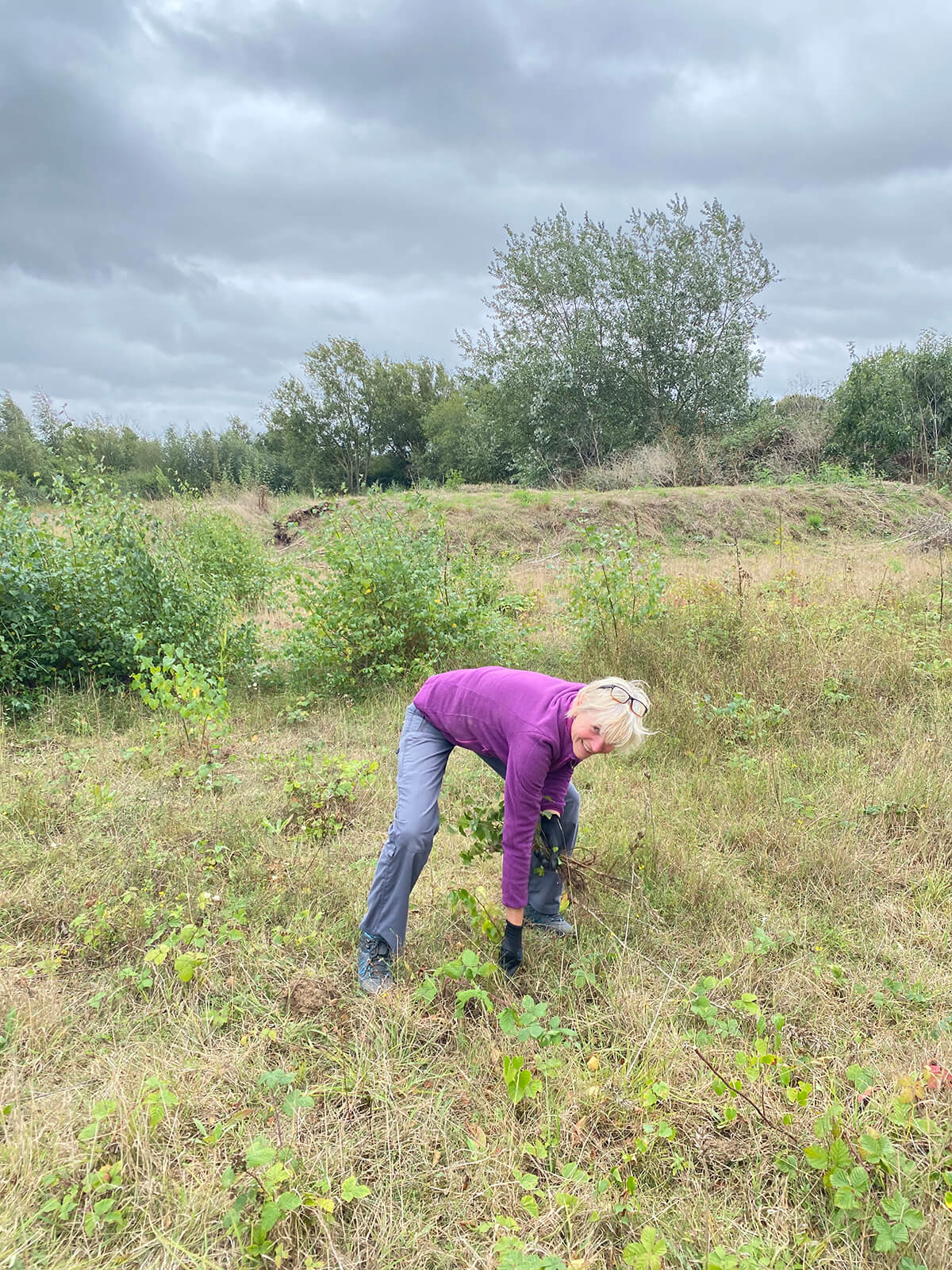
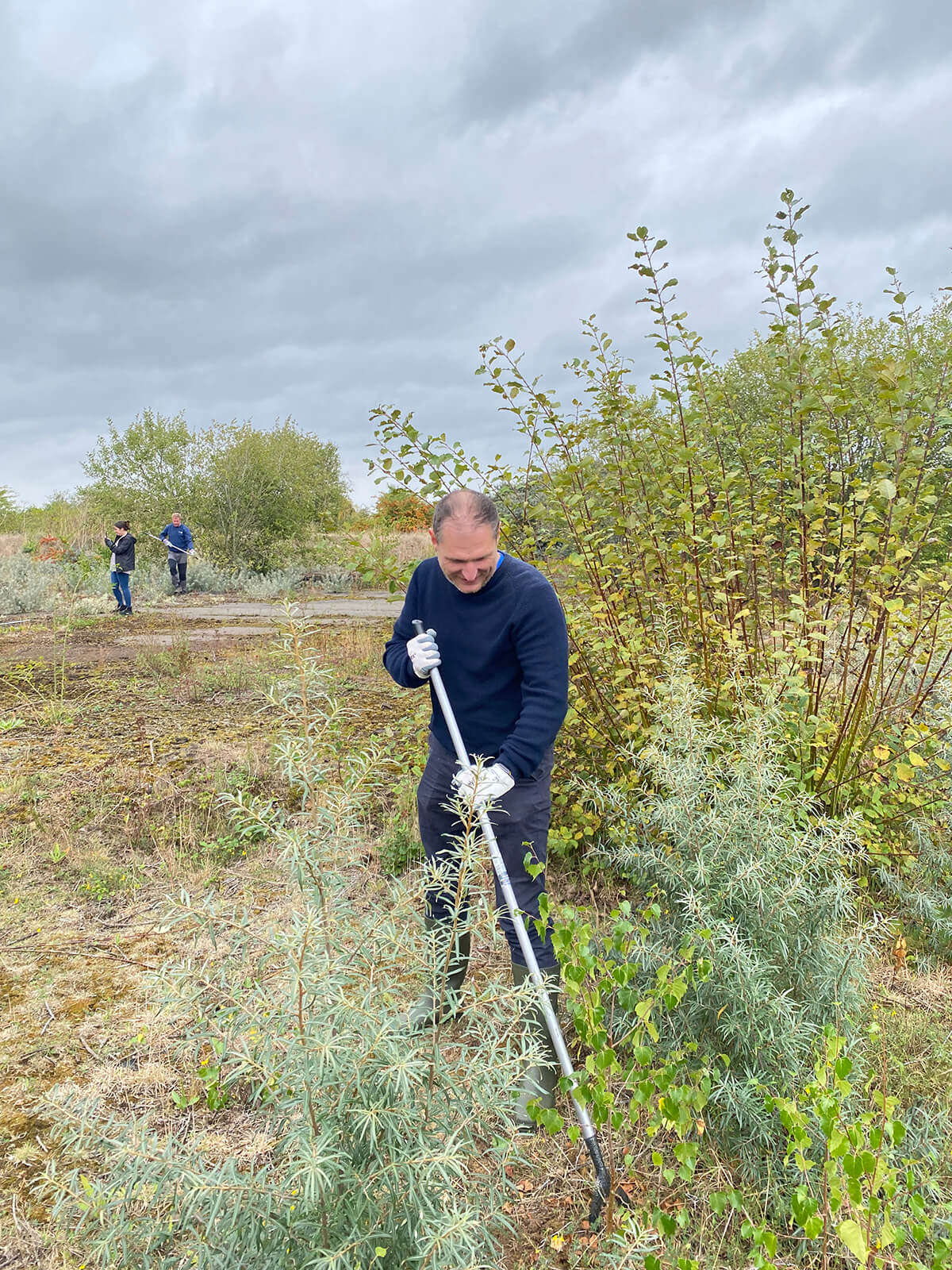
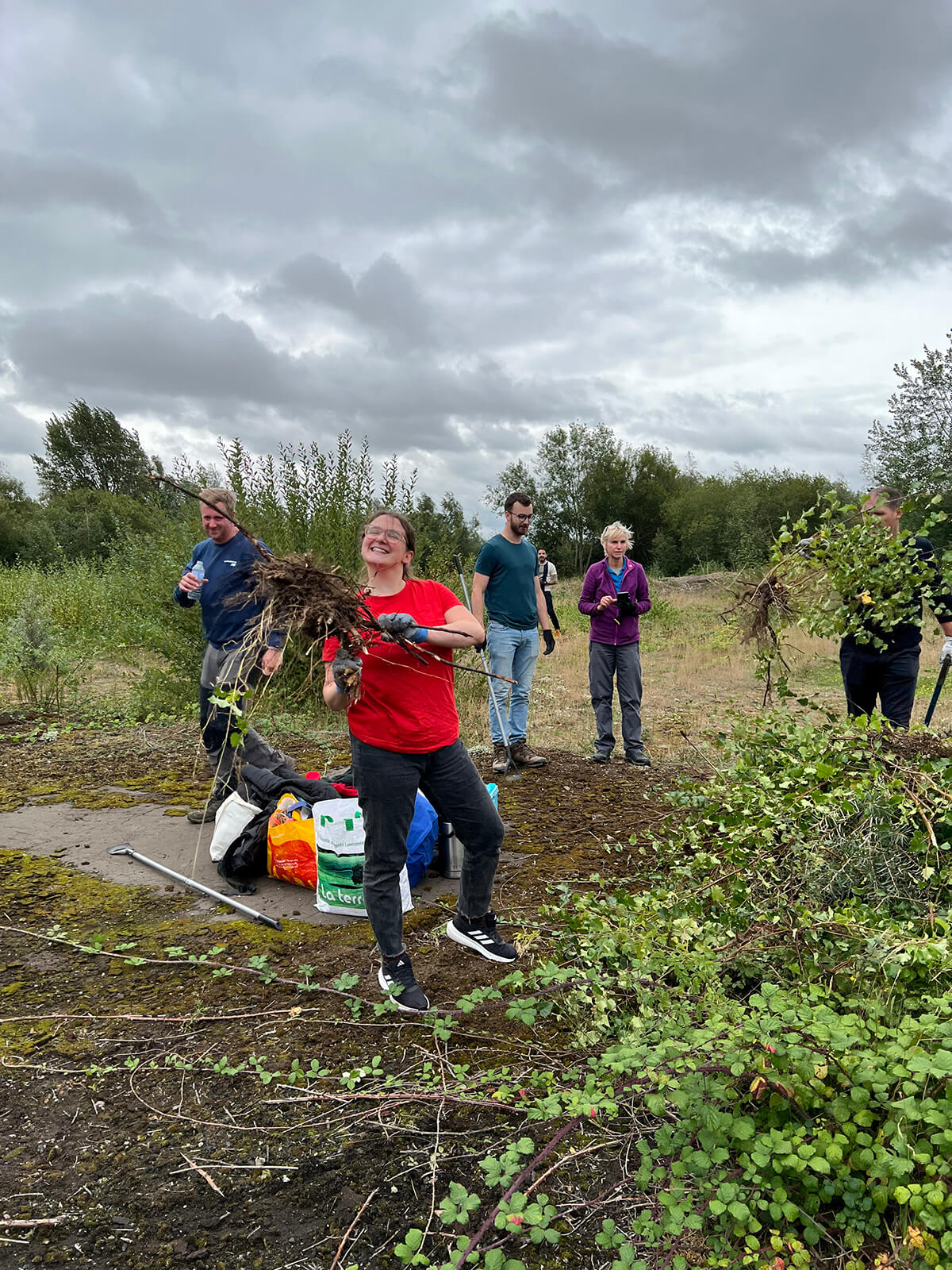
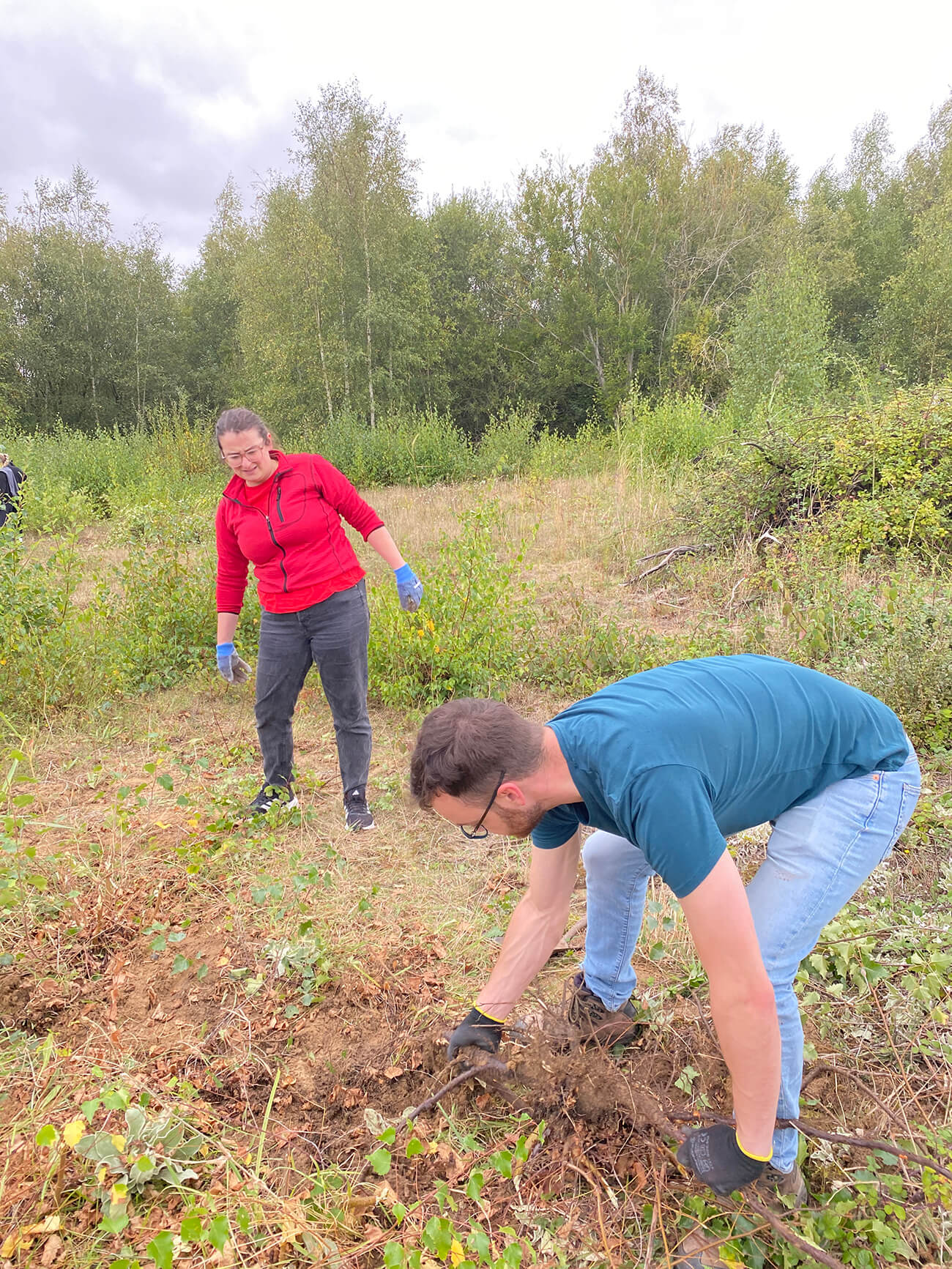
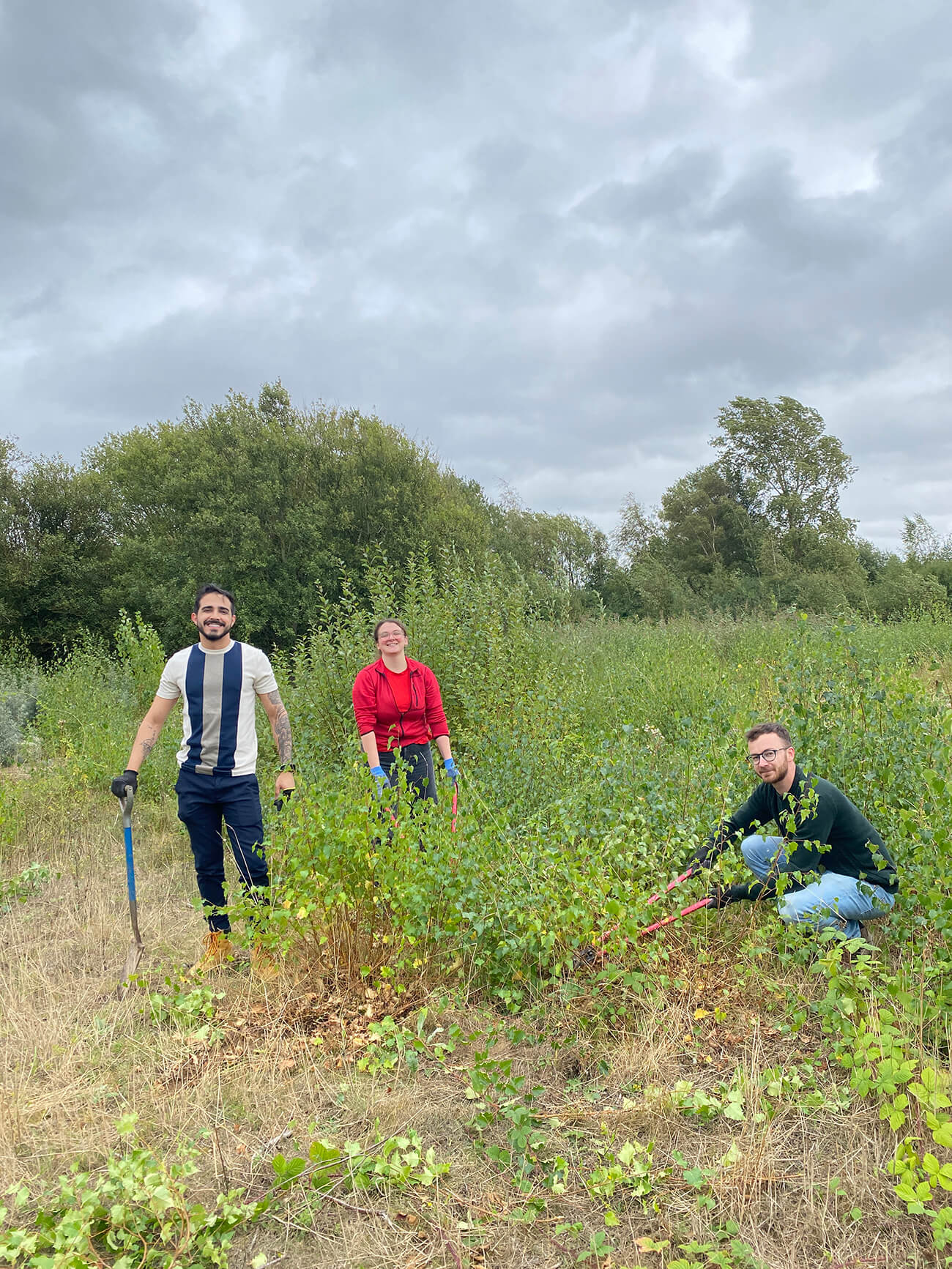
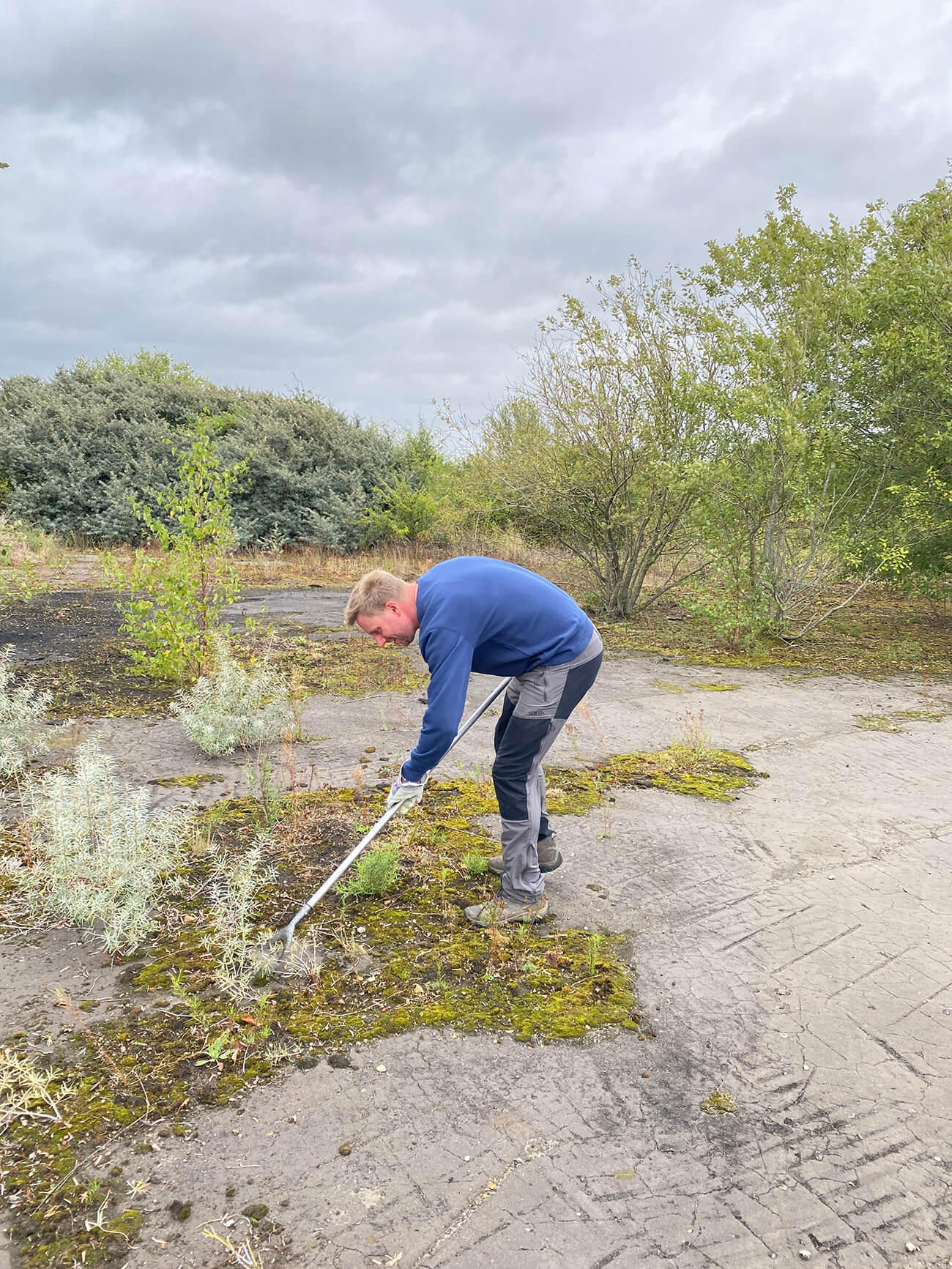
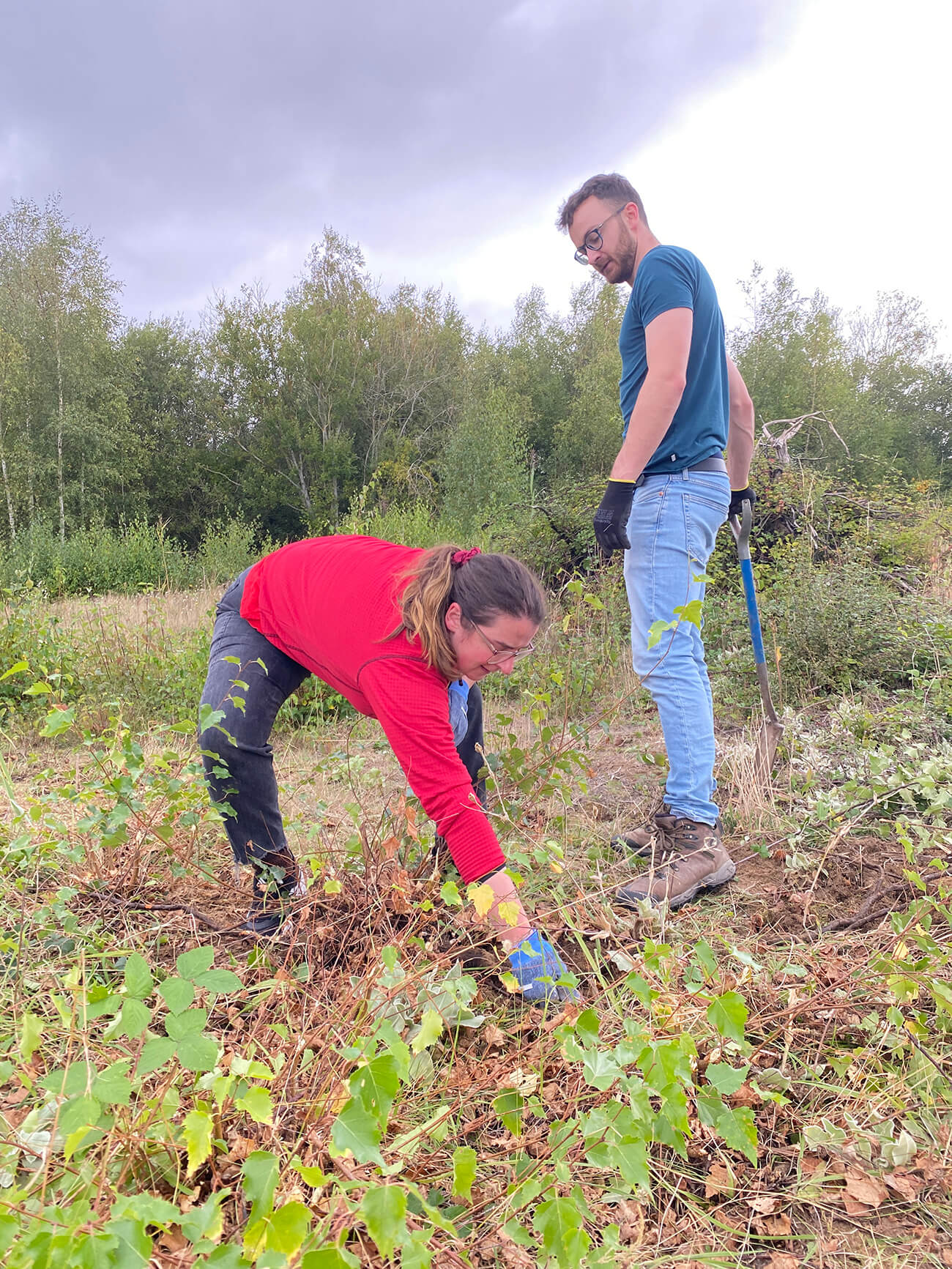
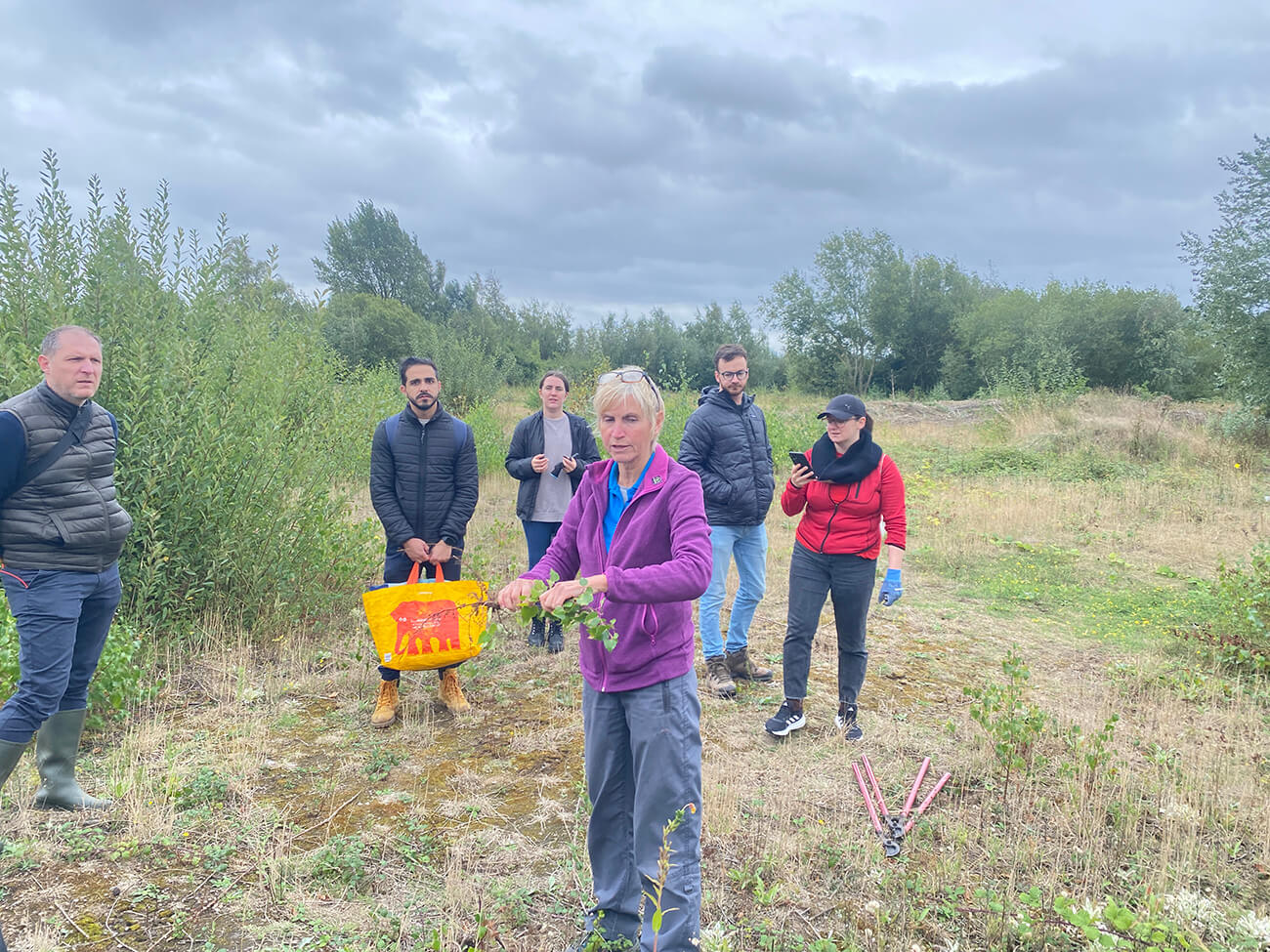
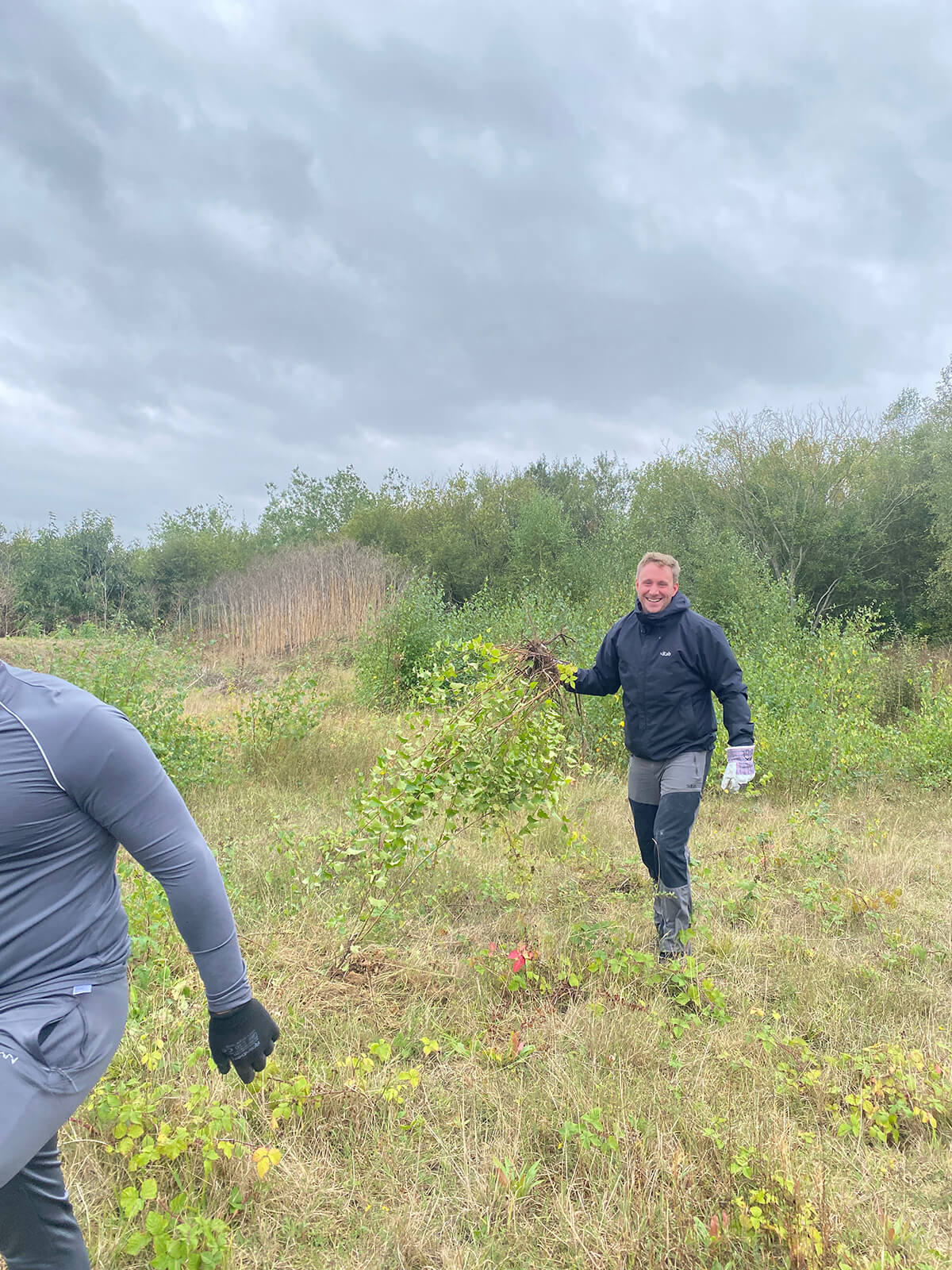
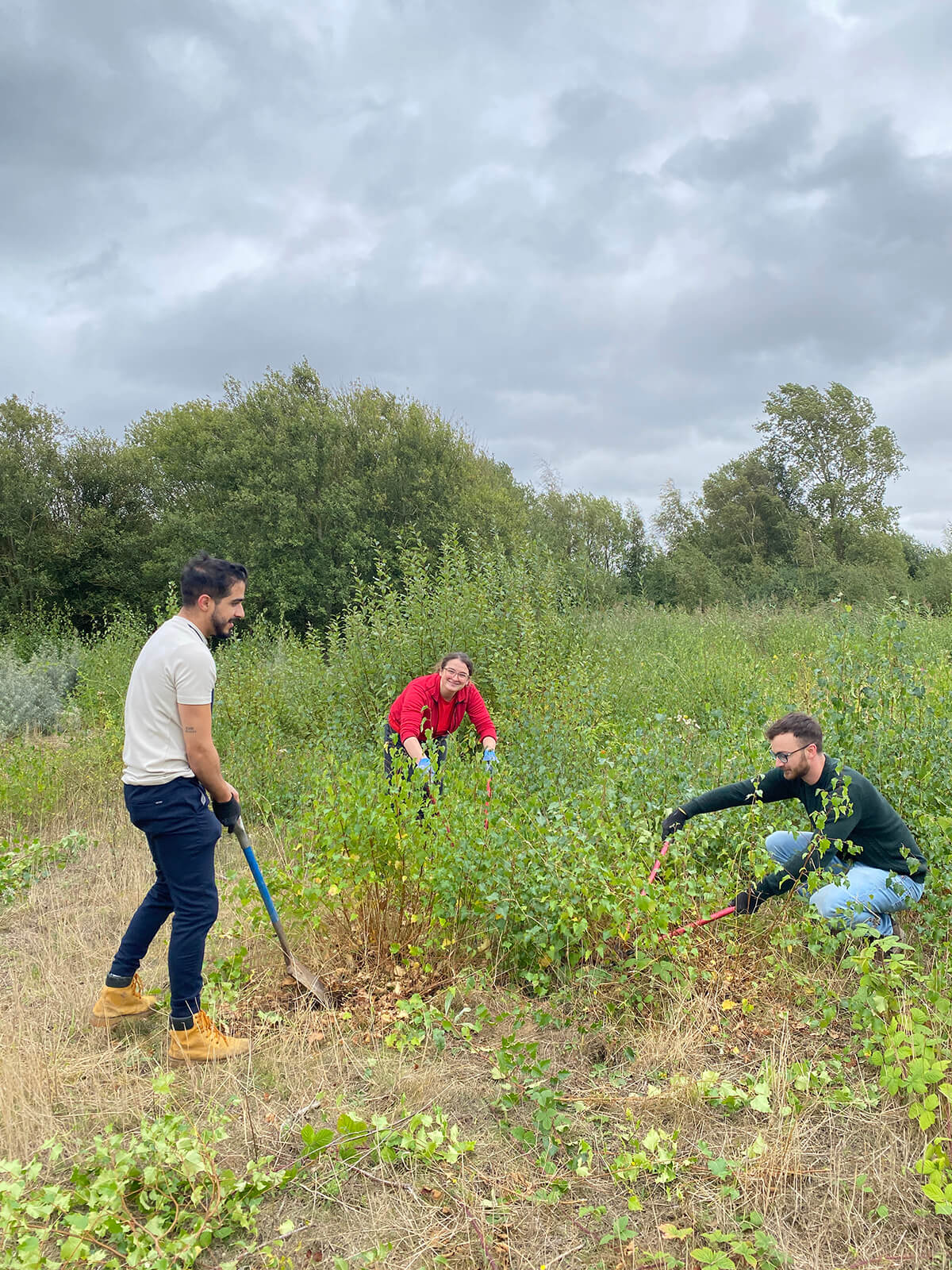
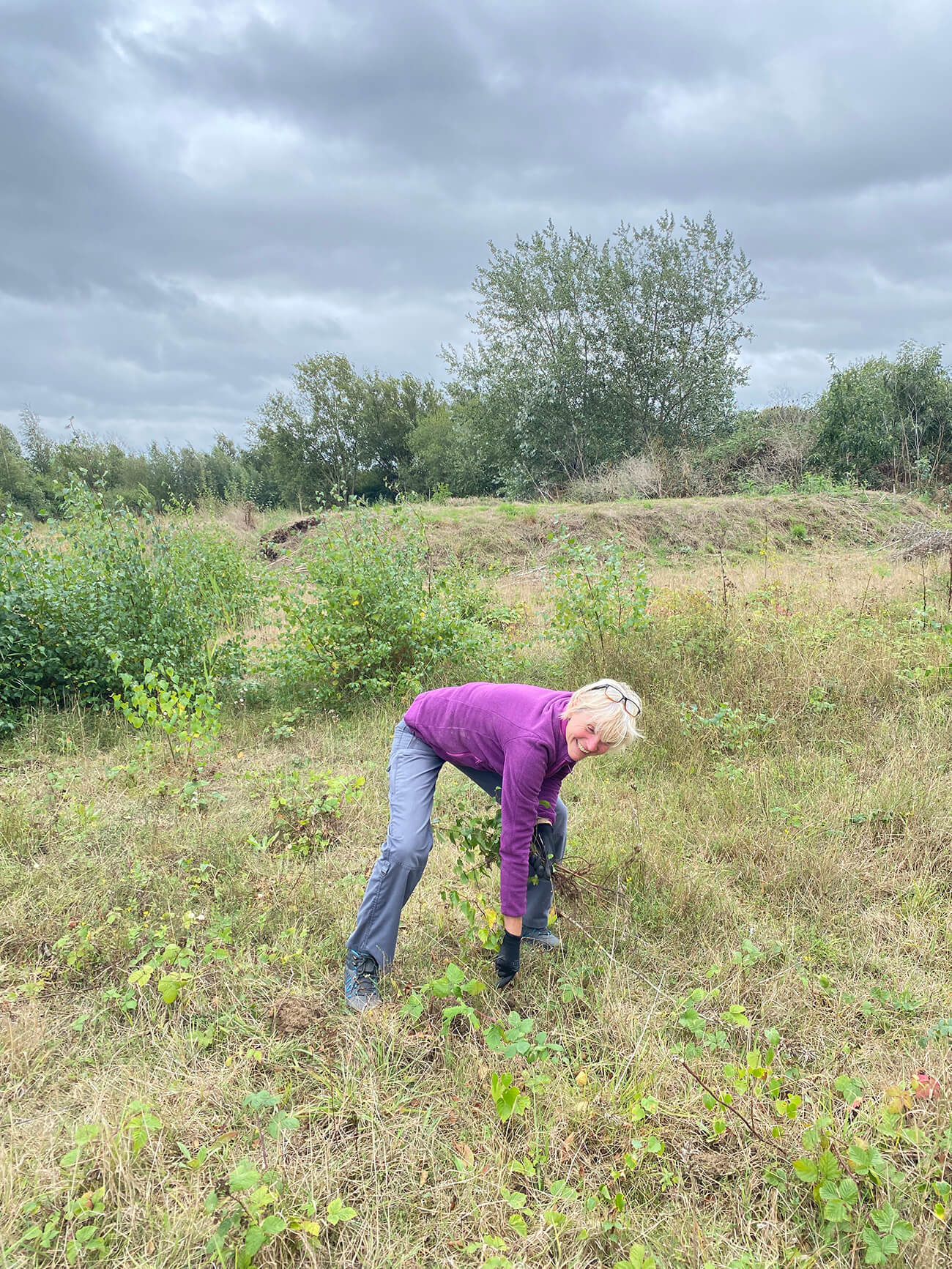
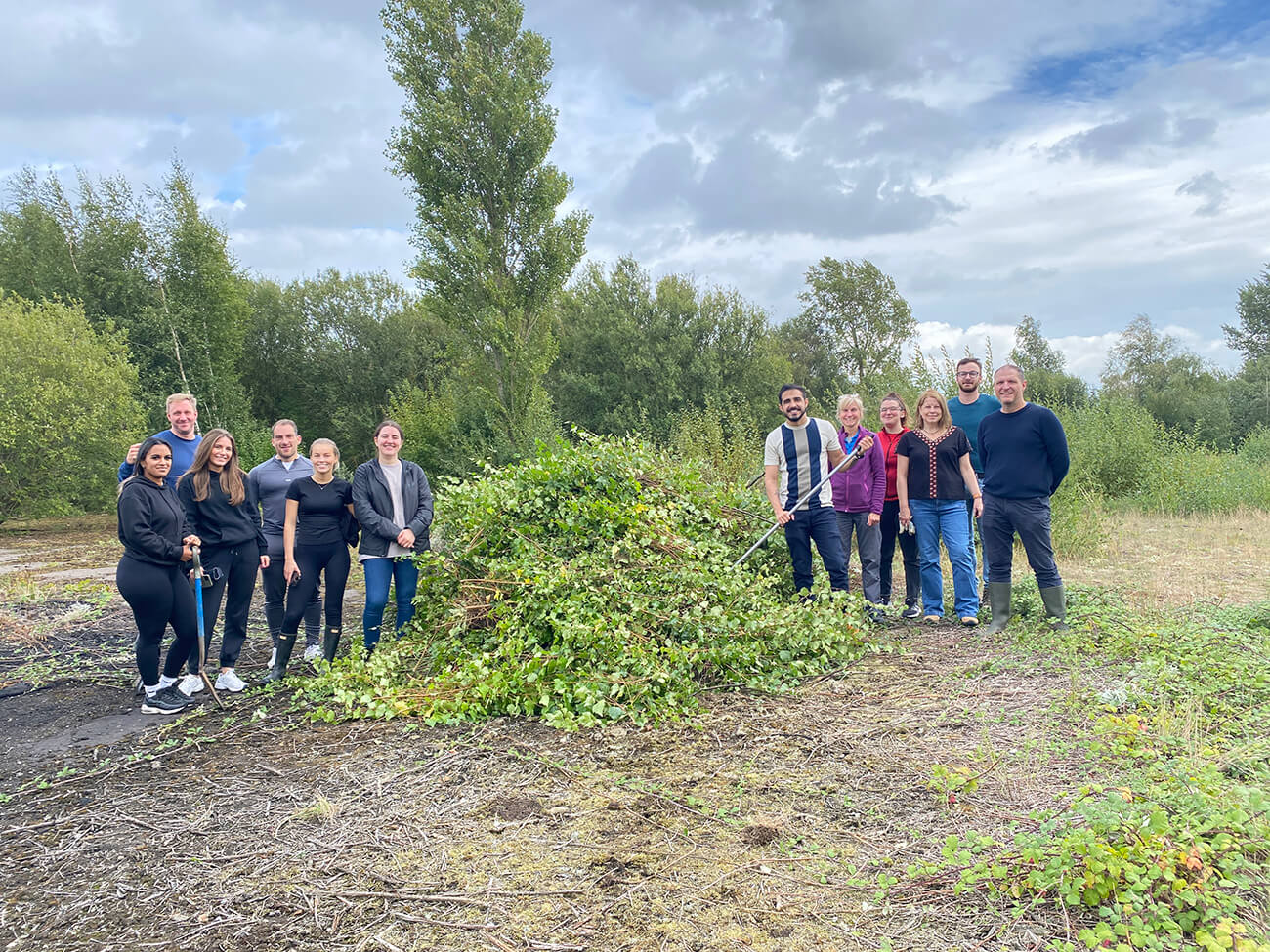
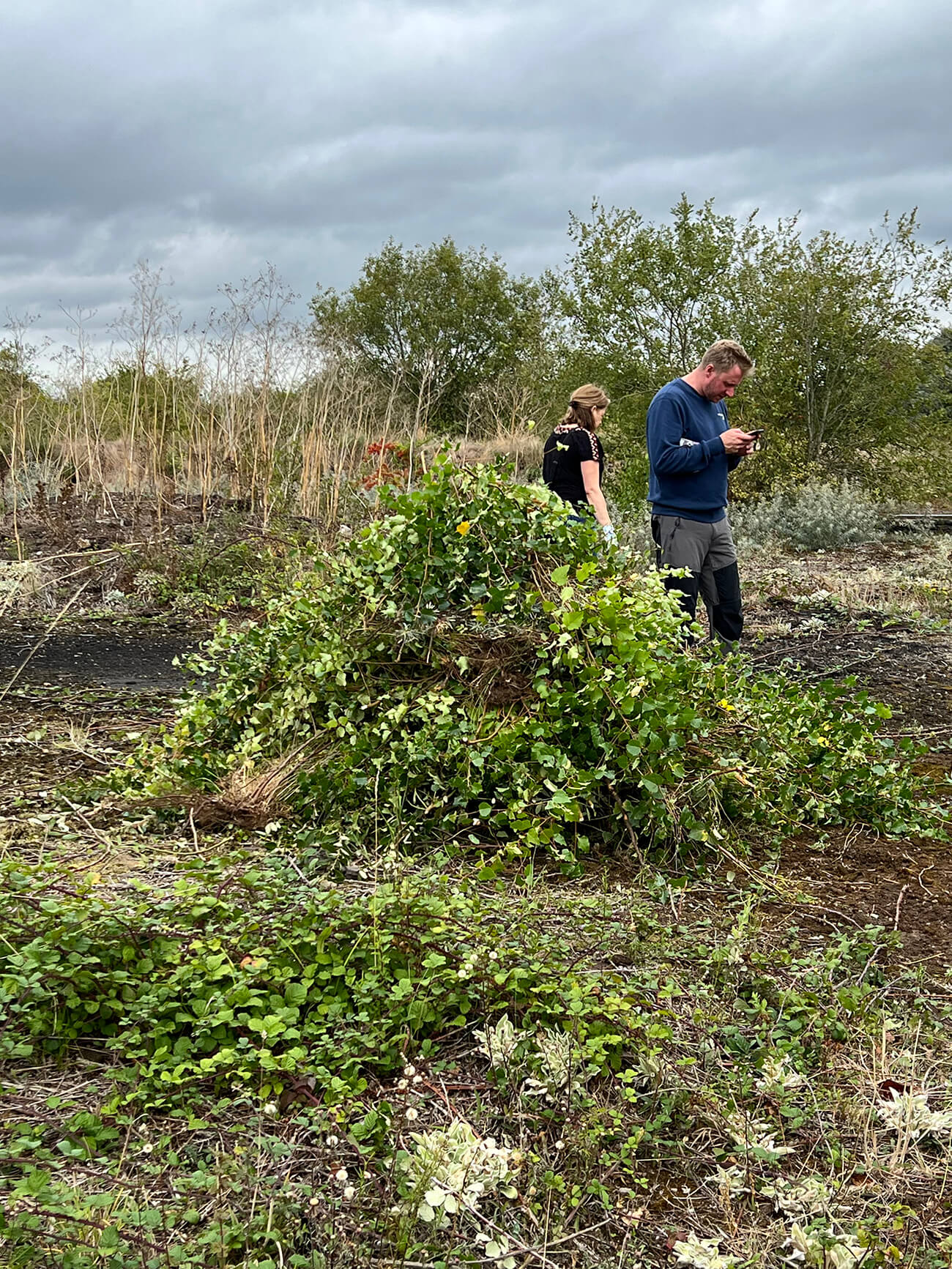
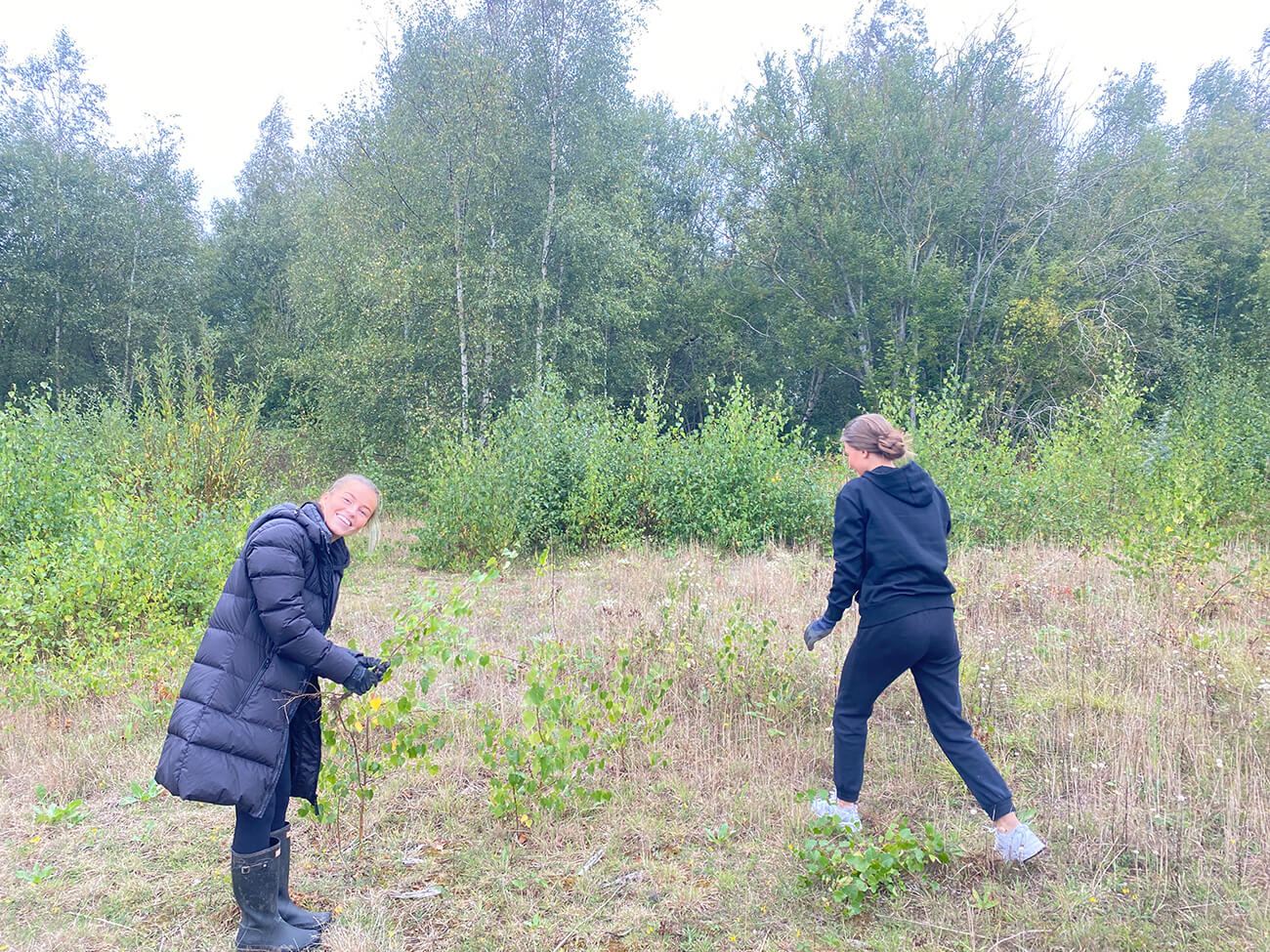
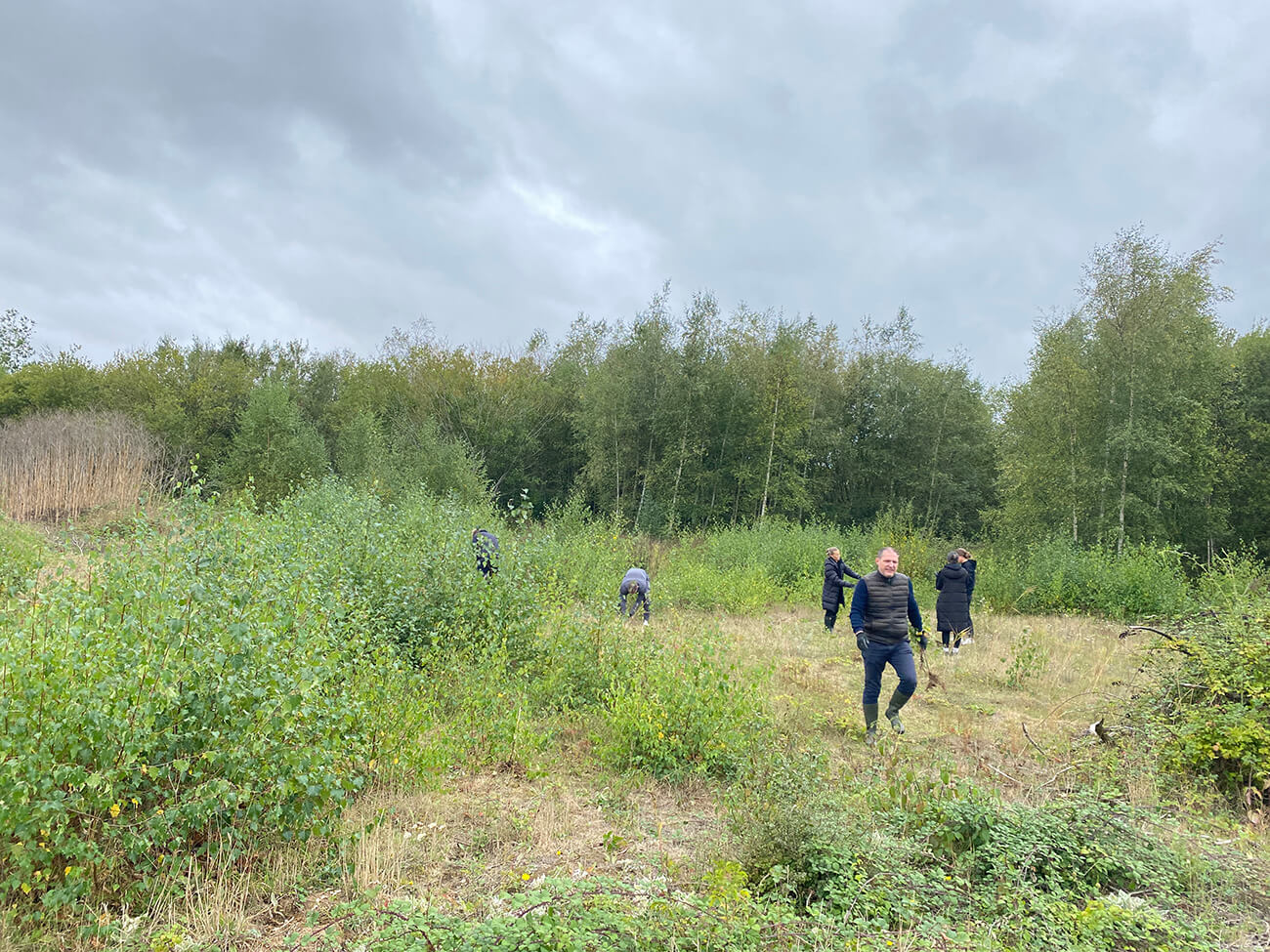
LRG joined GreenTheUK and Buglife at Canvey Wick, a remarkable SSSI in Essex, to support the restoration of wildflower-rich grassland within this unique mosaic of scrub, grassland and estuarine habitat. Volunteers hand-pulled evening primrose, birch saplings and sea buckthorn - species that, if left unchecked, outcompete the delicate wildflowers needed by pollinators. Working on tough, compacted ground, the team used loppers and spades to remove deep roots and create space for more pollinator-friendly plants to thrive. Canvey Wick is home to over 2,000 invertebrate species, including the endangered Shrill Carder Bee and Brown-banded Carder Bee, making LRG’s contribution to this wildflower restoration effort especially impactful.

Wildflower Restoration in Somerset (1.8 hectares)

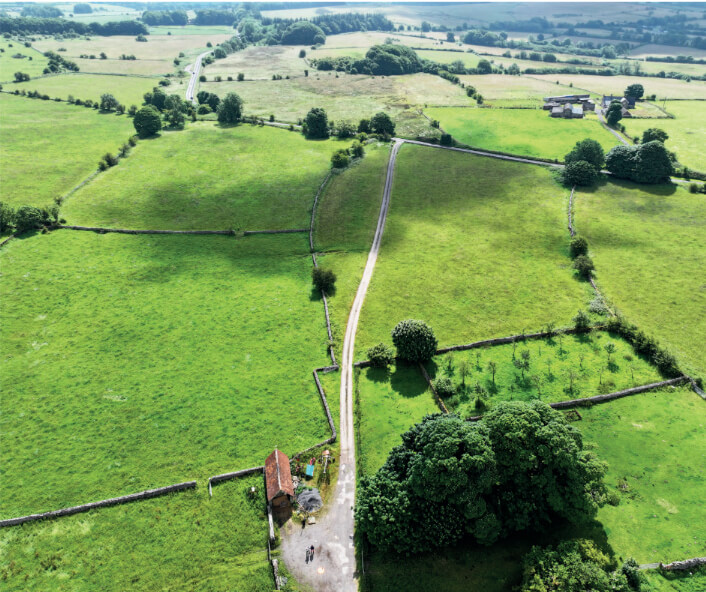
In 2025, LRG expanded its support for local wildlife by contributing to wildflower meadow restoration at Chancellor’s Farm in Somerset. Chancellor’s Farm is a 34-hectare Site of Special Scientific Interest in the Mendip Hills National Landscape, managed by the Somerset Wildlife Trust under a long-standing lease.

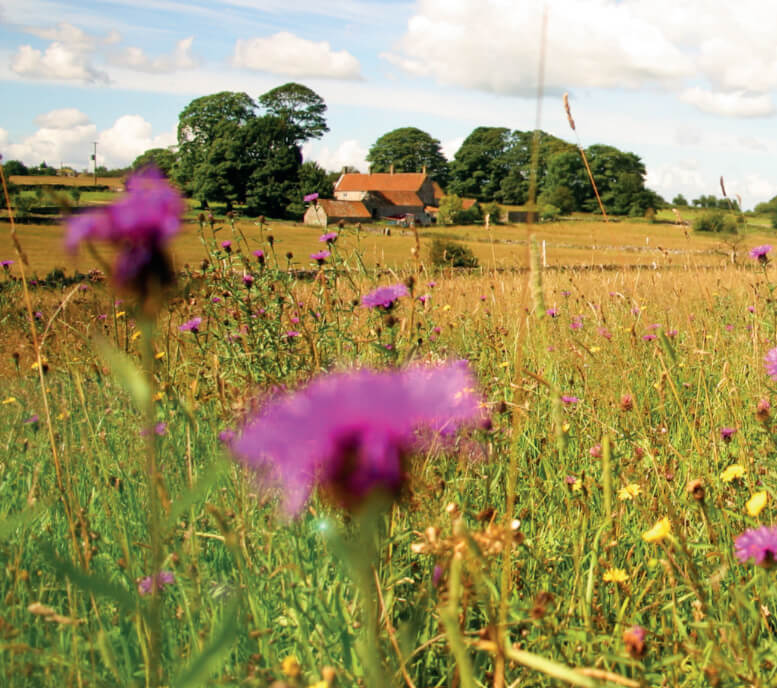
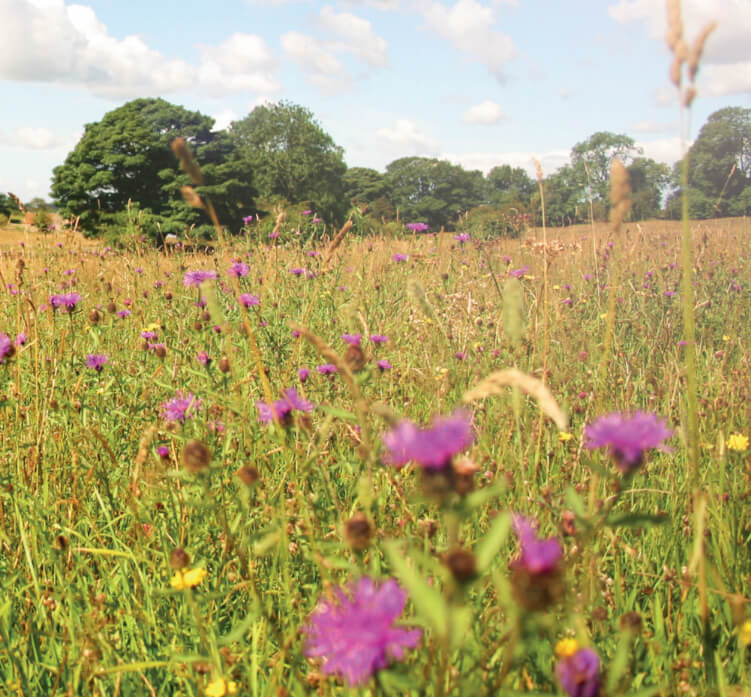
The farm is an exceptional survivor of traditional, low-intensity agriculture and supports one of Somerset’s finest examples of species-rich wildflower grassland. The meadows sit on an unusual mix of lime-rich, neutral and acidic soils, allowing for a remarkable diversity of wildflowers to thrive. These include species such as Devil’s-bit Scabious, along with classic hay meadow species including Yellow Rattle and Lesser Knapweed.

The diversity of wildflowers underpins a rich invertebrate community, providing abundant nectar, pollen, and larval food sources throughout the season. The varied grassland structure, long continuity of management, and absence of artificial fertilisers or chemicals make the site particularly valuable for pollinating insects and other grassland invertebrates, which in turn support bats, birds, and wider food webs across the landscape.

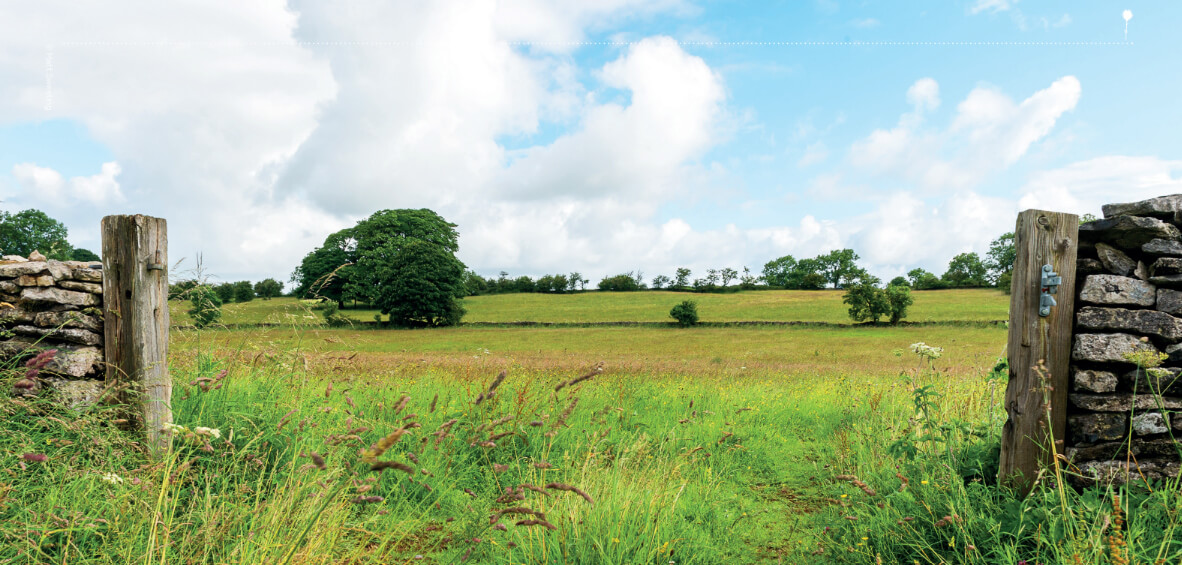
Managed through traditional hay cutting and light grazing, Chancellor’s Farm stands as a rare and vital stronghold for wildflower meadows. Its continued protection and careful management are critical to nature recovery across the Mendip Hills.

Wildflowers & Grasses Planted
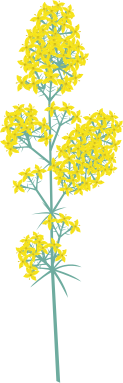
Lady’s Bedstraw

Lady’s Bedstraw: Galium Verum

Read More

Lady’s Bedstraw: Galium Verum

You can recognise this plant by the stunning clusters of bright yellow flowers which burst forth in the summer months and smell faintly of honey. When dried, Lady’s Bedstraw has a scent reminiscent of hay, and it used to be used to stuff mattresses, especially for women who were about to go into labour, which is probably how it got its interesting name. It was also commonly used to curdle milk to make cheese!

Black Medick

Black Medick: Medicago Lupulina

Read More

Black Medick: Medicago Lupulina

Also known as hop clover, this annual or short-lived perennial plant sprawls out along the ground and has small clusters of yellow flowers. The flowers are rich in nectar and attractive to bees; the blooms later turn into small black seed pods. Sheep like to graze on black medick, but cattle are not too fond of the taste.

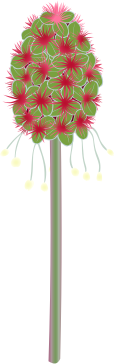
Salad Burnet

Salad Burnet: Sanguisorba Minor

Read More

Salad Burnet: Sanguisorba Minor

Salad burnet has a taste that is somewhat reminiscent of cucumber, making it a popular kitchen garden plant for use in drinks, salads, sauces and elsewhere. In the 1600s, English settlers took it with them to the New World where it quickly became a popular delicacy, and Thomas Jefferson was known to be a fan. He wasn’t the only one; Sir Francis Bacon suggested planting salad burnet along pathways to perfume the air.

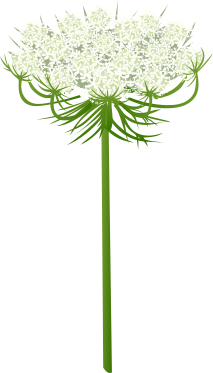
Wild Carrot

Wild Carrot: Daucus Carota

Read More

Wild Carrot: Daucus Carota

This biennial herbaceous plant is closely related to the carrots we grow and eat today. If you dig up the roots early enough, they are edible, but by the time the flowers appear, they will be too old and woody to eat. Wild carrot flowers are small and white, which is how this plant got its other name: Queen Anne’s lace.

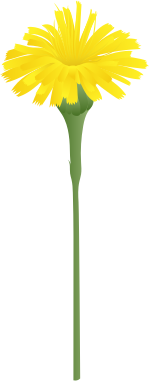
Common Cat’s-ear

Common Cat’s-ear: Hypochaeris Radicata

Read More

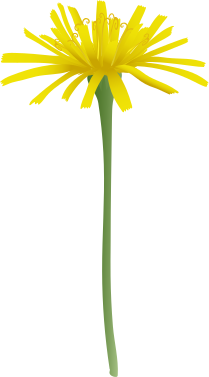
Common Cat’s-ear: Hypochaeris Radicata

These bright yellow flowers can be found growing in grassy areas all over the UK, from roadside verges to parks and meadows. This plant has an impressive rosette of leaves, which means it is often mistaken for the dandelion. The common cat’s-ear can be frustrating for gardeners, as it uses its strong root to anchor itself to the ground before springing up on lawns.

Cornflower

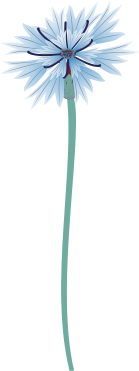
Cornflower: Centaurea Cyanus

Read More

Cornflower: Centaurea Cyanus

This annual plant is native to Europe and best-known for its striking blue flowers which bloom from late spring into early summer. The cornflower’s vibrant petals are a magnet for butterflies and bees. The flower is also called “the bachelor’s button”; possibly because they were commonly worn by single men and women hoping to find love, or maybe because they resemble buttons that require very little sewing!

Field Forget-me-not

Field Forget-me-not: Myosotis Arvensis

Read More

Field Forget-me-not: Myosotis Arvensis

You might well spot these small, pale blue flowers growing by the side of the road, or else on dry, arable land. Field forget-me-not seeds should be sown in the autumn, so that they can flower in the spring and summer, attracting bees, butterflies and other insects. According to Greek myth, it is so-called because when Zeus was naming the plants, this little blue flower feared being left out and shouted, “Forget me not!”.

Rough Hawkbit

Rough Hawkbit: Leontodon Hispidus

Read More

Rough Hawkbit: Leontodon Hispidus

The rough hawkbit is a rather hairy plant which fares best in the full sunshine. It looks quite a lot like the dandelion and shares its famously diuretic properties. Hawkbits have a sweet smell, like honey.

Ragged-robin

Ragged-robin: Lychnis Flos-cuculi

Read More

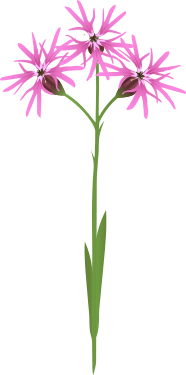
Ragged-robin: Lychnis Flos-cuculi

Ragged-robin gets its name from its pink flowers which look almost as though they have been shredded. The number of these star-shaped wildflowers is declining here in the UK. They grow particularly well in damp places, where they are a haven for butterflies, bees and other insects.

Bird’s-foot Trefoil

Bird’s-foot Trefoil: Lotus Corniculatus

Read More

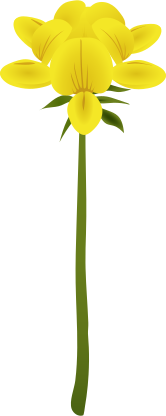
Bird’s-foot Trefoil: Lotus Corniculatus

Bird’s-foot trefoil is already a pretty great name, but this plant has many other exciting aliases, including “hen and chickens” and “eggs and bacon”. These colourful names refer to the plant’s red and yellow flowers. Its seed pods are reminiscent of a bird’s claws.

Yarrow

Yarrow: Achillea Millefolium

Read More

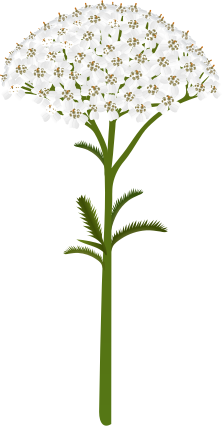
Yarrow: Achillea Millefolium

This hardy perennial has a slightly aniseed taste and can be made into tea; in the Middle Ages, it was used to flavour beer. Centuries ago, Yarrow was used to heal wounds and stop bleeding, but it was also thought to start nosebleeds, and still has the nickname “nosebleed plant”. Starlings and other birds use yarrow to line their nests.

Yellow-rattle

Yellow-rattle: Rhinanthus Minor

Read More

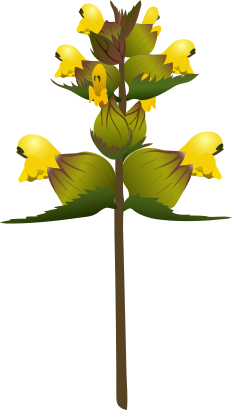
Yellow-rattle: Rhinanthus Minor

This plant’s yellow flowers are in bloom from May to September. It makes a popular addition to any wildflower meadow, as it feeds off the nutrients in other grasses, reducing competition between species. Its seeds grow in brown pods which make a slight rattling sound.

Meadow Buttercup

Meadow Buttercup: Ranunculus Acris

Read More

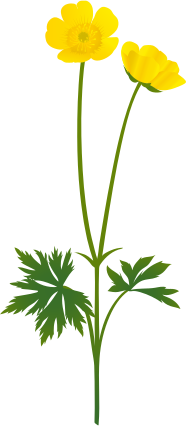
Meadow Buttercup: Ranunculus Acris

Buttercups are a familiar sight around the world, with this species being particularly hard to miss with its bright yellow colour and also being referred to as the “giant” or “tall” buttercup. Commonly used by Native American tribes to treat headaches, this plant is characteristically found in grazed grasslands and prefers soil with intermediate drainage. While sometimes considered a problematic weed in mowed lawns, the Meadow Buttercup is a valued addition to wildflower meadows and one cultivated variety even has the Royal Horticultural Society's Award of Garden Merit.

Red Campion

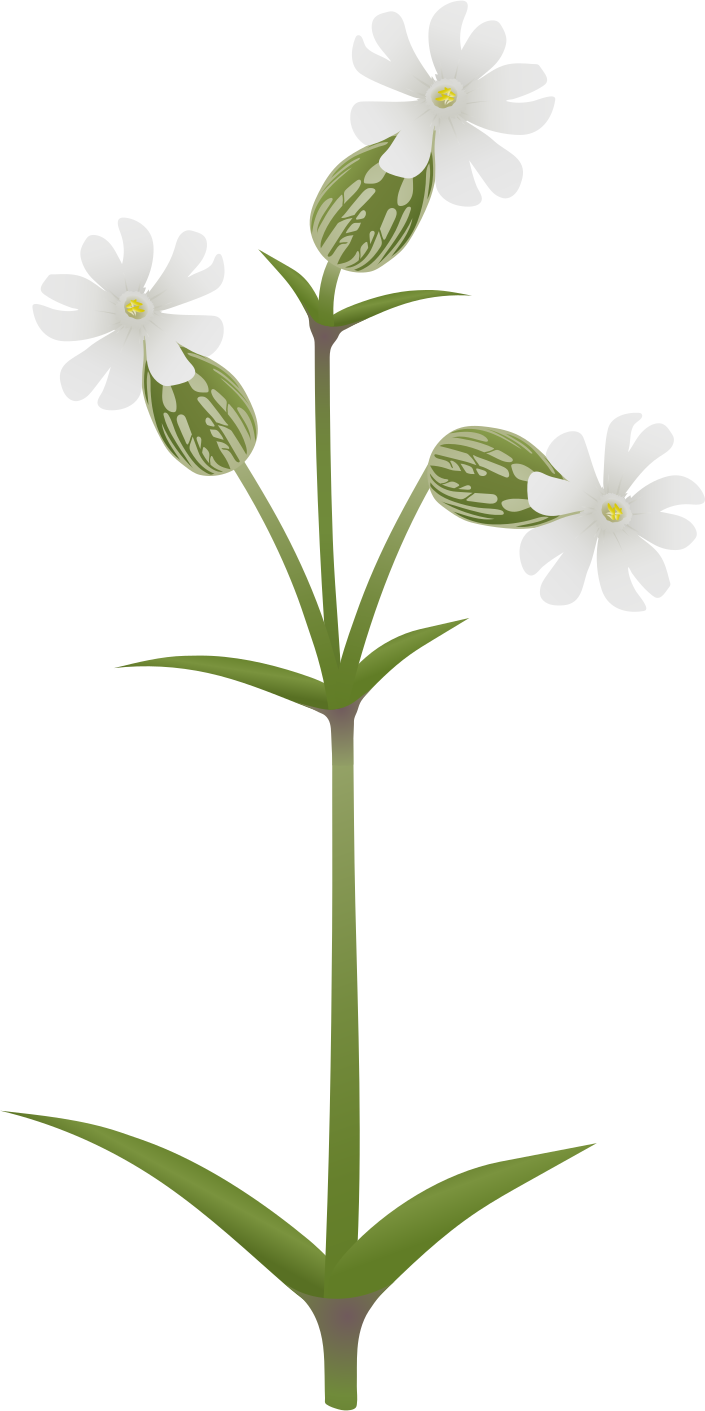
Red Campion: Silene Dioica

Read More

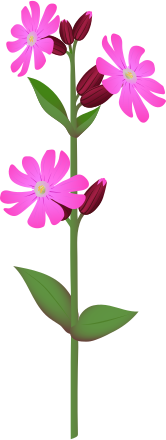
Red Campion: Silene Dioica

Native to the British Isles, this 5-petaled flower is commonly seen growing on roadsides, in woodlands, and on rocky slopes where there is damp soil. If you visit the Isle of Man you may hear it referred to as “blaa ny ferrishyn” or “fairy flower” and make sure not to pick them as it is a taboo to do so on the island.

White Campion

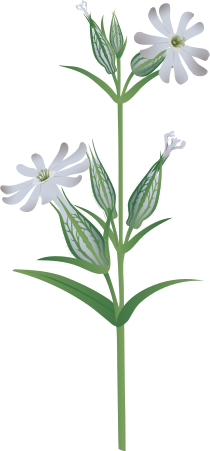
White Campion: Silene Alba

Read More

White Campion: Silene Alba

Not to be confused with Silene Vulgaris, this wildflower is also commonly referred to as Bladder Campion. Across England it has gained further nicknames including “Grave Flower” or “Flower of the Dead” due to its propensity for growing on graves and around tombstones, likely due to a preference for open, sunny areas. Their nectar-rich flowers are a hotspot of activity for bees, butterflies, and other insects making them a perfect addition to at-home wildflower gardens.

Night-Flowering Catchfly

Night-Flowering Catchfly: Silene Noctiflora

Read More

Night-Flowering Catchfly: Silene Noctiflora

The Night-Flowering Catchfly is a tall, annual herb growing to 75-80 centimetres. While considered a weed in North America, this plant is native to the UK and grows in fields and in other disturbed habitats. Inversely to most flowering plants and as the name implies, the Night-Flowering Catchfly flowers after dusk to attract nocturnal insects using a very strong fragrance.

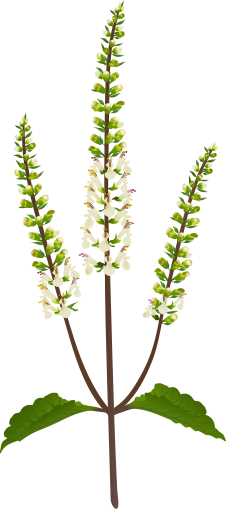
Wild Clary

Wild Clary: Salvia Verbenaca

Read More

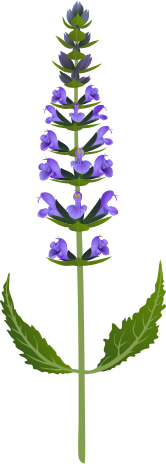
Wild Clary: Salvia Verbenaca

Wild Clary, or as it is also known, Wild Sage, boasts a distinct soft purple to violet set of flowers in summer. It grows in neutral to alkaline and requires full sun and uses its aromatic scent to attract pollinators. The famous scent lends itself to many culinary recipes, with Wild Clary often being used in a variety of dishes and steeped to make teas.

Ox-eye Daisy

Ox-eye Daisy: Leucanthemum Vulgare

Read More

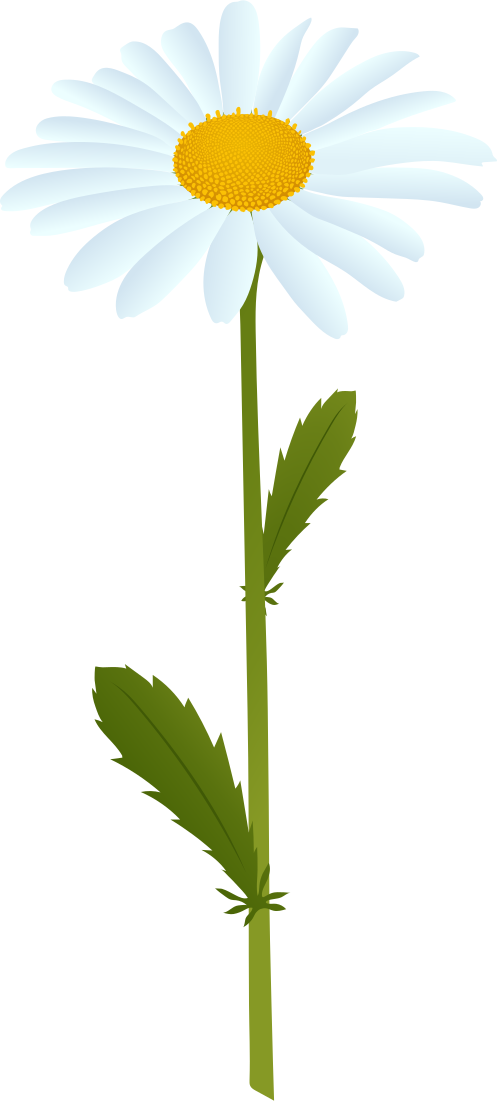
Ox-eye Daisy: Leucanthemum Vulgare

Ox-eye Daisy is a small, yet resilient flower and has the ability to thrive in diverse habitats. The yellow centre of the oxeye daisy is made up of many small flowers which hold nectar enjoyed by various pollinating insects, including butterflies, bees and hoverflies. A mature plant can produce up to 26,000 seeds that are spread by animals, vehicles, water and contaminated agricultural produce, and some seeds remain viable for up to nearly forty years.

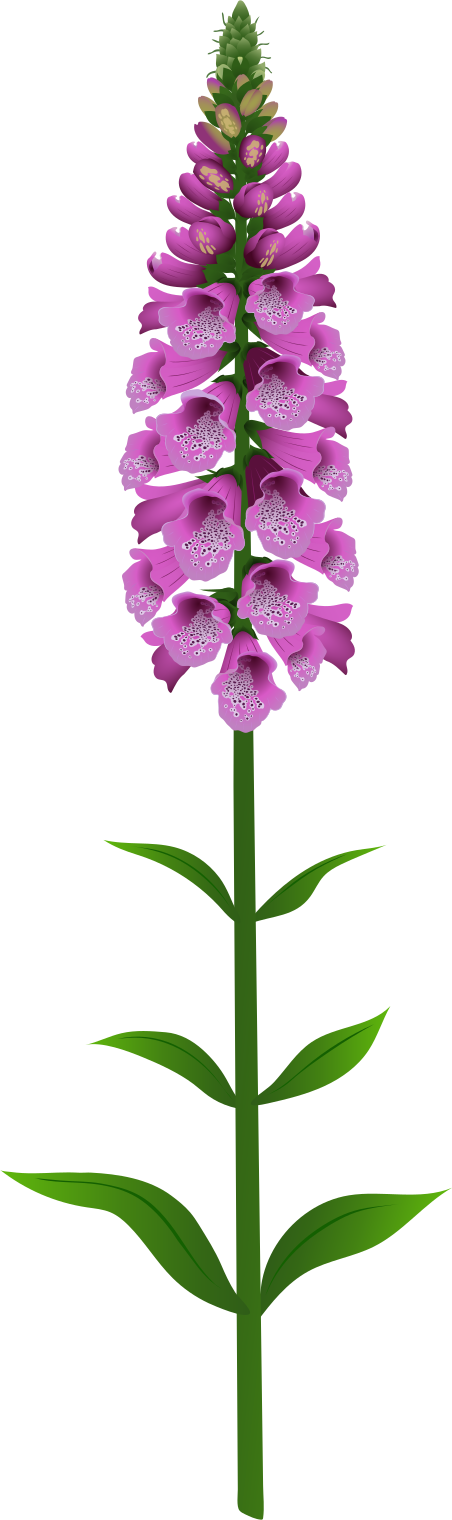
Wild Foxglove

Wild Foxglove: Digitalis Purpurea

Read More

Wild Foxglove: Digitalis Purpurea

Famous for its distinct look and potent poison, Wild Foxglove is a very popular addition to home gardens across the world. This beautiful flower sports a number of colours, ranging from purple, pink, yellow, and even white. Beyond looking pretty, Foxglove’s toxin is the source of digoxin, an important heart medication used worldwide. It is also one of the first wildflowers to reappear after a site has been disturbed by construction, tree felling, or other incidents, making it an important species for reintroducing biodiversity to an area.

Common Knapweed

Common Knapweed: Centaurea Nigra

Read More

Common Knapweed: Centaurea Nigra

Black Knapweed, a native UK wildflower, is recognised by its distinctive bright pink and purple, thistle-like flower heads. It's a superb wildlife plant as the flowers are rich in nectar and pollen, and attract bees, moths and butterflies such as the Marbled white butterfly. It’s seeds are popular with birds like goldfinches.

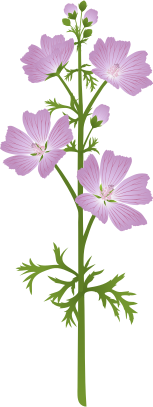
Musk Mallow

Musk Mallow: Malva Moschata

Read More

Musk Mallow: Malva Moschata

Musk Mallow is a beautiful flowering plant with pink saucer-shaped petals with an attractive scent and as such is typically grown as an ornamental plant. It is native to most of Europe and southwestern Asia, preferring dry yet fertile soils and is commonly found in hedgerows. Numerous bees, butterflies, and other beneficial insects are commonly attracted to the musky fragrance.

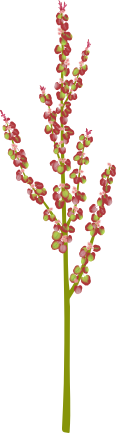
Common Sorrel

Common Sorrel: Rumex Acetosa

Read More

Common Sorrel: Rumex Acetosa

Sheep’s sorrel leaves look a little like spinach, and they are widely used in salads or as a garnish. The plant has a citrus taste, so it features in both sweet and savoury dishes. Sheep’s sorrel grows quickly and has small, red flowers which are pollinated by the wind.

Common St John's-wort

Common St John's-wort: Hypericum perforatum

Read More

Common St John's-wort: Hypericum perforatum

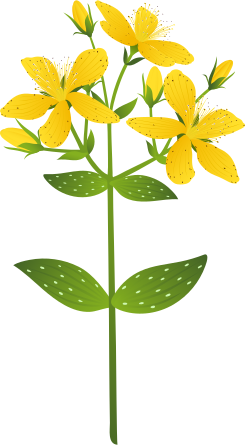
As a metre-tall flowering plant with distinctly black-spotted yellow petals, St John’s-wort is hard to miss. This plant produces a number of highly active chemical compounds which range from being harmful deterrents to large herbivores, to being extremely useful in a variety of medicines and being used as far back as the first century AD. While St John’s-wort tries to deter mammals, a number of insect species rely on it as a food source. Chrysolina hyperici, aptly called the Saint John's-wort beetle feeds on St John’s-wort and related plants.

Viper's-bugloss

Viper's-bugloss: Echium vulgare

Read More

Viper's-bugloss: Echium vulgare

Also known as blueweed for its vibrant blue flowers, Viper’s-bugloss is a native species that had its roots used as a treatment for snake bites, particularly vipers, in ancient times. It is commonly found growing in coastal areas and areas of unimproved grassland and chalk downland where it is a fan-favourite of Burnet Moths and Red Mason Bees. Due to its fondness of dryer soils, it is particularly well suited to dry gardens in areas prone to drought.

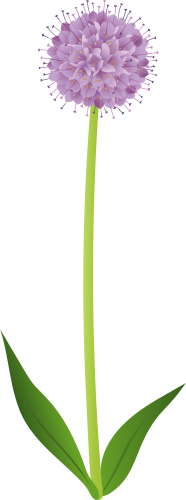
Field Scabious

Field Scabious: Knautia arvensis

Read More

Field Scabious: Knautia arvensis

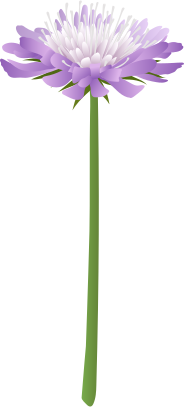
These vibrant bluish-purple flowers are related to the honeysuckle, rich in nectar and attractive to insects, especially bees. They are also known as “pincushion flowers” because they have short petals with little stamens sticking out of them. This flower gets its name from the Latin word for itch, because it was once believed to be a remedy for the skin disease scabies.

Tufted Vetch

Tufted Vetch: Vicia Cracca

Read More

Tufted Vetch: Vicia Cracca

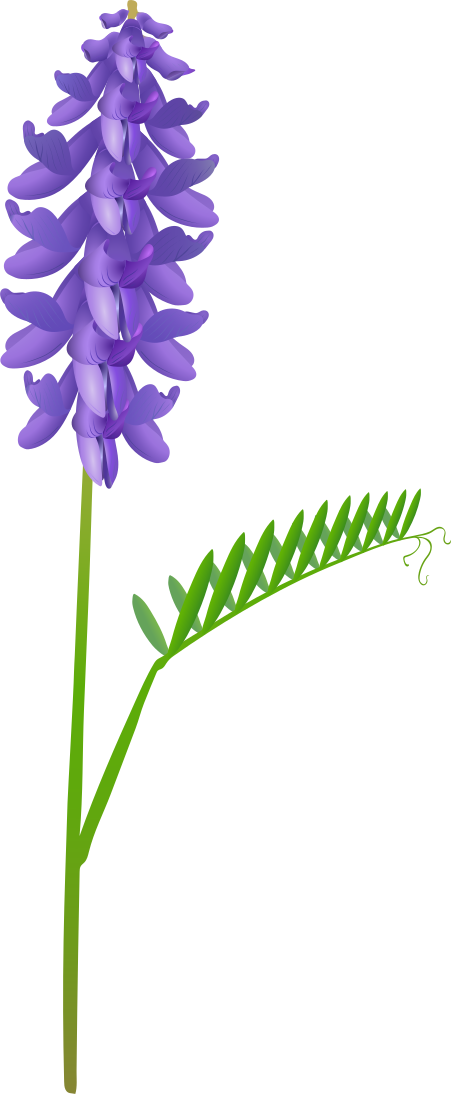
Tufted Vetch is known for its vibrant purple flowers and can be seen on grasslands, scrubland, woodland edges and the coast. Like other Legume plants, including beans and peas, Tufted Vetch has nitrogen-fixing properties which enrich their surrounding solis. Nitrogen is an essential part for plant growth and most plants rely on the availability of nitrogen in the soil to survive.

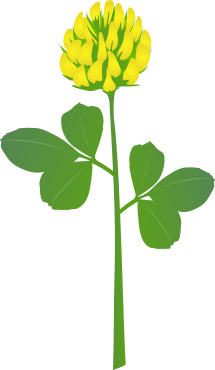
Alsike Clover

Alsike Clover: Trifolium Hybridum

Read More

Alsike Clover: Trifolium Hybridum

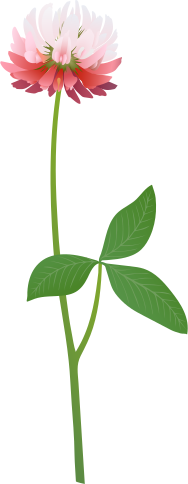
Alsike Clover, named after the town of Alsike, Sweden, was originally believed to be a hybrid of White Clover and Red Clover, hence the latin name Trifolium hybridum. As it turns out, it is an entirely separate species that just happens to have flowers with a pink to white colour gradient. It blooms from spring to autumn and is widely cultivated as a forage crop. It is naturally found alongside roads, in fields and meadows, as well as in banks and waste ground. Like many clovers, it is beneficial to soil quality, being found to quickly lower the pH of soil, increasing its viable area of reproduction and heavily reducing the density of weeds.

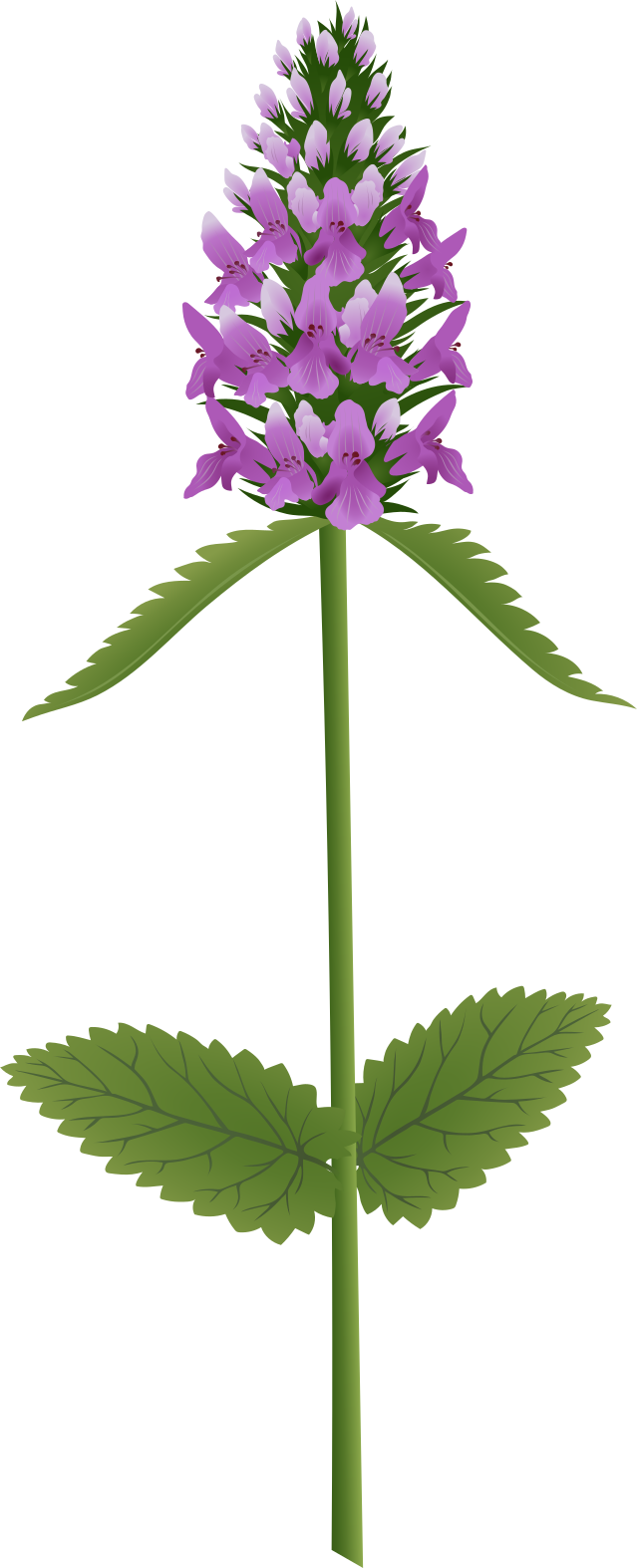
Betony

Betony: Stachys officinalis

Read More

Betony: Stachys officinalis

Deriving its name from the Greek “stachys” meaning “ear of grain,” the commonly called Purple Betony has a spiked shape inflorescence (the arrangement of the flowers on a plant). Purple Betony has a long and detailed history, even being referenced in Pliny the Elder who claimed it was 'a plant more highly esteemed than any other.' Showing up in numerous books over the millenia, many uses for the plant have been described such as: having dream-controlling properties, an old remedy for arthritis and gout, being used to make wine and holy water, and witchcraft.

Wood Sage

Wood Sage: Teucrium Scorodonia

Read More

Wood Sage: Teucrium Scorodonia

Wood Sage is an evergreen plant that resembles the common sage, but is not as fragrant and thus less popular as an herb in cooking. It is commonly grown as an ornamental plant in home gardens and is very popular amongst sawflies, wasps, bees, and ants. It is even the host plant of one specific species - the Wood Sage Flea Beetle, Longitarsus membranaceus.

Devil's-bit Scabious

Devil's-bit Scabious: Succisa pratensis

Read More

Devil's-bit Scabious: Succisa pratensis

A bright-purple flower with a variety of medical purposes, the Devil’s-bit Scabious is both a beautiful garden addition and useful to have around. It differs from other Scabious species by having five-lobed flowers instead of four-lobed and prefers damper soil. Folk tales claim the name is from the short black root being bitten off by the devil. Across the British Isles it is found growing in grasslands, hedgerows, marshes, meadows, and pastures. Devil’s-bit Scabious is wonderful for local biodiversity as it gets frequented by many types of insects, with hoverflies in particular being a preferred visitor. It is the larval food plant of two rare species: the marsh fritillary butterfly and narrow-bordered bee hawk-moth, and sites with their presence are carefully managed.

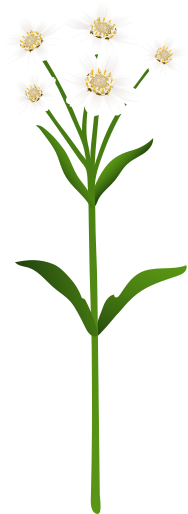
Sneezewort

Sneezewort: Achillea ptarmica

Read More

Sneezewort: Achillea ptarmica

Containing a multitude of exciting features, the Sneezewort rivals their number with the amount of intriguing names it has: fair-maid-of-France, goose tongue, white tansy, and more. Sneezewort boasts very pretty clusters of white flowers and develops in the pattern of the fibonacci sequence. The leaves can be consumed raw or cooked and chewing on them produces a numbing, tingling effect. Sneezewort is a hardy plant, preferring full sun, well-drained soil, and can tolerate hot summers and droughts.

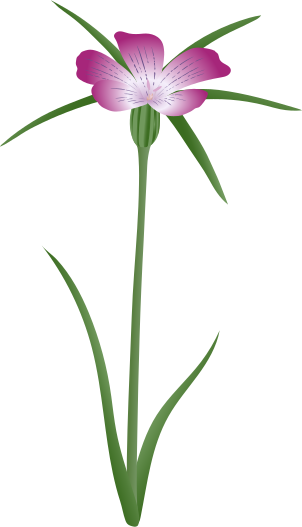
Corn Cockle

Corn Cockle: Agrostemma githago

Read More

Corn Cockle: Agrostemma githago

Corn Cockle’s flowers are scentless but range from deep pink to purple, with each petal bearing two or three discontinuous black lines. It was once extremely common in the 19th century, showing up as a weed in wheat fields. Due to the increase of intensive mechanised farming, Corn Cockle is now uncommon and at risk in many countries, and was even thought to be extinct in the UK until a single specimen was found growing in Sunderland in 2014. Every part of the plant is poisonous, containing a number of triterpene saponins, yet it is still used in folk medicine.

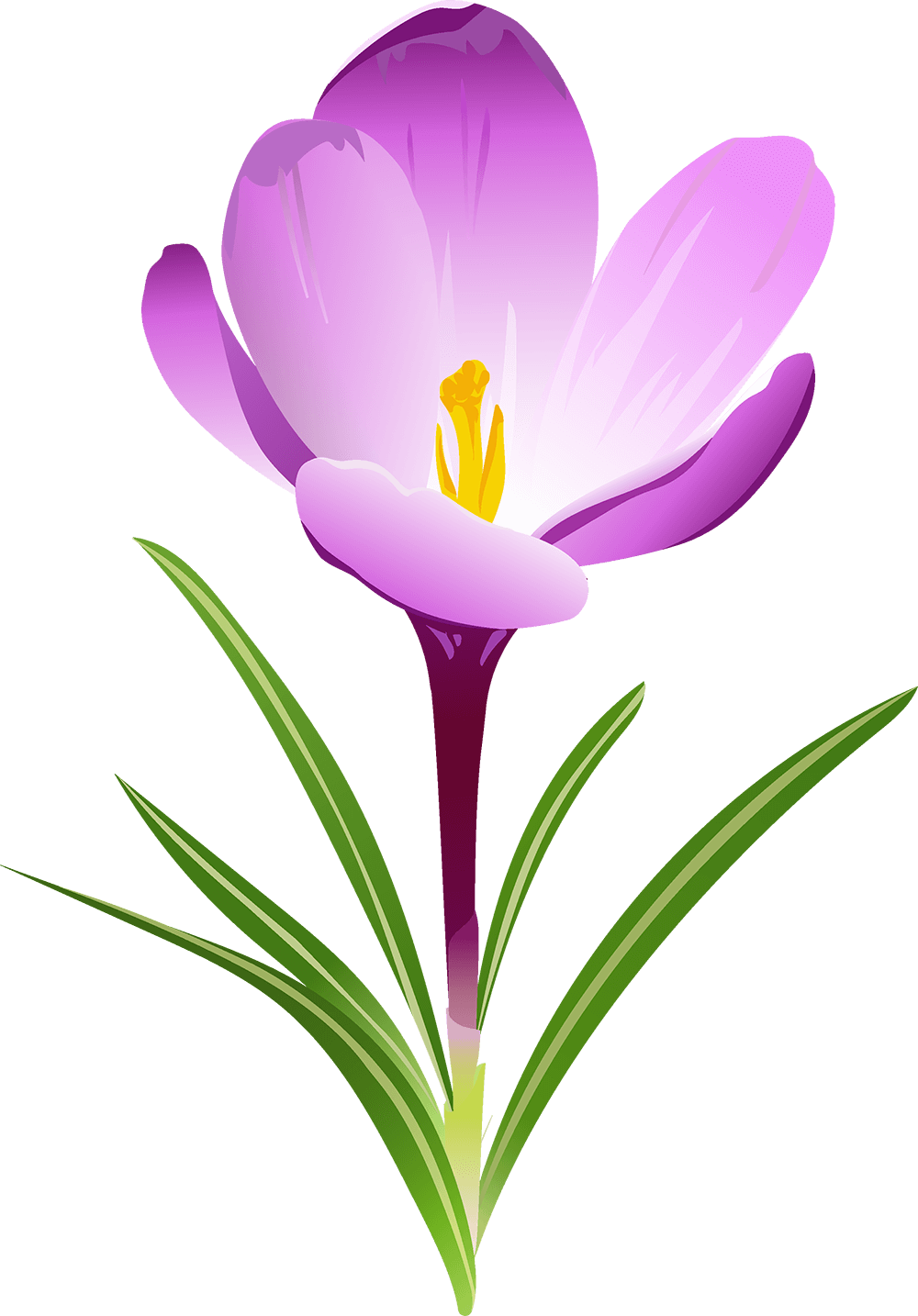
Crocus

Crocus: Crocus spp.

Read More

Crocus: Crocus spp.

You may not be familiar with the crocus flower, but it is the source of Saffron, one of the most expensive spices in the world with a rich history. In the 14th century, during the Black Death, there was a 14 week long “Saffron War” that occurred after a 363 kg shipment was hijacked by nobles. The crocus is native around the Mediterranean to Central Asia and is easily visible with purple, yellow, white or even striped flowers that bloom low to the ground. It is very popular amongst bumblebees and butterflies in particular.

Rudbeckia

Rudbeckia: Rudbeckia spp.

Read More

Rudbeckia: Rudbeckia spp.

Hailing from North America, the Rudbeckia, or cone-flower, is very distinct with its bright yellow petals and prominent, raised central black-brown disc. There are over a dozen different species of Rudbeckia with many having become popular garden species. Their leaves are a favourite snack for caterpillars of certain species of moths and butterflies. The name Rudbeckia comes from Rudbeck, honouring Olof Rudbeck the Elder and Olof Rudbeck the Younger.

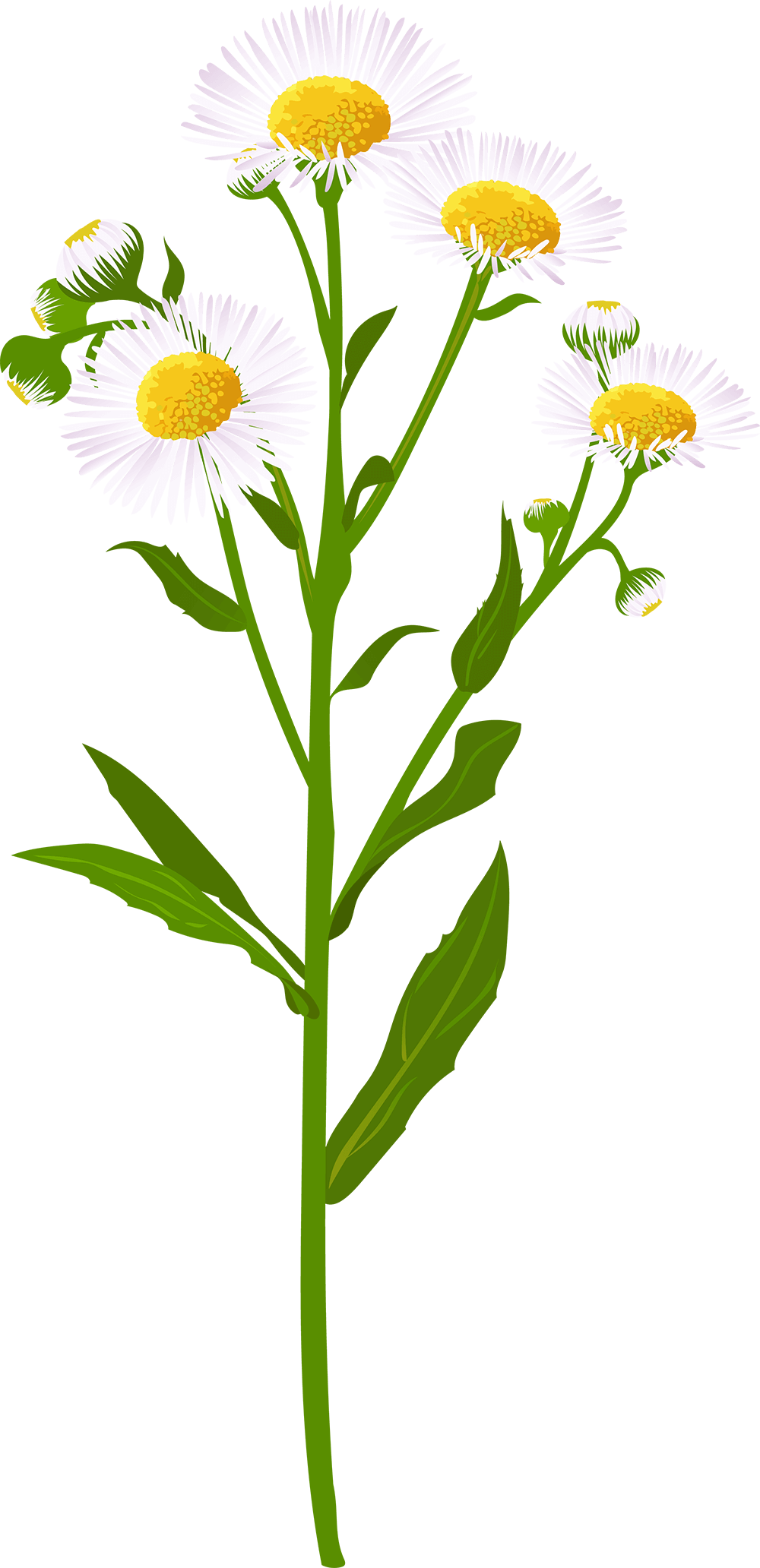
Fleabane

Fleabane: Erigeron spp.

Read More

Fleabane: Erigeron spp.

Fleabane gets its English name from the belief that the dried flowers would repel fleas, however there is little modern evidence that it does so. The name fleabane actually refers to a number of different types of flower, with there being hundreds of fleabanes falling under the Erigeron species that are found across the globe, many of which are loved by butterflies and moths as food sources for their larvae.

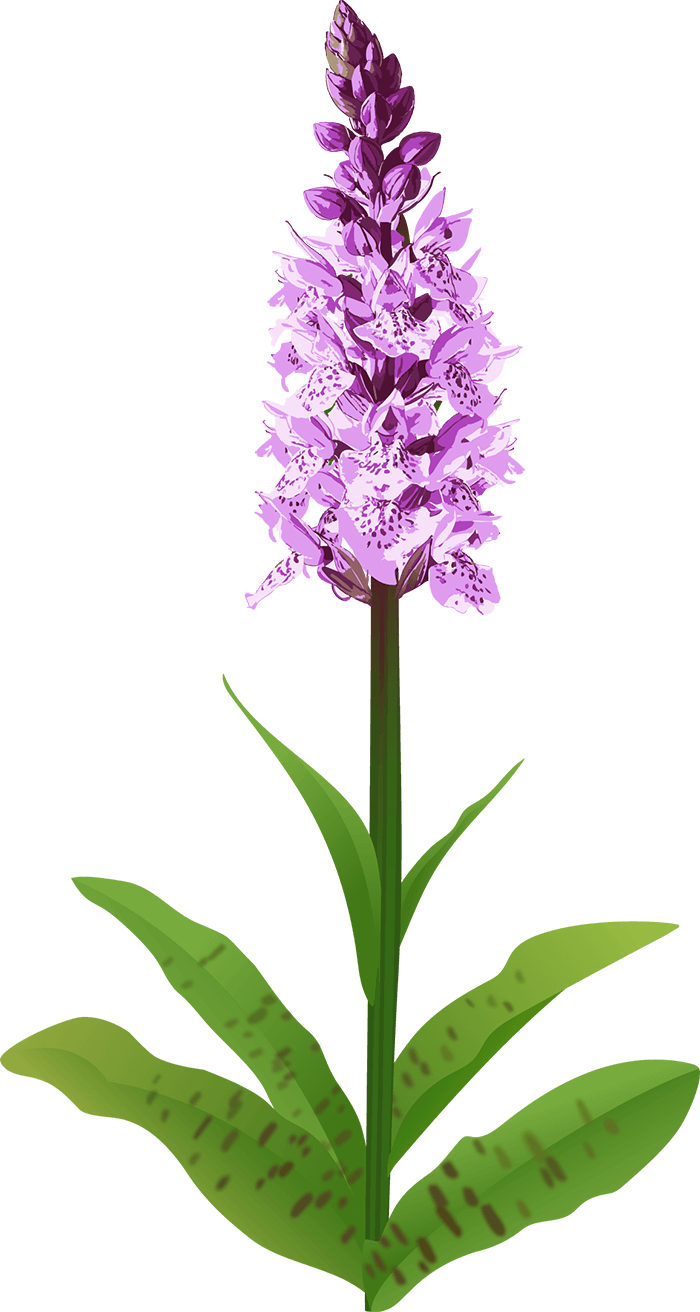
Common spotted orchid

Common spotted orchid: Dactylorhiza fuchsii

Read More

Common spotted orchid: Dactylorhiza fuchsii

The common spotted orchid is a subspecies of orchid and is one of the most common wild-growing orchids. It is spread across most of Europe and ranges all the way to Siberia and Western China. Somehow, it has also naturalised (a plant that is not native and thrives, but is not invasive) in Ontario, Canada. The flowers range from white to pale purple, with darker purple spots, loops, dots, and dashes and is frequented by bumblebees and longhorn beetles.

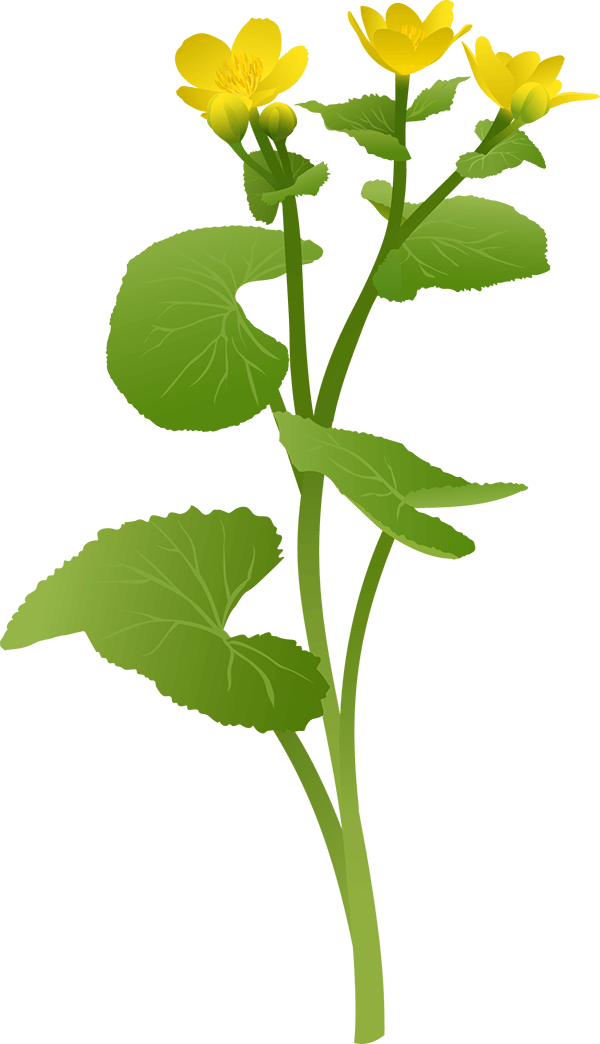
Marsh marigold

Marsh marigold: Caltha palustris

Read More

Marsh marigold: Caltha palustris

A striking perennial of wet places, marsh marigold brings early colour to pondsides, ditches and damp meadows with its glossy, bright yellow flowers. Blooming from March to May, it is one of the first nectar sources available to emerging pollinators after winter. Its rounded, dark green leaves form dense clumps that help stabilise wet soils, making it an important plant for healthy wetland ecosystems.

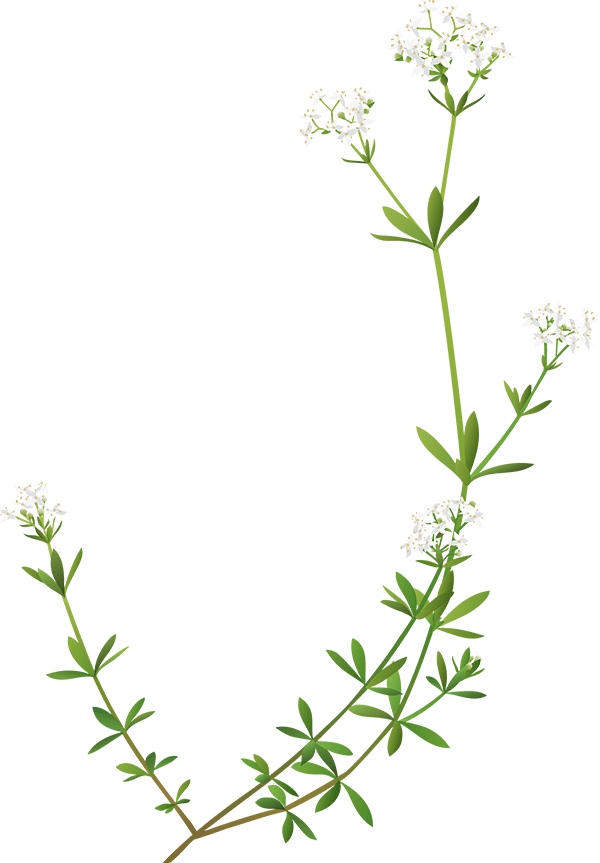
Heath bedstraw

Heath bedstraw: Galium saxatile

Read More

Heath bedstraw: Galium saxatile

Heath bedstraw is a low-growing, perennial commonly found on heathland, acid grassland and upland pastures. With its fine stems and narrow leaves, it produces small white flowers in summer that attract a range of insects. Well adapted to poor, acidic soils, heath bedstraw plays a valuable role in maintaining the structure and diversity of semi-natural heathland habitats.

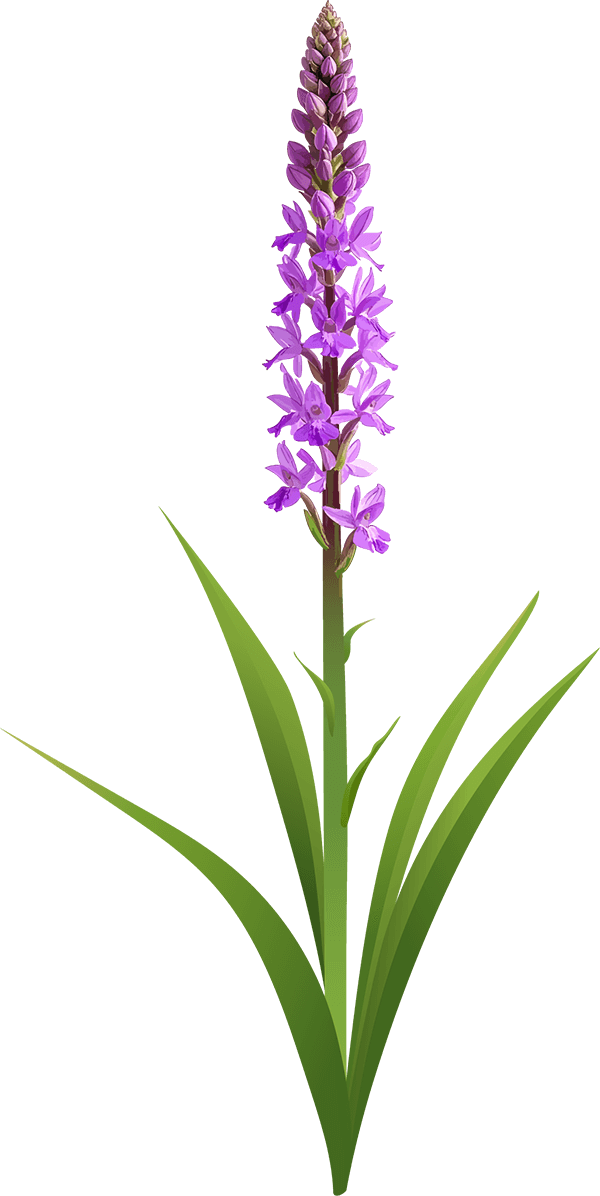
Common fragrant orchid

Common fragrant orchid: Gymnadenia conopsea

Read More

Common fragrant orchid: Gymnadenia conopsea

This elegant orchid is known for its tall spikes of pink to lilac flowers and its sweet, vanilla-like scent, which is strongest in the evening. Flowering from June to August, the common fragrant orchid thrives in unimproved grasslands, meadows and calcareous soils. It is highly attractive to butterflies and moths and is a strong indicator of long-established, species-rich grassland.

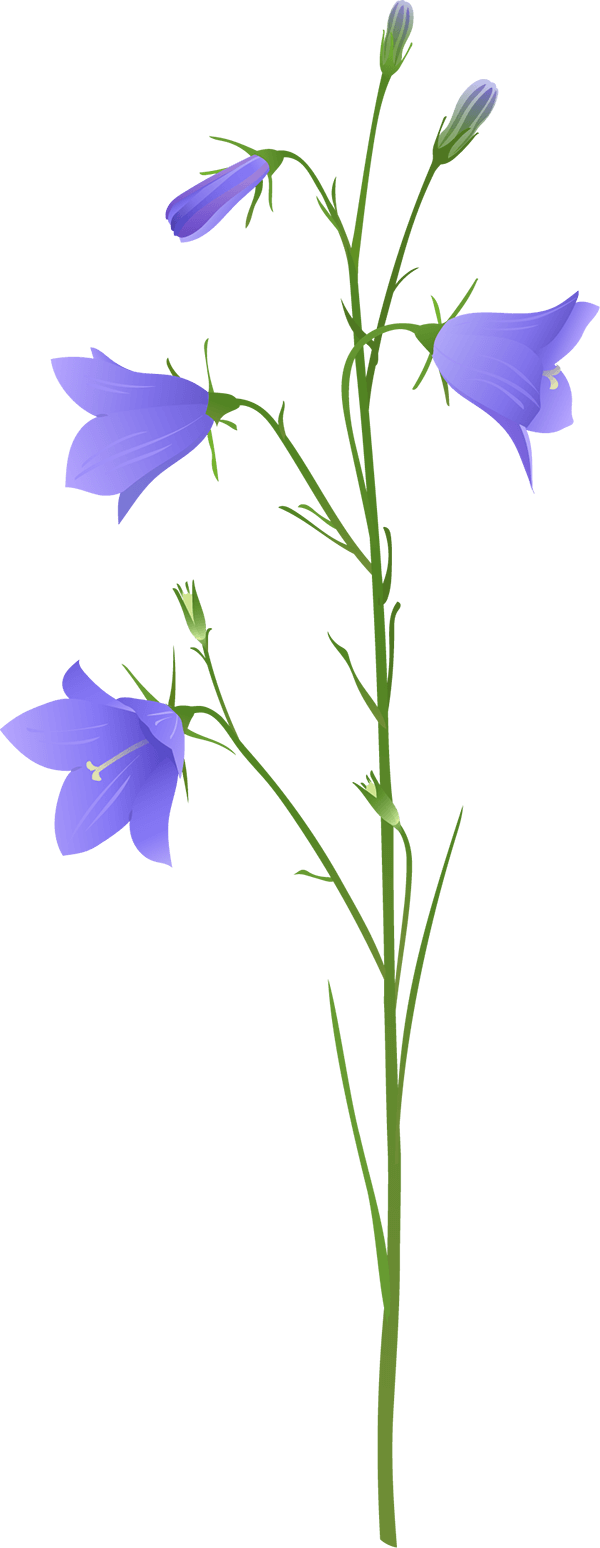
Harebell

Harebell: Campanula rotundifolia

Read More

Harebell: Campanula rotundifolia

Delicate yet resilient, harebell is a familiar wildflower of grasslands, coastal cliffs and roadside verges. Its nodding, bell-shaped blue flowers bloom from July to September, providing nectar for bees and other pollinators late in the summer. Despite its fragile appearance, harebell tolerates dry, nutrient-poor soils and contributes to the charm and biodiversity of open landscapes.

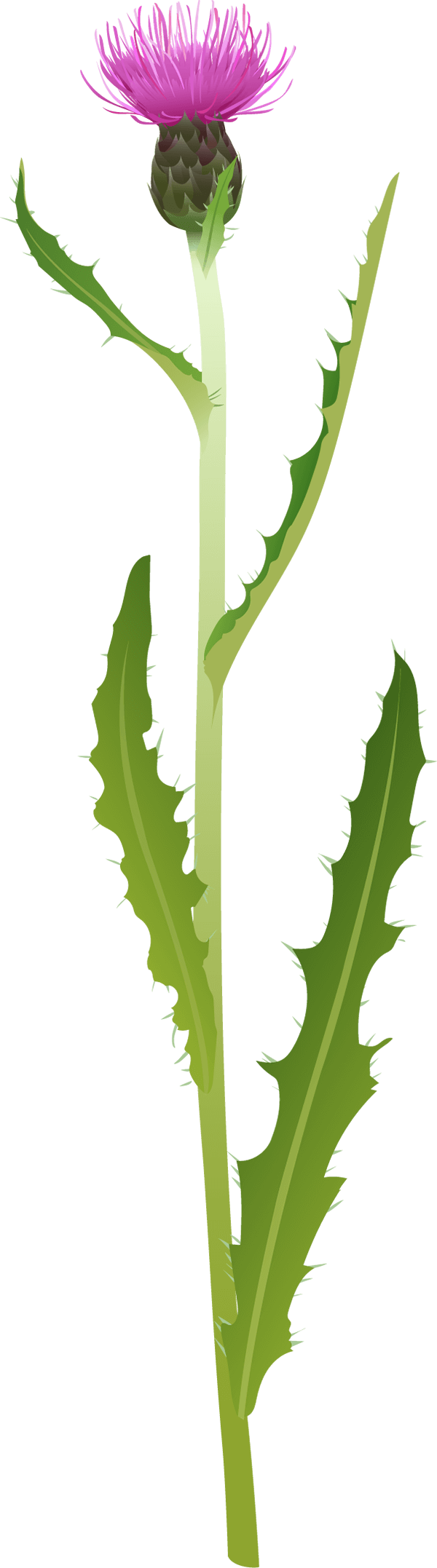
Meadow thistle

Meadow thistle: Cirsium dissectum

Read More

Meadow thistle: Cirsium dissectum

Meadow thistle is a slender, non-spiny thistle of damp, unimproved meadows and fens. Flowering from June to August, it produces soft, purple flowerheads that are rich in nectar and highly valued by bees and butterflies. As a plant associated with traditionally managed grasslands, meadow thistle is an important indicator of high-quality, wildlife-rich meadow habitats.

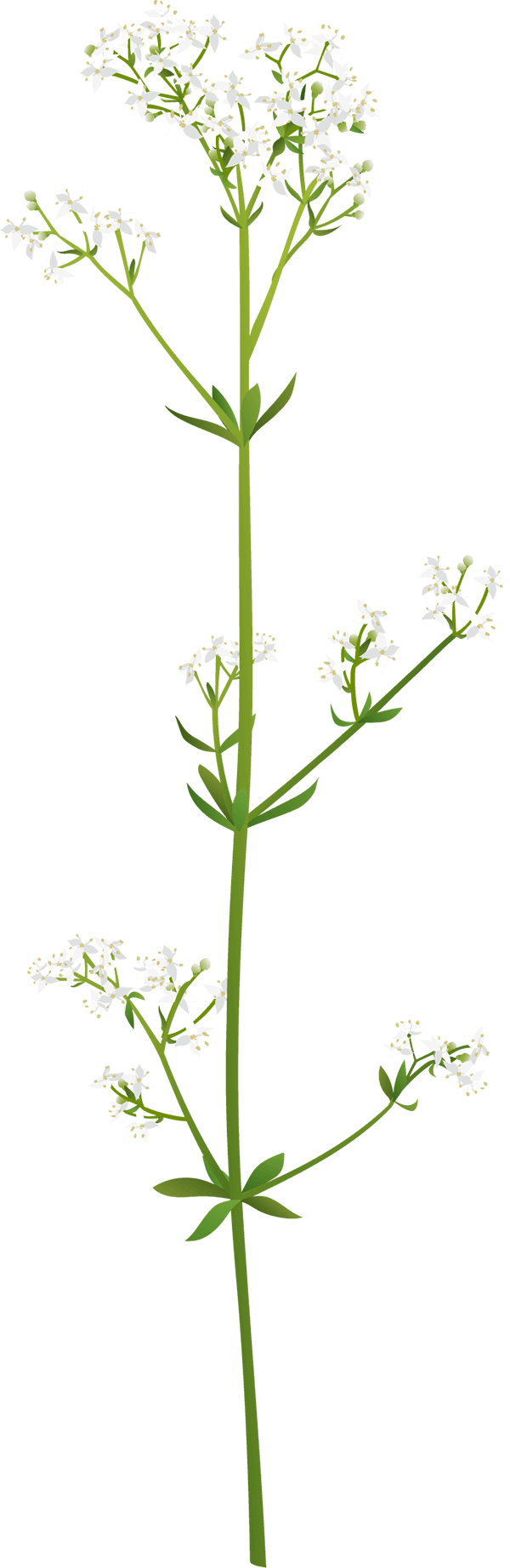
Fen bedstraw

Fen bedstraw: Galium uliginosum

Read More

Fen bedstraw: Galium uliginosum

Fen bedstraw is a graceful perennial found in wet meadows, fens and marshes. It has fine, sprawling stems and small white flowers that bloom in summer, supporting a range of insects. This species thrives in nutrient-poor, waterlogged soils and contributes to the delicate plant communities that characterise healthy fen and wet grassland ecosystems.

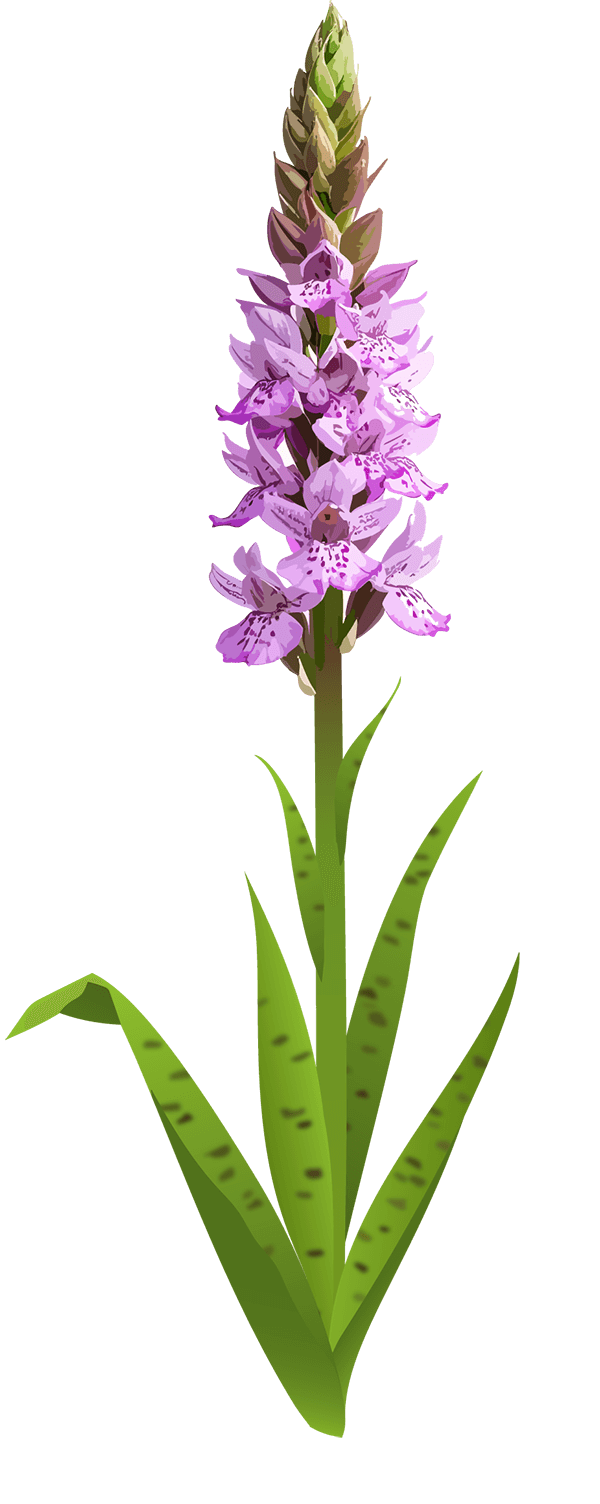
Heath spotted orchid

Heath spotted orchid: Dactylorhiza maculata

Read More

Heath spotted orchid: Dactylorhiza maculata

One of the UK’s most widespread orchids, the heath spotted orchid is easily recognised by its spotted leaves and dense spikes of pink to purple flowers. Flowering from June to August, it occurs on heathland, moorland and damp grasslands, particularly on acidic soils. Its presence reflects good habitat conditions and it provides an important nectar source for pollinating insects.

Tawyblade orchid

Tawyblade orchid: Neottia ovata

Read More

Tawyblade orchid: Neottia ovata

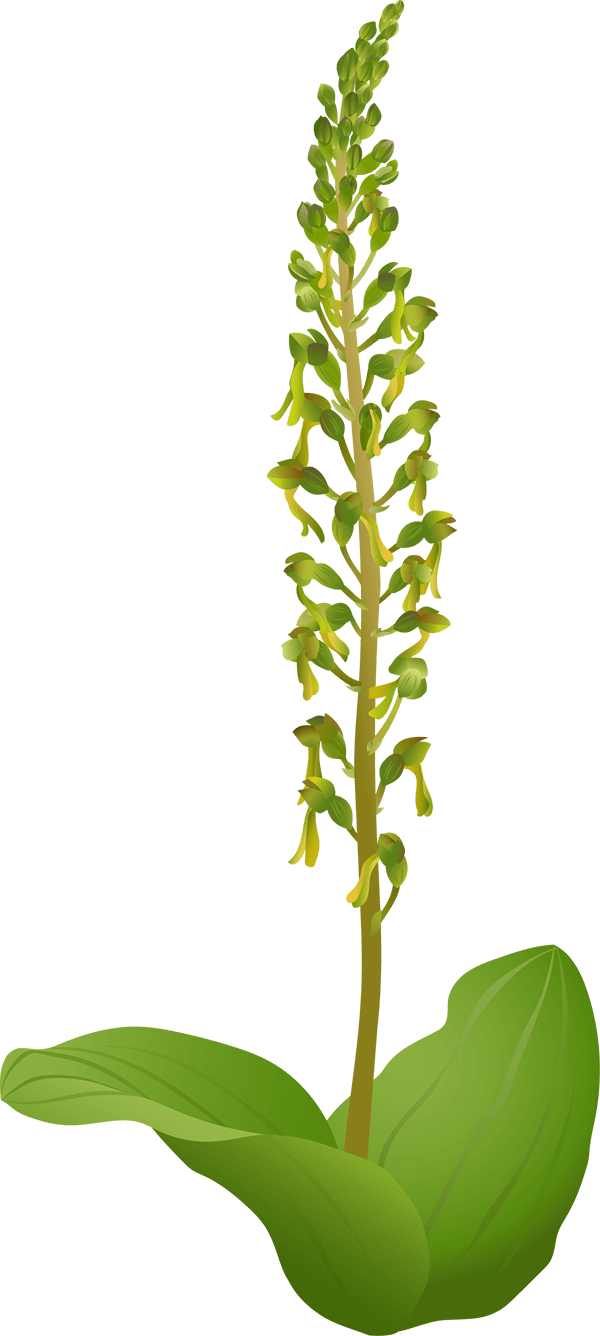
Named for its pair of broad, oval leaves, the twayblade orchid is a subtle but distinctive species of woodland, grassland and scrub. Its tall spike of greenish flowers appears from May to July and is pollinated primarily by insects attracted to its scent rather than its colour. Twayblade is notable for its reliance on complex soil fungi, highlighting the importance of healthy soils and undisturbed habitats.

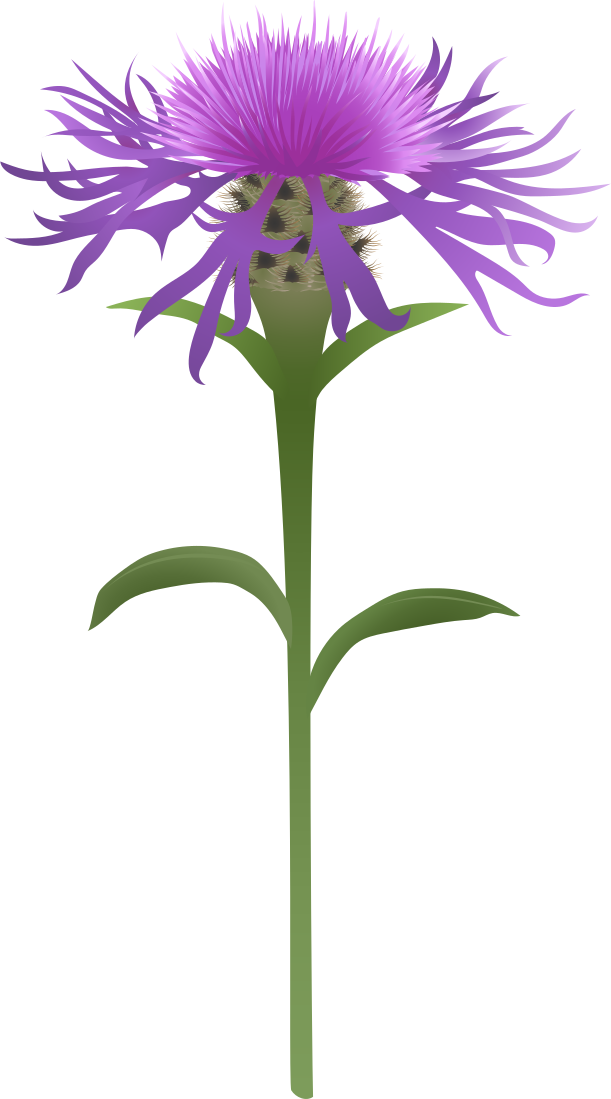
Greater knapweed

Greater knapweed: Centaurea scabiosa

Read More

Greater knapweed: Centaurea scabiosa

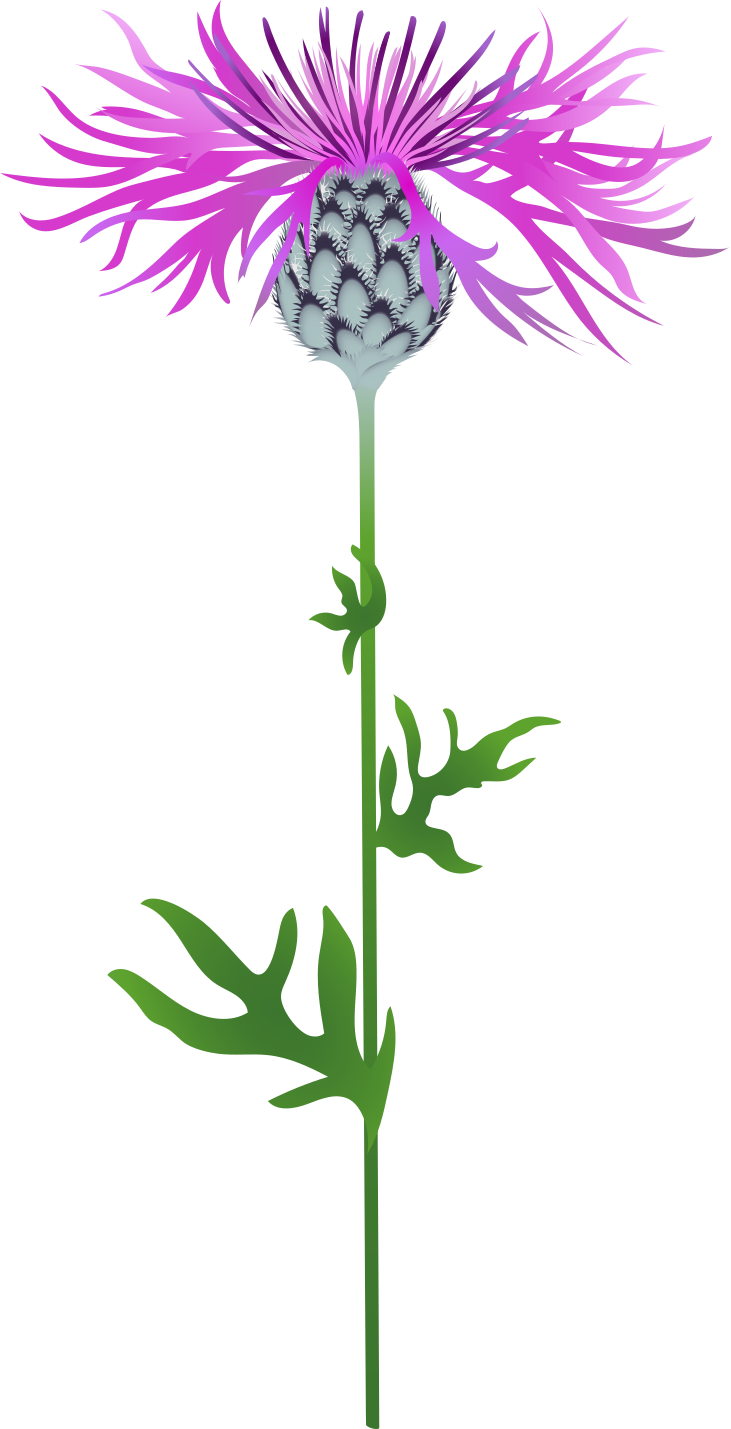
Greater Knapweed, characterised by deep purple thistle-like flowers, blooms in summer and attracts butterflies and bees. Its rugged appearance lends it a robust presence in meadows. This wildflower has medieval associations with knighthood and chivalry.

Marjoram

Marjoram: Origanum majorana

Read More

Marjoram: Origanum majorana

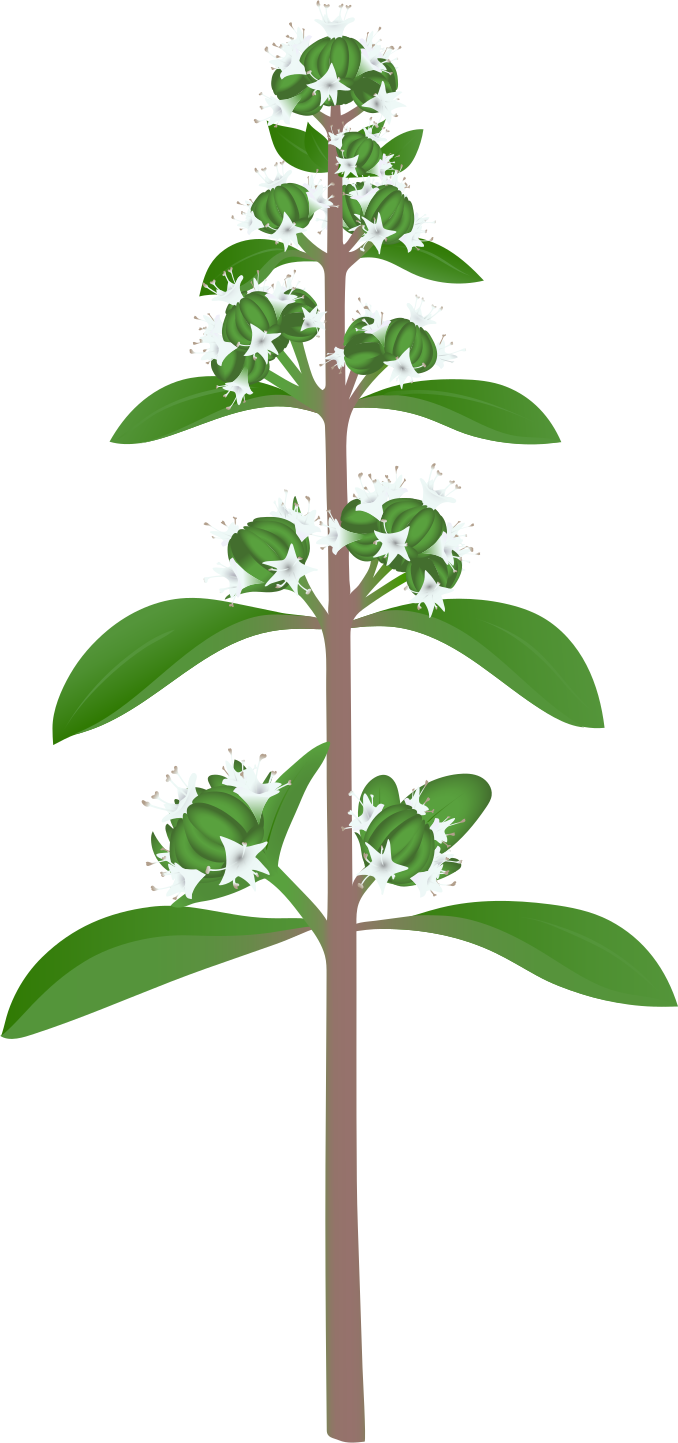
Wild marjoram, loved by bees, other pollinating insects and humans alike, can be found on chalk or limestone grassland, hedge banks, woodland rides and scrub. Often called oregano in Europe, marjoram is best known as a pizza herb, and is important in both Greek and Italian cuisine. Wild Marjoram has been traditionally used to treat colds, indigestion and stomach upsets.

Common Bent

Common Bent: Agrostis Castellana

Read More

Common Bent: Agrostis Castellana

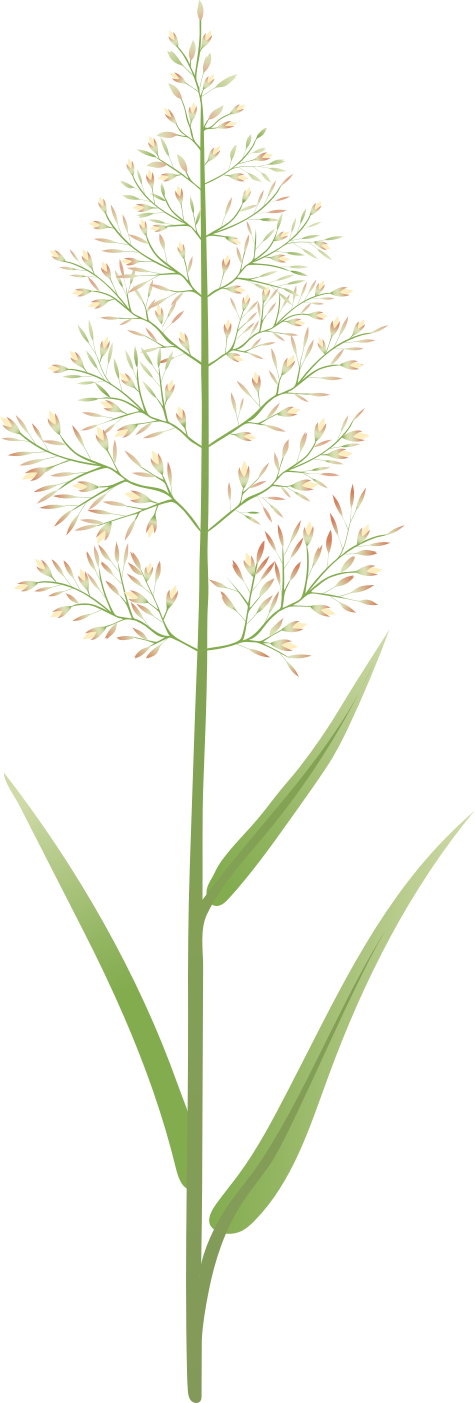
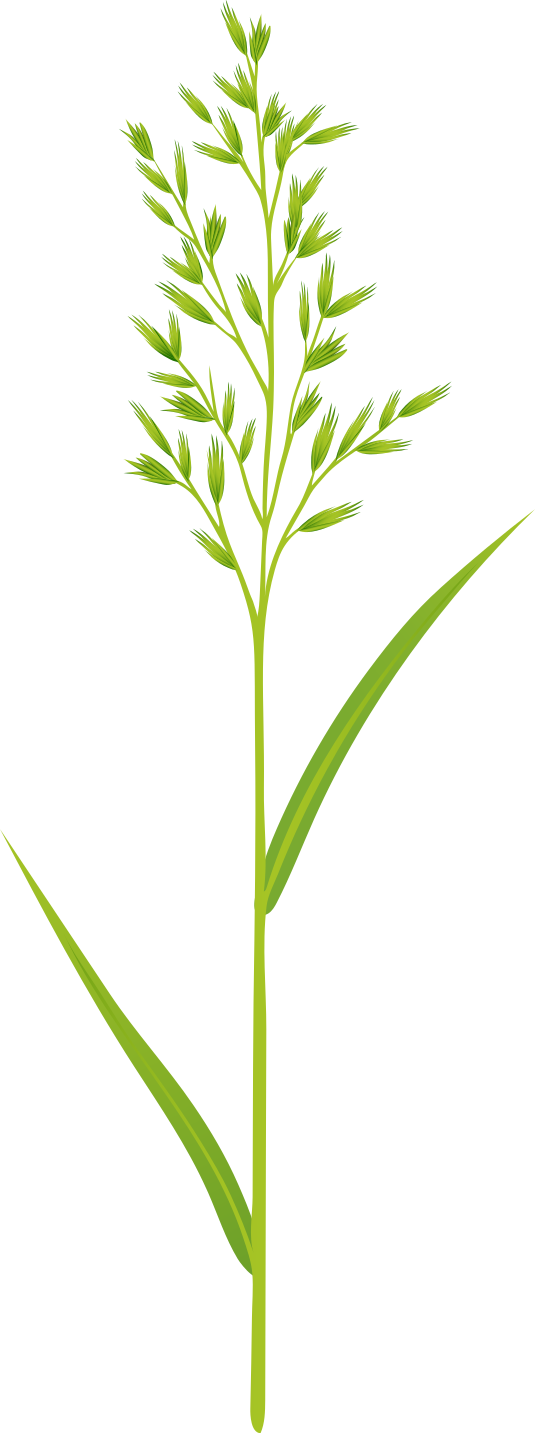
This slightly wispy, bristly perennial grass grows quickly. It is also known as highland bent, and is often found on roadsides or in wildflower meadows. Common bent is what is known as a hyperaccumulator of zinc and lead, which means it can grow in soils with a high concentration of those metals.

Crested Dog’s-tail

Crested Dog’s-tail: Cynosurus Cristatus

Read More

Crested Dog’s-tail: Cynosurus Cristatus

This common perennial grass grows in tufts in lowland areas where there isn’t too much water. Crested dog’s-tail is stiff and used to be used for making bonnets. It germinates quickly but takes quite a while to grow, so it doesn’t compete against and dominate other species in the wildflower meadow.

Sheep’s Fescue

Sheep’s Fescue: Festuca Ovina

Read More

Sheep’s Fescue: Festuca Ovina

This narrow-leaved grass grows in tufts and is slightly spiky in appearance. It fares well in loamy soil and is often found growing in pasturelands where, as you might expect from the name, sheep like to graze on it. Sheep’s fescue has very dense bunches of roots, which makes it tricky for weeds to take hold nearby.

Smooth-stalked Meadow Grass

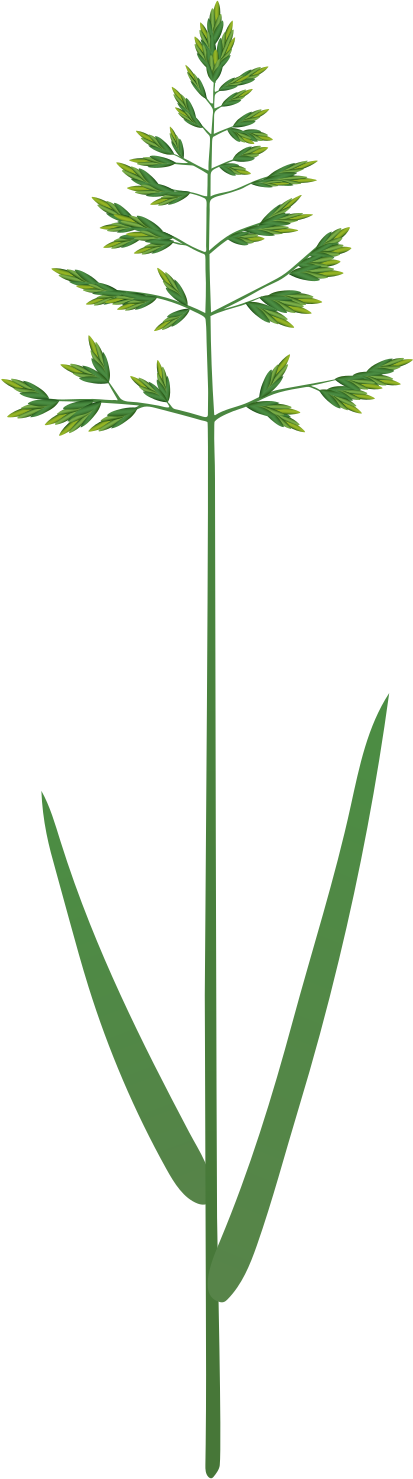
Smooth-stalked Meadow Grass: Poa Pratensis

Read More

Smooth-stalked Meadow Grass: Poa Pratensis

This perennial grass species likes to grow in fertile, well-drained soil. It is a valuable pasture plant and is often used to make lawns in parks and gardens. Poa pratensis is also known as Kentucky bluegrass, and in the USA, it is used as a playing surface in both American Football and Major League Baseball.

Small-leaved Timothy

Small-leaved Timothy: Phleum Pratense ssp Bertolinii

Read More

Small-leaved Timothy: Phleum Pratense ssp Bertolinii

This grass is named after Timothy Hanson, an American farmer who introduced it to the United States in the early 1700s. Timothy grass is a common trigger for those who suffer from seasonal allergies, but its pollen has been used in the development of a hay fever vaccine. Timothy hay is a popular treat for many animals, from small pets to thoroughbred racehorses.

Red Fescue

Red Fescue: Festuca Rubra

Read More

Red Fescue: Festuca Rubra

Widespread across the entire Northern Hemisphere, this species of grass can grow in all sorts of habitats and climates. It does however, prefer shade and is often planted as an ornamental species in gardens for its shade tolerance. It has narrow, needle-like leaves and as such is commonly avoided by livestock.

Sweet Vernal

Sweet Vernal: Anthoxanthum odoratum

Read More

Sweet Vernal: Anthoxanthum odoratum

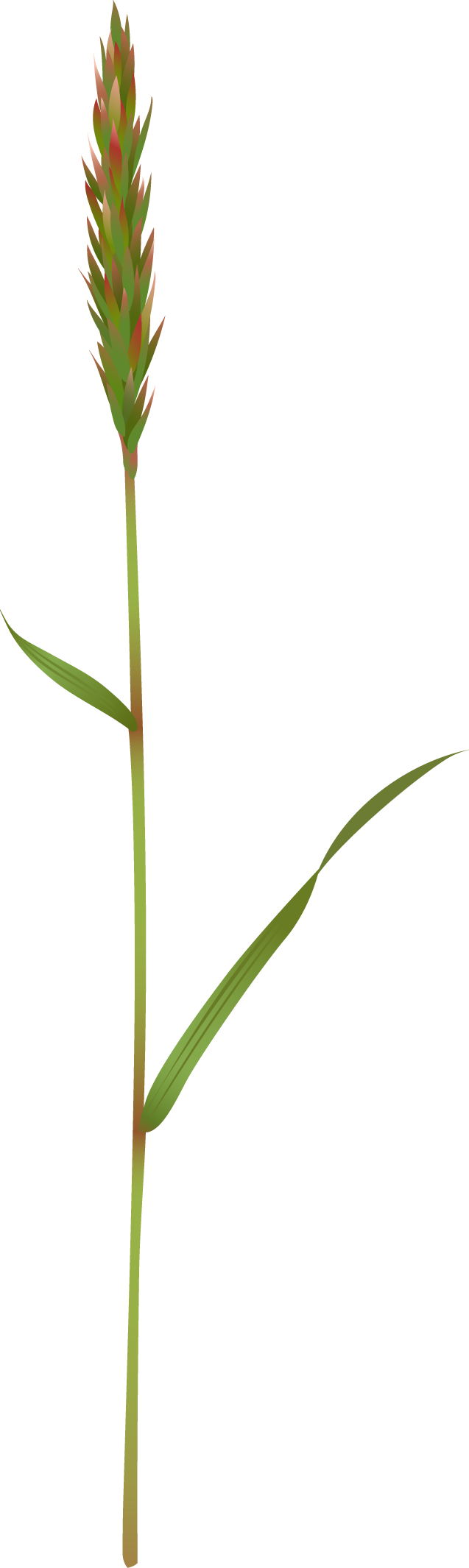
A delicate grass that flowers between April-July, known for its sweet, vanilla-like scent. Sweet vernal grass is often one of the first species to colour spring meadows and plays a key role in creating the fragrant character of traditional hay. It is the foodplant for the larvae of brown and skipper butterflies.

UN's Sustainable Development Goals

As a GreenTheUK partner, you support projects that are in line with the UN Sustainable Development Goals.

SDG Icon

Take urgent action to combat climate change and its impacts.

SDG Icon

Sustainably manage forests, combat desertification, halt and reverse land degradation, halt biodiversity loss.

Over time, this meadow should be home to a rich variety of wildlife which could include…

Buff-tailed bumblebee: Bombus terrestris

Buff-tailed bumblebee

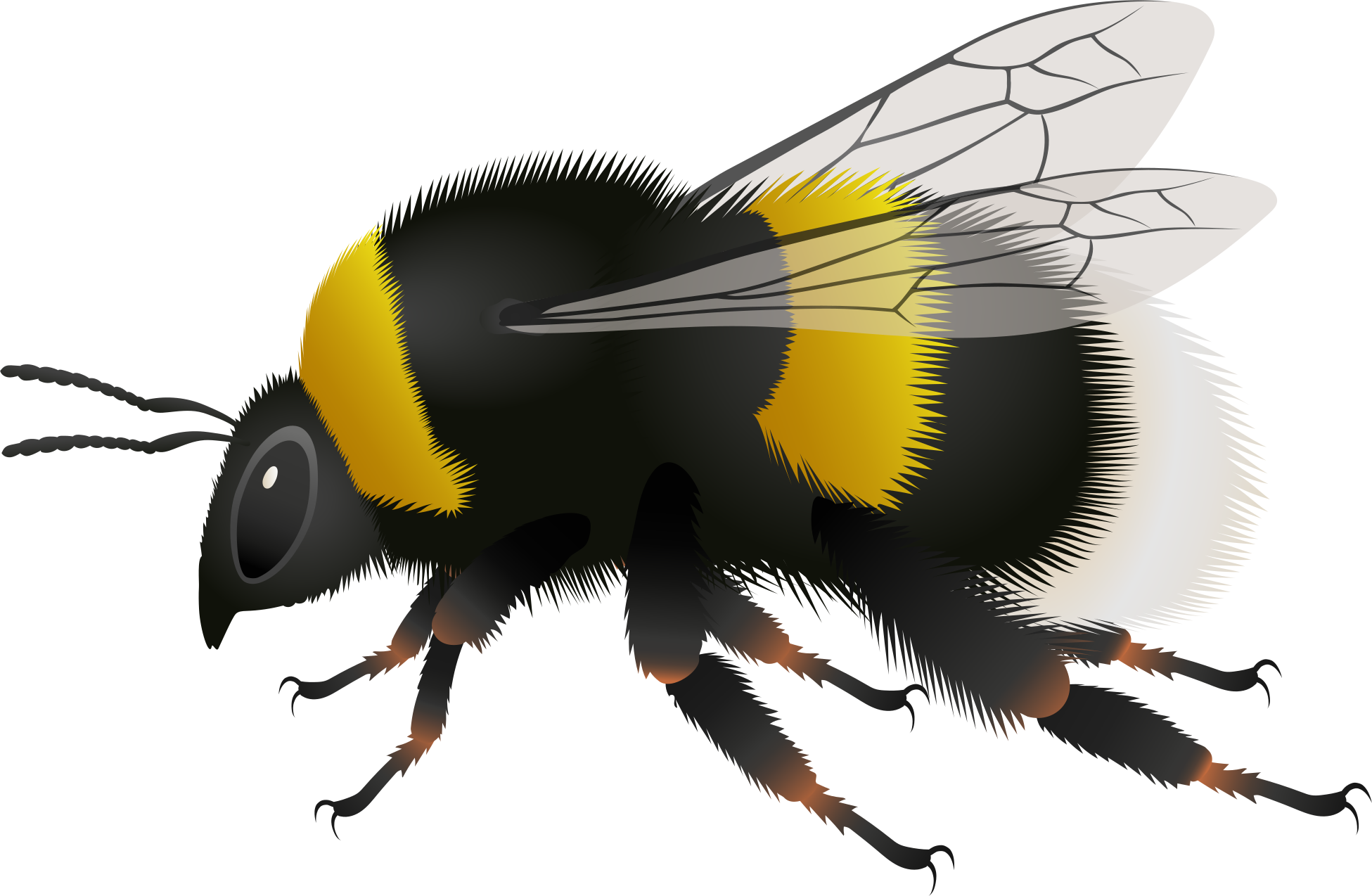
These are the giants of the bumblebee world, and the whole species is named after the buff colour of their queen’s tail. They can be found in the UK’s lowlands, nesting underground in very large groups. These insects are very fond of nectar, and if they can’t easily reach it with their tongues, they will bite a hole in the flower to suck it out.

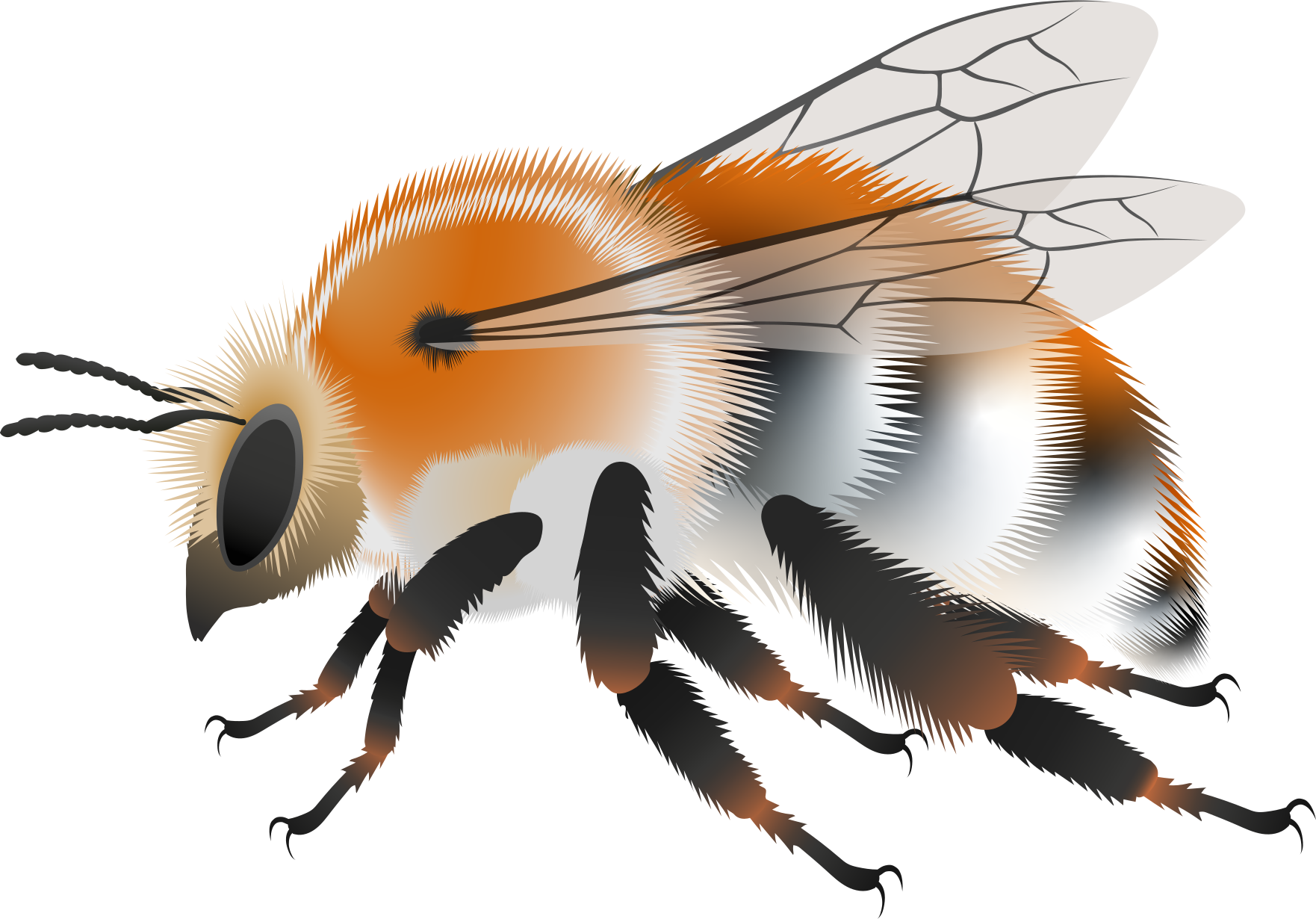
Common Carder Bee: Bombus Pascuorum

Common Carder Bee

This relatively small ginger-coloured bumblebee is widespread throughout the UK, in habitats including farms, woods and gardens. Carder bees have very long tongues and feed on heather, clover and lavender. They often nest in old mouse runs and disused birds’ nests.

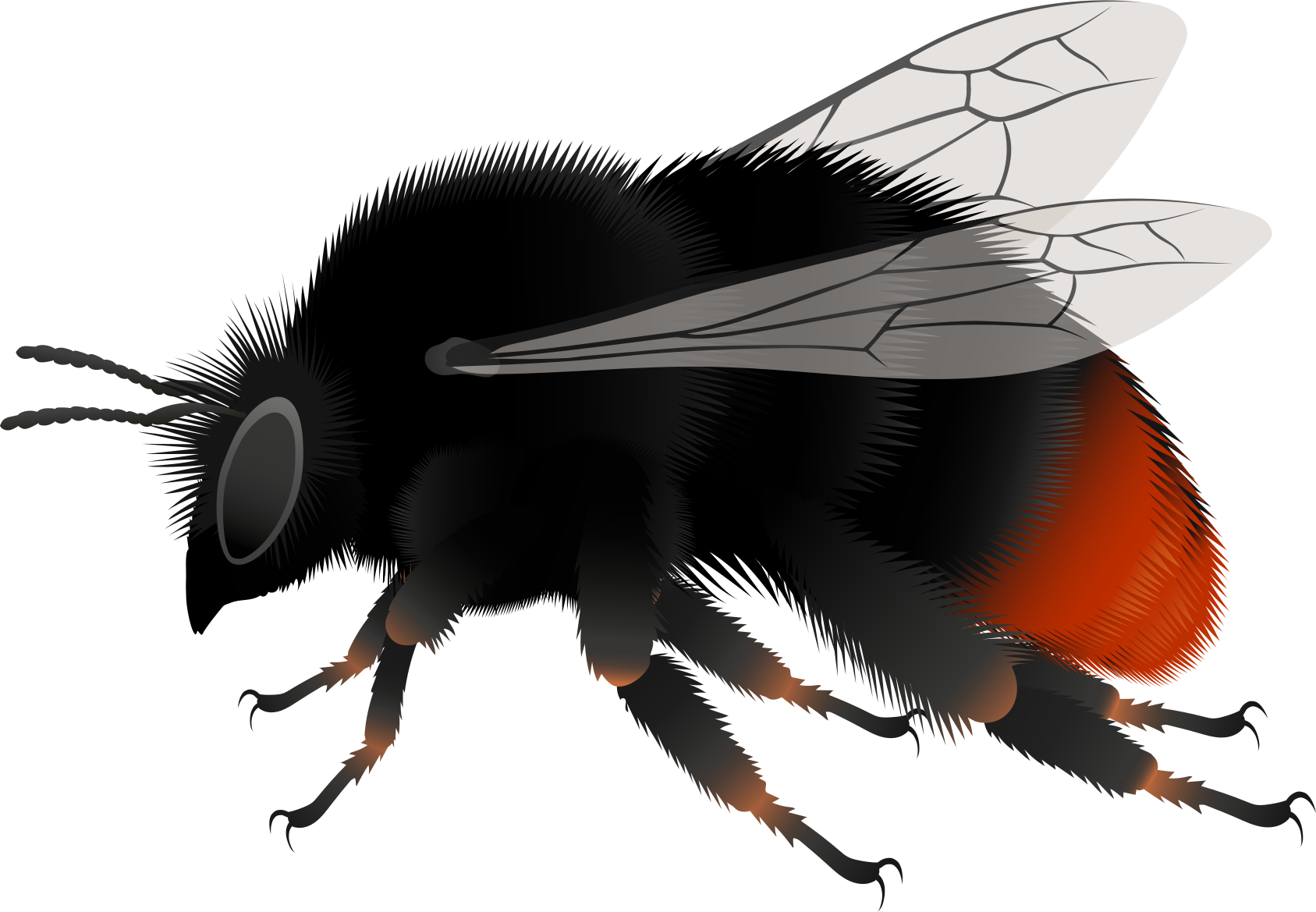
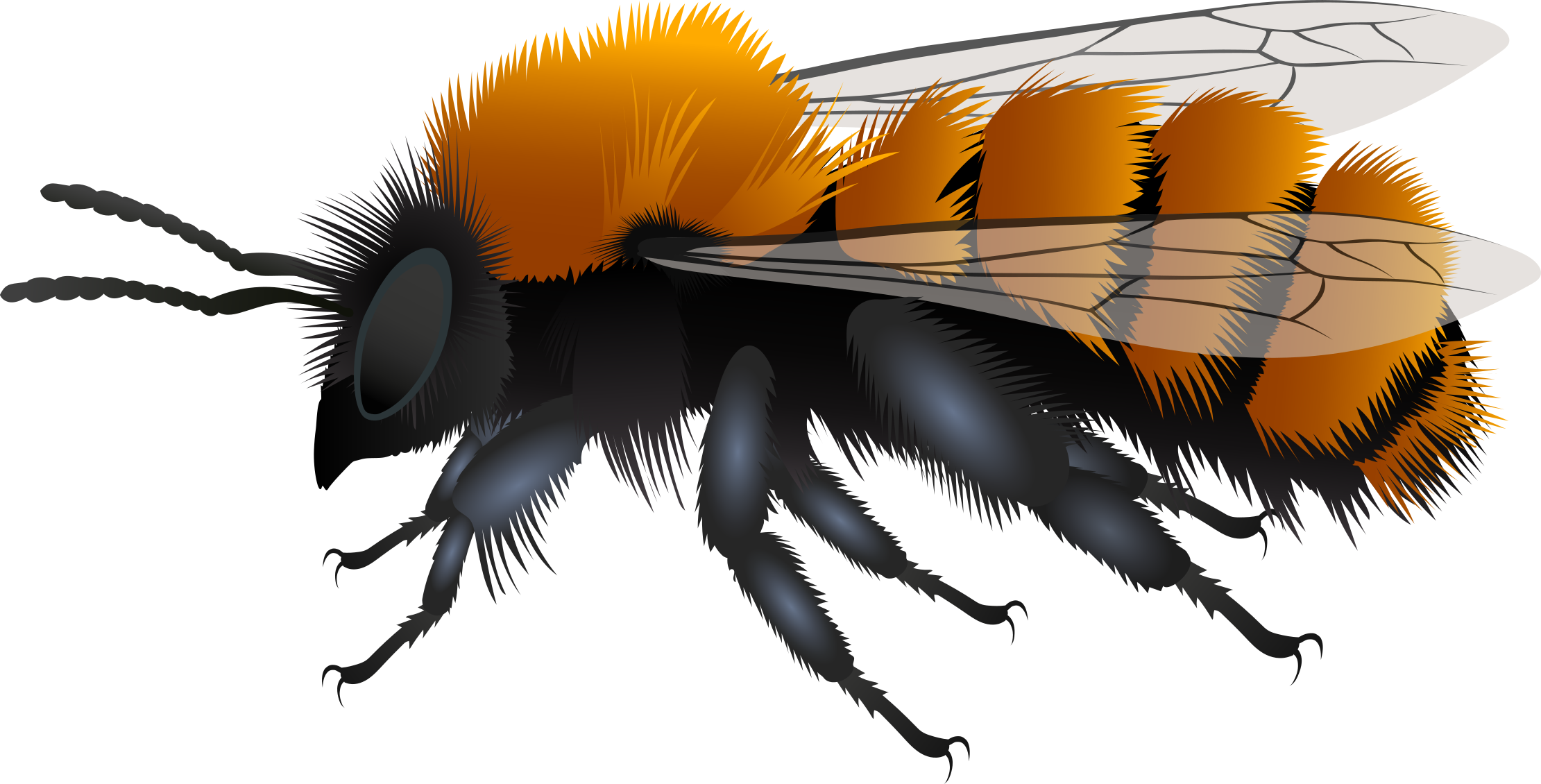
Red-tailed Bumblebee: Bombus Lapidarius

Red-tailed Bumblebee

This is an abundant species of bumblebee that is found all over the UK. This social bee nests in disused burrows, under stones or at the base of old dry stone walls. Both males and females have the eponymous red tails as well as velvety black bodies and transparent wings.

Shrill Carder Bee: Bombus Sylvarum

Shrill Carder Bee Stamp

The shrill carder bee is one one of the rarest bumblebees in the UK, and is only found in a handful of locations, including the Newport Wetlands in South Wales. This bee has a distinctly high-pitched buzz, which is why it got the moniker “shrill”. Carder bees have very long tongues which they stick into flowers so that they can suck nectar.

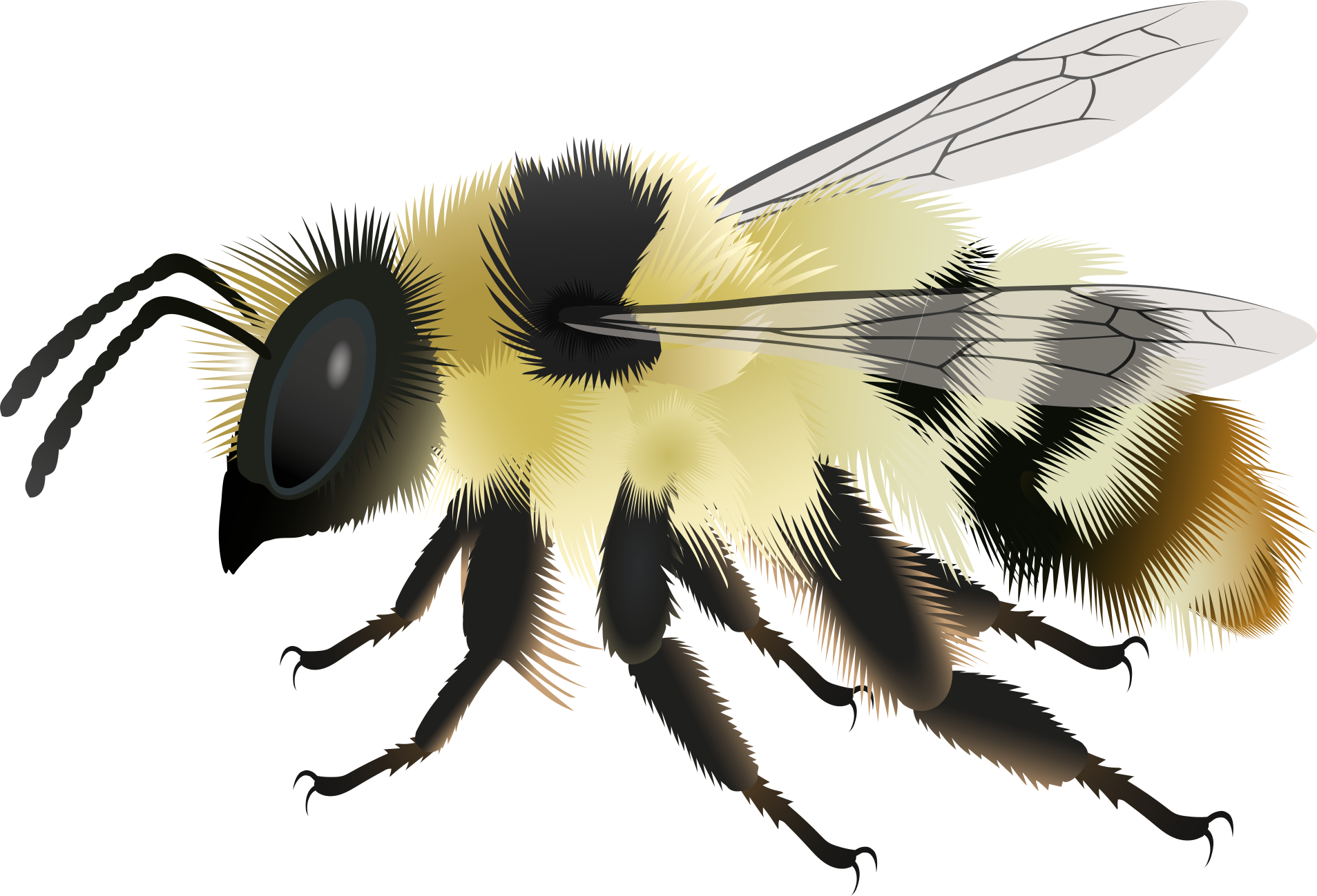
Brown-banded Carder Bee: Bombus Humilis

Brown-banded Carder Bee Stamp

The brown-banded carder bee is a bumblebee that favours heaths and dry, open grasslands. It has a chestnut-coloured thorax and strawberry-blond abdomen, but there are a few black hairs at the base of its wings. Populations have declined because of habitat loss, but this bee can be found in clusters in north Cornwall and Newport in South Wales, for example.

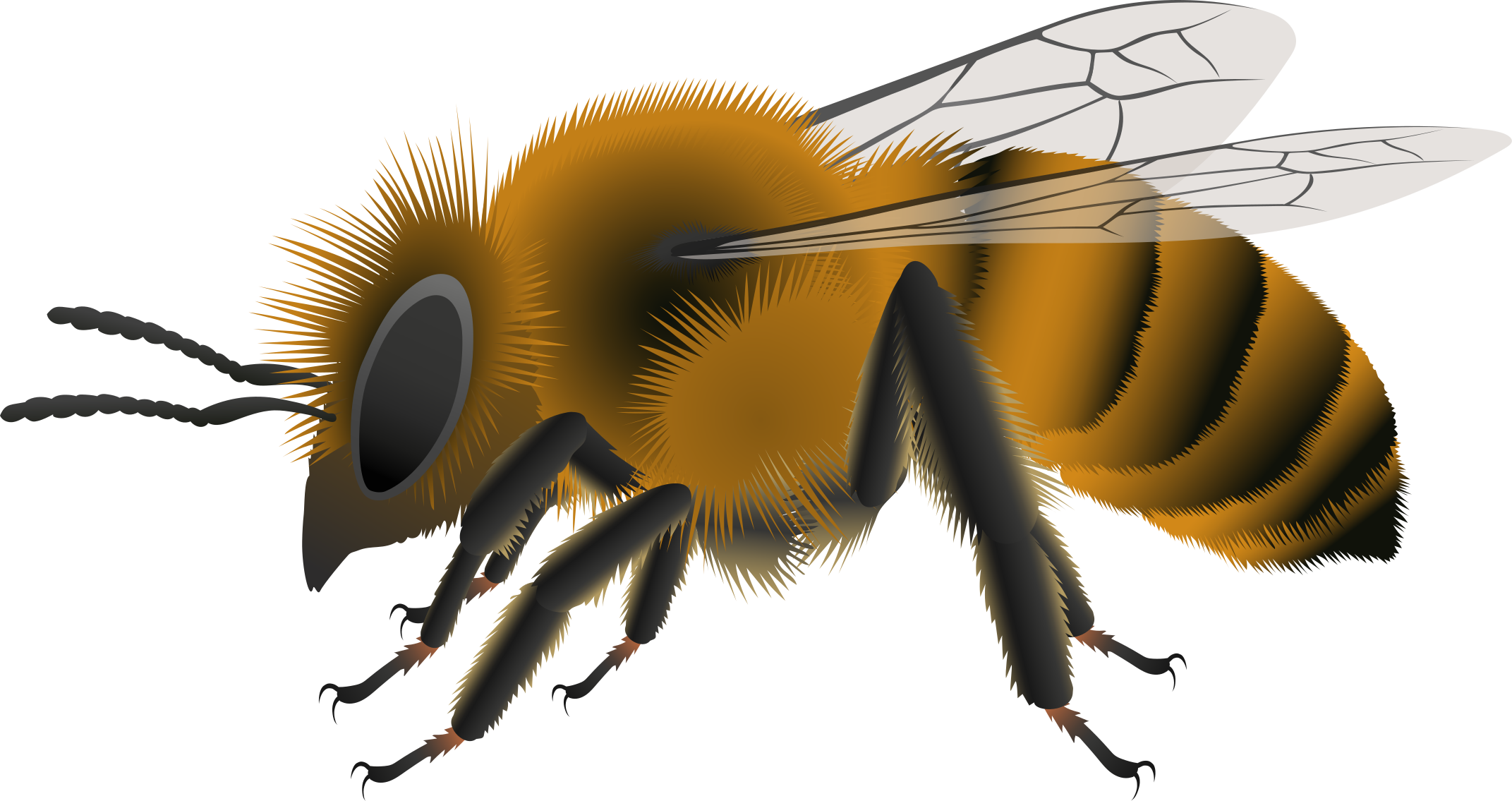
Honeybee: Apis Mellifera

Honeybee

Honeybees have six legs, four wings and five eyes. They use the Sun, and possibly the Earth’s magnetic fields, to navigate, and they can fly at speeds of up to 20mph when in search of food. At the height of summer there are around 40,000 honeybees in each hive, and that number drops to around 5,000 in the winter.

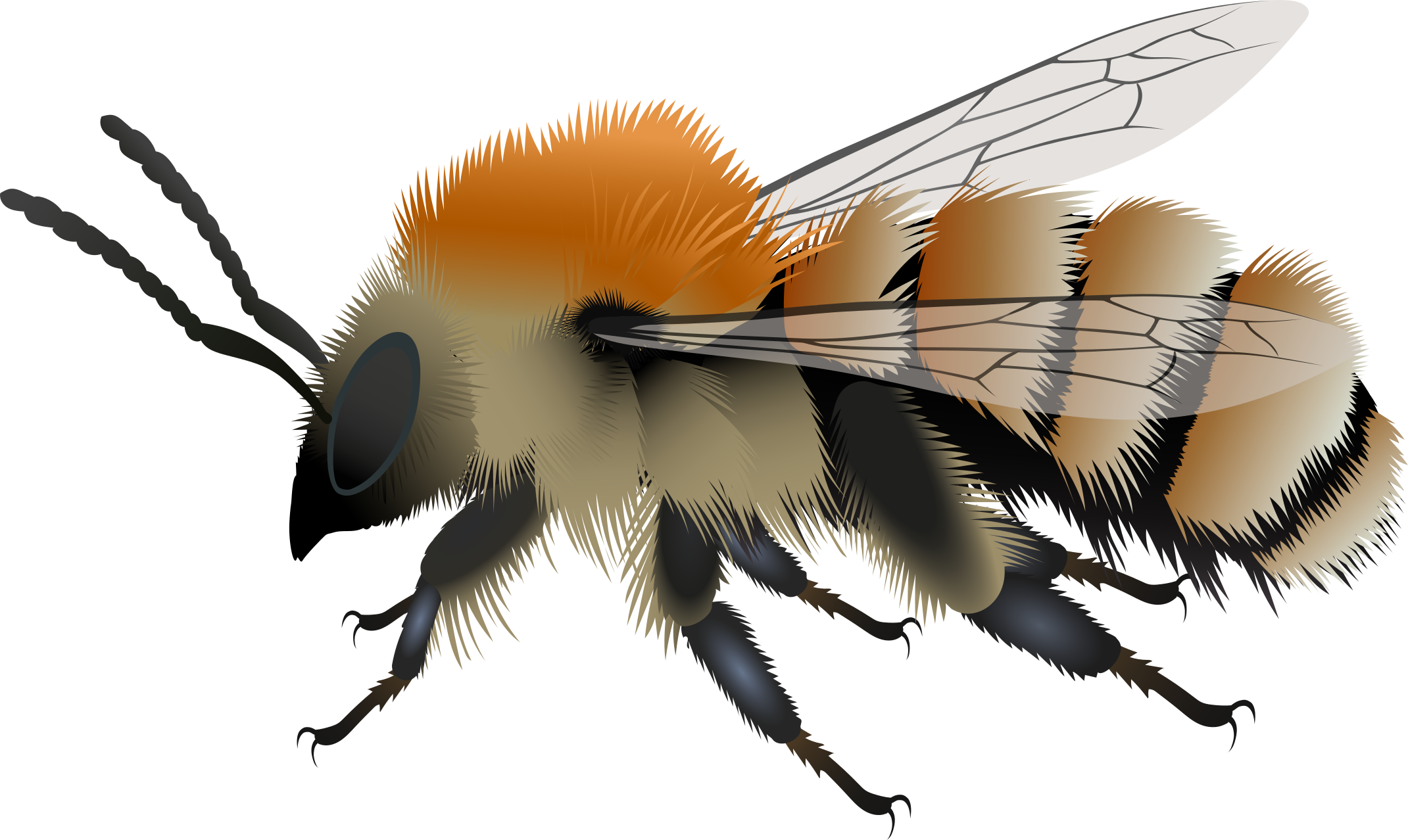
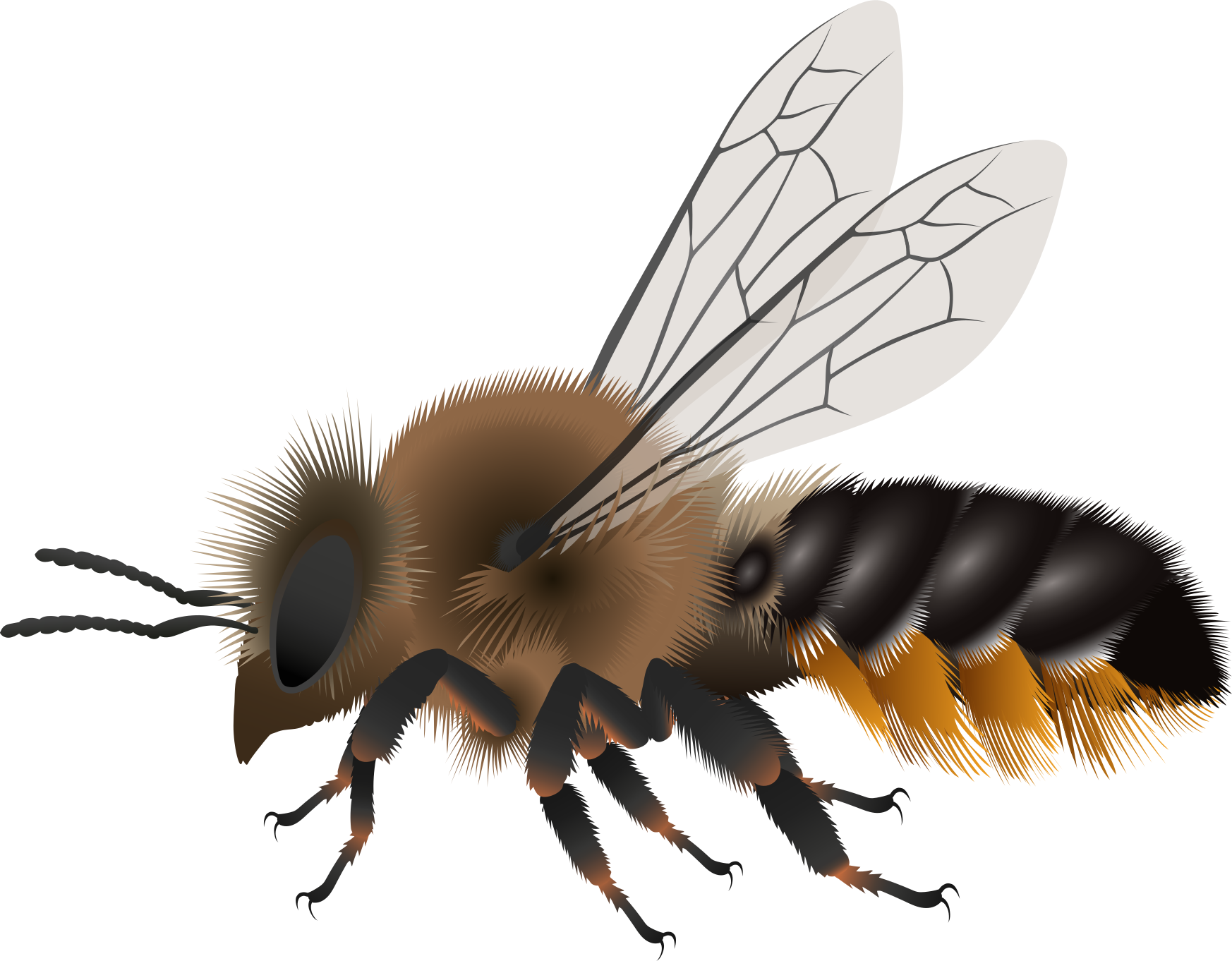
Tawny Mining Bee: Andrena Fulva

Tawny Mining Bee

These furry, ginger bees are commonly found in parks and gardens across southern Britain during April and May. They feed from a wide variety of plants including dandelions, buttercups, willows and fruit trees. Tawny mining bees often make their nests in lawns and flowerbeds or in orchards where they can be close to apple, pear and cherry blossom for example.

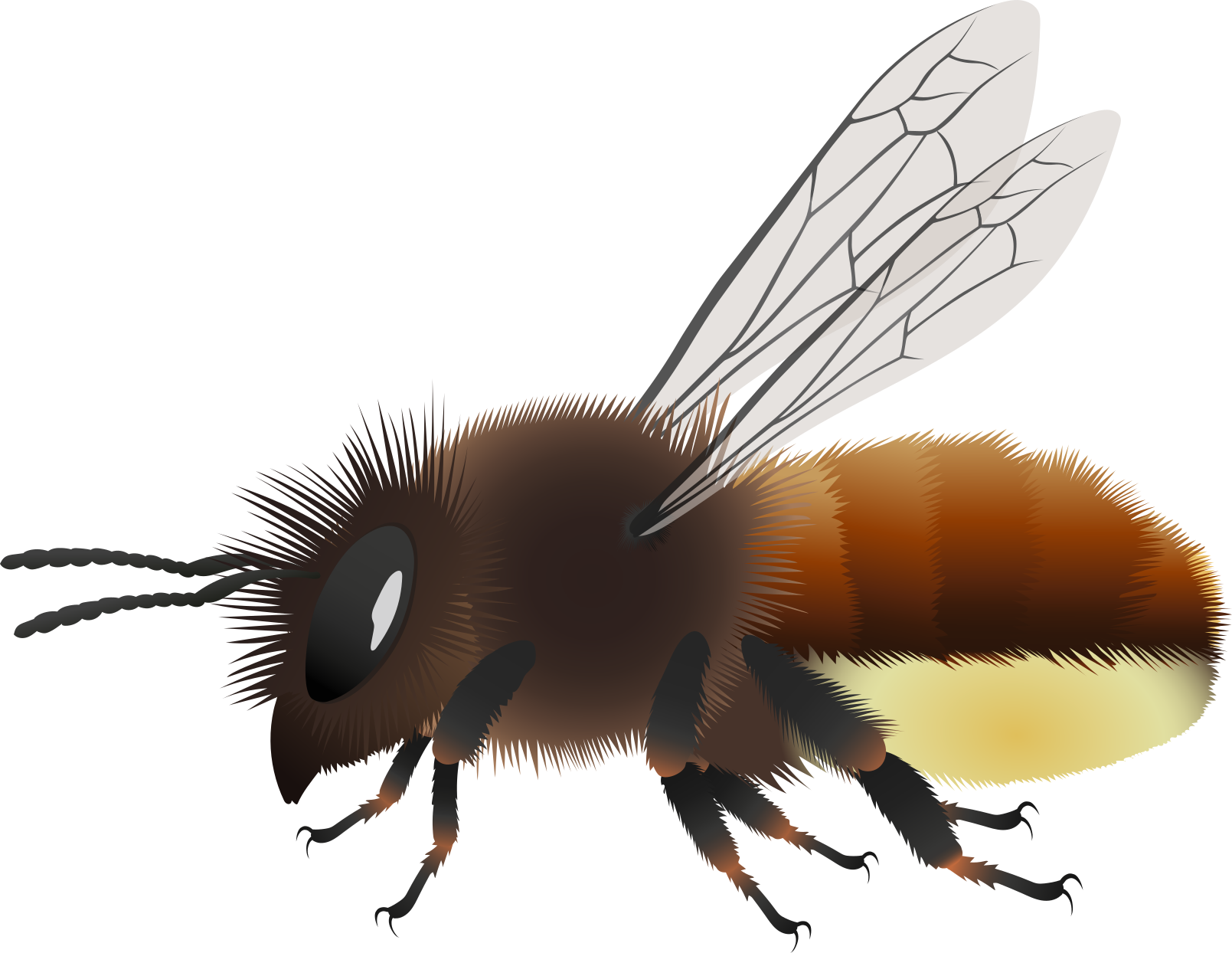
Red Mason: Osmia Rufa

Red Mason

Also known as the red mason bee, this insect can be found in cities, towns and villages across Britain and Europe. Females make their homes and lay their eggs in wall cavities, under roof tiles and even inside keyholes, lining their nests with mud. These bees are excellent pollinators, particularly of apple trees.

A Leaf-cutter Bee: Megachile Centuncularis

A Leaf-cutter Bee

As the name suggests, if you spot semi-circular holes in leaves, it’s a sign that this bee has been at work in your garden. The insect then carries the little pieces of leaf back to its nest, gluing them together with saliva to build cells for their larvae. You can spot this bee from April to August when it flies around feeding on pollen and nectar.

Large Scabious Bee: Andrena Hattofiana

Large Scabious Bee Stamp

This solitary bee can be found in small numbers across Europe, and it is now considered an endangered species. As the name suggests, this bee needs scabious flowers to thrive, and as scabious-rich habitats have declined, so bee numbers have followed. Small populations have been found in Cornwall, notably in the rough of golf courses, where scabious flowers can thrive, attracting the bees.

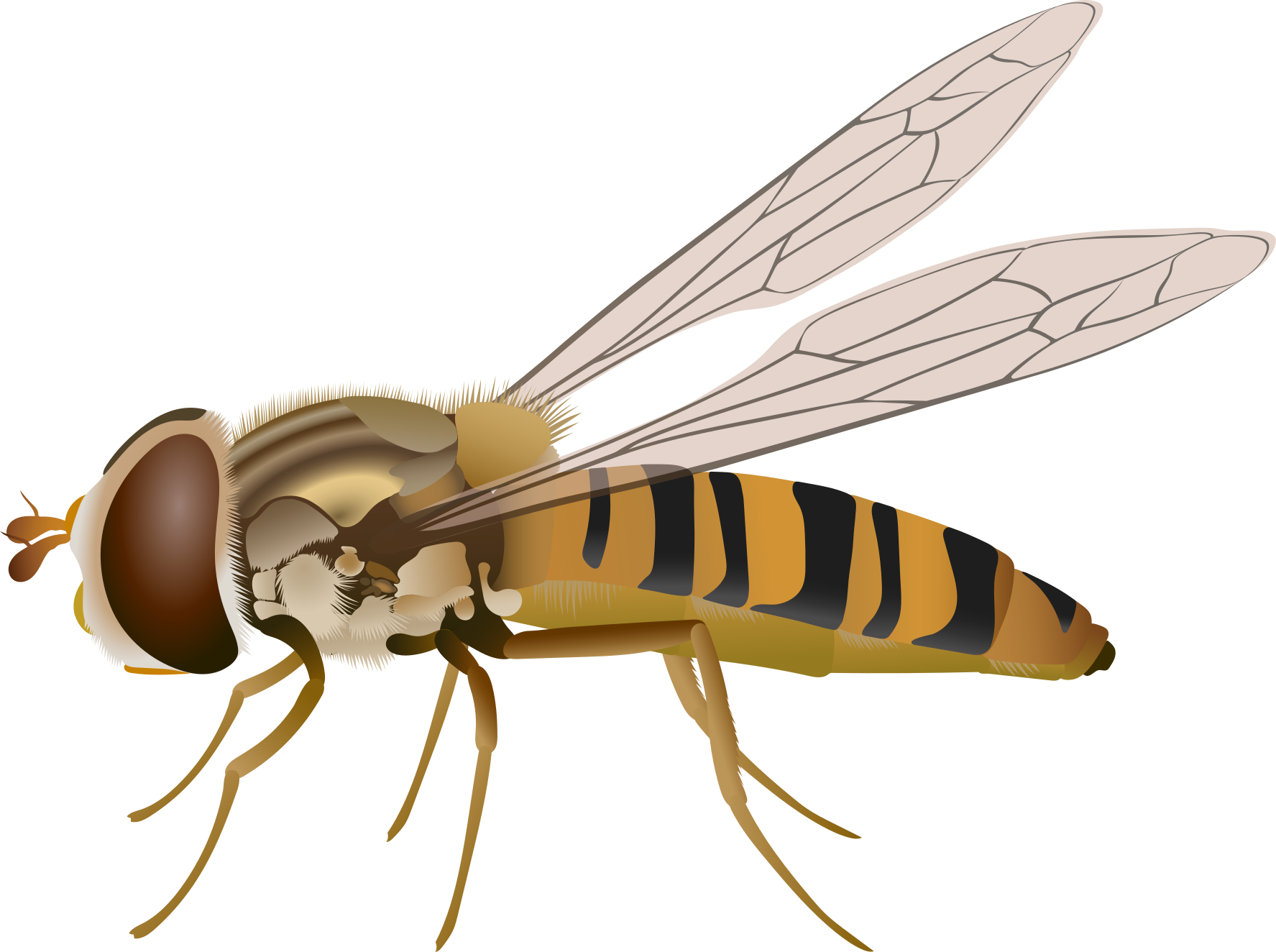
Marmalade Hoverfly: Episyrphus Balteatus

Marmalade Hoverfly

The marmalade hoverfly is so-called because it is orange with black stripes that are thin or “thick cut” just like the popular preserve! It is Britain’s most common hoverfly and can be seen in parks, gardens, hedgerows and woods. They are present all year round, but numbers are often much higher in the summer when marmalade hoverflies migrate to the UK from abroad.

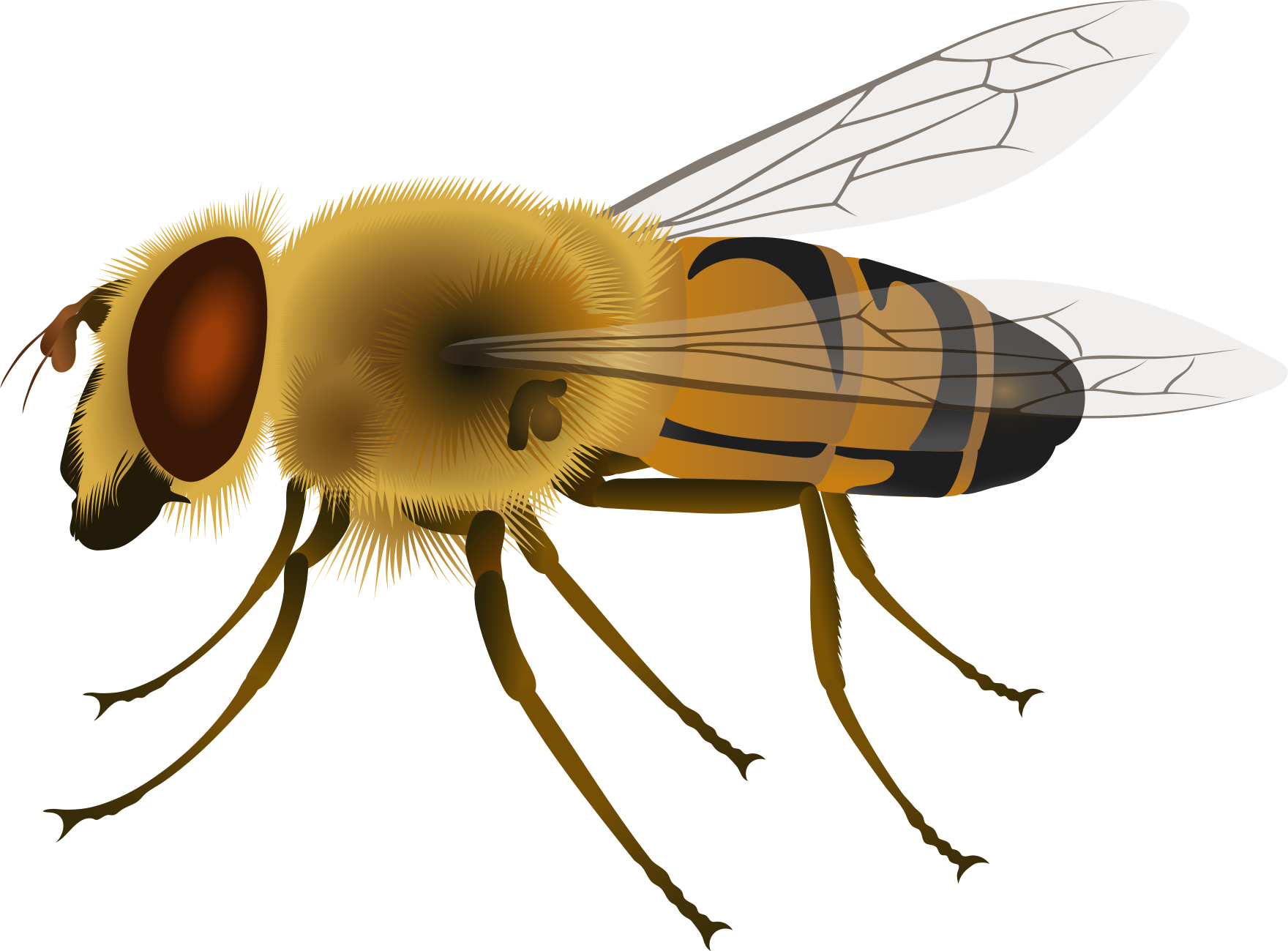
Drone Fly: Eristalis Tenax

Drone Fly

This insect’s patchy brown and orange body makes it look a lot like the male honeybee, which is a very effective way to keep it safe from predators. Drone flies also copy honeybee flight patterns as they move around in search of nectar. Their larvae, nicknamed “rat-tailed maggots”, feed on rotting organic material in stagnant water.

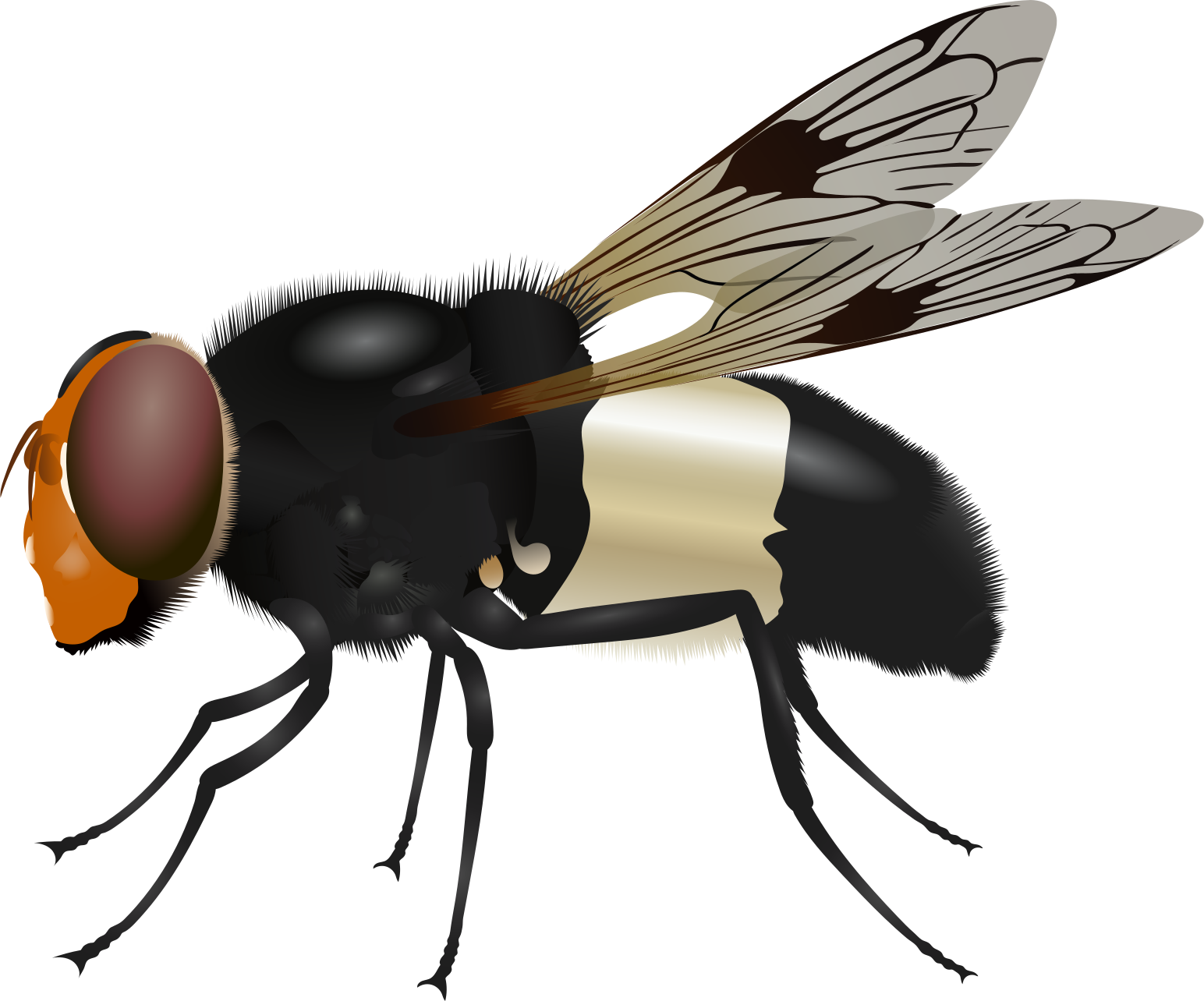
Pellucid Hoverfly: Volucella Pellucens

Pellucid Hoverfly

This large black fly has a white stripe on its body and black spots on its transparent wings. It can be found throughout most of Britain and Ireland, and is often seen feasting on bramble flowers in hedgerows or on the edge of woodland. The larvae develop in wasp nests where they feed on detritus wasp grubs.

Large Narcissus Fly: Merodon Equestris

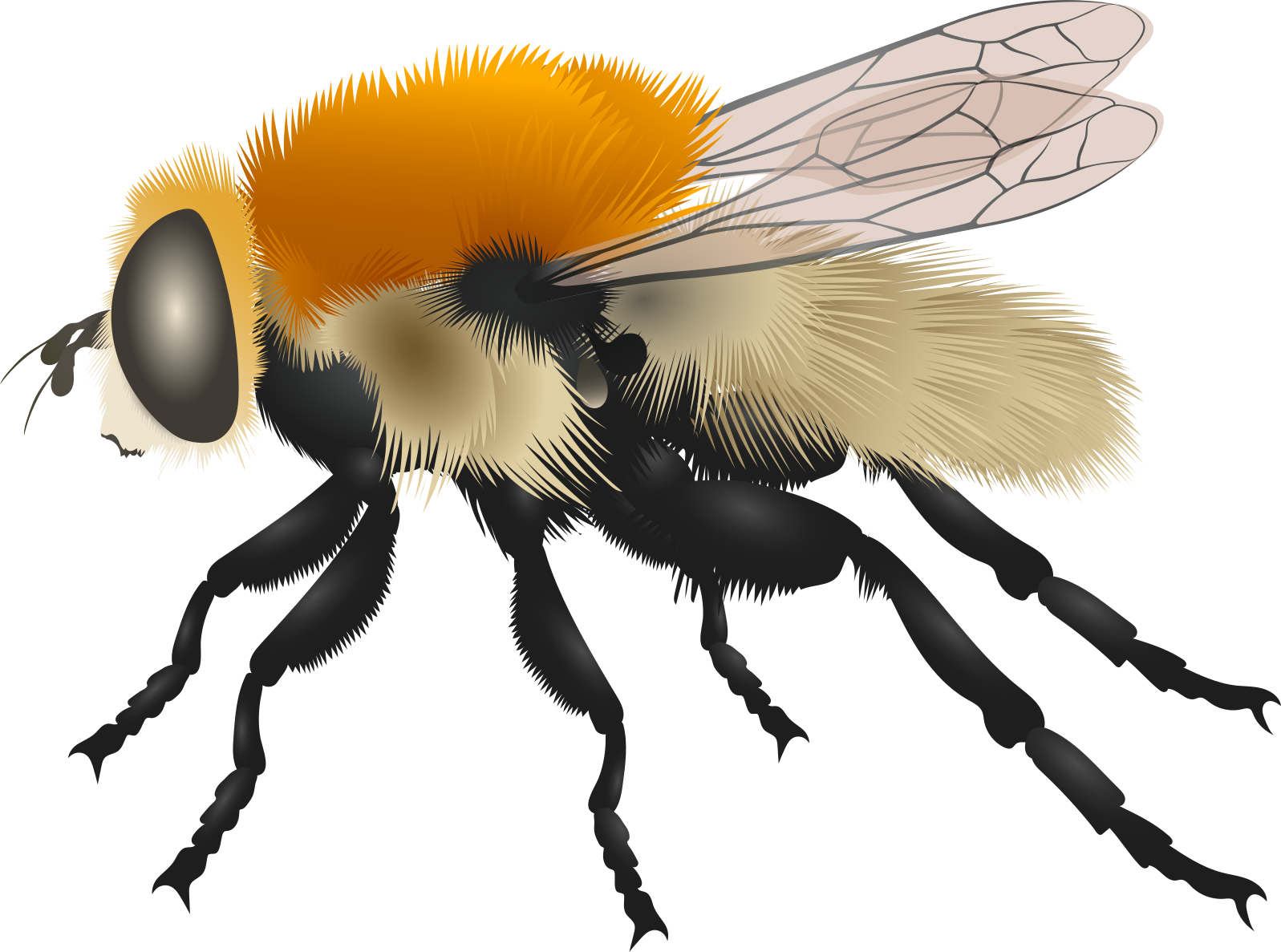
Large Narcissus Fly

This medium-sized hoverfly looks very much like a bumblebee, which provides great protection against predators. This insect loves warm, sunny spots full of flowers, like gardens in the summer. Females lay their eggs on the leaves of bulbous plants such as bluebells and daffodils, and the larvae then burrow into the bulbs, feeding on them and causing some damage.

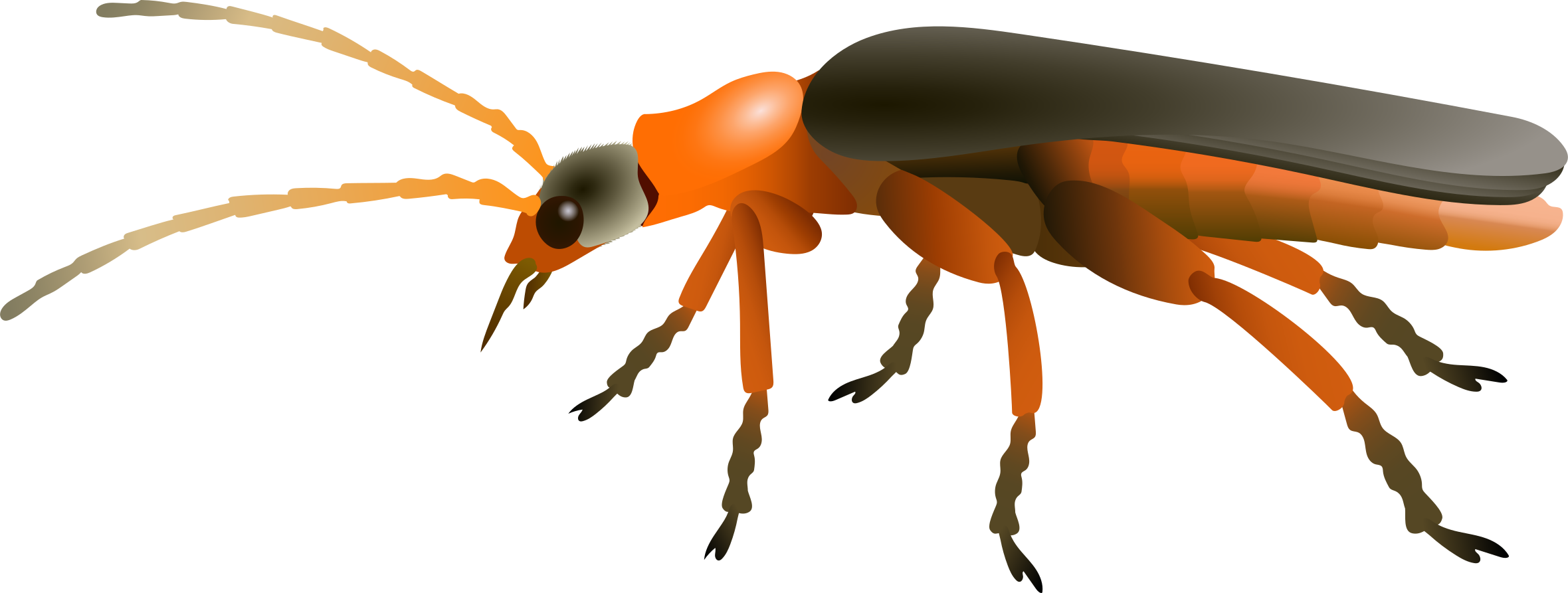
Soldier Beetle: Cantharis Rustica

Soldier Beetle

The soldier beetle makes its home in open woodland or anywhere where there is tall grass. These carnivorous predators are common throughout England and Wales, where they can be seen from May to July. The adults prefer to hunt for food on flowers, while their larvae live on the ground, feeding on a range of other creatures.

7-spot Ladybird: Coccinella Septempunctata

7-spot Ladybird

These ladybirds are easy to identify because, just as you might expect, they have a pattern of seven black spots on their red wing cases. They are our most common ladybirds, found in parks and gardens throughout the UK. Ladybirds use their bright colours to warn predators that they won’t taste good, but it doesn’t always work!

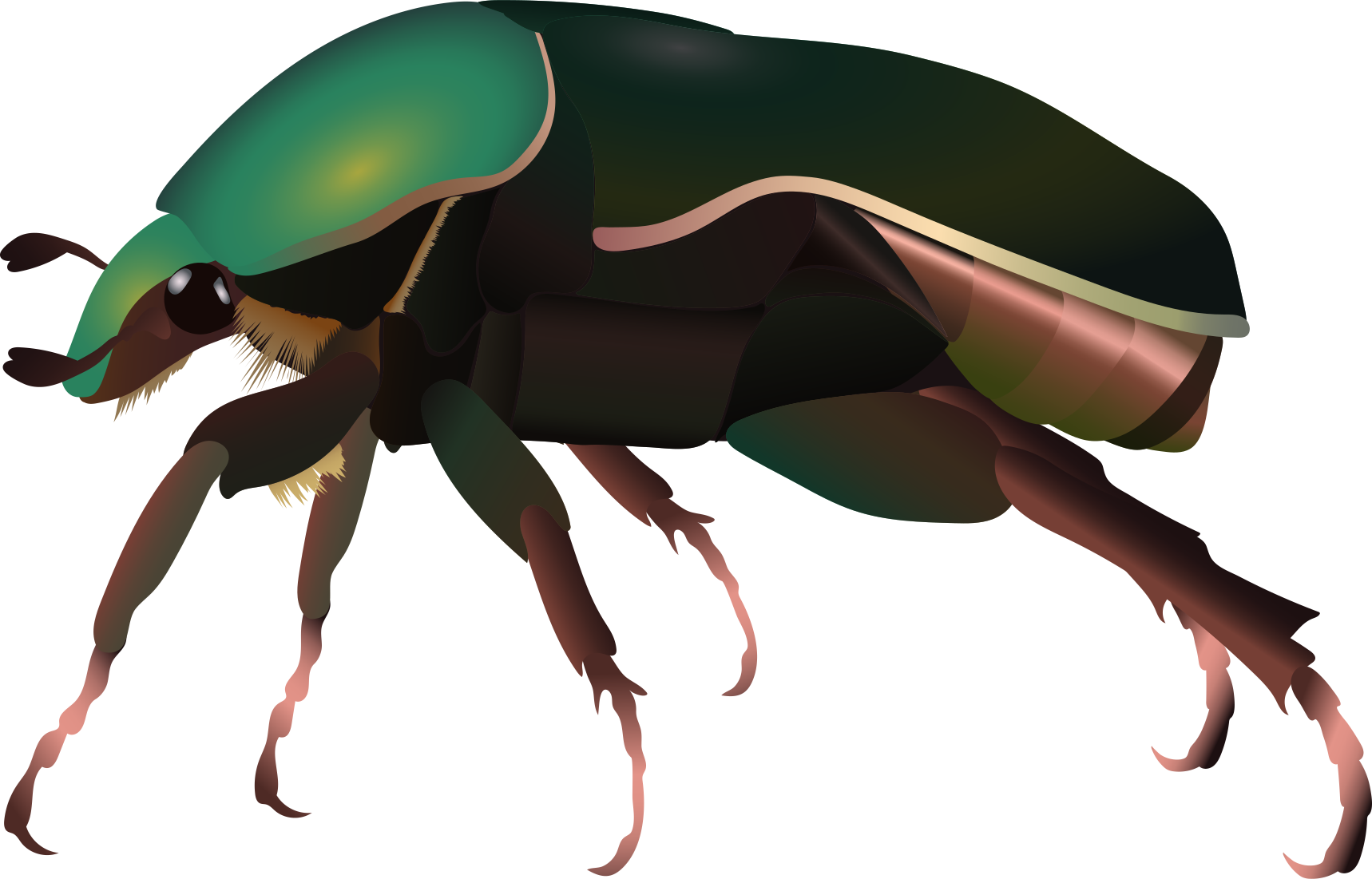
Rose Chafer: Cetonia Aurata

Rose Chafer

These beetles have distinctive green and purple-bronze iridescent bodies, making them easy to identify. They love crawling on flowers on sunny days, when they shimmer in the light and look even more striking. Their favourite source of food, as the name indicates, is the rose, and the dog rose in particular.

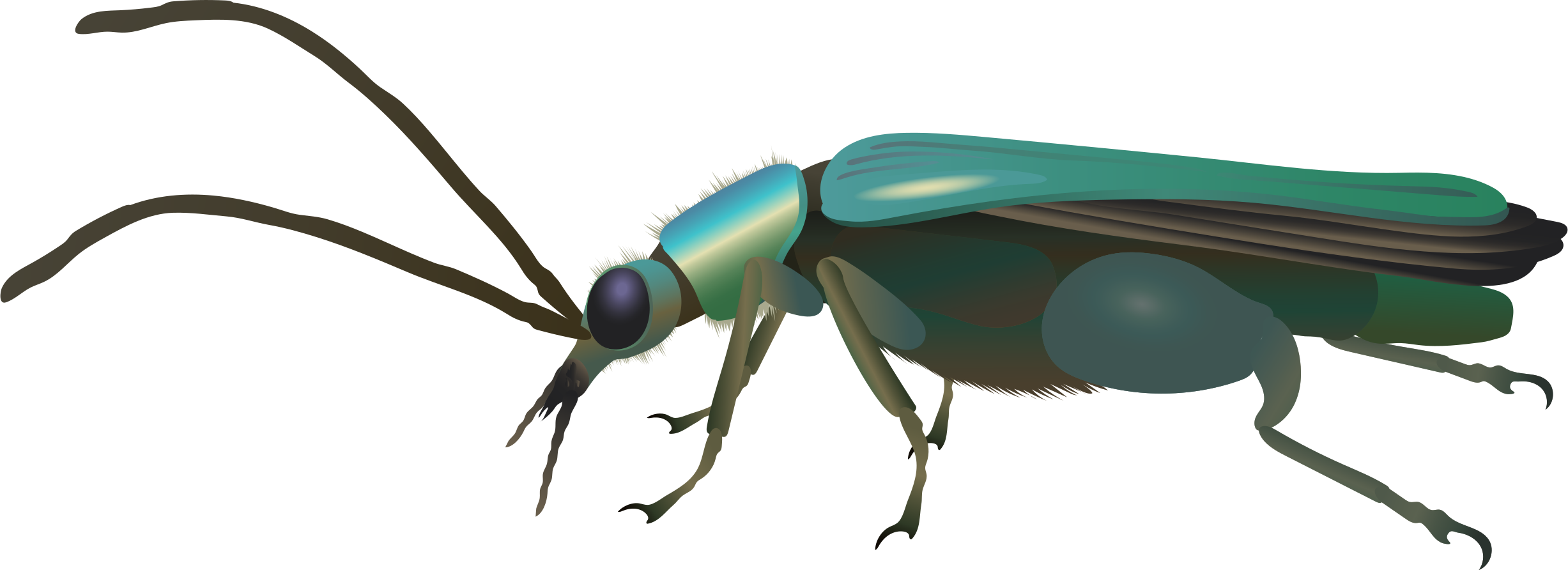
Flower Beetle: Oedeomera Nobilis

Flower Beetle

This beetle is so-called because the male of the species has large green bulges on its hind thighs, whereas the female does not. It used to be quite rare, but is now a very abundant species throughout the UK. You should be able to spot the adults without too much difficulty, as they like to feed on open flowers like daisies

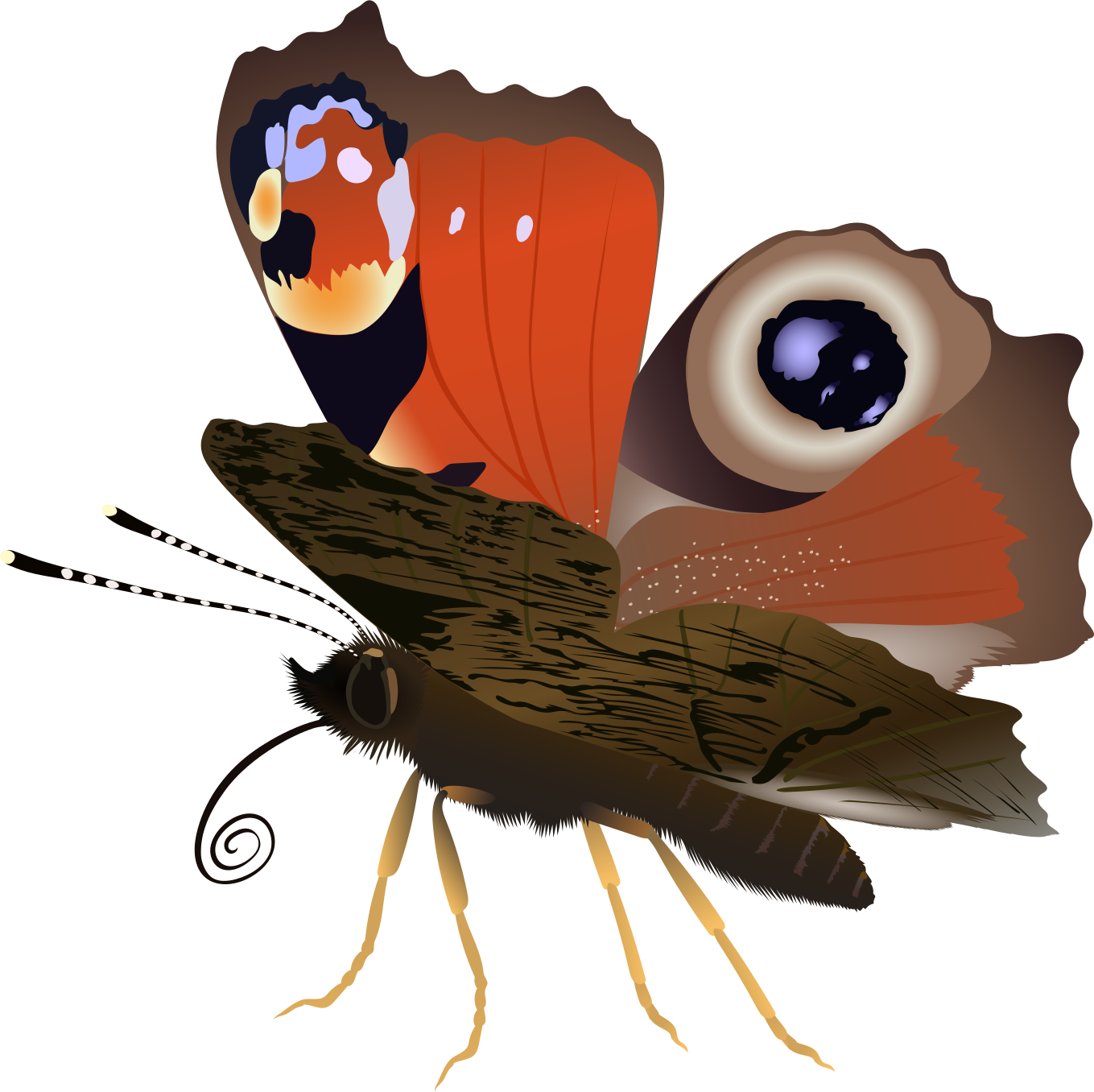
Peacock Butterfly: Inachis Io

Peacock Butterfly

This common British butterfly gets its name from the large spots on its wings, which are reminiscent of peacock feathers. These markings help to scare off predators in the woods, gardens and parks where they live. They hibernate in winter, folding up their wings to show the dull undersides so that they can blend in with their surroundings while they sleep.

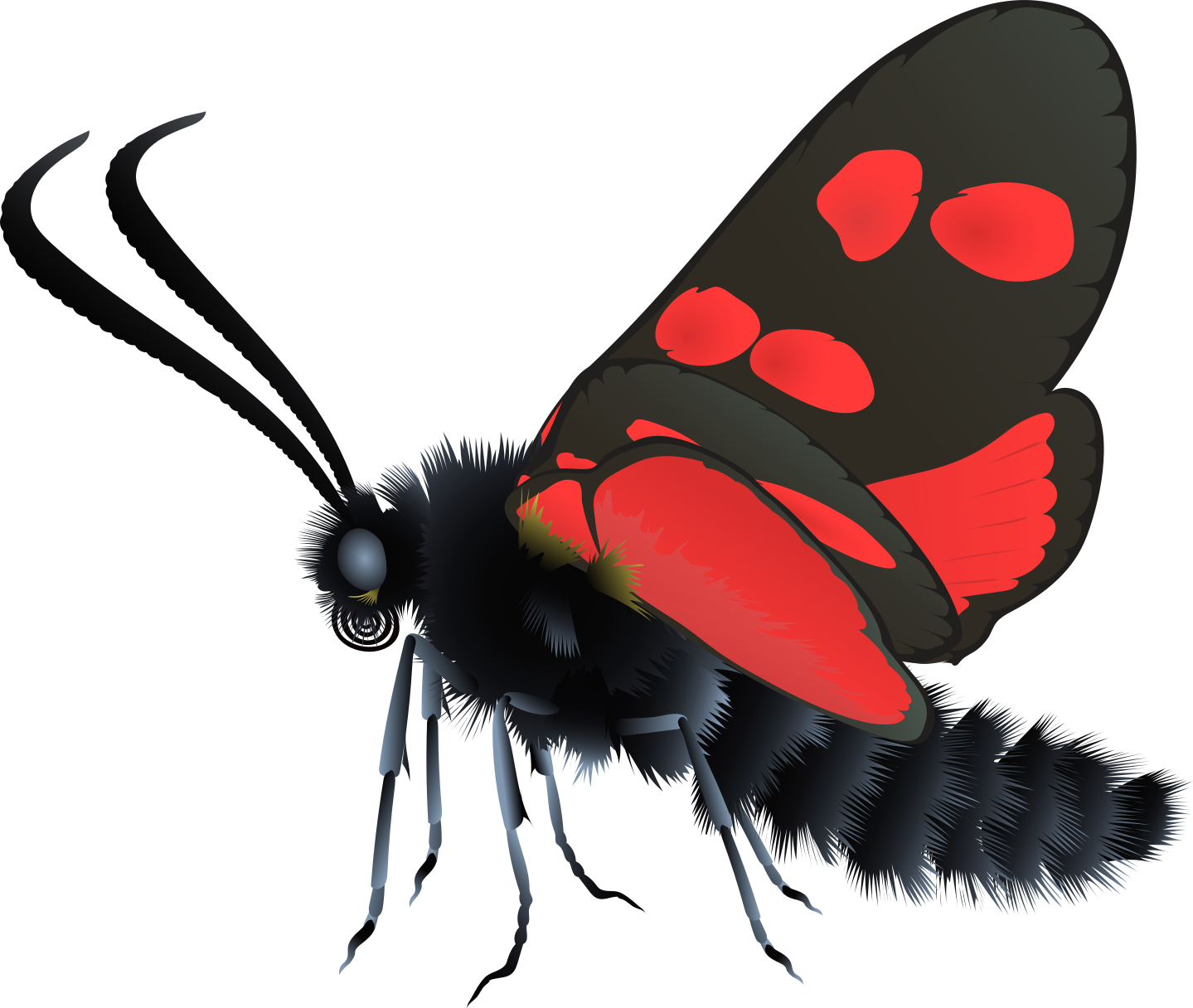
6-spot Burnet: Zygaena Filipendulae

6-spot Burnet

You are most likely to spot this medium-sized moth flying around in the daytime between June and August. It has six red spots on each of its glossy black forewings. If attacked, the burnet moth will release cyanide, so the spots serve as a warning to predators that this species is poisonous.

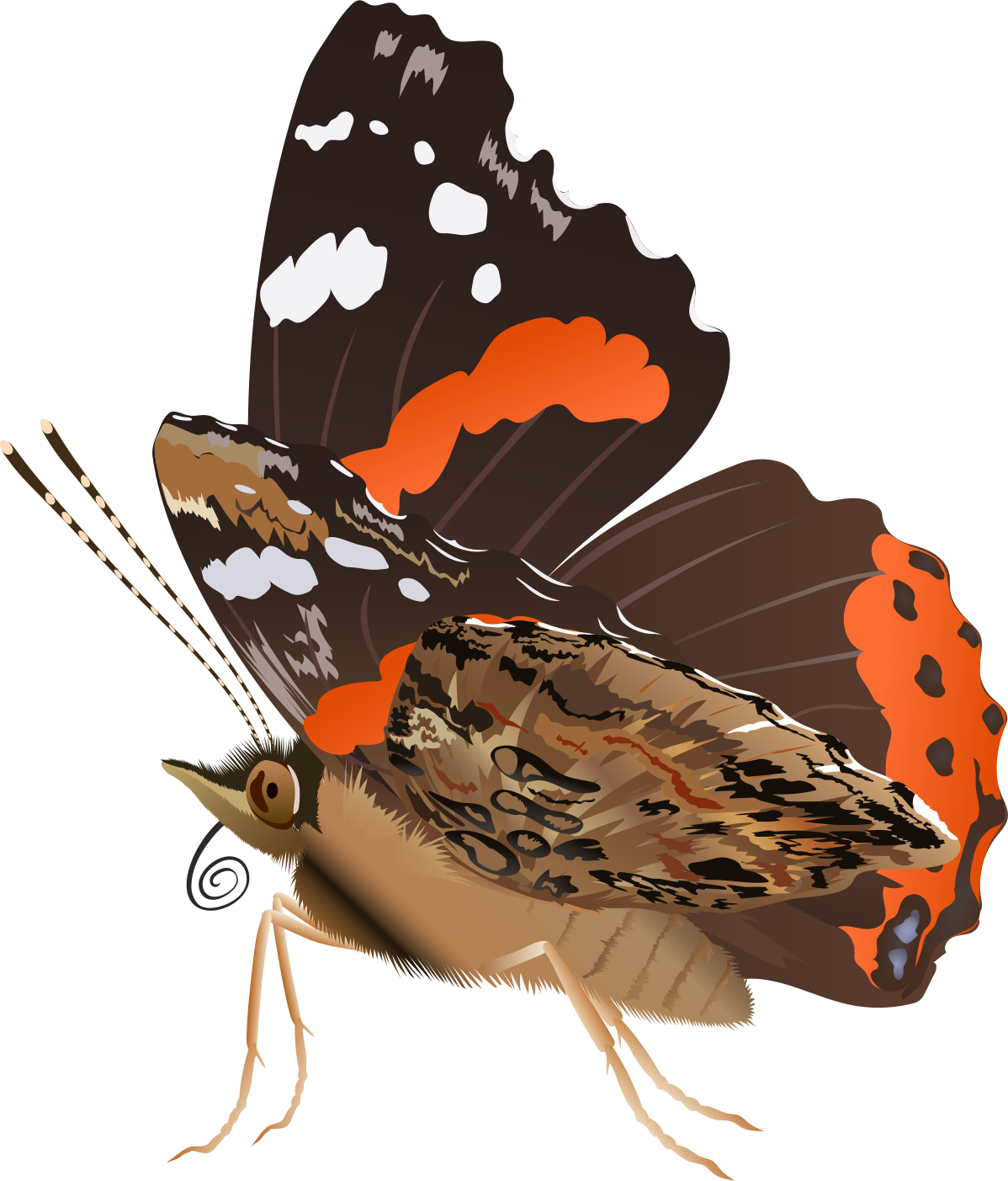
Red Admiral: Vanessa Atalanta

Red Admiral

These large red, white and black butterflies have very powerful wings. Most of the magnificent red admirals that we see in the UK start off in North Africa and migrate north, arriving here from late March onwards and staying until autumn. Male red admirals court their females for several hours before they begin mating.

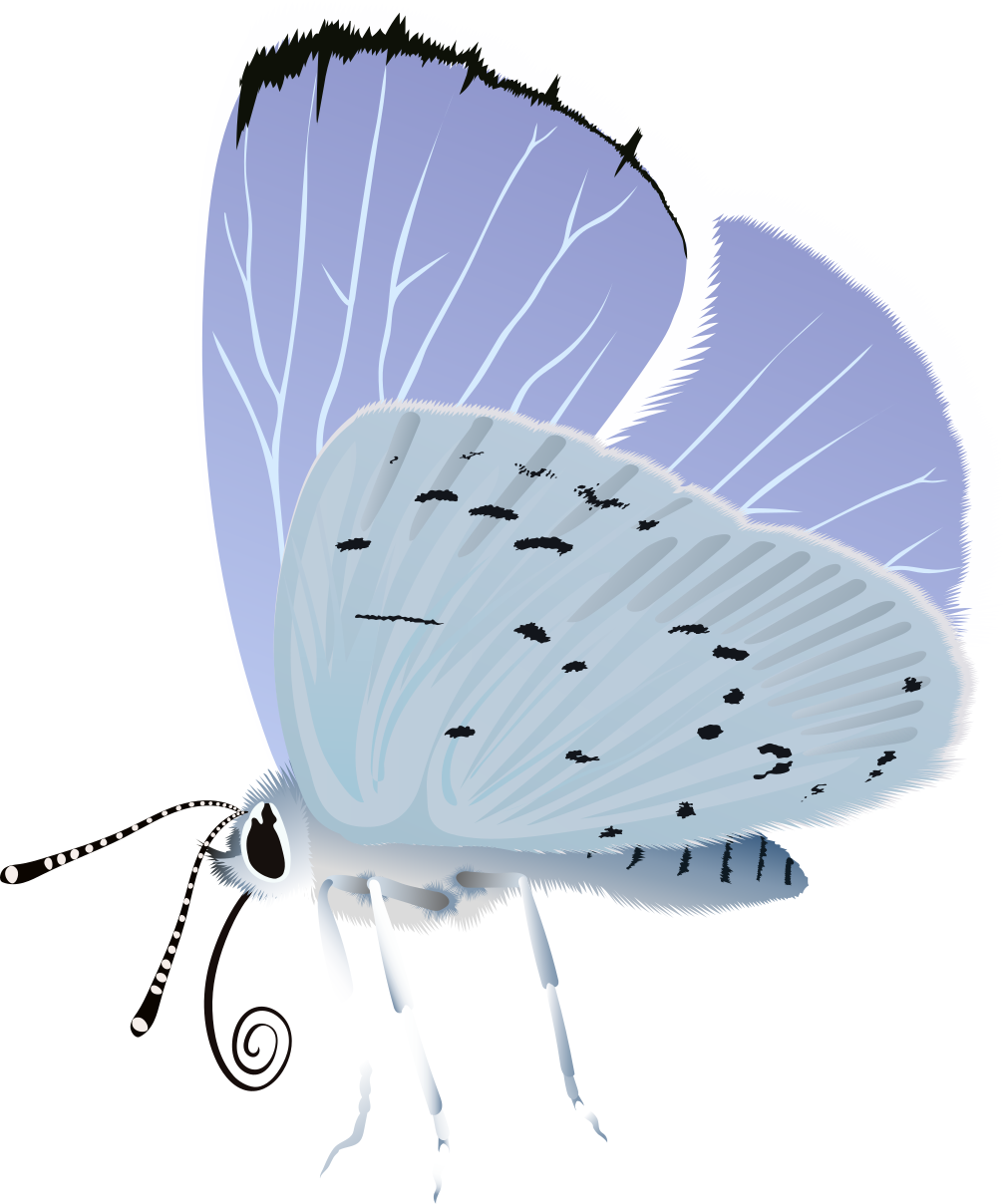
Holly Blue: Celastrina Argiolus

Holly Blue

This stunning, vibrant, blue butterfly can be seen across most of the UK, but is most common in England and Wales. Caterpillars feed on holly and ivy buds, digging into them and eating what is inside. Holly blues are very popular in Finland, where they have been elevated to the status of national butterfly!
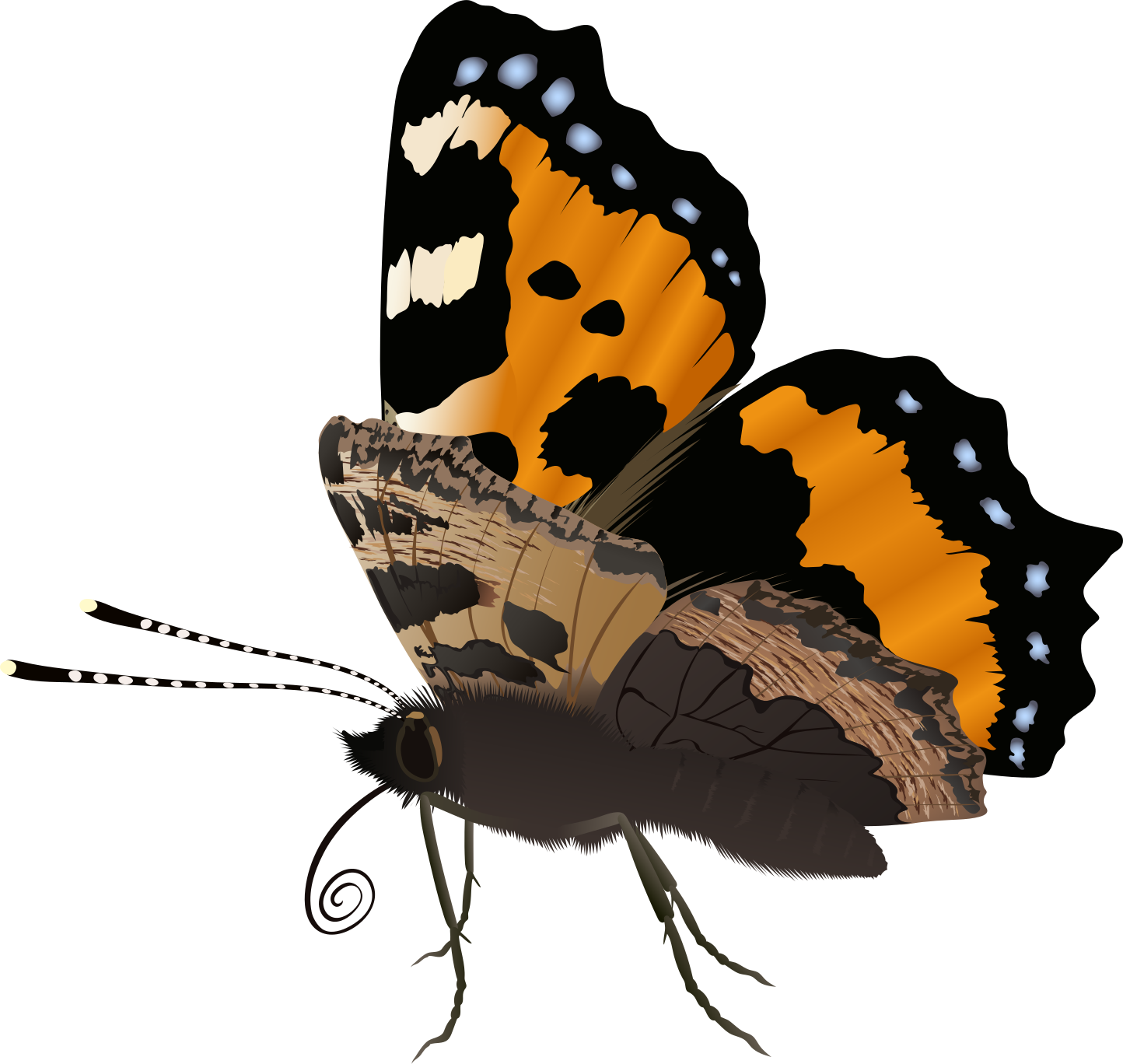
Small Tortoiseshell Butterfly: Aglais Urticae

Small Tortoiseshell Butterfly

The small tortoiseshell is one of the UK’s most common and beloved butterfly species. Females lay their eggs on stinging nettles, before caterpillars hatch around ten days later. When courting, the males beat their antennae on the females’ hindwings.
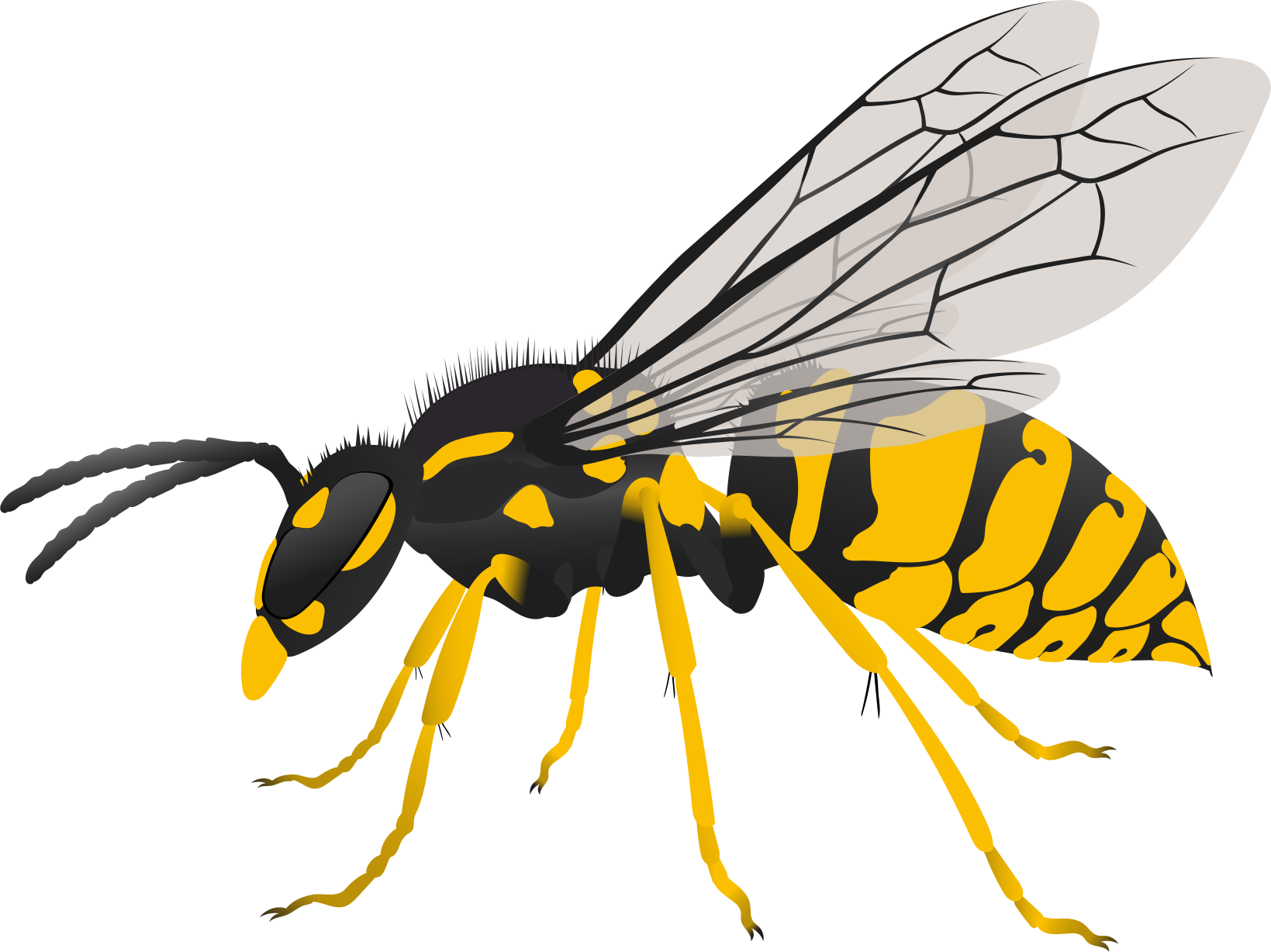
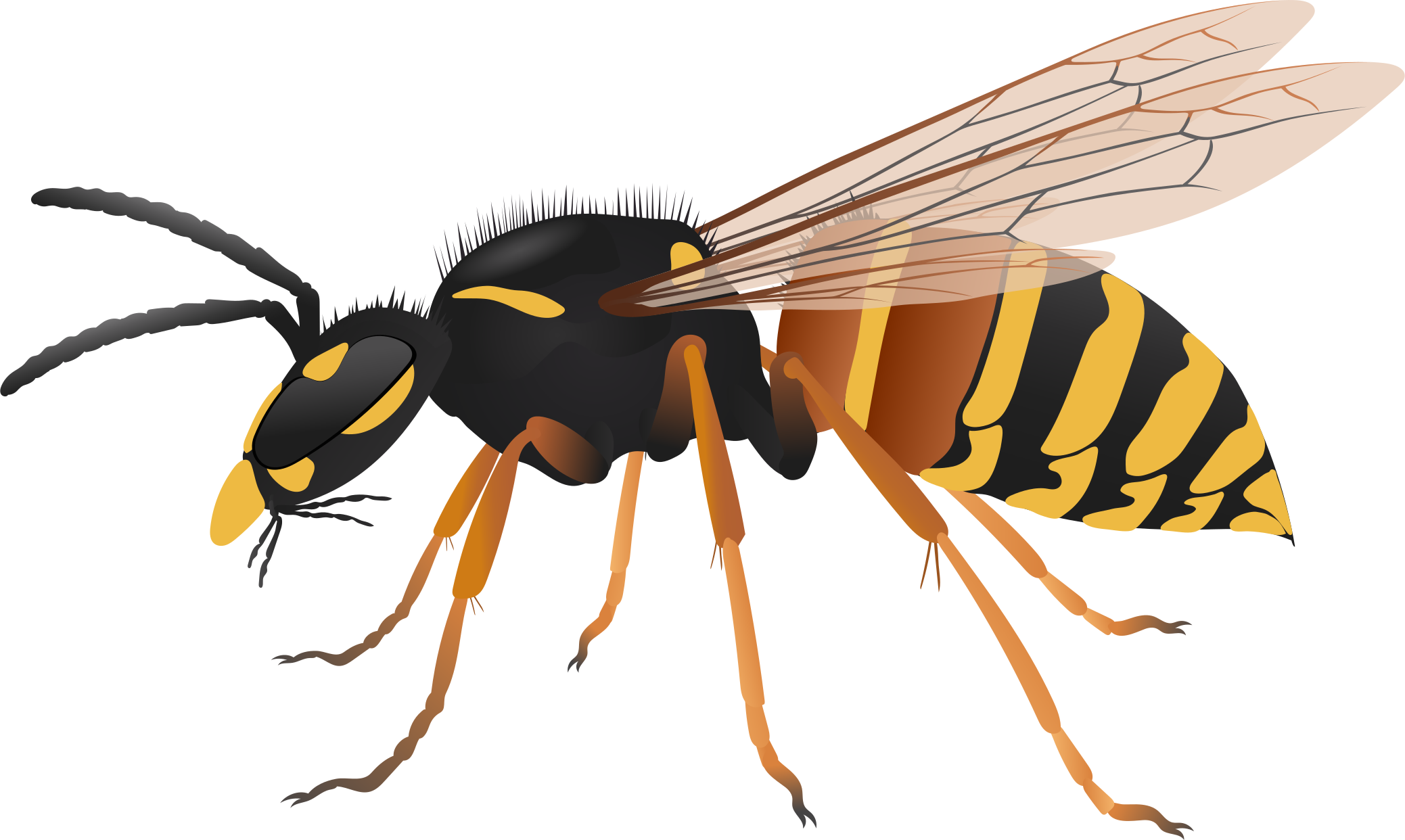
Common Wasp: Vespula Vulgaris

Common Wasp

Anyone who has ever tried to have a summer picnic will be familiar with this yellow and black striped insect which can be found all over the UK. Queens first come out of hibernation at the very start of spring and start to look for suitable nesting sites in a range of habitats. Wasps will try to eat anything sweet, and although we might think of them as pests, they are useful pollinators.
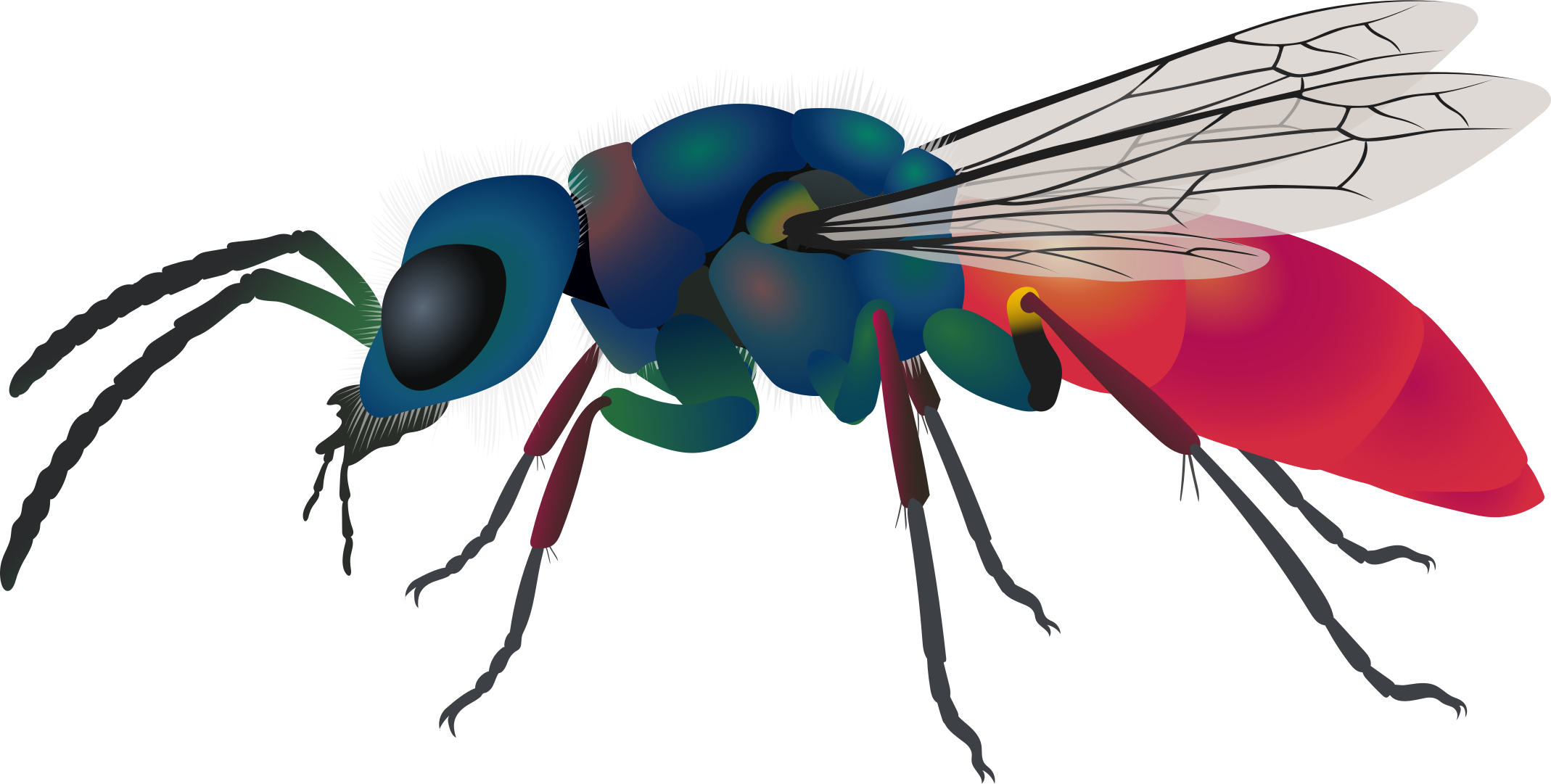
Ruby-tailed Wasp: Chrysis Ignita

Ruby-tailed Wasp

Ruby-tailed wasps are often called “cuckoo wasps” because they lay their eggs in other insects’ nests. Shiny and turquoise with a rich red abdomen, they are strikingly beautiful in appearance. Ruby-tailed wasps have a sting, but don’t tend to use it.

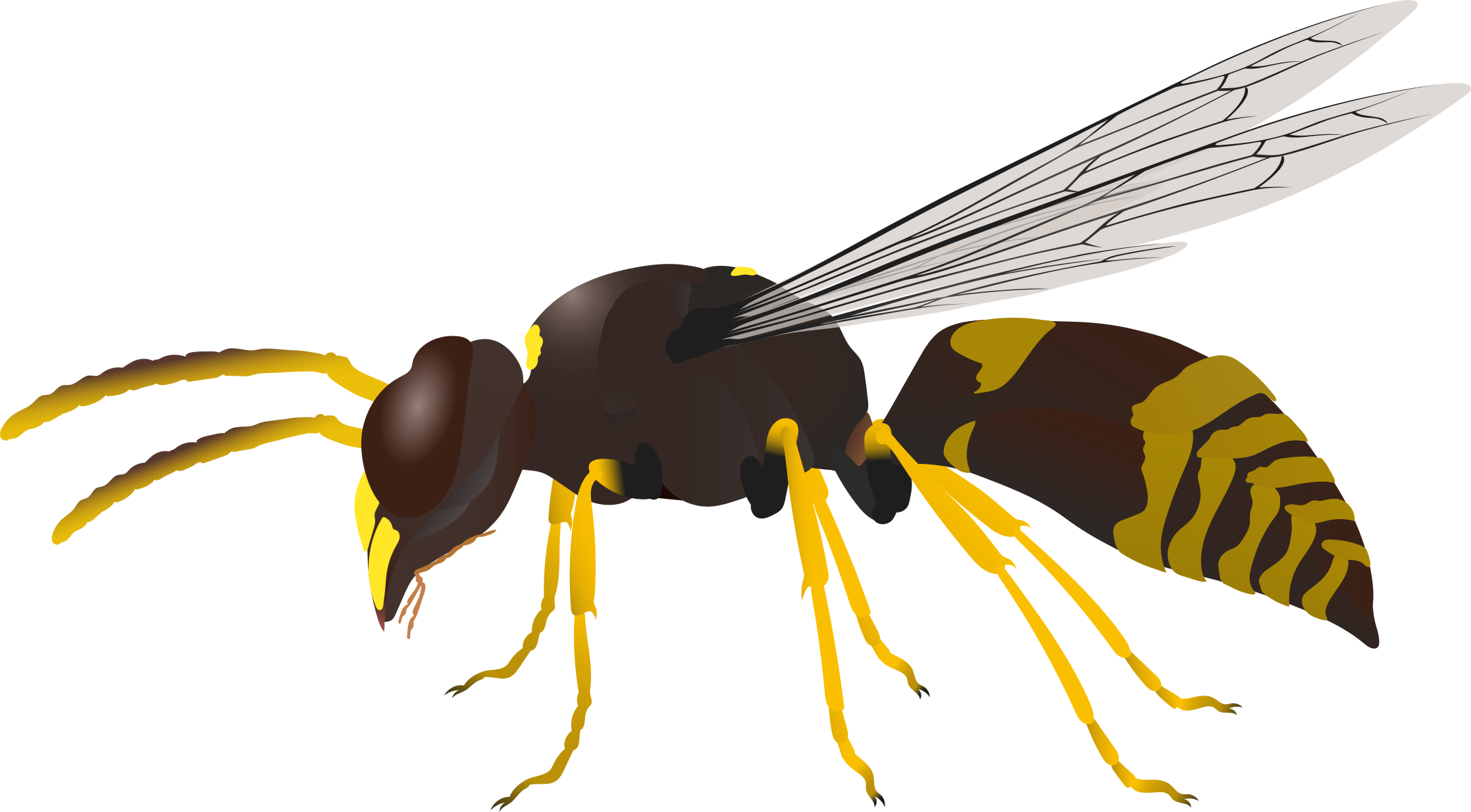
Mason Wasp: Ancistrocerus Parietum

Mason Wasp

This wasp is native to Europe and North America and gets its name because it likes to build its nests in walls. Mason wasps have black bodies with yellow stripes and narrow waists. Female mason wasps are slightly larger than males, and can control the gender of their offspring.

Red Wasp: Vespula Rufa

Red Wasp

This wasp is so-called because it has reddish-brown markings on its body. Red wasps make their nests in tree stumps, using leaf litter and soil. Badgers often destroy the nests, eating them along with the wasps, as their thick hair and skin protects them from being stung.

Supported By:

supported company logo

Project Partner:

partner logo GreenTheUK logo

Join Our Mailing List...