Planting for the Future

header image

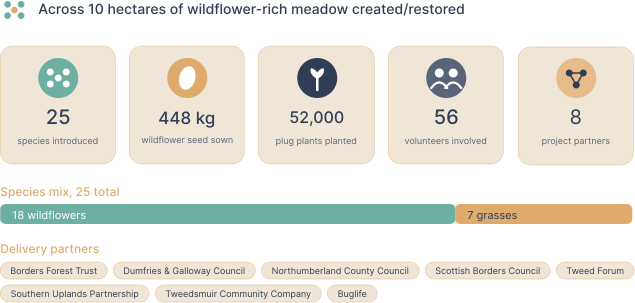
Network Rail supported the planting of 10 hectares of wildflowers in the UK in 2025-26

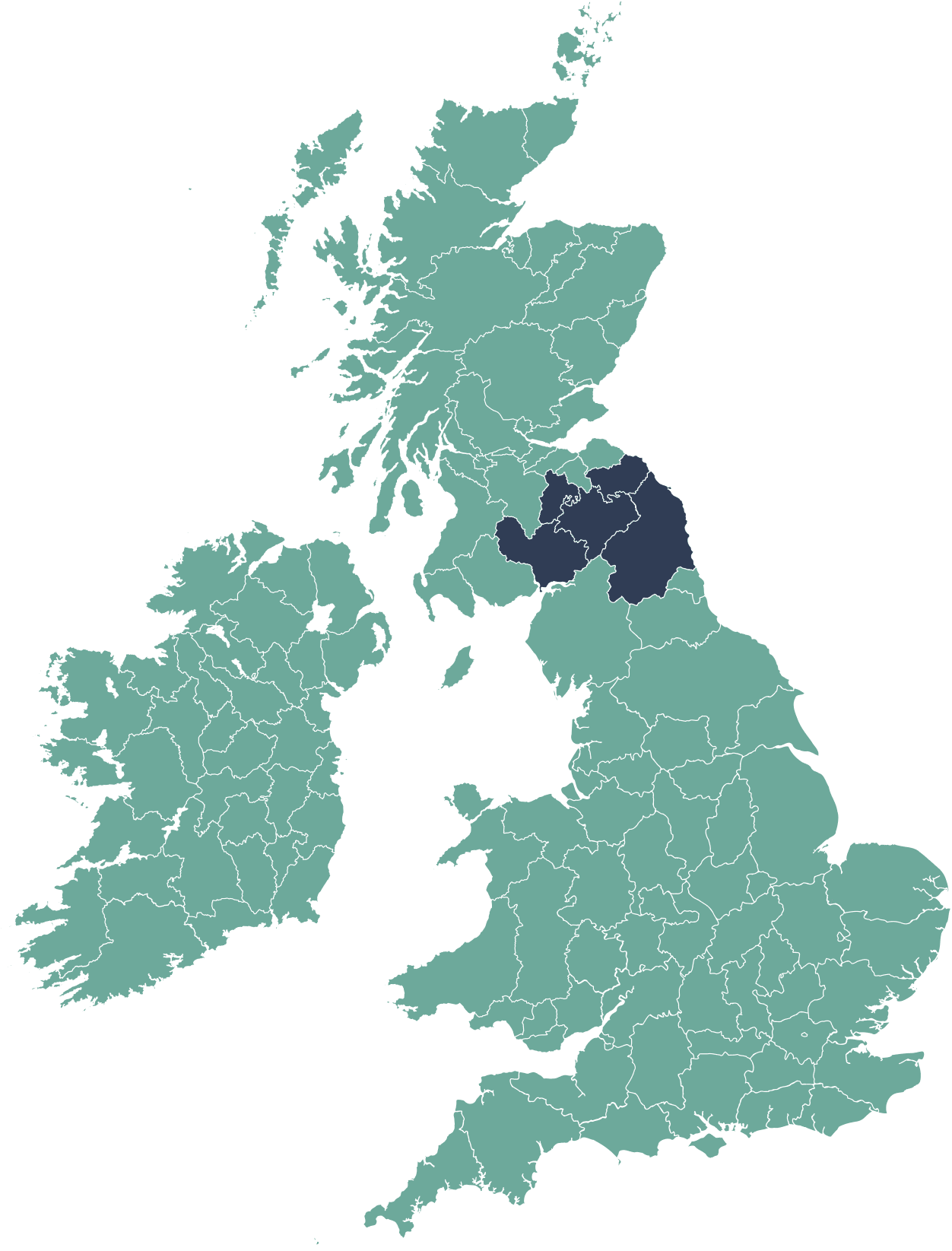
Through its partnership with GreenTheUK, Network Rail supported the creation and restoration of 10 hectares of species-rich wildflower habitat across Scotland during 2025-26. The project strengthened the Central Scotland and Pollinators Along the Tweed B-Lines networks, creating connected habitats that will benefit pollinating insects, wildlife and local communities for years to come.

B
What are B-Lines?

B-Lines are a nationwide network of wildflower-rich corridors designed to reconnect fragmented habitats across the UK. By creating and restoring flower-rich stepping stones between existing wildlife sites, B-Lines help pollinating insects move more freely through the landscape, strengthening populations and improving ecological resilience.

At a glance

Habitat created/restored 10 hectares
Project sites 4
Site locations Corehead Farm, Norham, Scottish Borders Council sites, Melrose
Site breakdown Corehead Farm (2.0 ha), Norham (2.6 ha), Scottish Borders Council (4.3 ha), Melrose (1.1 ha)
Regions Dumfries & Galloway, Scottish Borders, Northumberland
Focus Pollinator habitat restoration
Techniques Meadow seeding, green hay transfer, plug planting, yellow rattle introduction and targeted grassland management
UN Sustainable Development Goals SDG 13: Climate Action & SDG 15: Life on Land
Stats infographic

Why this project matters

  • iconSupports declining pollinator populations
  • iconRestores fragmented meadow habitats
  • iconImproves biodiversity
  • iconCreates resilient ecosystems
  • iconBenefits local communities
  • iconLeaves a lasting environmental legacy

Pollination is fundamental to the health of our environment, supporting ecosystems, food production and biodiversity across the United Kingdom. A significant proportion of the crops we rely on depend on pollinators, making their survival critical not only for nature, but for long-term food security and economic stability. Through its support of wildflower restoration, Network Rail is helping to protect and strengthen these essential natural systems.

The UK is home to a remarkable diversity of pollinators, from bees and butterflies to hoverflies and beetles, all of which depend on flower-rich habitats for survival. Wildflower meadows are among the most valuable environments for these species. In summer, they become vibrant, living landscapes filled with colour, movement and sound, providing vital nectar, pollen and nesting opportunities that sustain a wide range of wildlife.

However, these habitats have declined dramatically over the past century, leaving many pollinators without the resources they need to thrive. The loss and fragmentation of wildflower-rich grasslands has made it increasingly difficult for insects to feed, breed and move across the landscape, contributing to widespread population declines.
Map

Network Rail's support plays a key role in making this possible, not just by enabling the creation of new wildflower areas, but by helping to ensure they are carefully established and managed over time. Wildflower grasslands require thoughtful stewardship, particularly in their early years, to allow delicate species to establish successfully. Sensitive management, such as controlling aggressive grasses and weeds, and timing mowing or grazing to support flowering and seed-setting, helps these habitats develop into rich, balanced ecosystems.

The benefits of this work extend far beyond pollinators. Restored wildflower grasslands support birds, small mammals and other wildlife, improve soil health, and enhance the natural beauty of the landscape. They also contribute to climate resilience, helping ecosystems better withstand environmental pressures. These projects create corridors of habitat that allow pollinators to move more freely, supporting healthier, more resilient populations.

By supporting the Central Scotland B-Lines and Pollinators Along the Tweed B-Lines network, Network Rail helped create and restore 10 hectares of species-rich wildflower meadows and grasslands in Scotland. The projects contribute to a larger network of wildflower habitats that support pollinating insects and local communities. Habitat creation and enhancement works have been delivered across 10 different sites from Dumfries and Galloway to Roxburghshire and across several towns in the Scottish Borders using locally appropriate seed mixes, plug planting, green hay transfer, yellow rattle introduction, and targeted grassland management. Together, these measures will help restore vital pollinator food and resting sources, increase botanical diversity, and provide long term benefits for both invertebrates, other wildlife and local communities.

Where the work took place

Site image
2 hectares
Corehead Farm
Location: Annan Water, near Moffat County: Dumfries and Galloway

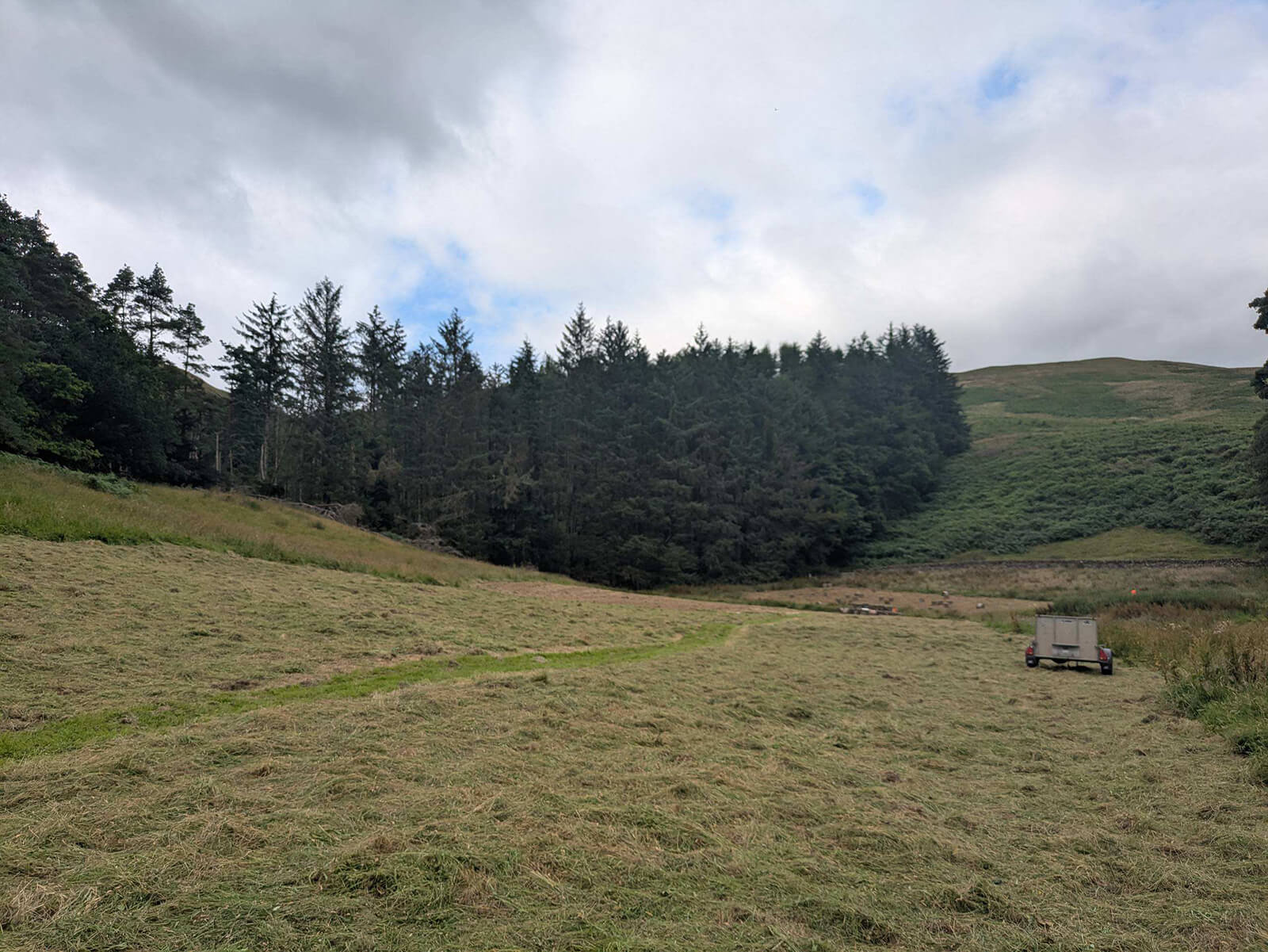
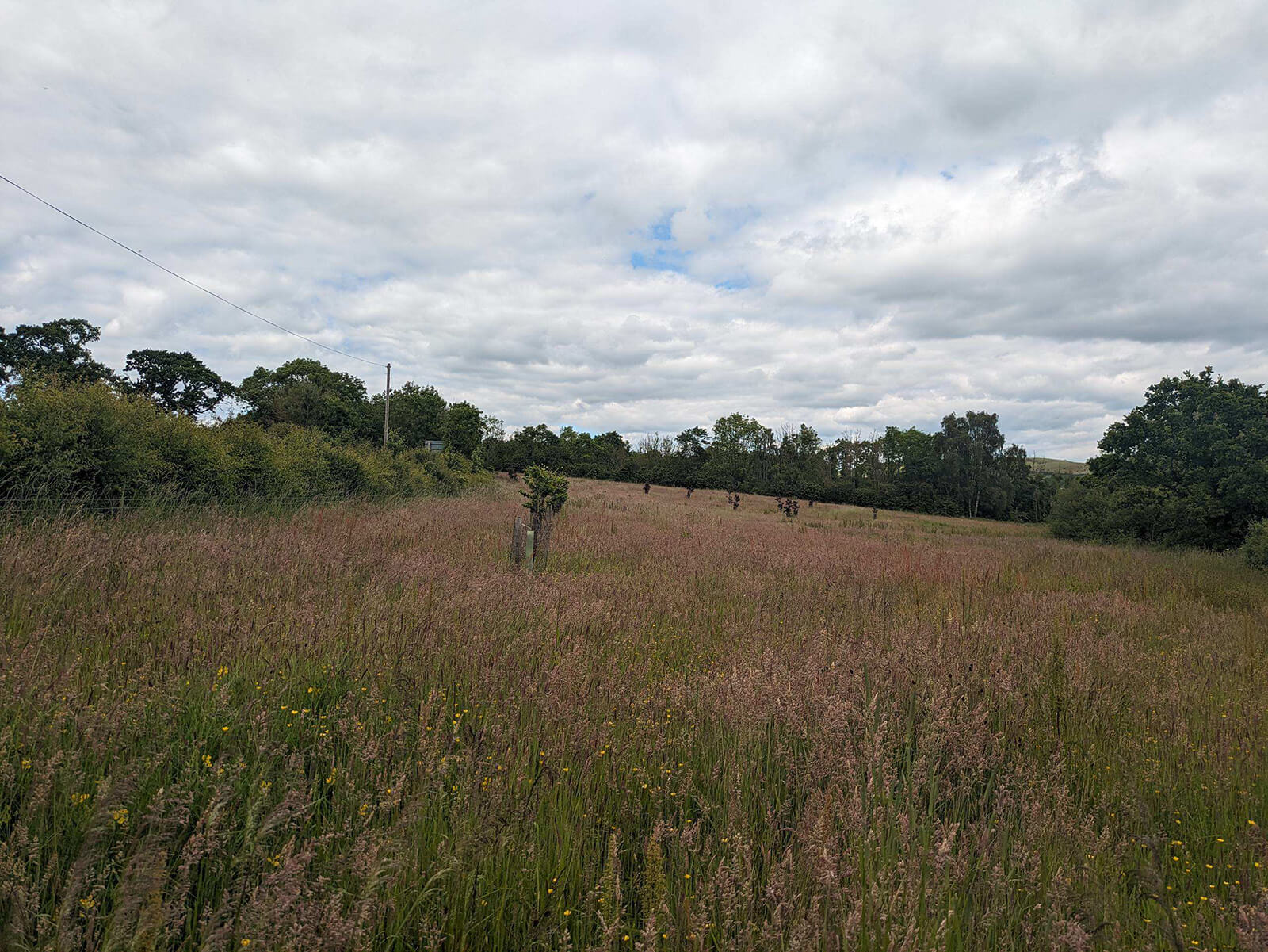
Two hectares of wildflower meadow, divided into Areas A and B, were established and enhanced at Corehead Farm in County Dumfries and Galloway. Both areas were sown using an 80/20 wildflower meadow seed mix, with Area B receiving an additional green hay transfer from Area A to enhance botanical diversity through the introduction of locally adapted plant species. This approach successfully supplemented the initial seed mix by increasing species richness and supporting the establishment of a more diverse, resilient meadow community across the site.

Site image
2.6 hectares
Norham
Location: Scottish Borders County: Northumberland

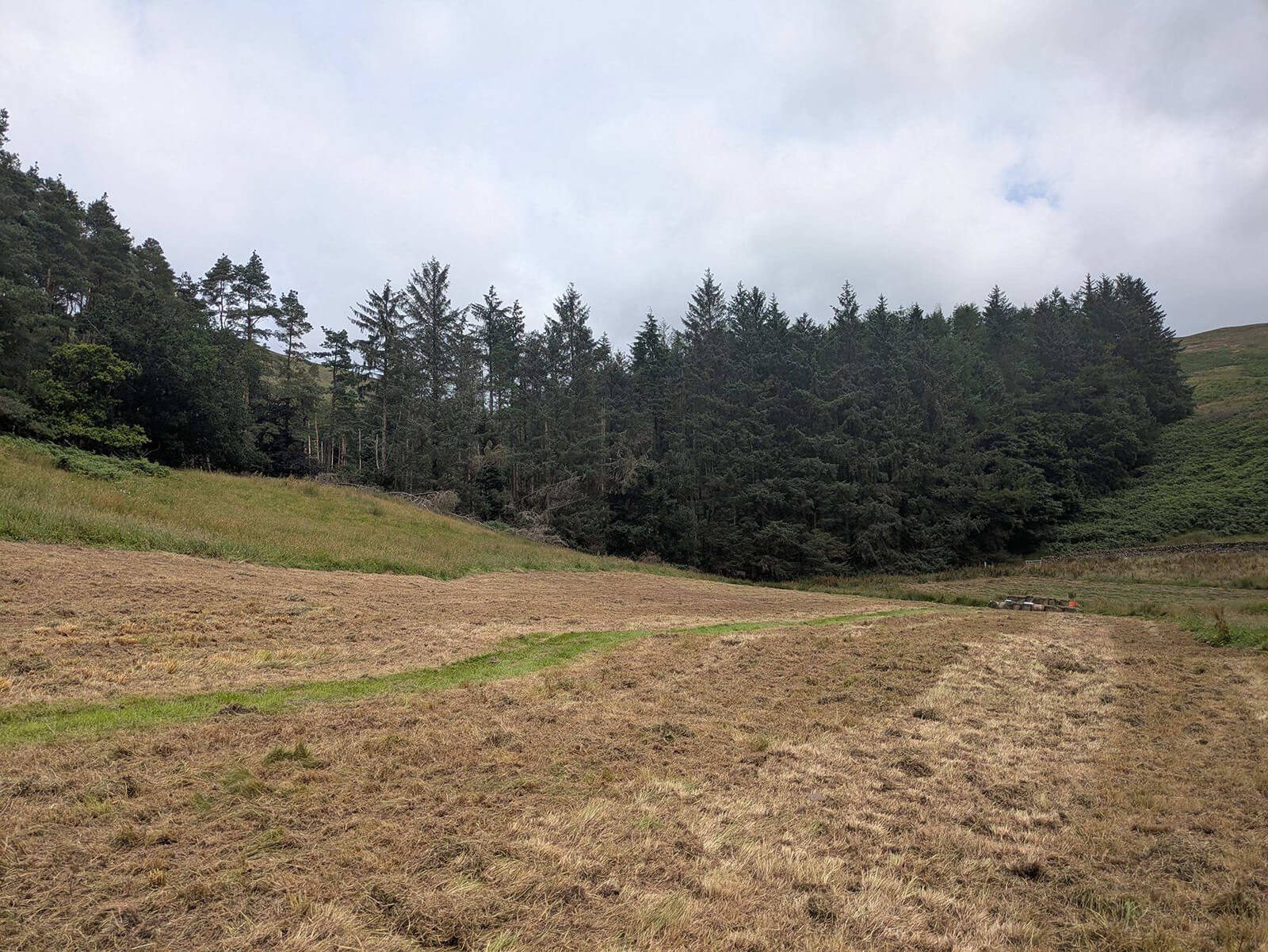
The project involved the establishment of a wildflower meadow across two areas using a seed mix tailored to local environmental conditions.

Area A was sown using a meadow seed mix suitable for the site’s wetter conditions, while Area B was established using an 80/20 wildflower meadow seed mix to encourage the development of diverse grassland communities. By selecting seed mixes appropriate to each area, the project aimed to establish resilient meadow habitats capable of supporting a wide range of pollinating insects and other wildlife while enhancing the overall biodiversity of the site.
Site image
4.3 hectares
Scottish Borders
Location: Galashiels, Tweedbank, Melrose, Newstead and Kelso

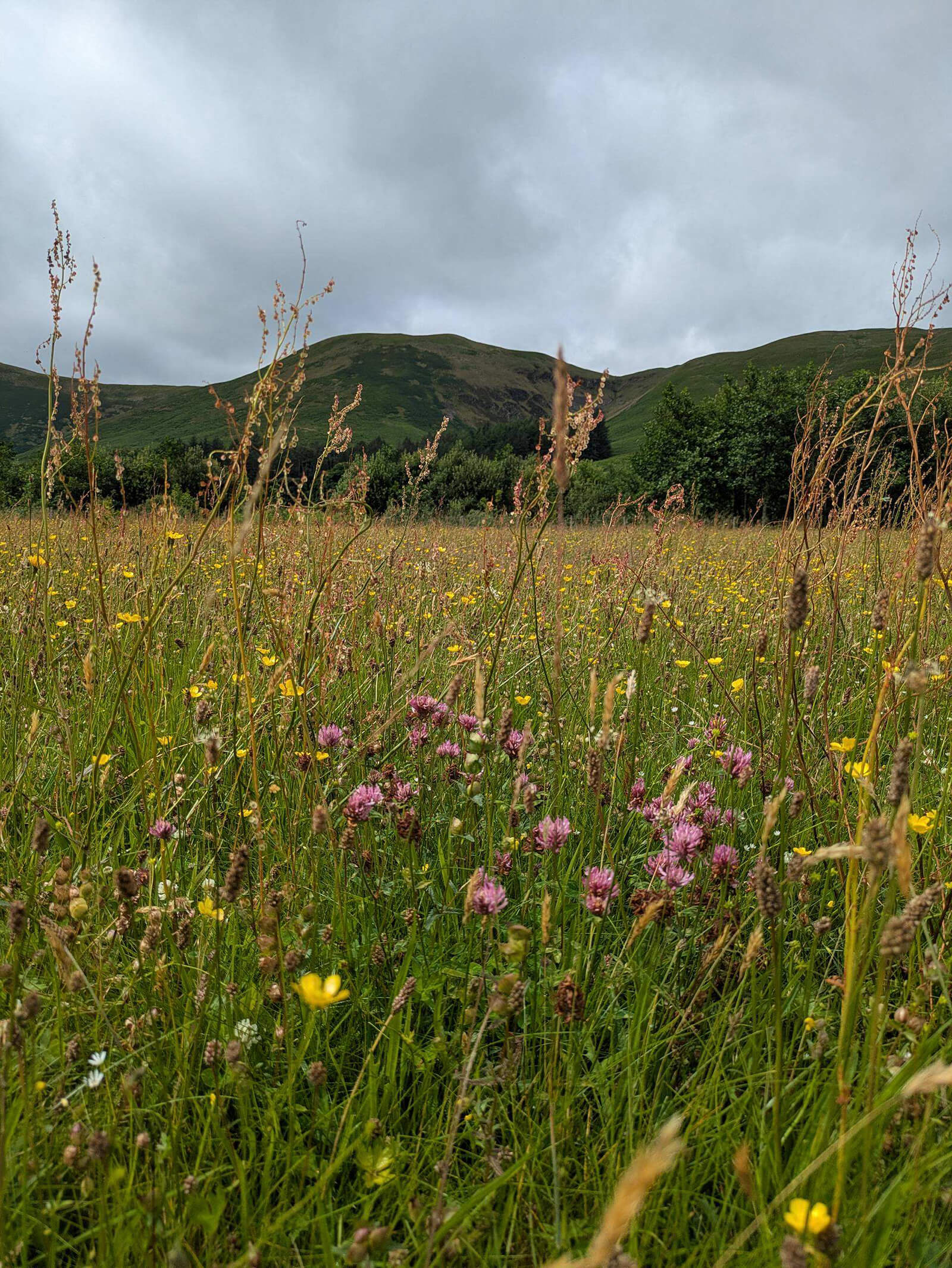
Habitat enhancement works were delivered across six Scottish Borders Council sites covering a combined area of 4.3 hectares. The project focused on improving existing grassland habitats through the establishment of wildflower meadow vegetation and targeted habitat management.

The works included sowing an 80/20 wildflower meadow seed mix, introducing yellow rattle seed and native wildflower plug plants at the Melrose site, and implementing improved grassland management at Newstead. Together, these measures were designed to increase botanical diversity, reduce grass dominance and create more valuable habitat for pollinators and other wildlife across the Scottish Borders.
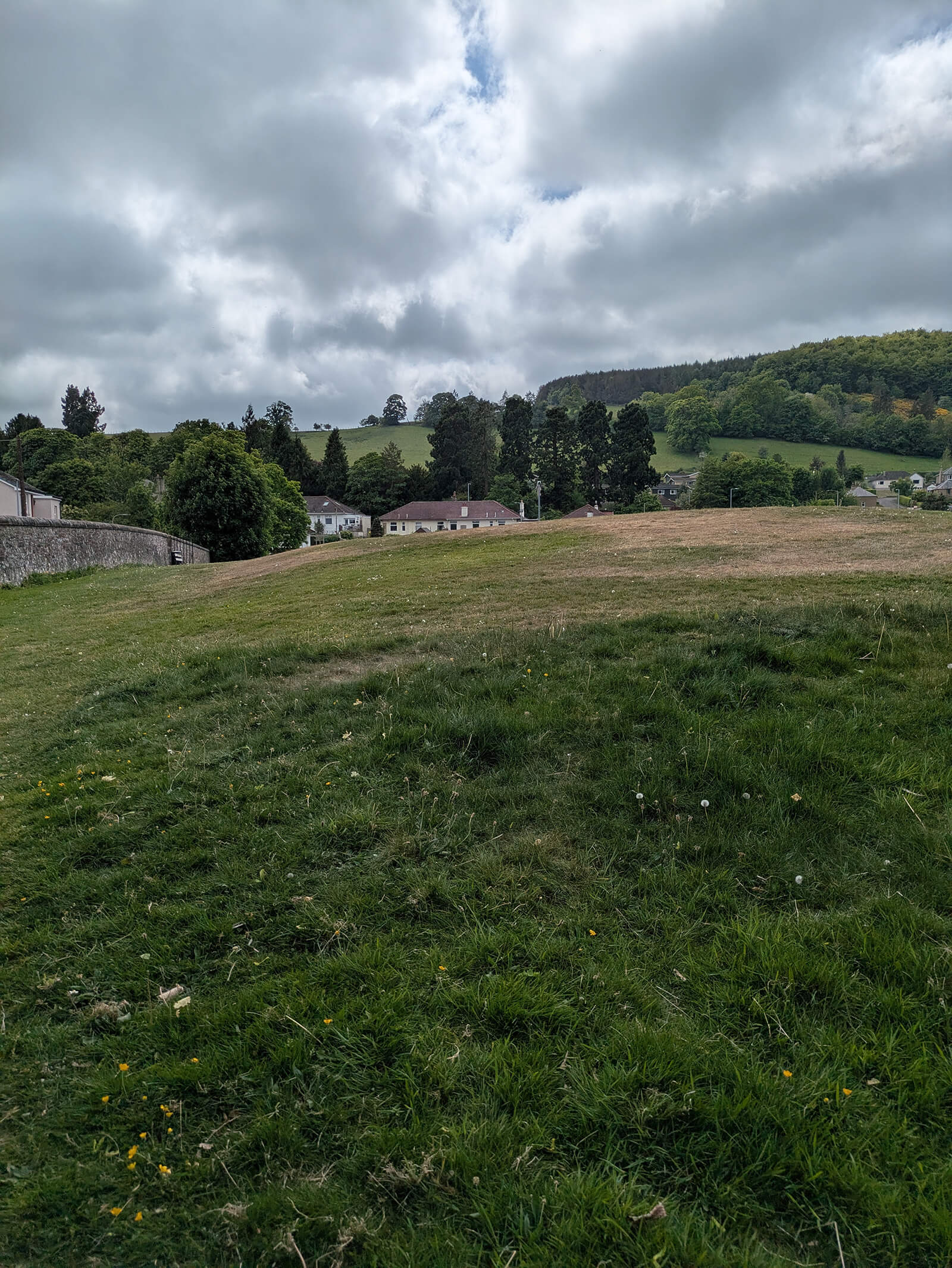
Site image
1.1 hectares
Scottish Borders
Location: Abbey Street and St Mary’s Road, Melrose

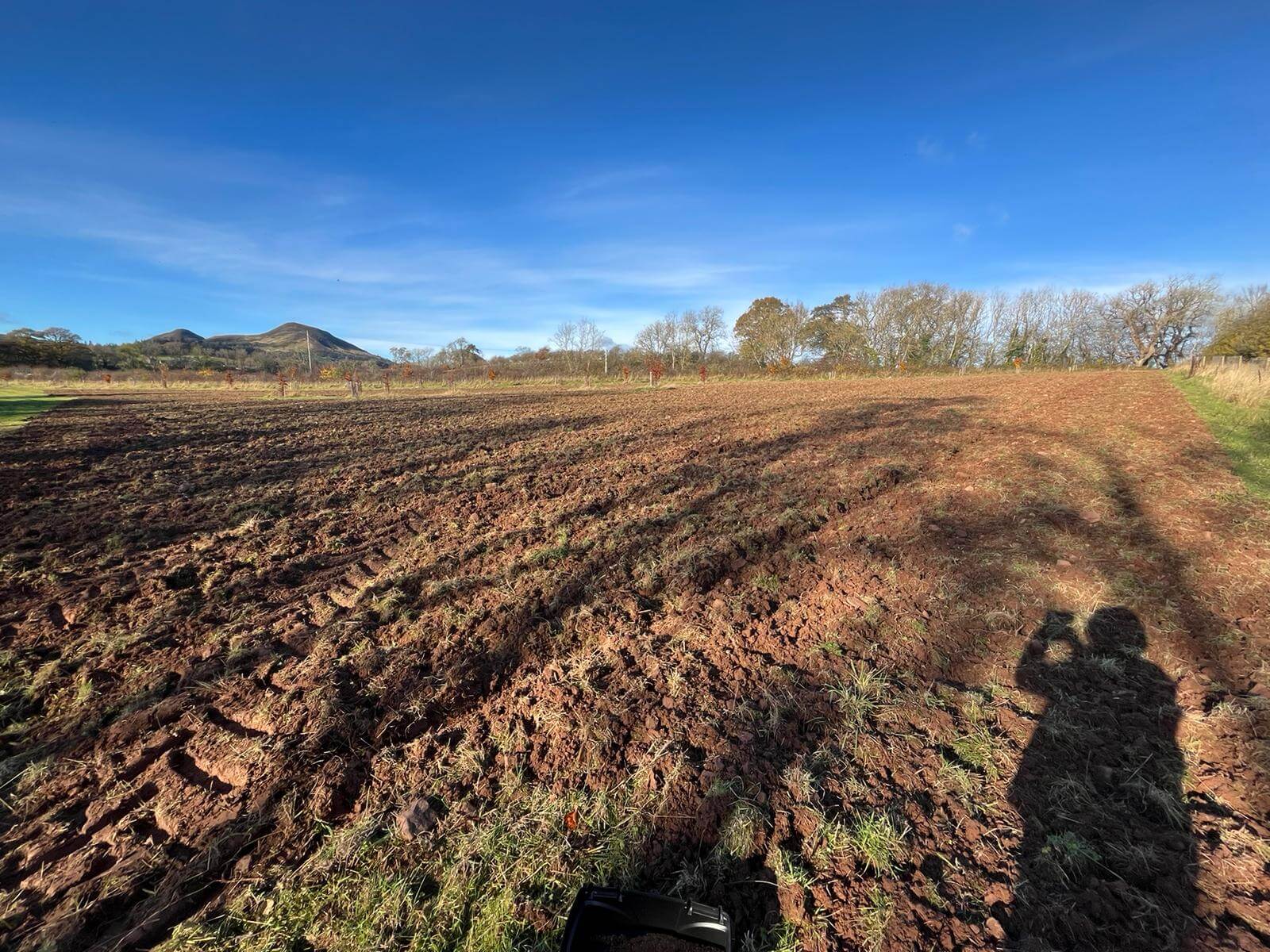
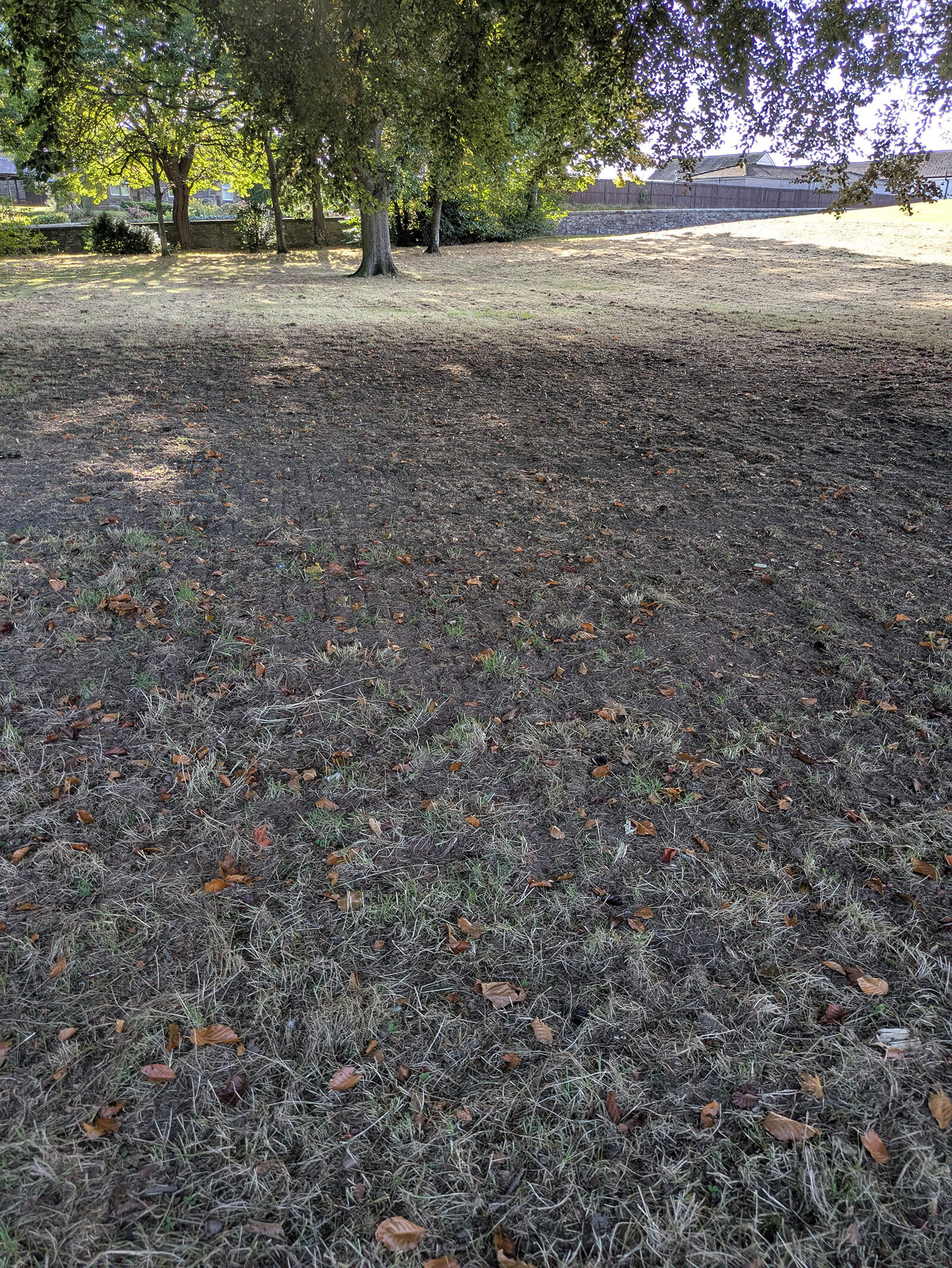
Habitat enhancement works were undertaken across 1.1 hectares at a National Trust for Scotland site in Melrose. The project included ground preparation, the planting of native wildflower plug plants and the sowing of yellow rattle seed to establish a more species-rich grassland habitat.

Ground preparation created favourable conditions for successful plant establishment, while plug planting introduced key species that will contribute to increased botanical diversity as the habitat develops. Yellow rattle was incorporated to suppress vigorous grasses naturally, enabling a greater diversity of wildflowers to establish and improve the overall ecological quality of the meadow.

Specialist Techniques

01

Green Hay Transfer

Green hay transfer involves spreading freshly cut hay from a nearby species-rich wildflower meadow onto a prepared site. As the hay dries, it releases naturally occurring seeds from locally adapted plants, helping establish a diverse wildflower community while preserving the area's local genetic diversity.

02

Yellow Rattle Introduction

Yellow rattle is a native wildflower known as the "meadow maker" because it naturally suppresses vigorous grasses by feeding on their roots. Reducing grass competition creates space for a wider variety of wildflowers to establish, increasing the meadow's diversity and ecological value over time.

03

Wildflower Plug Planting

Plug planting introduces young native wildflower plants directly into prepared ground, helping species establish more quickly than seed alone. This technique improves plant diversity, increases early flowering during restoration, and gives slower-growing species a greater chance of establishment.

04

Locally Appropriate Seed Mixes

Native wildflower and grass seed mixes are carefully selected to suit local soils, climate and habitat conditions. Using species that naturally occur in the surrounding landscape creates more resilient meadows, supports local wildlife and helps restore habitats characteristic of the region.

05

Targeted Grassland Management

Species-rich grasslands require ongoing management to thrive. Carefully timed mowing or grazing, along with the control of invasive plants and aggressive grasses, allows wildflowers to flower, set seed and spread naturally. This long-term stewardship is essential for developing healthy, diverse meadow habitats.

06

Ground Preparation

Before sowing or planting, sites are carefully prepared by reducing existing vegetation and creating areas of bare soil. This gives wildflower seeds and young plants the best opportunity to establish successfully while minimising competition from vigorous grasses and weeds.

icon

"Pollinators Along the Tweed is a really nice opportunity to work with different partners and co-deliver activities as well. Which can help us reach different audiences or engage in a bit of a different way. Whilst spreading awareness and habitat connectivity for our vital pollinators."

Kate O'Leary

Project Lead, Buglife

Wildflowers & Grasses Planted
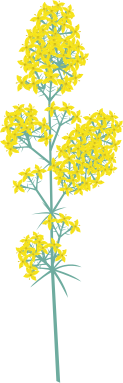
Lady’s Bedstraw

Lady’s Bedstraw: Galium Verum

Read More

Lady’s Bedstraw: Galium Verum

You can recognise this plant by the stunning clusters of bright yellow flowers which burst forth in the summer months and smell faintly of honey. When dried, Lady’s Bedstraw has a scent reminiscent of hay, and it used to be used to stuff mattresses, especially for women who were about to go into labour, which is probably how it got its interesting name. It was also commonly used to curdle milk to make cheese!

Cowslip

Cowslip: Primula Veris

Read More

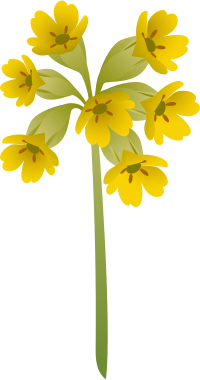
Cowslip: Primula Veris

You can recognise the cowslip by its clusters of drooping bell-shaped yellow flowers which make a cheery addition to meadows and woodlands. Cowslips are very strongly associated with springtime and Easter, thriving on chalky soils where they flower between April and May. They were traditionally picked to make May Day garlands and wedding decorations.

Autumn Hawkbit

Autumn Hawkbit: Leontodon Autumnalis

Read More

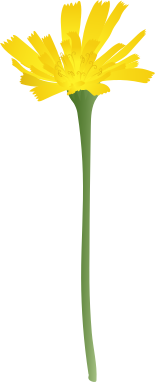
Autumn Hawkbit: Leontodon Autumnalis

The autumn hawkbit shares part of its name with the dandelion because the two flowers are really very similar. This grassland perennial’s yellow rosette flowers are in full bloom from June to October. Unlike its hairy cousin, the rough hawkbit, the autumn variety has slender, almost hairless leaves.

Self-heal

Self-heal: Prunella Vulgaris

Read More

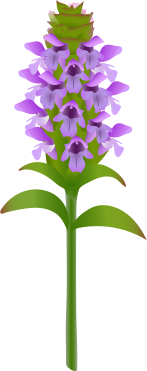
Self-heal: Prunella Vulgaris

Self-heal’s bright purple flowers grow close to the ground in meadows and grasslands as well as by the side of the road and on lawns. It is in bloom between June and October. As you might expect from the name, this small plant has long been used in herbal medicine to treat a number of ailments.

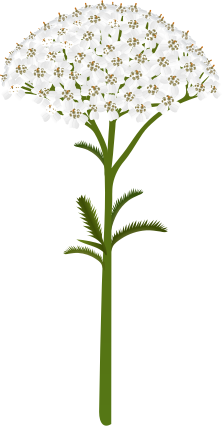
Yarrow

Yarrow: Achillea Millefolium

Read More

Yarrow: Achillea Millefolium

This hardy perennial has a slightly aniseed taste and can be made into tea; in the Middle Ages, it was used to flavour beer. Centuries ago, Yarrow was used to heal wounds and stop bleeding, but it was also thought to start nosebleeds, and still has the nickname “nosebleed plant”. Starlings and other birds use yarrow to line their nests.

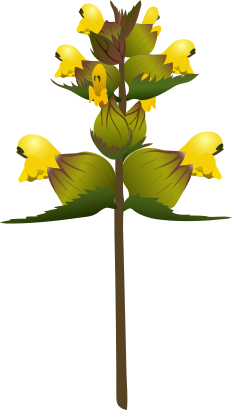
Yellow-rattle

Yellow-rattle: Rhinanthus Minor

Read More

Yellow-rattle: Rhinanthus Minor

This plant’s yellow flowers are in bloom from May to September. It makes a popular addition to any wildflower meadow, as it feeds off the nutrients in other grasses, reducing competition between species. Its seeds grow in brown pods which make a slight rattling sound.

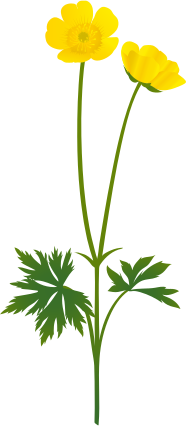
Meadow Buttercup

Meadow Buttercup: Ranunculus Acris

Read More

Meadow Buttercup: Ranunculus Acris

Buttercups are a familiar sight around the world, with this species being particularly hard to miss with its bright yellow colour and also being referred to as the “giant” or “tall” buttercup. Commonly used by Native American tribes to treat headaches, this plant is characteristically found in grazed grasslands and prefers soil with intermediate drainage. While sometimes considered a problematic weed in mowed lawns, the Meadow Buttercup is a valued addition to wildflower meadows and one cultivated variety even has the Royal Horticultural Society's Award of Garden Merit.

Ox-eye Daisy

Ox-eye Daisy: Leucanthemum Vulgare

Read More

Ox-eye Daisy: Leucanthemum Vulgare

Ox-eye Daisy is a small, yet resilient flower and has the ability to thrive in diverse habitats. The yellow centre of the oxeye daisy is made up of many small flowers which hold nectar enjoyed by various pollinating insects, including butterflies, bees and hoverflies. A mature plant can produce up to 26,000 seeds that are spread by animals, vehicles, water and contaminated agricultural produce, and some seeds remain viable for up to nearly forty years.

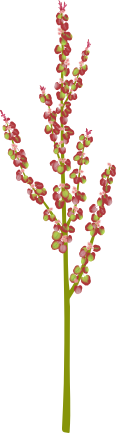
Common Sorrel

Common Sorrel: Rumex Acetosa

Read More

Common Sorrel: Rumex Acetosa

Sheep’s sorrel leaves look a little like spinach, and they are widely used in salads or as a garnish. The plant has a citrus taste, so it features in both sweet and savoury dishes. Sheep’s sorrel grows quickly and has small, red flowers which are pollinated by the wind.

Ribwort Plantain

Ribwort Plantain: Plantago Lanceolata

Read More

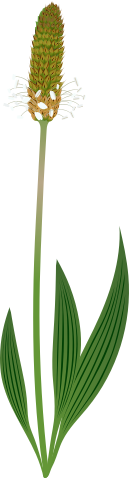
Ribwort Plantain: Plantago Lanceolata

You’re most likely to see this perennial in England between the months of May and August. The hoary plantain has a rosette of leaves at its base, a slim stem and delicate pinkish-white flowers growing out of a thick spike at the top. This plant grows best in dry grassland areas, especially where there is chalk or limestone soil.

Red Clover

Red Clover: Trifolium pratense

Read More

Red Clover: Trifolium pratense

As with all clovers, Red Clover is part of the bean family Fabaceae and native to Europe, Western Asia, and parts of Northern Africa. Despite the name, the Red Clover boasts dark pink flowers and is extremely popular both with many types of bumblebees as a food source and people as an ornamental plant. The flowers are edible and can be used as a garnish or ground into flour. It is also extremely valued as a fodder crop as it increases social fertility by nitrogen fixation.

Meadow Vetchling

Meadow Vetchling: Lathyrus pratensis

Read More

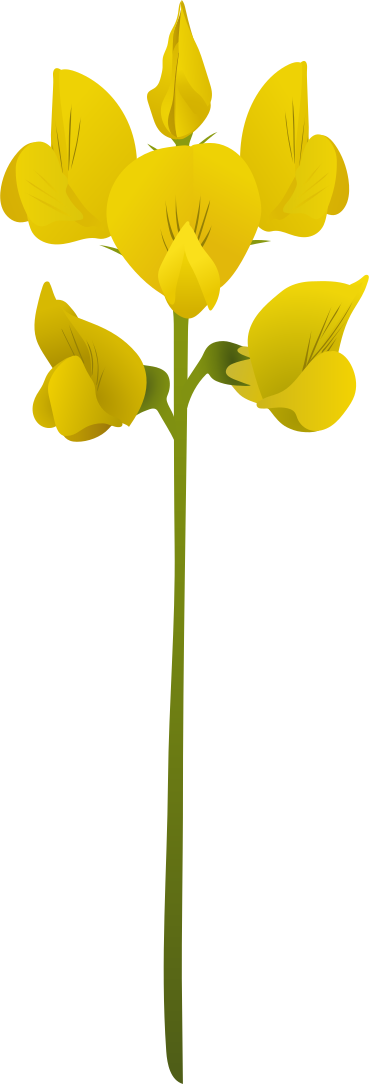
Meadow Vetchling: Lathyrus pratensis

Meadow Vetchling is a scrambling plant that is part of the Legume (pea) family. It’s found in hardy habitats like rough grassland, wasteland and road verges due to its climbing nature. Looking for vibrant yellow flowers followed by shiny black seeds will help identify this species.

Devil's-bit Scabious

Devil's-bit Scabious: Succisa pratensis

Read More

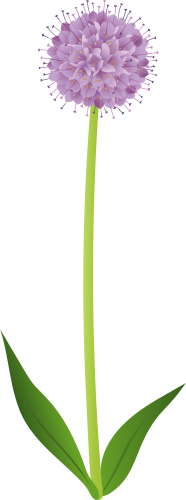
Devil's-bit Scabious: Succisa pratensis

A bright-purple flower with a variety of medical purposes, the Devil’s-bit Scabious is both a beautiful garden addition and useful to have around. It differs from other Scabious species by having five-lobed flowers instead of four-lobed and prefers damper soil. Folk tales claim the name is from the short black root being bitten off by the devil. Across the British Isles it is found growing in grasslands, hedgerows, marshes, meadows, and pastures. Devil’s-bit Scabious is wonderful for local biodiversity as it gets frequented by many types of insects, with hoverflies in particular being a preferred visitor. It is the larval food plant of two rare species: the marsh fritillary butterfly and narrow-bordered bee hawk-moth, and sites with their presence are carefully managed.

Common Knapweed

Common Knapweed: Centaurea Nigra

Read More

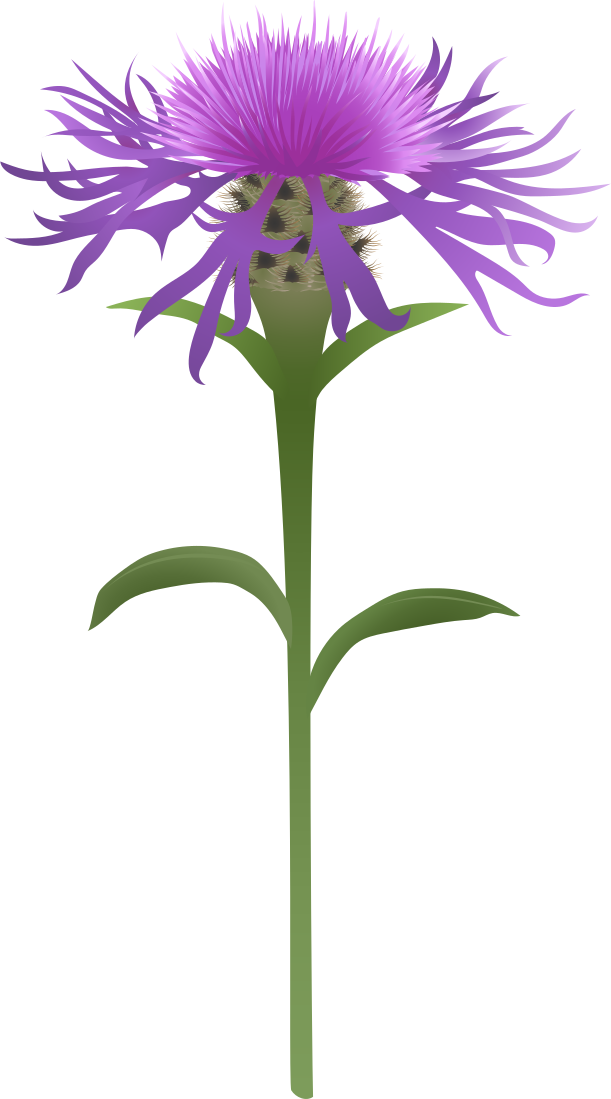
Common Knapweed: Centaurea Nigra

Black Knapweed, a native UK wildflower, is recognised by its distinctive bright pink and purple, thistle-like flower heads. It's a superb wildlife plant as the flowers are rich in nectar and pollen, and attract bees, moths and butterflies such as the Marbled white butterfly. It’s seeds are popular with birds like goldfinches.

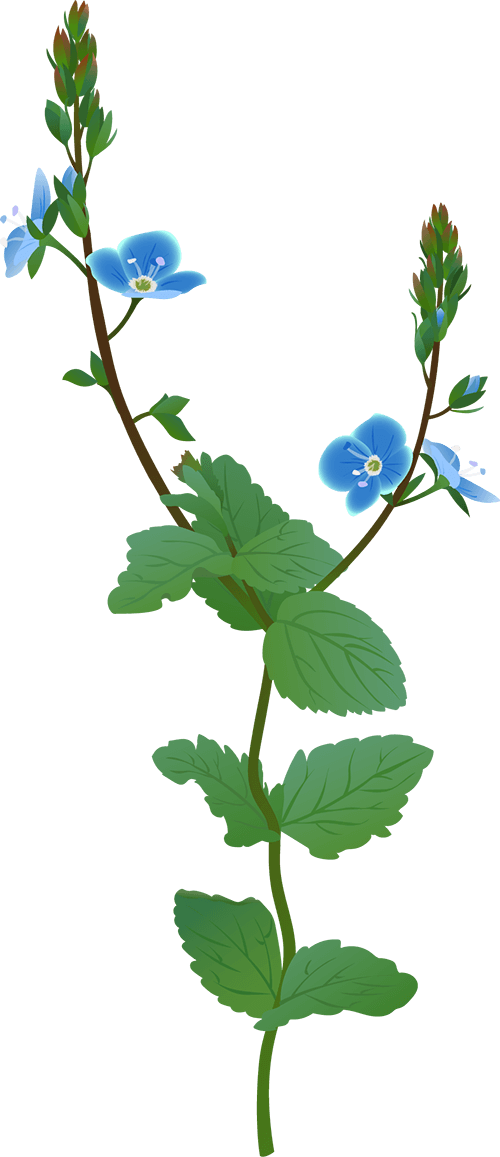
Germander speedwell

Germander speedwell: Veronica chamaedrys

Read More

Germander speedwell: Veronica chamaedrys

A low-growing, bright-blue wildflower, germander speedwell carpets meadows, woodland edges, and roadside verges. Its small, nectar-rich flowers are visited by a variety of bees, hoverflies, and butterflies, making it an important early summer nectar source. Its sprawling habit provides shelter for tiny invertebrates.

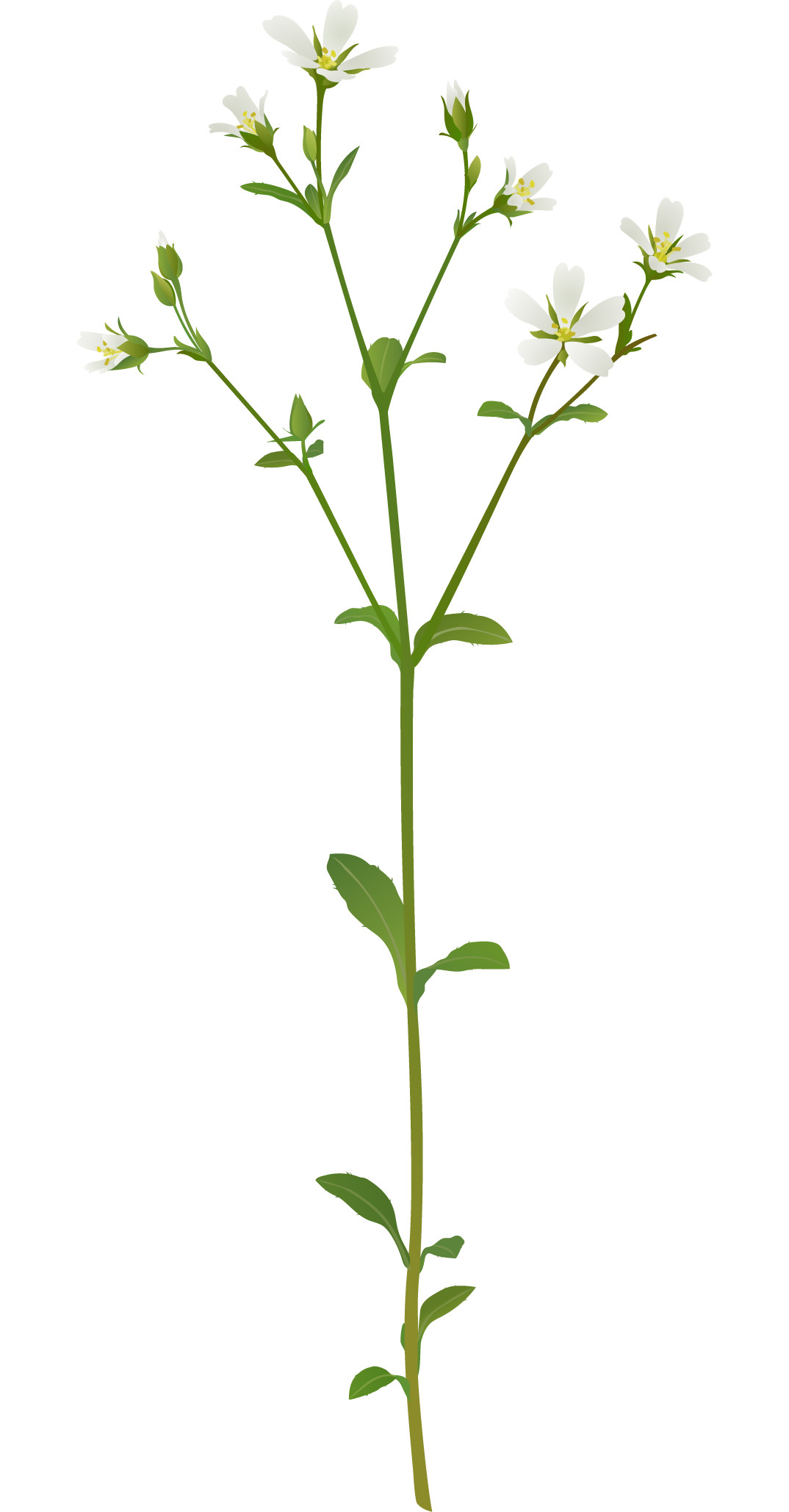
Common Mouse-Ear

Common Mouse-Ear: Cerastium fontanum

Read More

Common Mouse-Ear: Cerastium fontanum

Also called mouse-ear chickweed or starweed, the common mouse-ear grows tear-shaped leaves in a star pattern. It is typically considered a weed and grows all over the UK, flowering from April to September. Common mouse-ear has tiny, white, five-petalled flowers, and each plant can produce as many as 6,500 seeds. Numerous species of insect use the plant as a source of food.

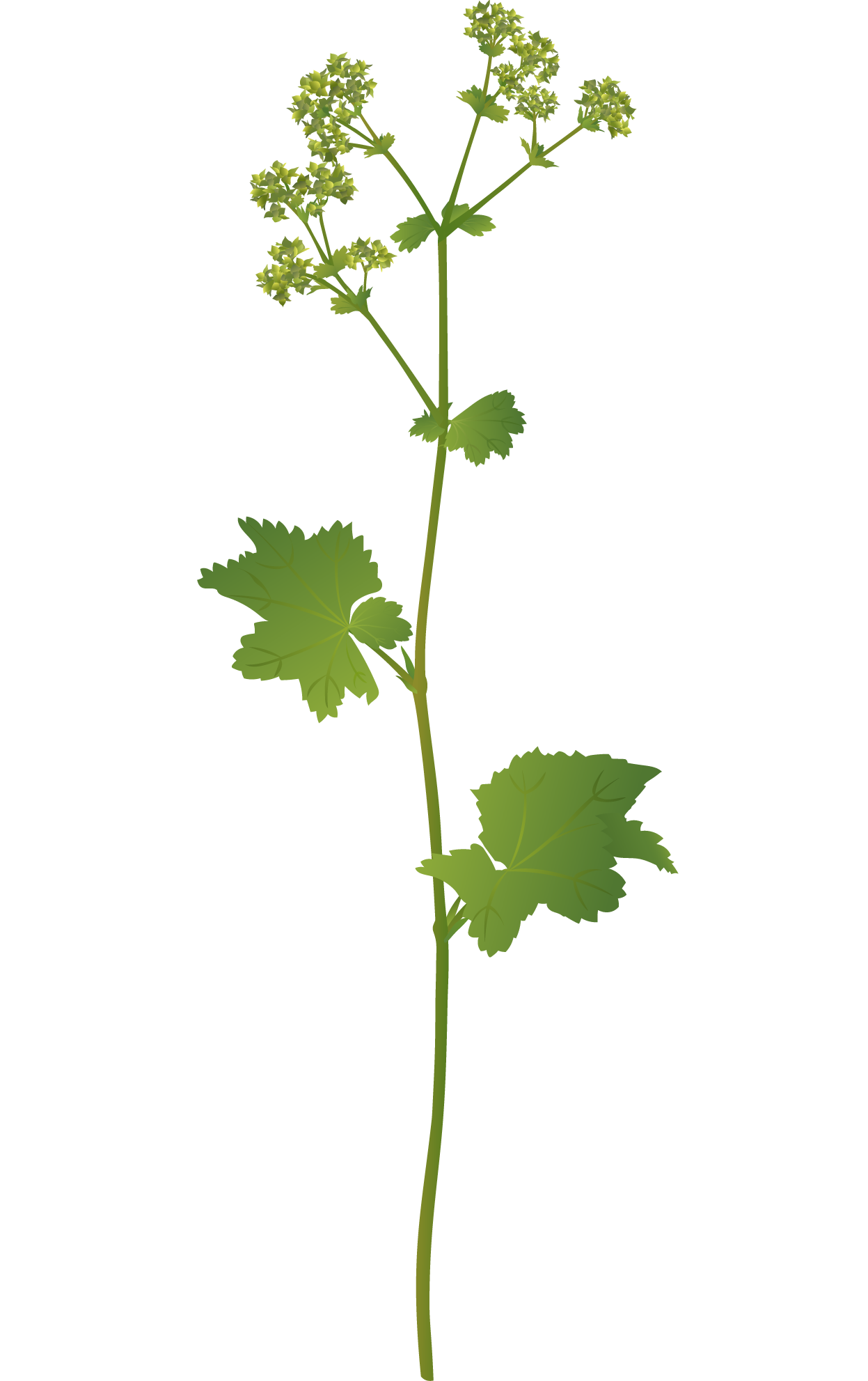
Smooth Lady’s Mantle

Smooth Lady’s Mantle: Alchemilla glabra

Read More

Smooth Lady’s Mantle: Alchemilla glabra

Smooth lady's mantle is a low-growing perennial of damp meadows, flushes and upland grasslands. Its softly pleated leaves collect droplets of water, a feature that inspired medieval herbalists and alchemists, who believed the moisture held magical or medicinal properties. Sprays of tiny yellow-green flowers appear from June to August, attracting a variety of small pollinating insects, while the plant thrives in traditionally managed, species-rich grasslands.

Agrimony

Agrimony: Agrimonia Eupatoria

Read More

Agrimony: Agrimonia Eupatoria

Agrimony is a herbaceous plant with slender spikes of small yellow flowers. It is mentioned in ancient medicinal texts by herbalists like Dioscorides and Pliny the Elder, and Shakespeare mentions its ability to ward off sleep and nightmares in "A Midsummer Night's Dream." Its leaves emit a pleasant fragrance

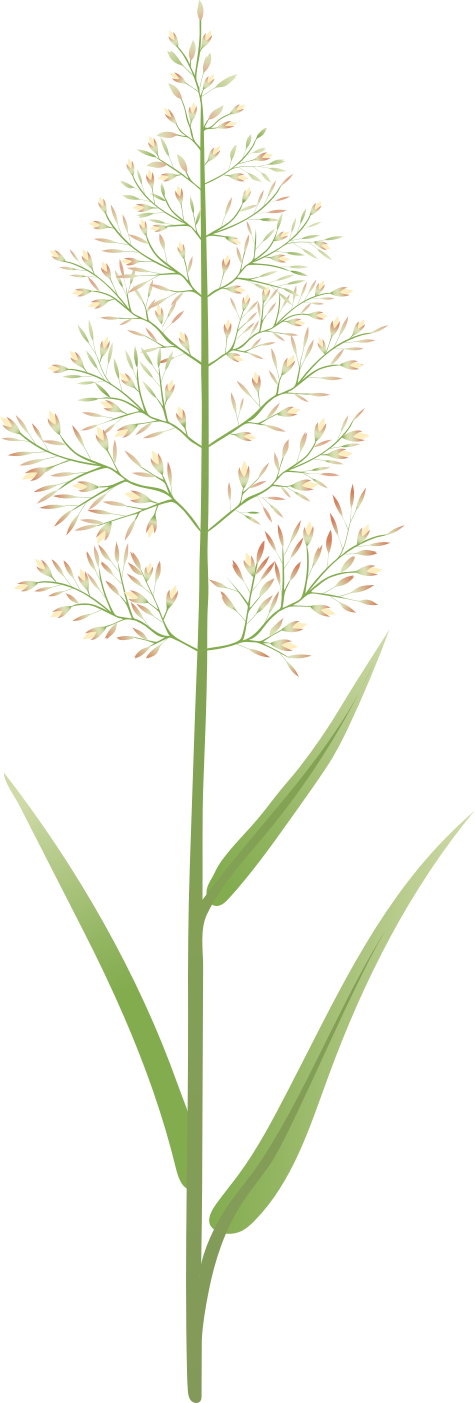
Common Bent

Common Bent: Agrostis Castellana

Read More

Common Bent: Agrostis Castellana

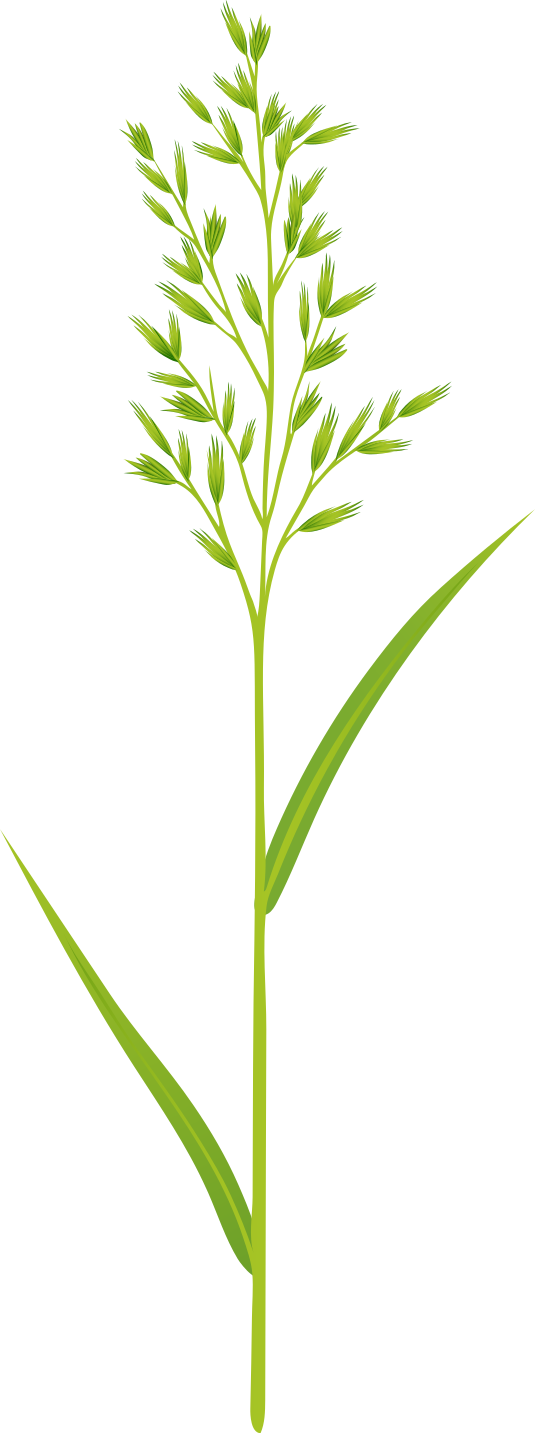
This slightly wispy, bristly perennial grass grows quickly. It is also known as highland bent, and is often found on roadsides or in wildflower meadows. Common bent is what is known as a hyperaccumulator of zinc and lead, which means it can grow in soils with a high concentration of those metals.

Crested Dog’s-tail

Crested Dog’s-tail: Cynosurus Cristatus

Read More

Crested Dog’s-tail: Cynosurus Cristatus

This common perennial grass grows in tufts in lowland areas where there isn’t too much water. Crested dog’s-tail is stiff and used to be used for making bonnets. It germinates quickly but takes quite a while to grow, so it doesn’t compete against and dominate other species in the wildflower meadow.

Sheep’s Fescue

Sheep’s Fescue: Festuca Ovina

Read More

Sheep’s Fescue: Festuca Ovina

This narrow-leaved grass grows in tufts and is slightly spiky in appearance. It fares well in loamy soil and is often found growing in pasturelands where, as you might expect from the name, sheep like to graze on it. Sheep’s fescue has very dense bunches of roots, which makes it tricky for weeds to take hold nearby.

Red Fescue

Red Fescue: Festuca Rubra

Read More

Red Fescue: Festuca Rubra

Widespread across the entire Northern Hemisphere, this species of grass can grow in all sorts of habitats and climates. It does however, prefer shade and is often planted as an ornamental species in gardens for its shade tolerance. It has narrow, needle-like leaves and as such is commonly avoided by livestock.

Meadow Foxtail

Meadow Foxtail: Alopecurus Pratensis

Read More

Meadow Foxtail: Alopecurus Pratensis

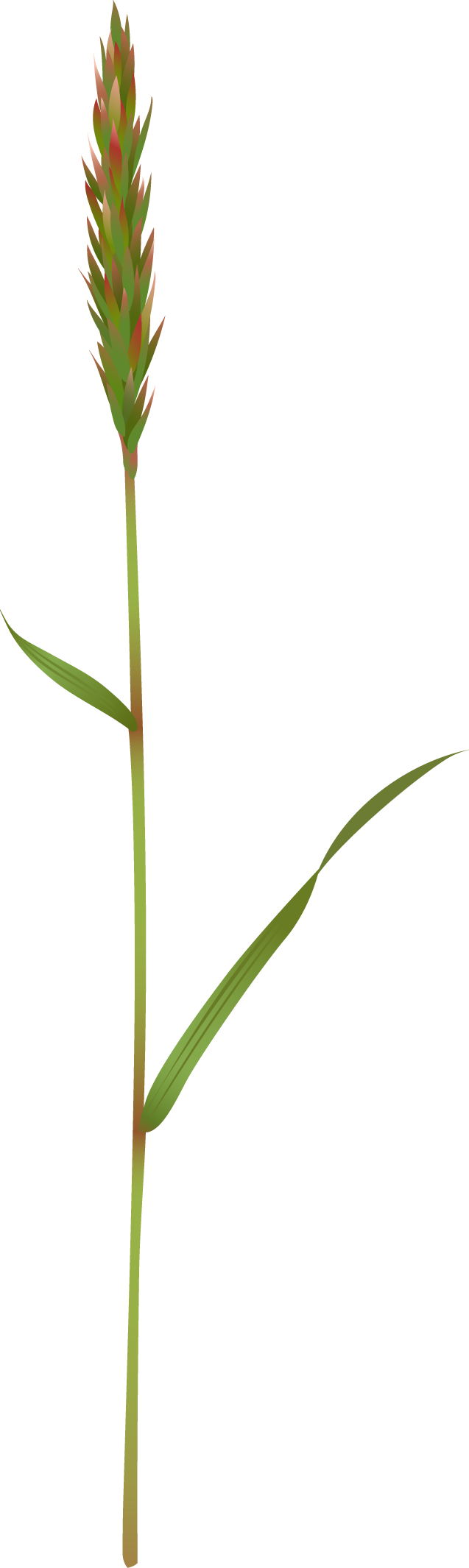
Meadow Foxtail is one of the earliest grasses to bloom in the UK, flowering as early as April. It’s widely cultivated for both hay and pasture grazing and grows to around one metre in height. Aside from grazing animals, it is known to be a food source for many caterpillars, such as the Essex skipper.

Sweet Vernal

Sweet Vernal: Anthoxanthum odoratum

Read More

Sweet Vernal: Anthoxanthum odoratum

A delicate grass that flowers between April-July, known for its sweet, vanilla-like scent. Sweet vernal grass is often one of the first species to colour spring meadows and plays a key role in creating the fragrant character of traditional hay. It is the foodplant for the larvae of brown and skipper butterflies.

Quaking Grass

Quaking Grass: Briza media

Read More

Quaking Grass: Briza media

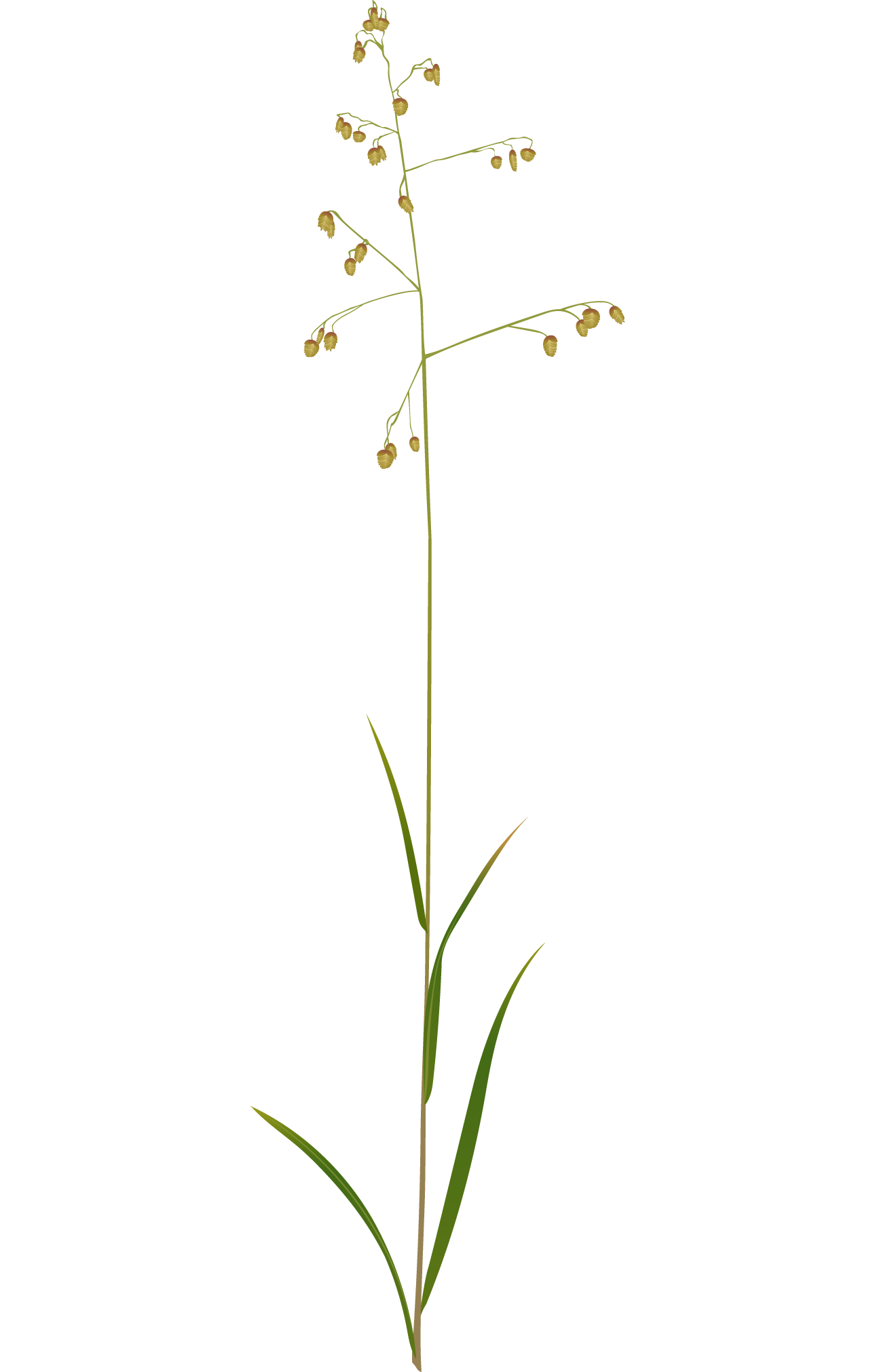
Quaking grass is recognised by its distinctive hops-shaped green and purplish spikelets. It has long been valued as an ornamental grass and was traditionally included in dried flower arrangements because its distinctive seed heads retain their shape well after cutting. Flowering from June to August, it is characteristic of unimproved meadows and chalk grasslands, where it supports a range of grassland insects and serves as an indicator of long-established, species-rich habitats.

UN Sustainable Development Goals

As a GreenTheUK partner, you support projects that are in line with the UN Sustainable Development Goals.

SDG Icon

Take urgent action to combat climate change and its impacts.

SDG Icon

Sustainably manage forests, combat desertification, halt and reverse land degradation, halt biodiversity loss.
Over time, this meadow should be home to a rich variety of wildlife which could include…

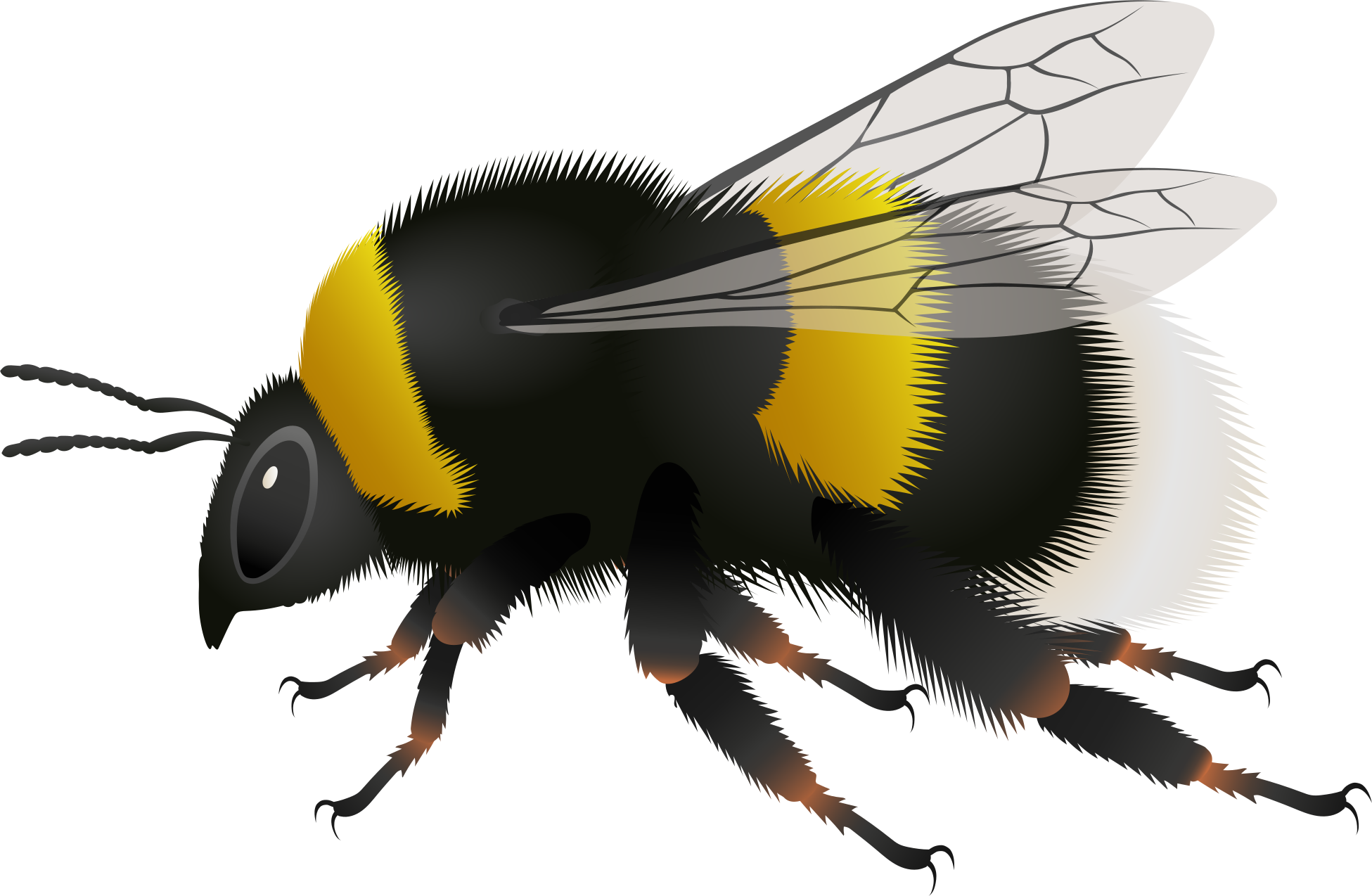
Buff-tailed bumblebee: Bombus terrestris

Buff-tailed bumblebee

These are the giants of the bumblebee world, and the whole species is named after the buff colour of their queen’s tail. They can be found in the UK’s lowlands, nesting underground in very large groups. These insects are very fond of nectar, and if they can’t easily reach it with their tongues, they will bite a hole in the flower to suck it out.

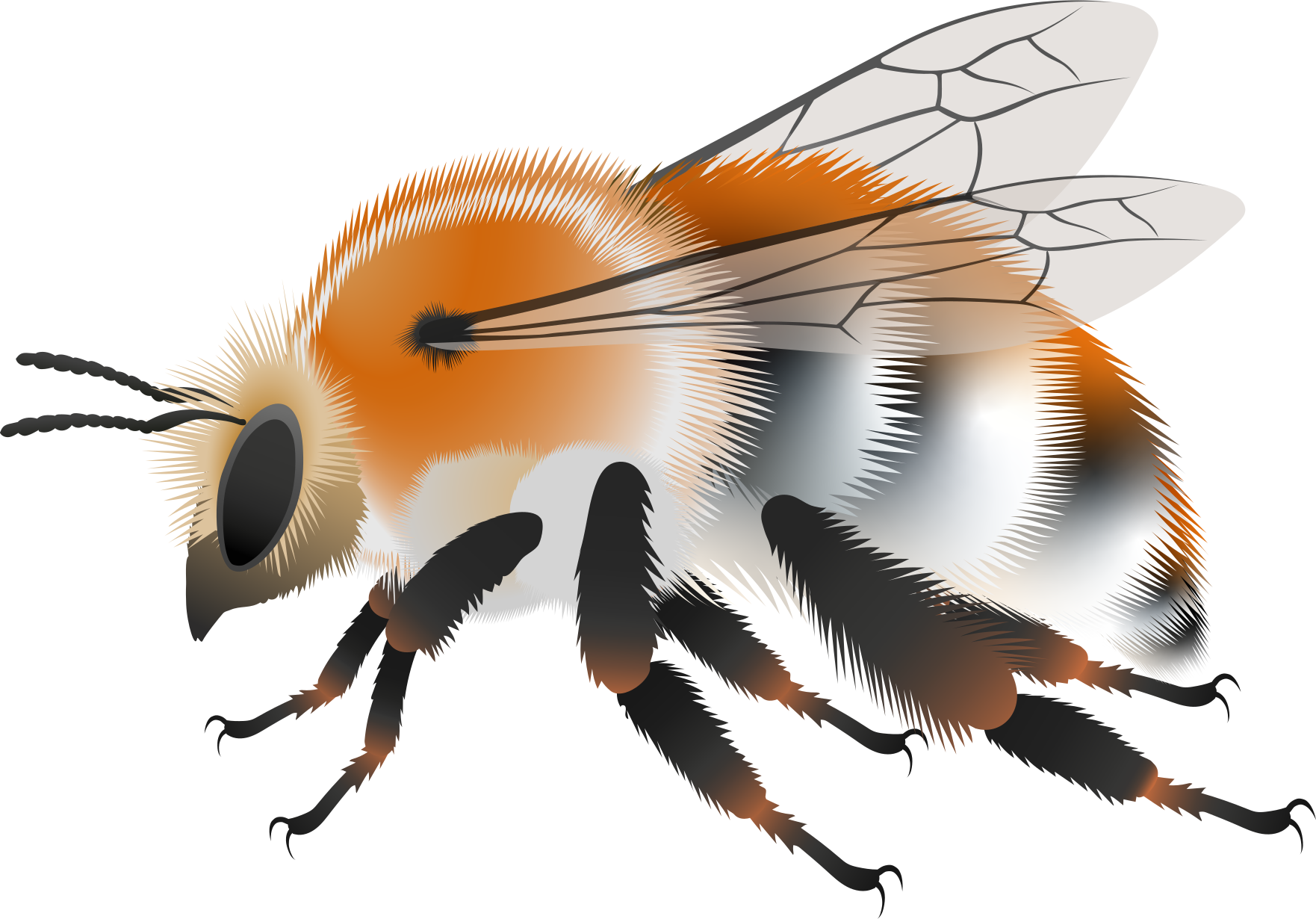
Common Carder Bee: Bombus Pascuorum

Common Carder Bee

This relatively small ginger-coloured bumblebee is widespread throughout the UK, in habitats including farms, woods and gardens. Carder bees have very long tongues and feed on heather, clover and lavender. They often nest in old mouse runs and disused birds’ nests.

Red-tailed Bumblebee: Bombus Lapidarius

Red-tailed Bumblebee

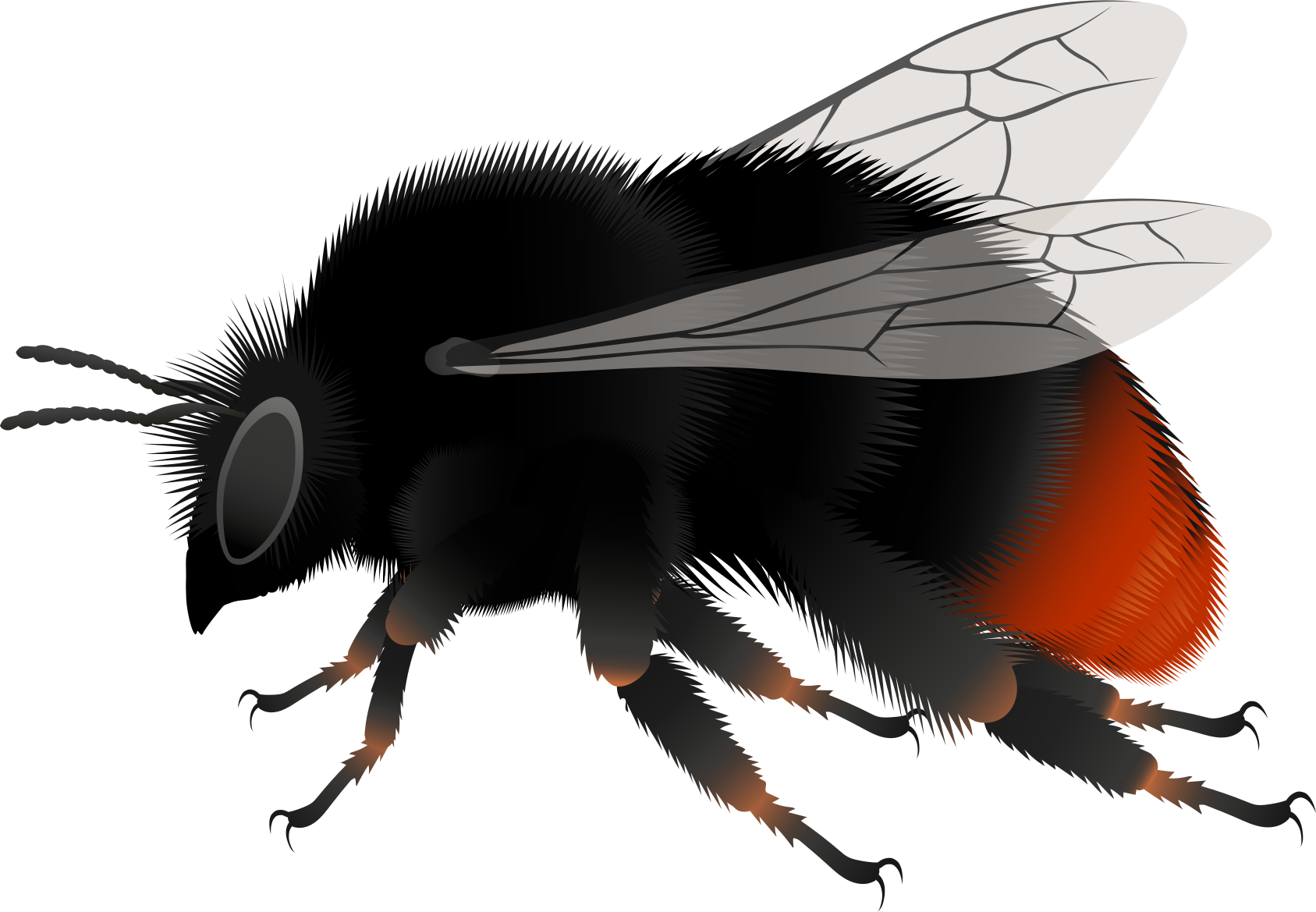
This is an abundant species of bumblebee that is found all over the UK. This social bee nests in disused burrows, under stones or at the base of old dry stone walls. Both males and females have the eponymous red tails as well as velvety black bodies and transparent wings.

Honeybee: Apis Mellifera

Honeybee

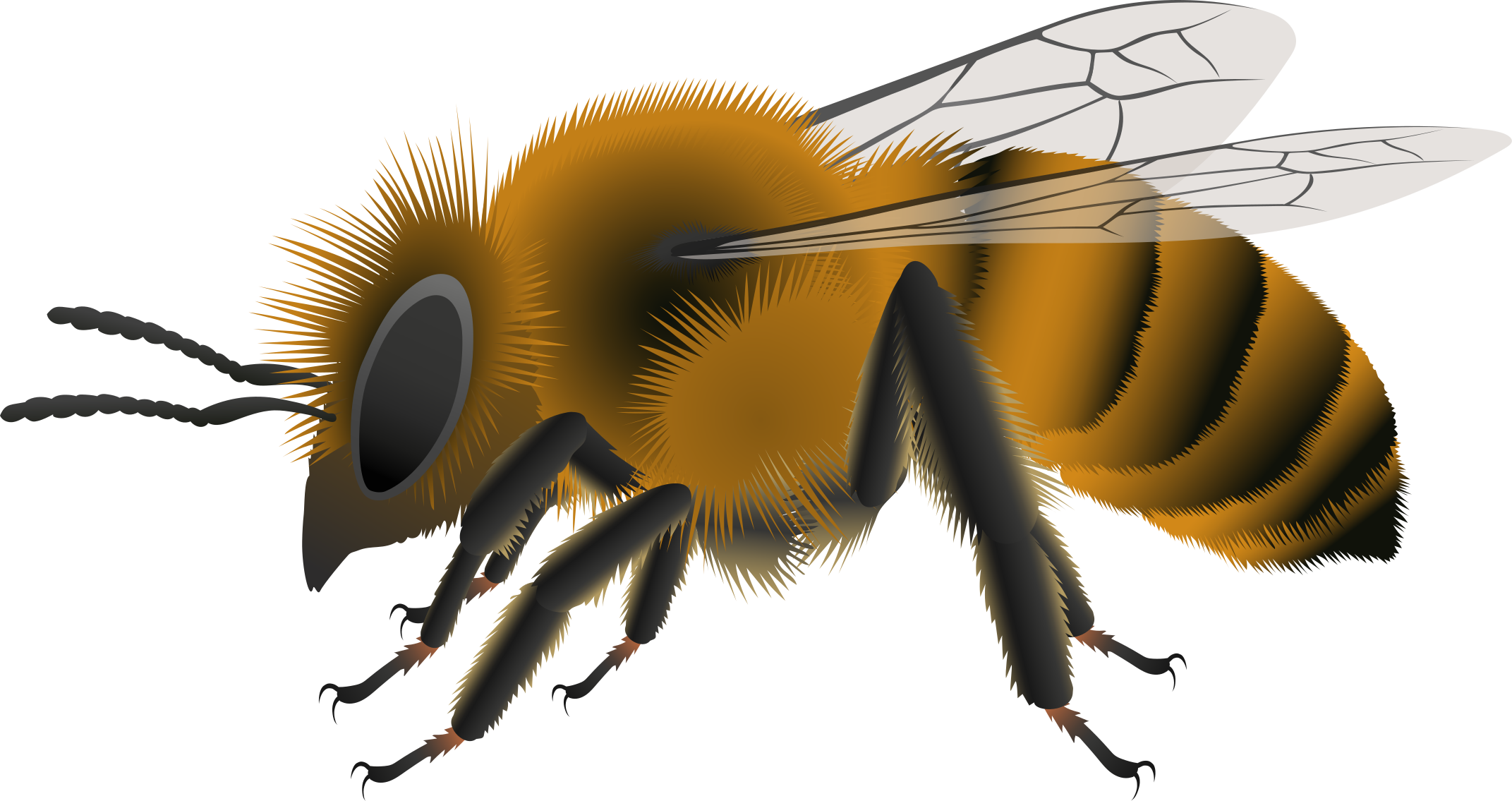
Honeybees have six legs, four wings and five eyes. They use the Sun, and possibly the Earth’s magnetic fields, to navigate, and they can fly at speeds of up to 20mph when in search of food. At the height of summer there are around 40,000 honeybees in each hive, and that number drops to around 5,000 in the winter.

Tawny Mining Bee: Andrena Fulva

Tawny Mining Bee

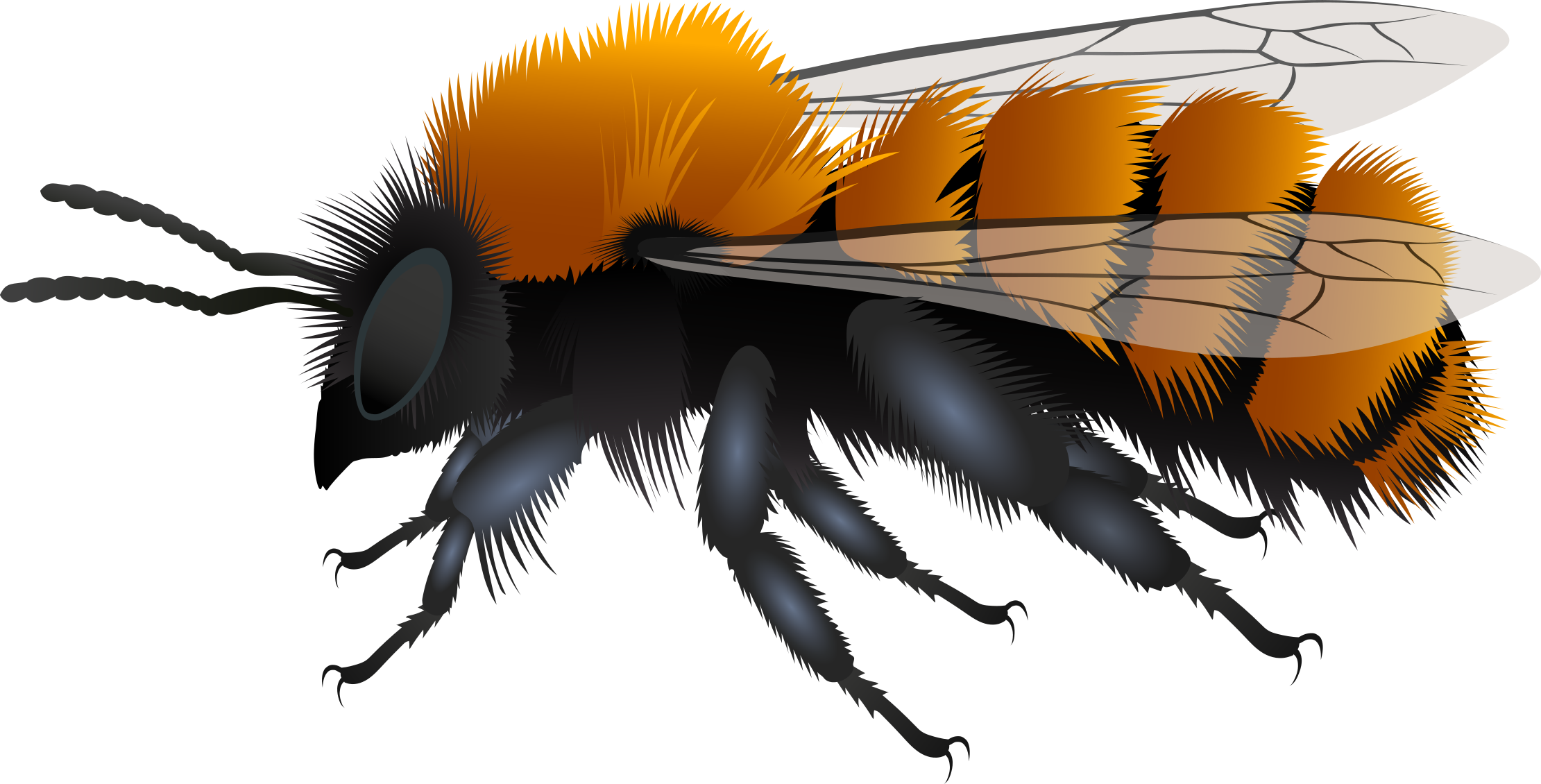
These furry, ginger bees are commonly found in parks and gardens across southern Britain during April and May. They feed from a wide variety of plants including dandelions, buttercups, willows and fruit trees. Tawny mining bees often make their nests in lawns and flowerbeds or in orchards where they can be close to apple, pear and cherry blossom for example.

Red Mason: Osmia Rufa

Red Mason

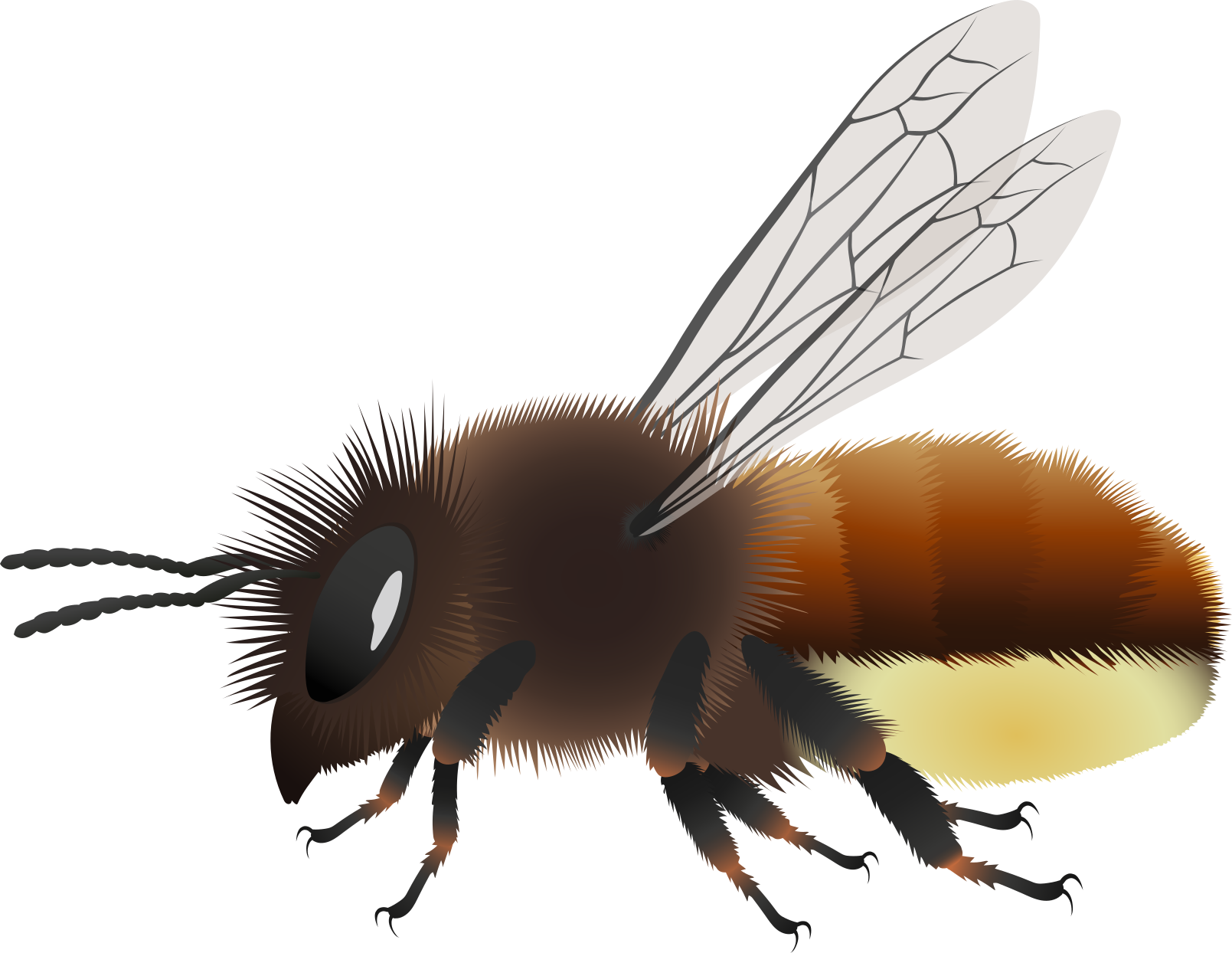
Also known as the red mason bee, this insect can be found in cities, towns and villages across Britain and Europe. Females make their homes and lay their eggs in wall cavities, under roof tiles and even inside keyholes, lining their nests with mud. These bees are excellent pollinators, particularly of apple trees.

Marmalade Hoverfly: Episyrphus Balteatus

Marmalade Hoverfly

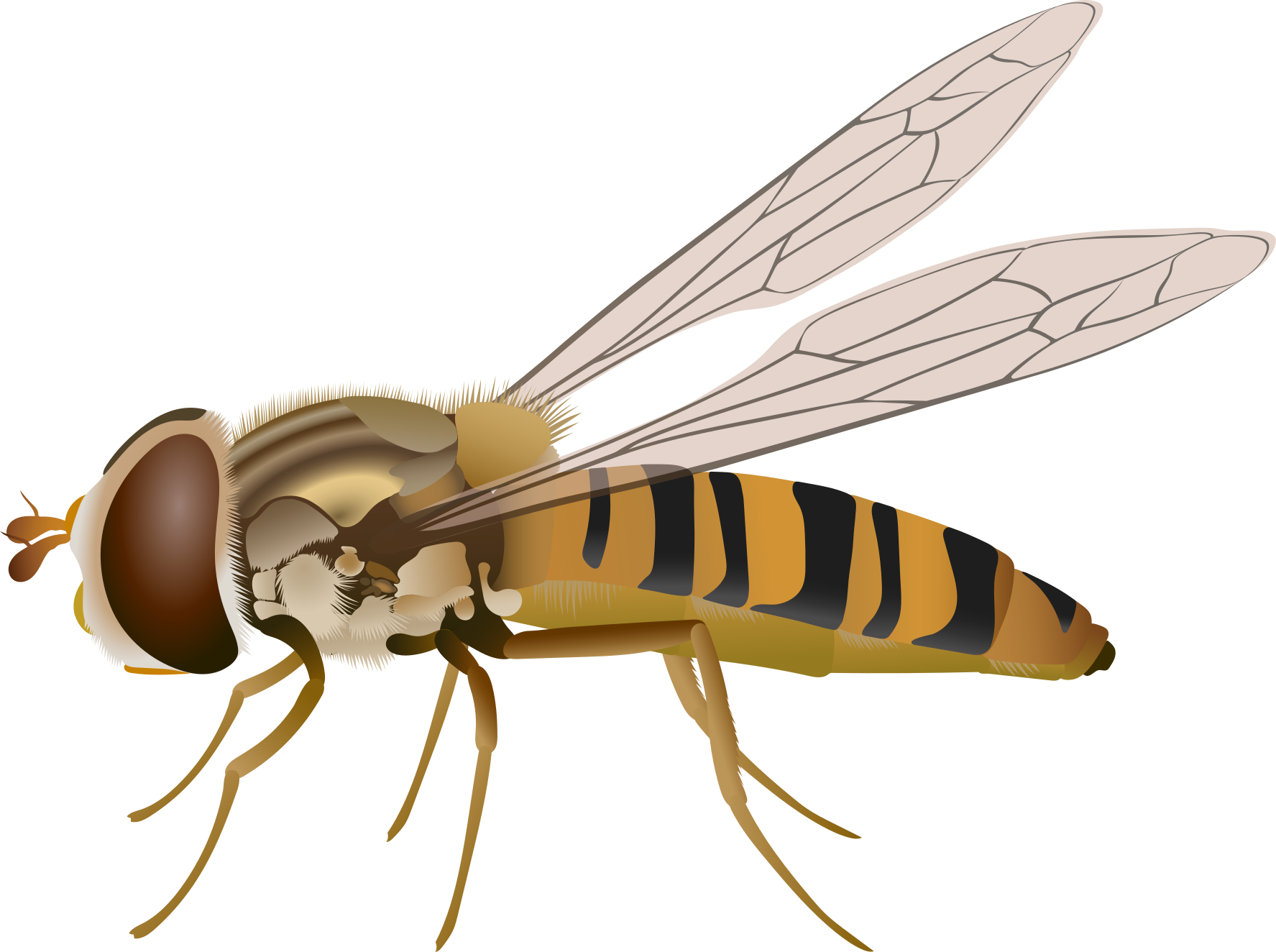
The marmalade hoverfly is so-called because it is orange with black stripes that are thin or “thick cut” just like the popular preserve! It is Britain’s most common hoverfly and can be seen in parks, gardens, hedgerows and woods. They are present all year round, but numbers are often much higher in the summer when marmalade hoverflies migrate to the UK from abroad.

Drone Fly: Eristalis Tenax

Drone Fly

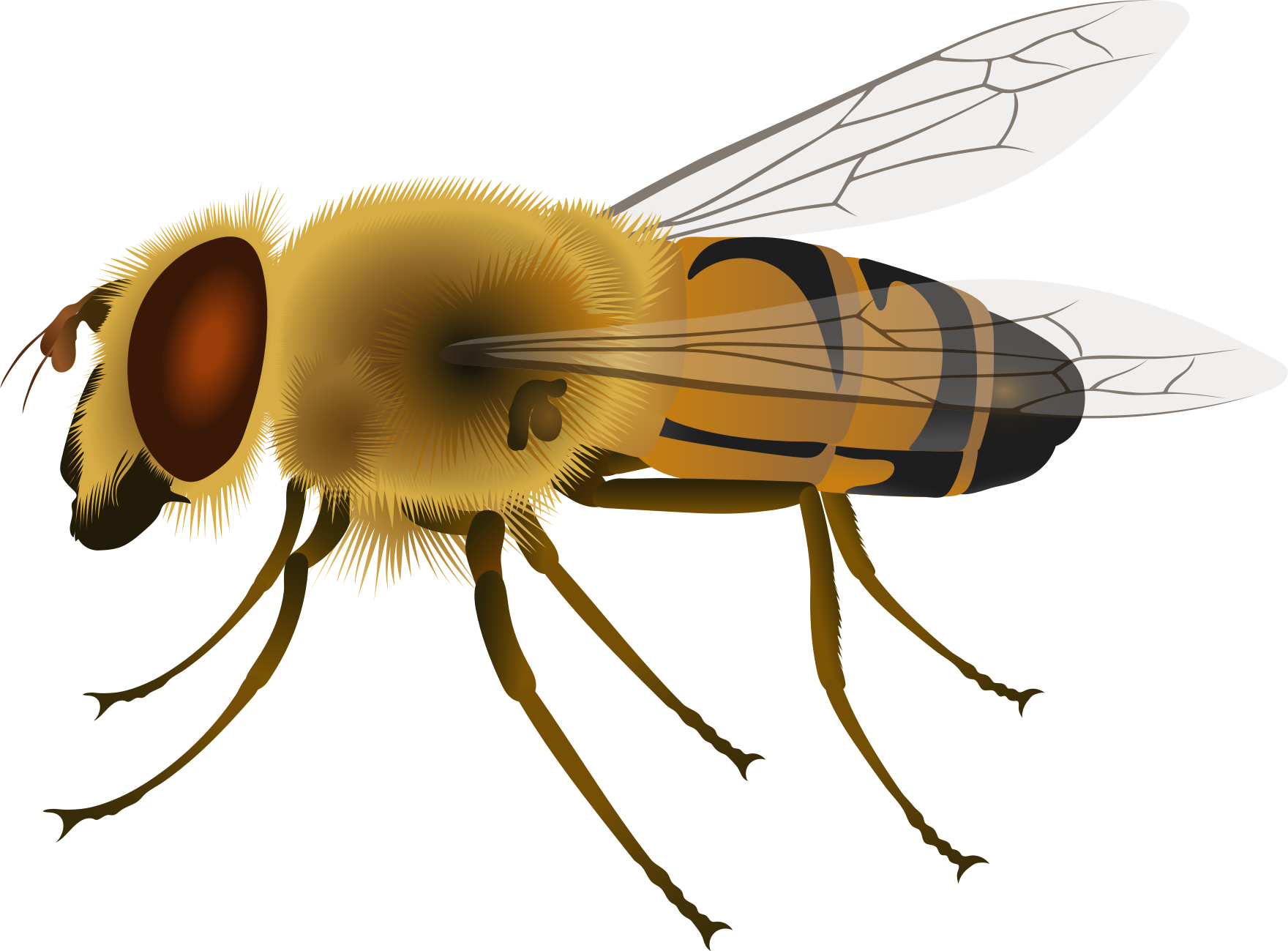
This insect’s patchy brown and orange body makes it look a lot like the male honeybee, which is a very effective way to keep it safe from predators. Drone flies also copy honeybee flight patterns as they move around in search of nectar. Their larvae, nicknamed “rat-tailed maggots”, feed on rotting organic material in stagnant water.

Pellucid Hoverfly: Volucella Pellucens

Pellucid Hoverfly

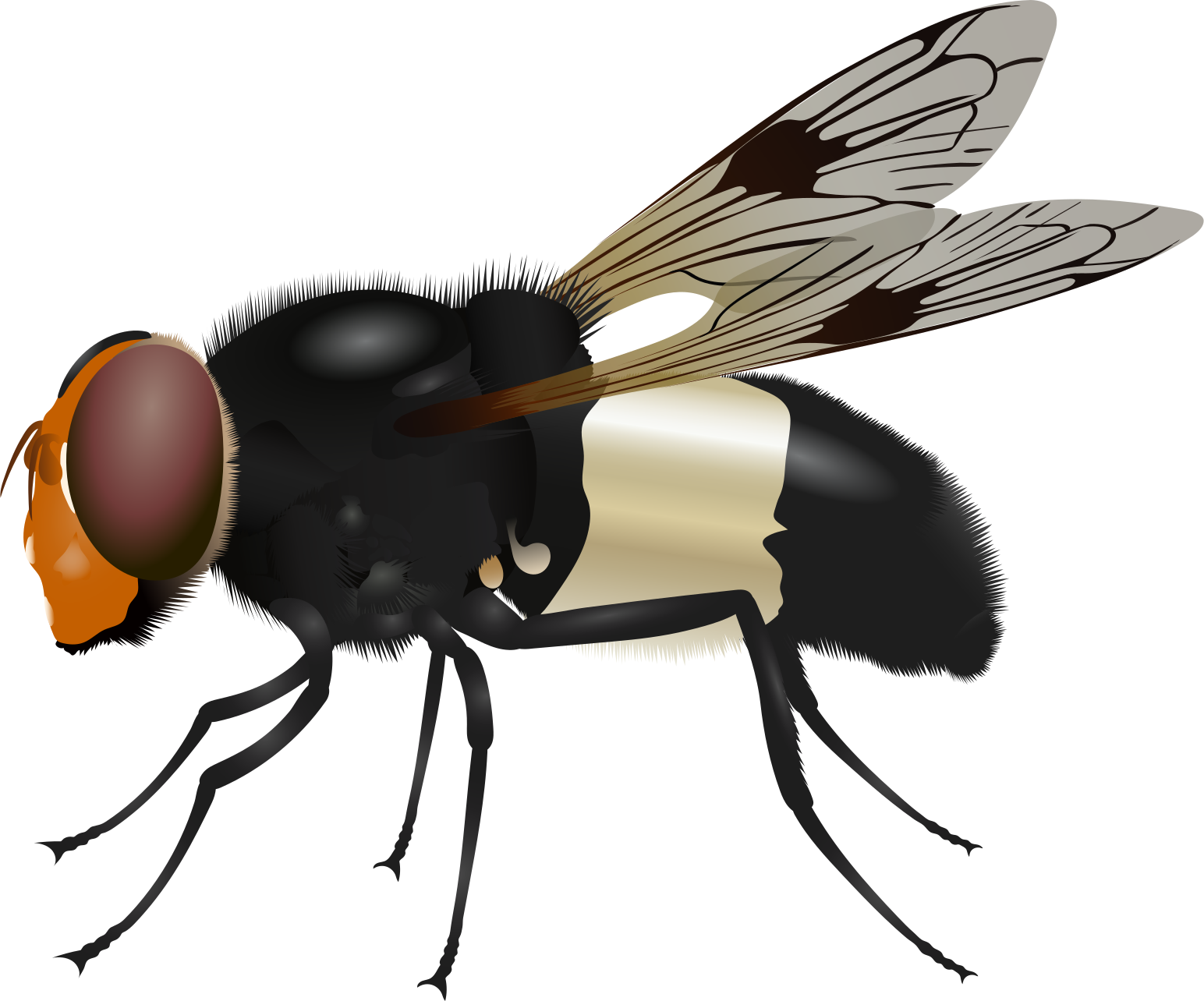
This large black fly has a white stripe on its body and black spots on its transparent wings. It can be found throughout most of Britain and Ireland, and is often seen feasting on bramble flowers in hedgerows or on the edge of woodland. The larvae develop in wasp nests where they feed on detritus wasp grubs.

Large Narcissus Fly: Merodon Equestris

Large Narcissus Fly

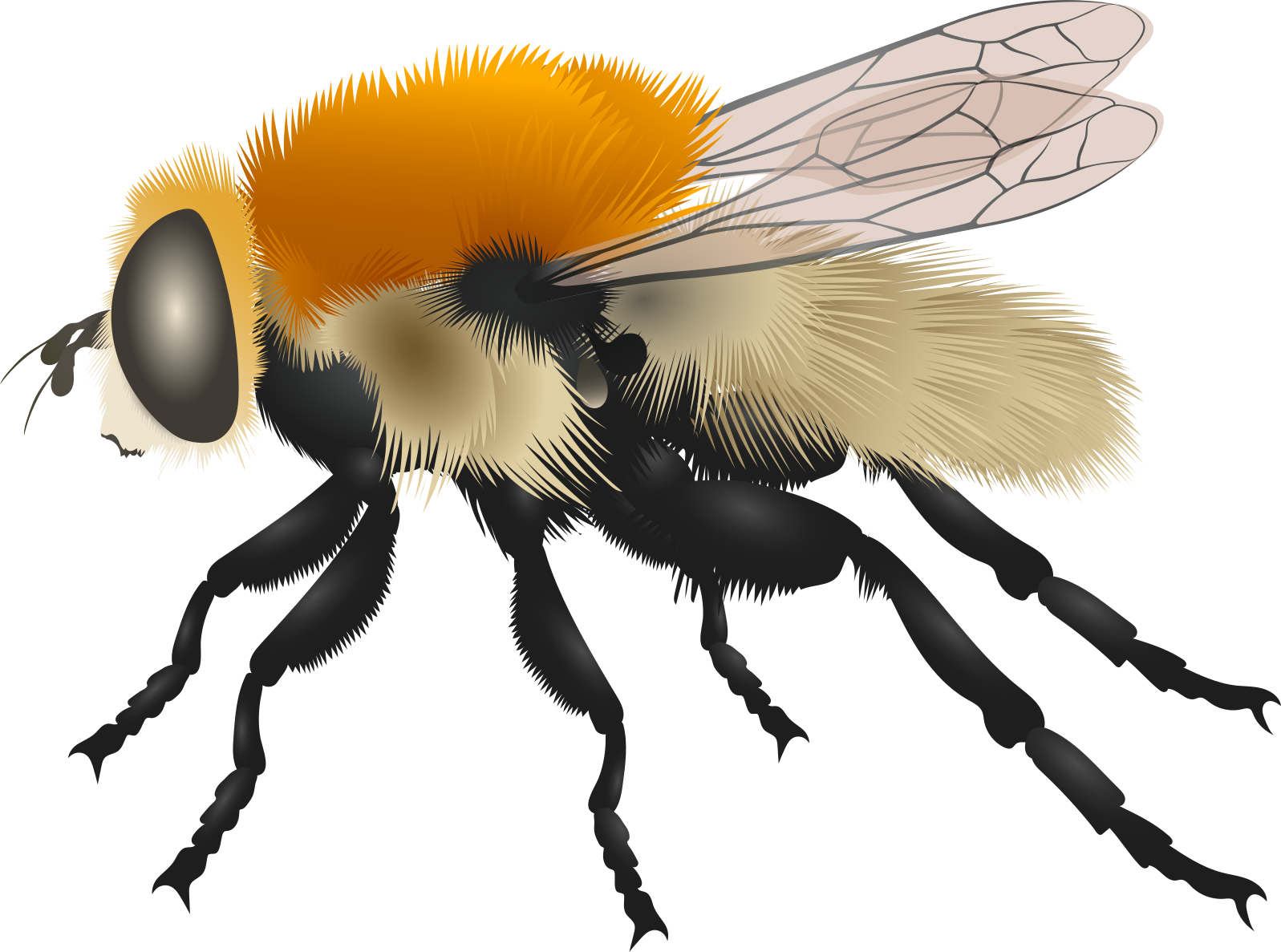
This medium-sized hoverfly looks very much like a bumblebee, which provides great protection against predators. This insect loves warm, sunny spots full of flowers, like gardens in the summer. Females lay their eggs on the leaves of bulbous plants such as bluebells and daffodils, and the larvae then burrow into the bulbs, feeding on them and causing some damage.

Soldier Beetle: Cantharis Rustica

Soldier Beetle

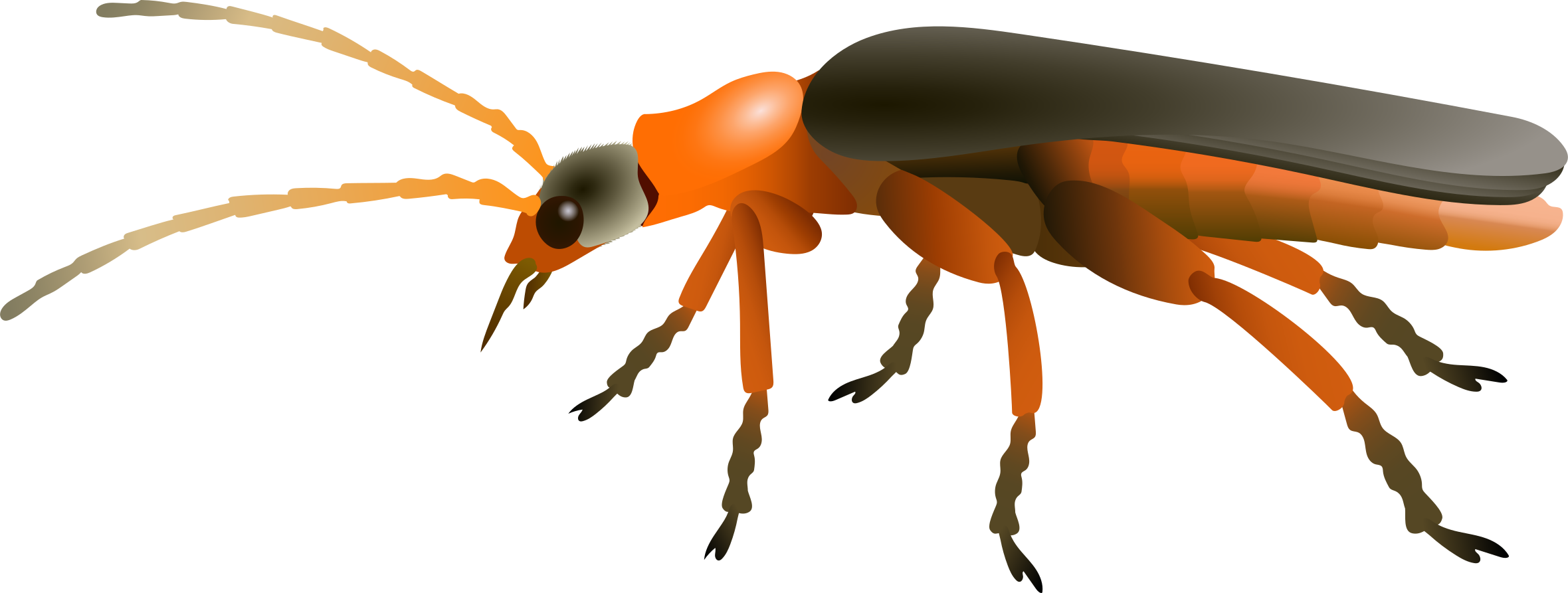
The soldier beetle makes its home in open woodland or anywhere where there is tall grass. These carnivorous predators are common throughout England and Wales, where they can be seen from May to July. The adults prefer to hunt for food on flowers, while their larvae live on the ground, feeding on a range of other creatures.

7-spot Ladybird: Coccinella Septempunctata

7-spot Ladybird

These ladybirds are easy to identify because, just as you might expect, they have a pattern of seven black spots on their red wing cases. They are our most common ladybirds, found in parks and gardens throughout the UK. Ladybirds use their bright colours to warn predators that they won’t taste good, but it doesn’t always work!

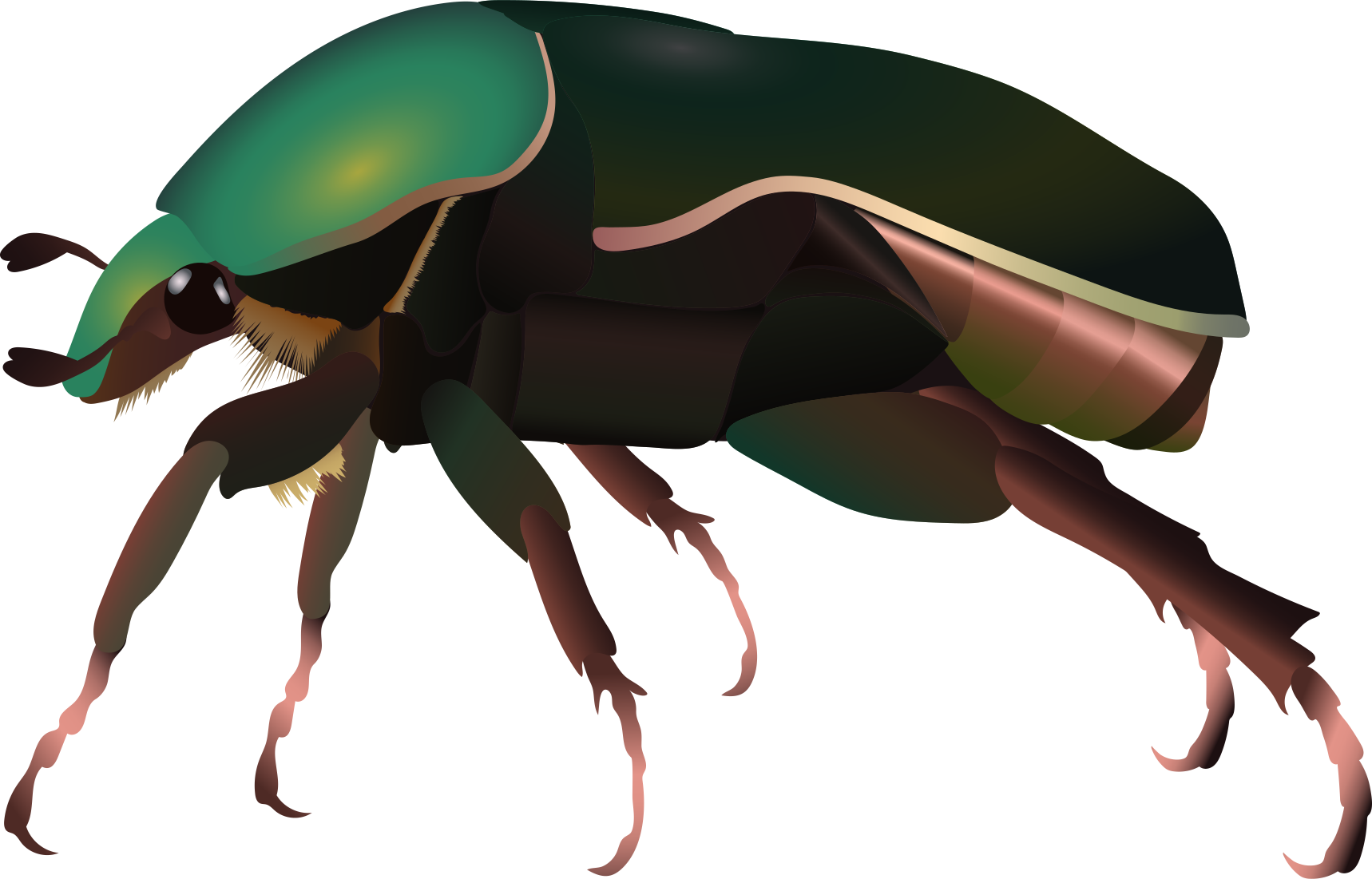
Rose Chafer: Cetonia Aurata

Rose Chafer

These beetles have distinctive green and purple-bronze iridescent bodies, making them easy to identify. They love crawling on flowers on sunny days, when they shimmer in the light and look even more striking. Their favourite source of food, as the name indicates, is the rose, and the dog rose in particular.

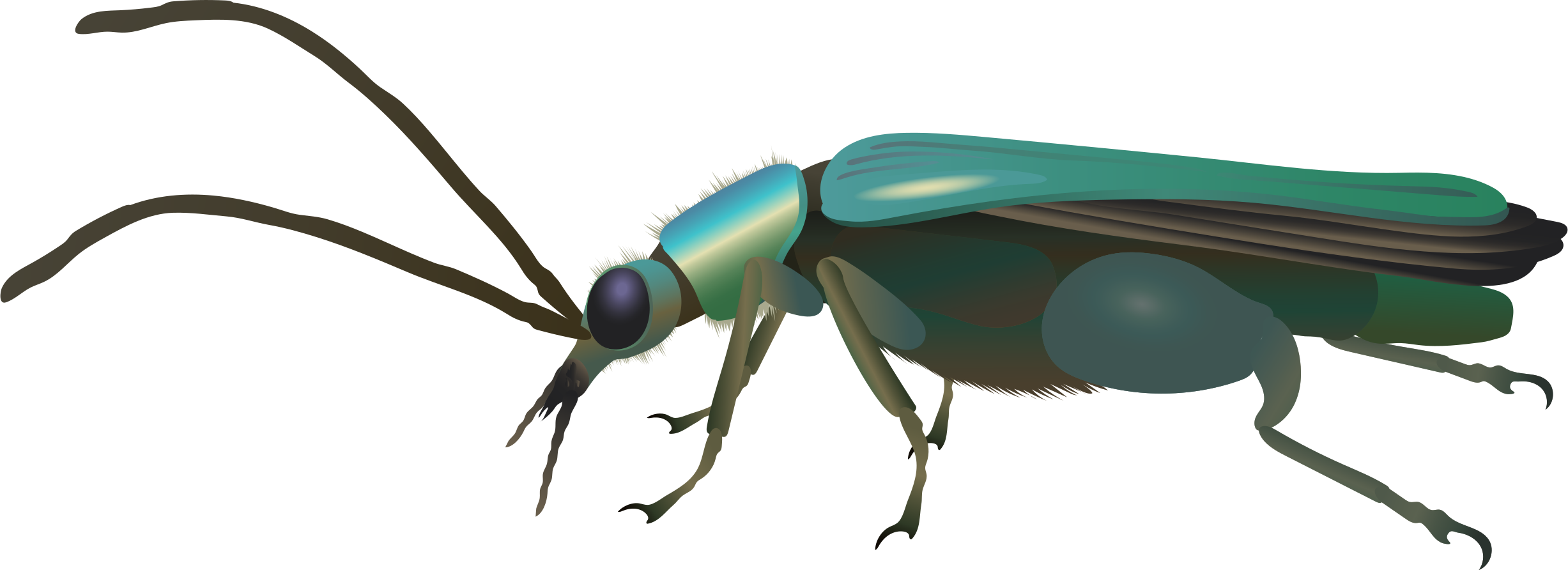
Flower Beetle: Oedeomera Nobilis

Flower Beetle

This beetle is so-called because the male of the species has large green bulges on its hind thighs, whereas the female does not. It used to be quite rare, but is now a very abundant species throughout the UK. You should be able to spot the adults without too much difficulty, as they like to feed on open flowers like daisies

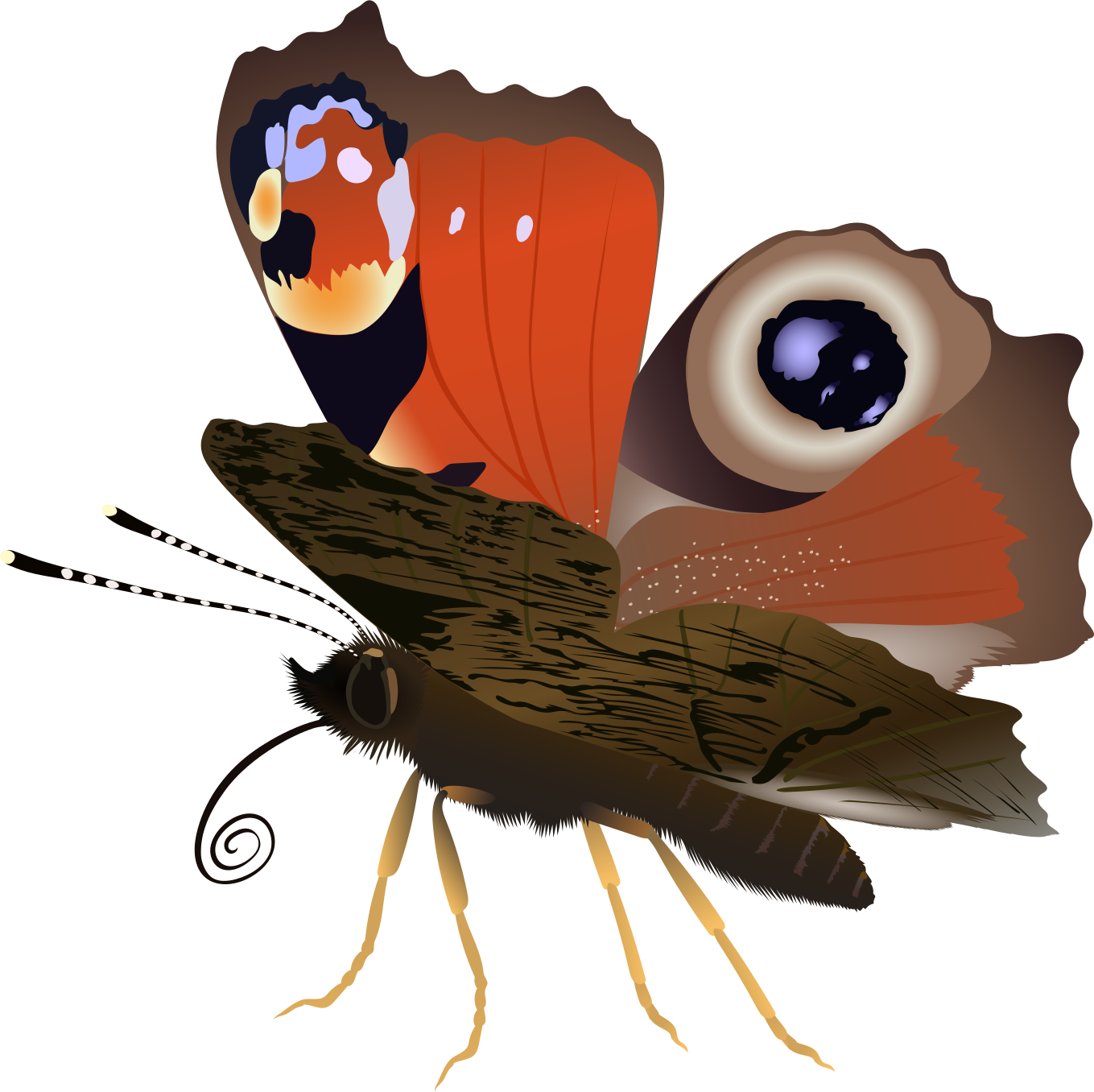
Peacock Butterfly: Inachis Io

Peacock Butterfly

This common British butterfly gets its name from the large spots on its wings, which are reminiscent of peacock feathers. These markings help to scare off predators in the woods, gardens and parks where they live. They hibernate in winter, folding up their wings to show the dull undersides so that they can blend in with their surroundings while they sleep.

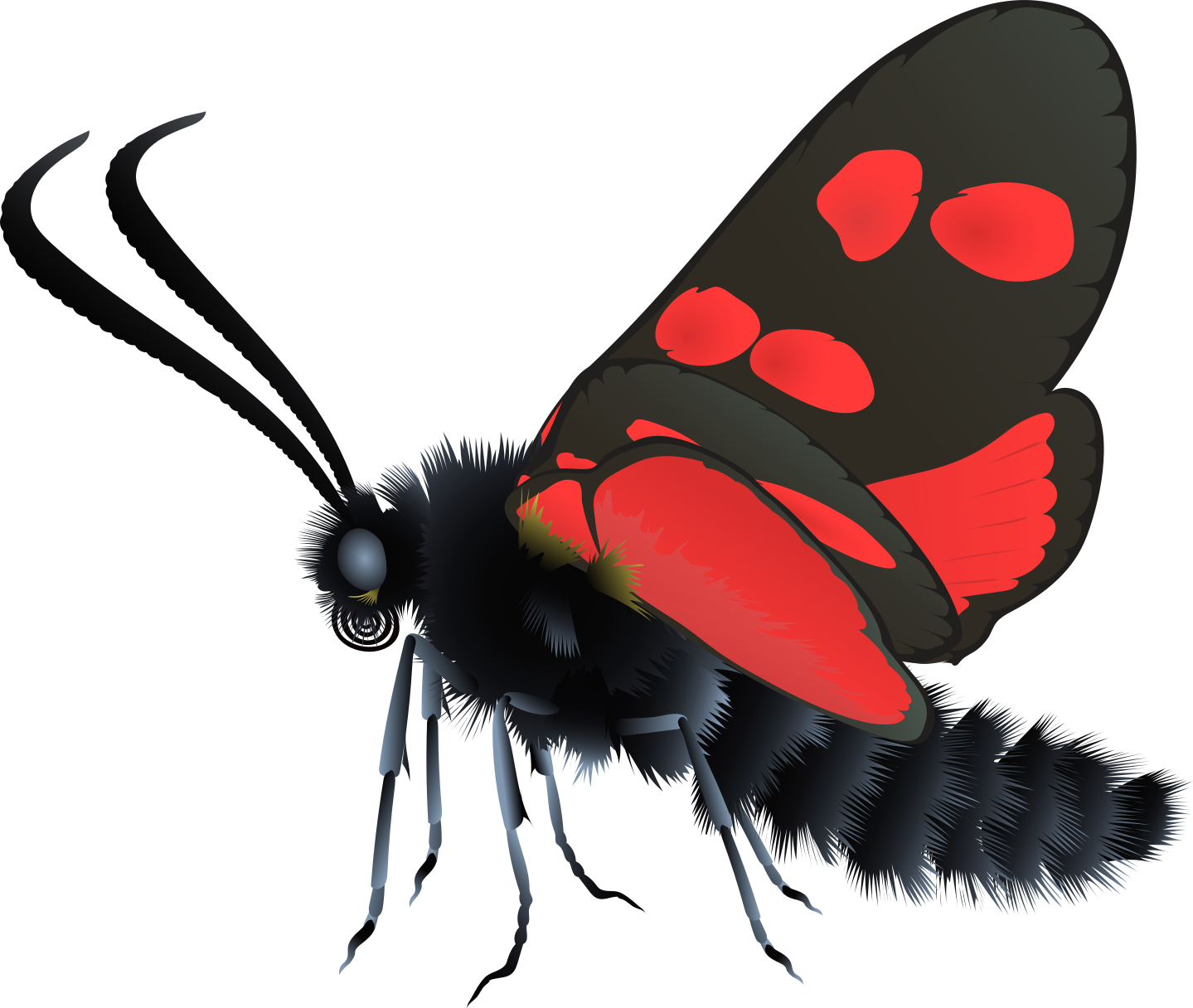
6-spot Burnet: Zygaena Filipendulae

6-spot Burnet

You are most likely to spot this medium-sized moth flying around in the daytime between June and August. It has six red spots on each of its glossy black forewings. If attacked, the burnet moth will release cyanide, so the spots serve as a warning to predators that this species is poisonous.

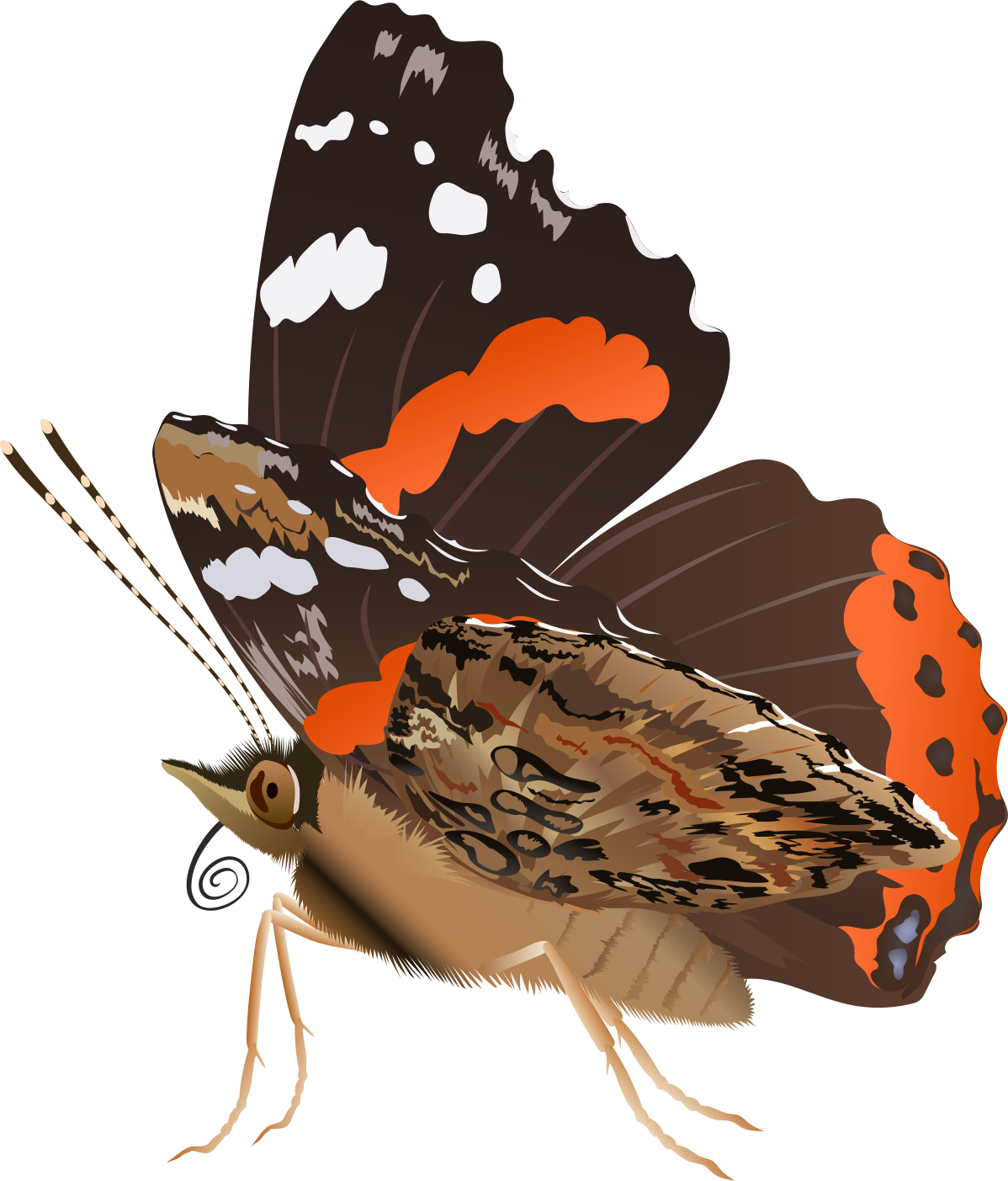
Red Admiral: Vanessa Atalanta

Red Admiral

These large red, white and black butterflies have very powerful wings. Most of the magnificent red admirals that we see in the UK start off in North Africa and migrate north, arriving here from late March onwards and staying until autumn. Male red admirals court their females for several hours before they begin mating.

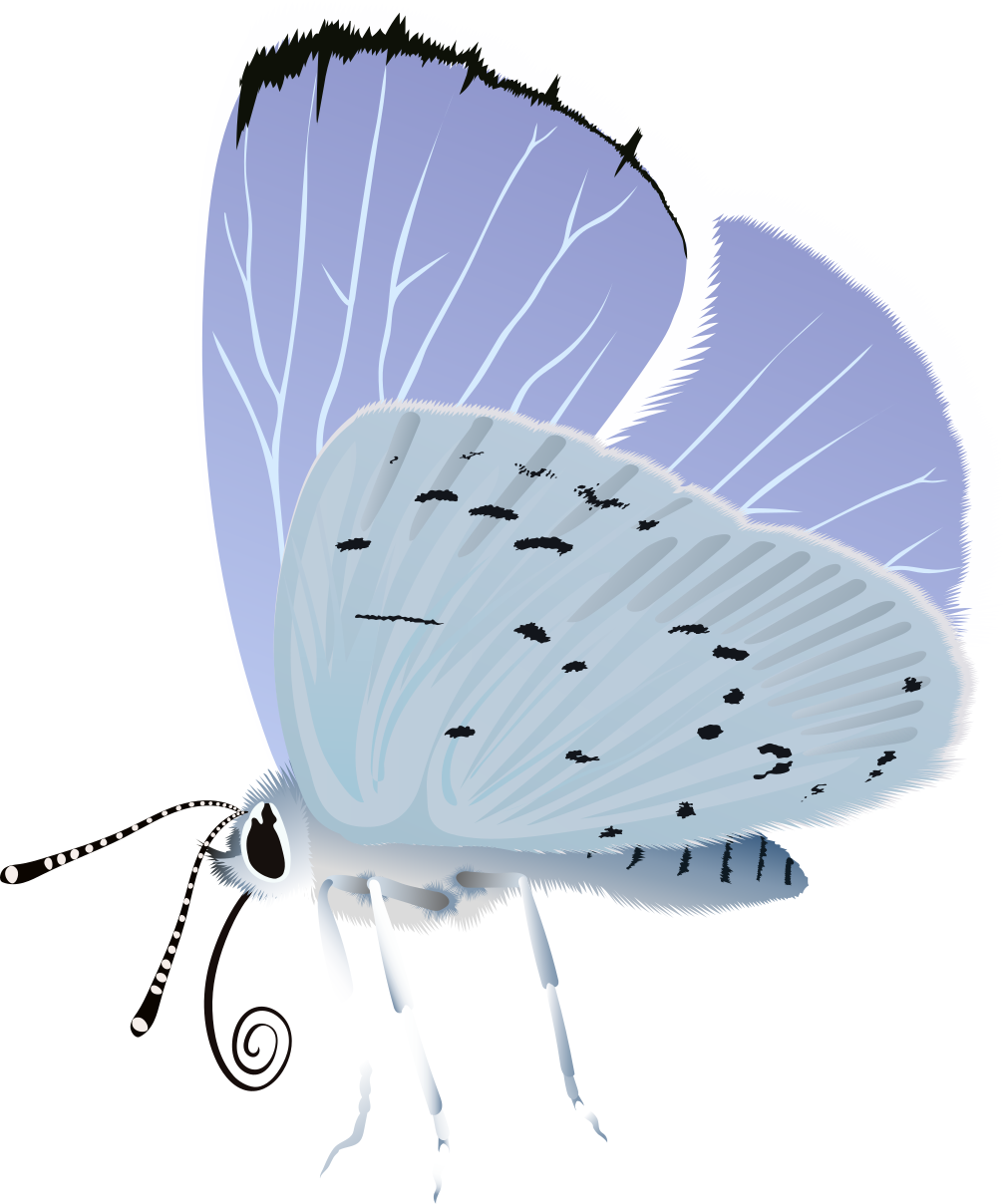
Holly Blue: Celastrina Argiolus

Holly Blue

This stunning, vibrant, blue butterfly can be seen across most of the UK, but is most common in England and Wales. Caterpillars feed on holly and ivy buds, digging into them and eating what is inside. Holly blues are very popular in Finland, where they have been elevated to the status of national butterfly!

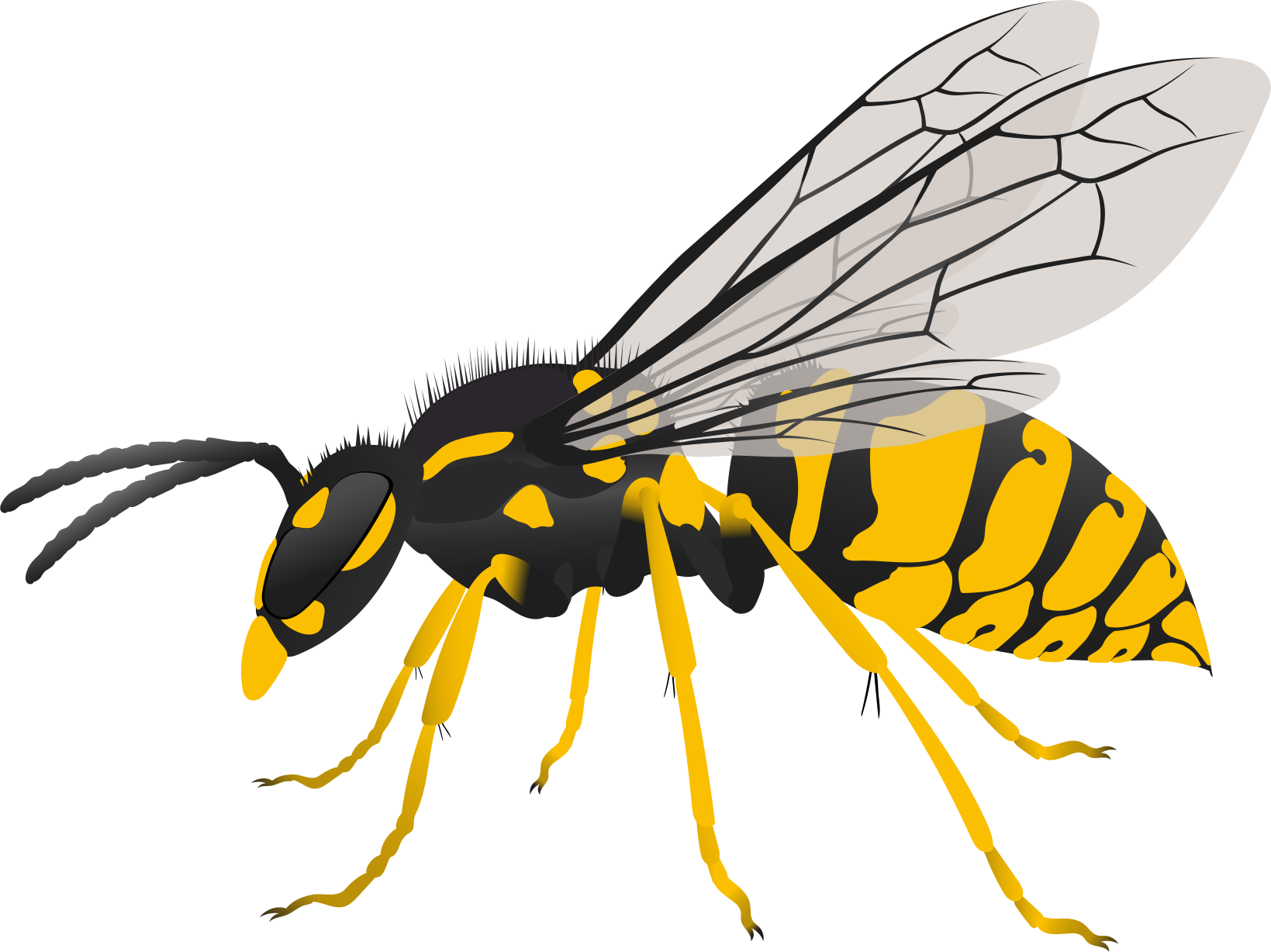
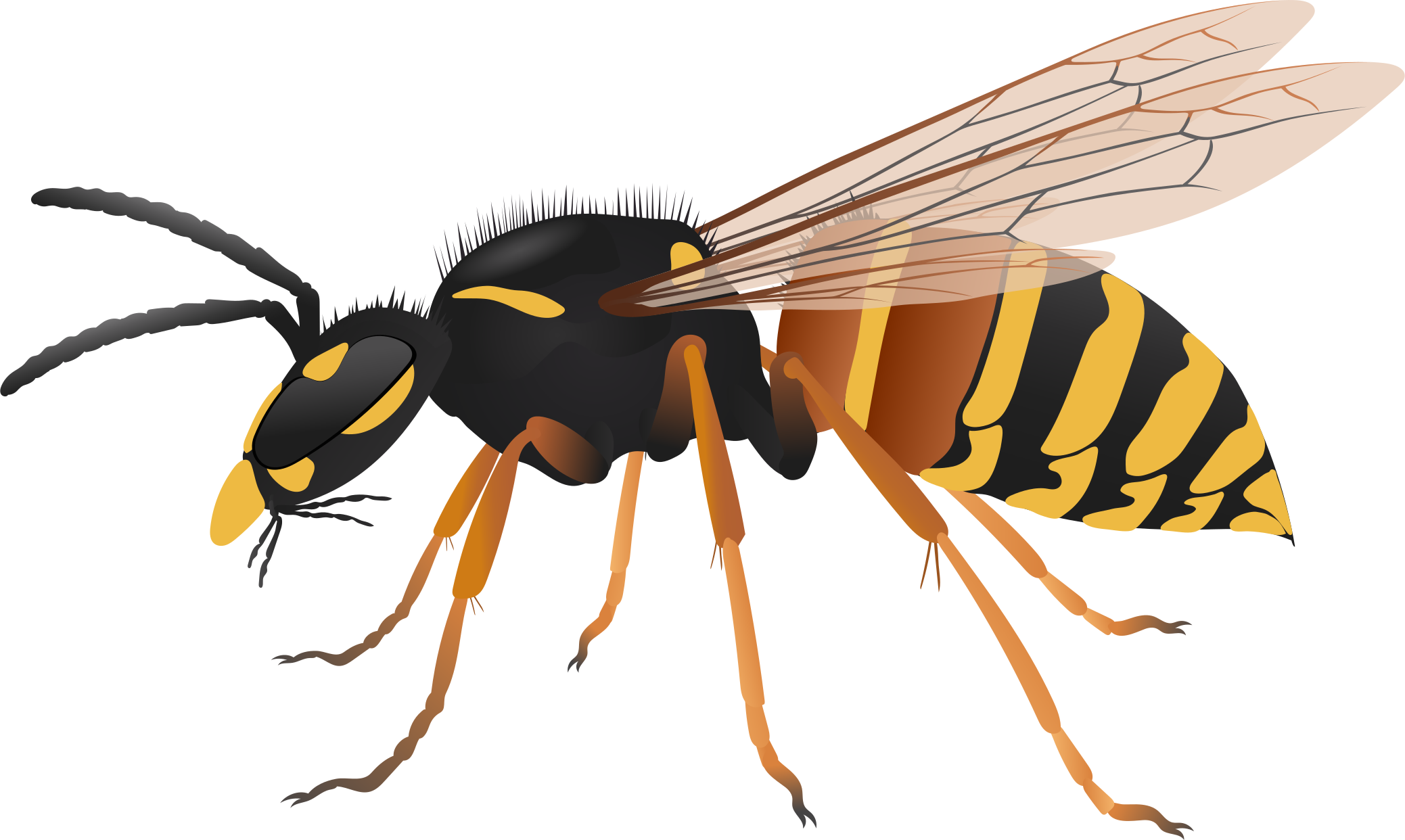
Common Wasp: Vespula Vulgaris

Common Wasp

Anyone who has ever tried to have a summer picnic will be familiar with this yellow and black striped insect which can be found all over the UK. Queens first come out of hibernation at the very start of spring and start to look for suitable nesting sites in a range of habitats. Wasps will try to eat anything sweet, and although we might think of them as pests, they are useful pollinators.

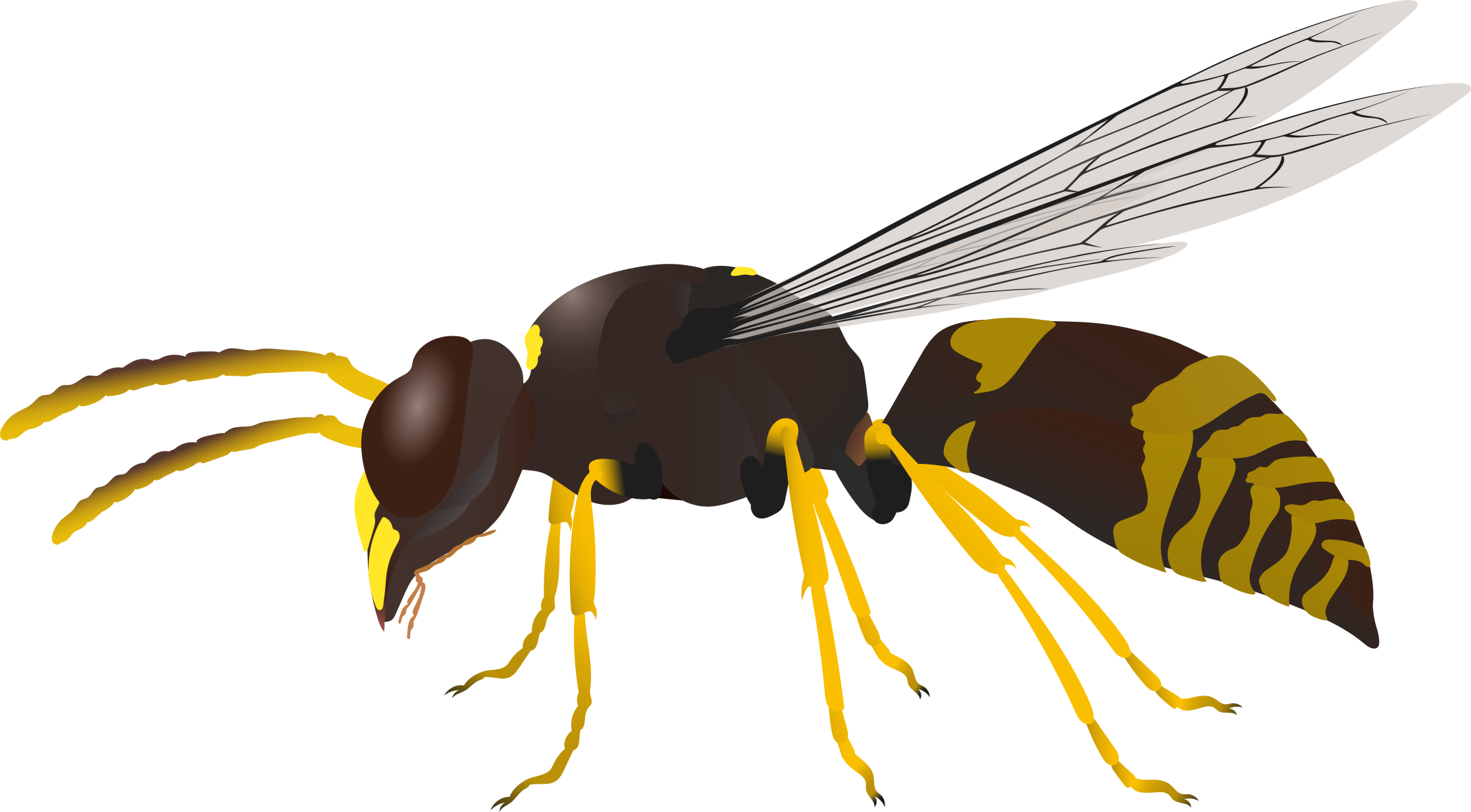
Mason Wasp: Ancistrocerus Parietum

Mason Wasp

This wasp is native to Europe and North America and gets its name because it likes to build its nests in walls. Mason wasps have black bodies with yellow stripes and narrow waists. Female mason wasps are slightly larger than males, and can control the gender of their offspring.

Red Wasp: Vespula Rufa

Red Wasp

This wasp is so-called because it has reddish-brown markings on its body. Red wasps make their nests in tree stumps, using leaf litter and soil. Badgers often destroy the nests, eating them along with the wasps, as their thick hair and skin protects them from being stung.

Conclusion

Through its partnership with GreenTheUK and Buglife, Network Rail has helped restore 10 hectares of connected wildflower habitat across Scotland, strengthening ecological networks that will continue to support pollinators and wildlife long into the future. As these meadows mature over the coming years, they will become increasingly valuable refuges for biodiversity while contributing to healthier, more resilient landscapes.

Supported By:

supported company logo

Project Partner:

partner logo GreenTheUK logo

Join Our Mailing List...